



Peel and Stick Tile Bathroom Makeover: Where It Works
The material works, but only where moisture and traffic stay low. Here's how to choose your project, stay on budget, and make the results last.
A builder-grade bathroom can look dramatically different for under $200. No contractor, no mortar, no grout. The catch is placement. A peel and stick tile bathroom makeover fails or succeeds almost entirely based on where the tiles go. Prolonged moisture exposure weakens the adhesive, leading to edges curling and tiles lifting, according to AOL earlier this year. That means shower walls and wet-zone floors are where these projects fall apart, not where they shine.
The smart play is targeting the right surfaces: a vanity backsplash, an accent wall away from spray zones, the floor of a powder room, or the exterior panels of a dated cabinet.
This guide covers three specific applications in depth: vanity backsplash, accent wall, and powder room or half-bath floor. It includes a sample budget breakdown, a before-you-buy checklist, and a clear list of when to stop and choose a different approach.
Who this is for: Renters, homeowners postponing a full remodel, people staging a home for sale, or anyone refreshing a guest bath or powder room. If you're tiling a high-traffic family bathroom floor or anything inside a shower enclosure, this guide will tell you to stop, and why.
Prerequisites: Confirm your target surface is smooth, structurally sound, and free of active moisture issues. Bubbling paint, soft drywall, or visible mold disqualifies the surface before you buy a single tile.
Best surfaces for a peel and stick tile bathroom makeover
Not all bathroom surfaces are equal candidates. Use this as your starting filter before calculating a single square foot.
SurfaceVerdictWhyVanity backsplash wallBestLow direct-water exposure, high visual impact, small square footage keeps cost downAccent wall (away from spray)BestNo meaningful moisture contact, strong design payoffPowder room or half-bath floorMaybeNo shower steam, lower traffic, but prep and product selection matter a lotPrimary bathroom floorSkipHigh traffic accelerates surface wear and adhesive stressFloor in front of tub or showerSkipWater pools here regularly; adhesive failsAny surface inside a shower enclosureSkipSustained moisture will lift tiles; no exceptions
That "Maybe" on the powder room floor deserves explanation. It's feasible because there's no shower producing steam and traffic is lighter than a primary bath. It requires careful prep and realistic expectations about lifespan, but it's the scenario that produced the sub-$100 transformation documented by Designing Vibes in late 2024. More on that below.
Before you buy, do three things:
Identify your surface material. Peel-and-stick performs best on smooth, non-porous surfaces: existing sheet vinyl, primed drywall, or painted wood. Some products can go over concrete or existing tile; others cannot. Read the manufacturer's instructions before purchasing, not after, per designer Elizabeth Burns in U.S. News.
Order a sample. Test adhesion and scratch resistance on your actual surface before committing to a full order. A sample also confirms color and pattern under your specific lighting, something product photos reliably misrepresent, as Burns notes in U.S. News.
Check reviews for your specific product. Quality varies enough that brand selection matters. Budget vinyl flooring for 200 square feet can run as low as $100; higher-quality material for the same area reaches $900, per U.S. News. Buying the cheapest product on a bathroom floor is the fastest path to peeling it back up within a year.
When to stop here and do something else:
Surface has active moisture, soft spots, or visible mold
Walls or floors have significant texture, bumps, or divots that can't be sanded smooth
The target area is inside a shower enclosure or a high-traffic primary bathroom floor
Landlord restrictions prohibit adhesive-backed products, so verify before buying
The goal is a result that lasts a decade or more, which requires traditional tile and professional installation
Where peel and stick tile for bathroom walls works, and where it doesn't
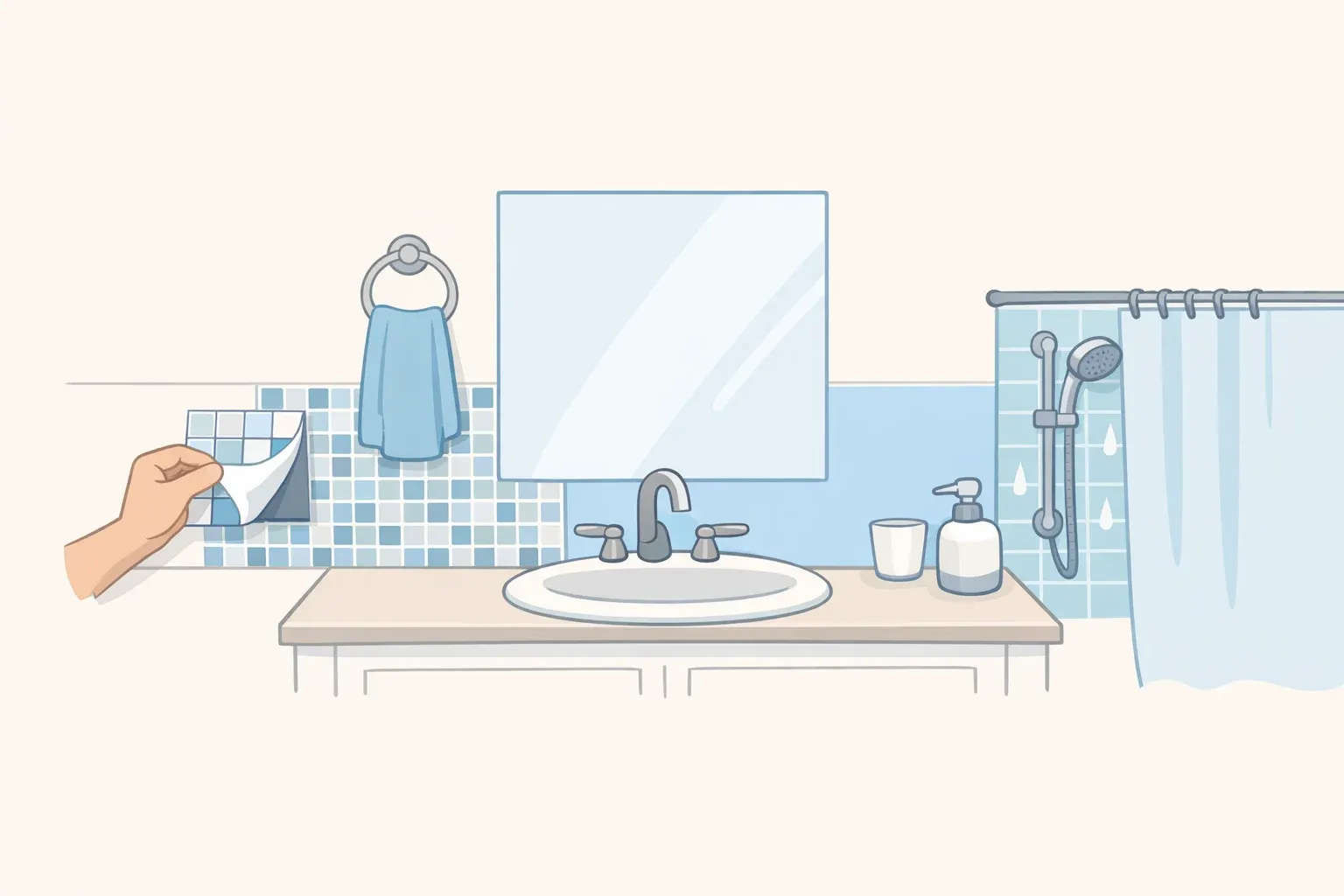
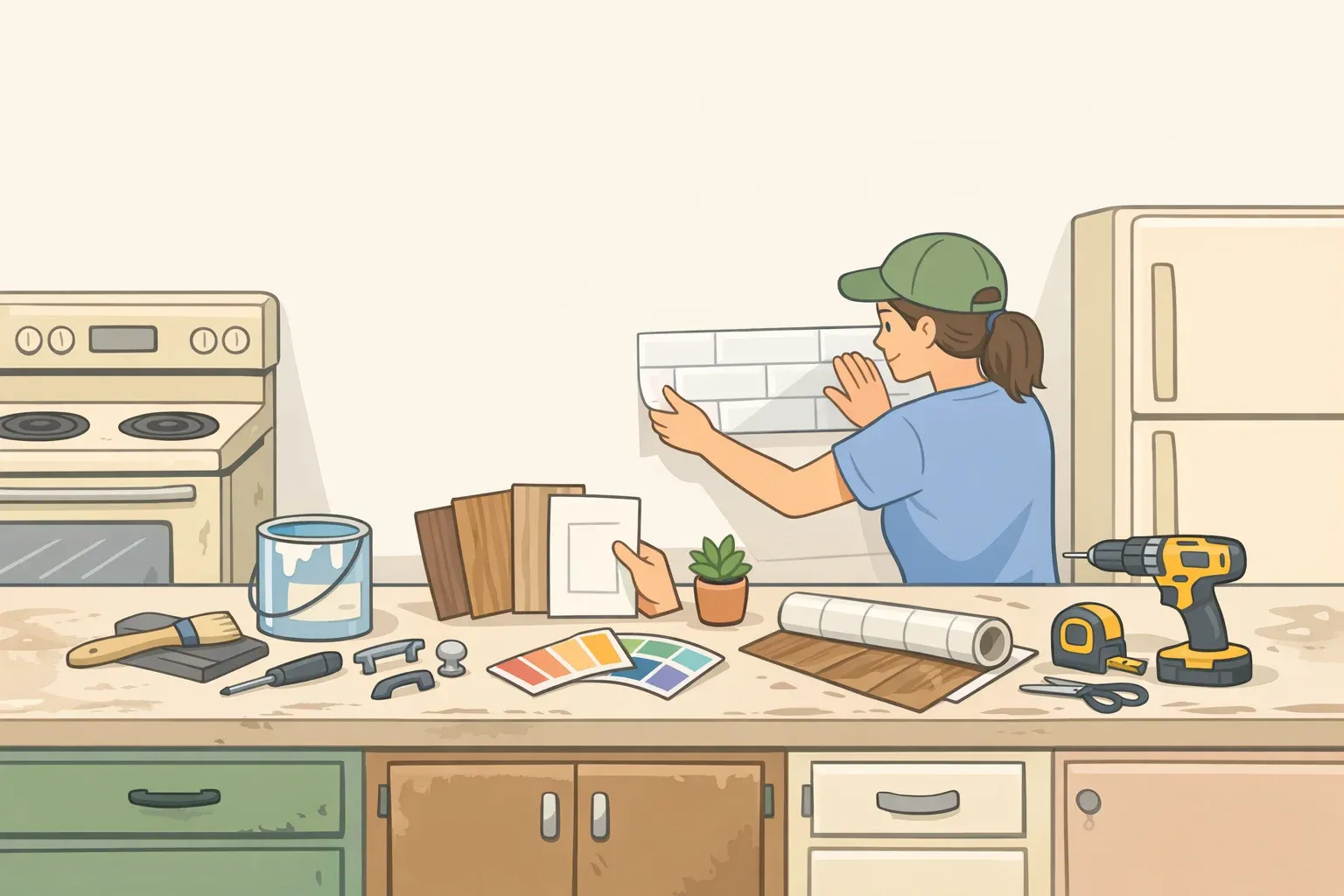
The vanity backsplash is the single strongest use case in this guide: typically 10 to 20 square feet, low direct-water exposure, and the surface that produces the most visible before-and-after contrast in a builder-grade bathroom.
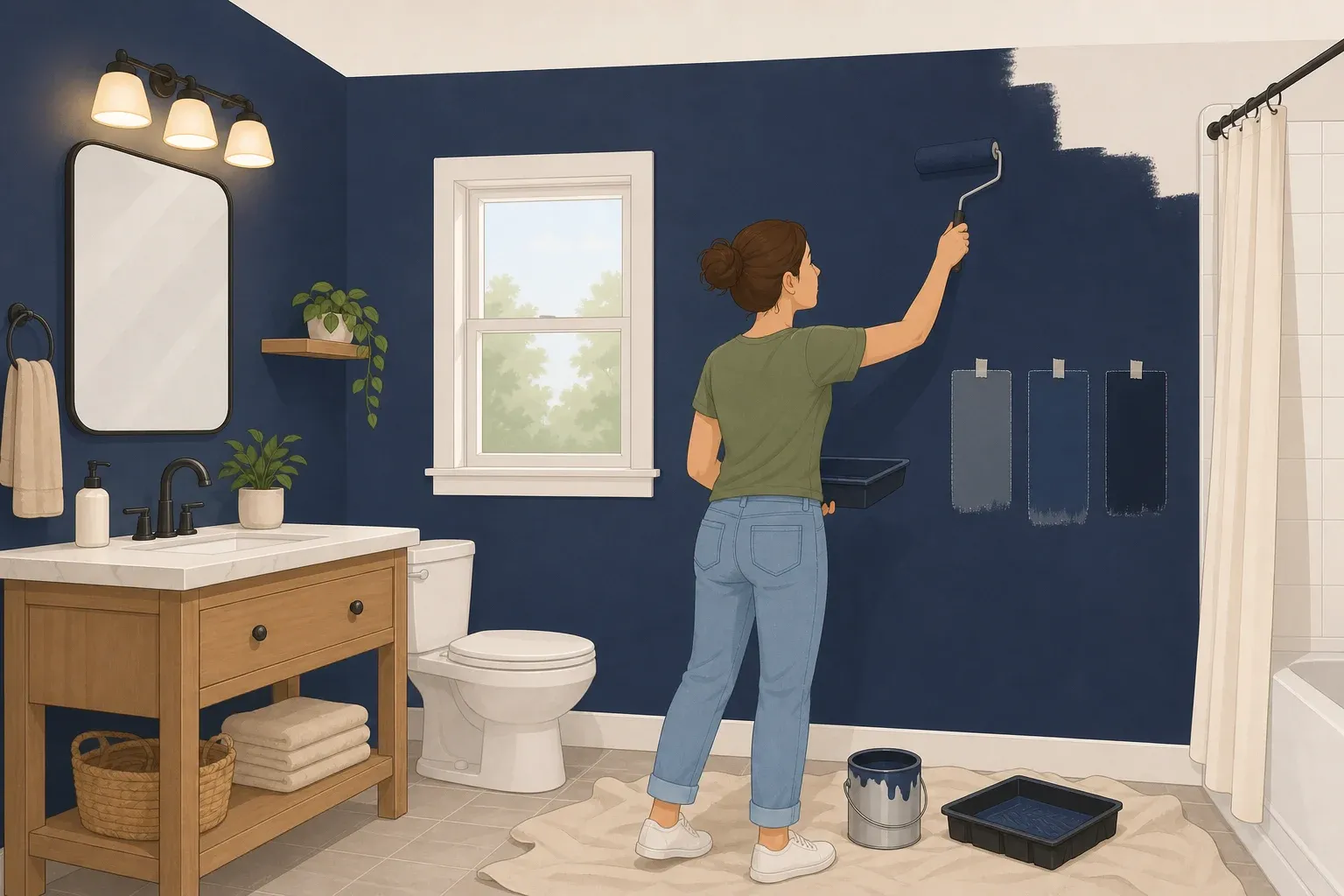
An accent wall, the wall opposite or beside the shower rather than inside it, is the other clear winner. No meaningful moisture contact, and the design payoff can reframe the entire room. Designer Courtney Batten of Paige Studio notes that backsplash-style applications are ideal because it's a small area with outsized impact on how a space feels, a principle that translates directly from kitchen to bathroom walls, per AOL earlier this year.
Walls inside a shower enclosure or in the direct splash zone near a tub are a different matter. Peel-and-stick tile doesn't hold up well against moisture in the long term, full stop. The adhesive issue isn't theoretical; it's the consistent finding across the sources in this guide. Place tile on a wall that routinely gets wet and you're scheduling a removal project, not completing a makeover.
How the $200 bathroom makeover budget actually works
The number is real, but it depends on combining peel-and-stick tile with a vanity refresh rather than attempting to tile an entire bathroom. Here's how the math holds together.
Backsplash tile for a typical vanity wall, roughly 15 square feet, costs between $60 and $150 depending on product quality. Designer Elizabeth Burns puts the per-square-foot range at $4 to $10, per U.S. News. A small powder room floor of 30 to 40 square feet at the same range runs $120 to $400, making product selection the key budget variable. For an accent wall of 25 to 30 square feet, budget similarly.
Sample budget: vanity backsplash + cabinet refresh
Peel-and-stick backsplash tile (15 sq ft at ~$7/sq ft): ~$105
Cabinet paint or contact paper: ~$25–$40
New hardware (4–6 pulls or knobs): ~$20–$40
Surface prep primer (if needed): ~$12–$15
Total: roughly $160–$200
Where do the savings actually come from? Not the tile itself. Basic subway tile runs around $2 per square foot, less than most peel-and-stick options, per Burns in U.S. News. The real savings come from eliminating backer board, mortar, grout, tile spacers, and all associated labor. A professionally installed kitchen backsplash averages around $1,000 in total cost, per U.S. News. A vanity backsplash is smaller, but the same labor cost categories disappear entirely when you go the peel-and-stick route.
The vanity is what makes this a room transformation rather than a tile project. In a builder-grade bathroom, the cabinet is typically the most visually dominant element and the most expensive to replace outright. Repaint it, swap the hardware, and add a backsplash directly above it, and the room reads as genuinely renovated. A homeowner documented exactly this on A House in the Hills in late 2024, noting the refinished vanity saved thousands compared to buying a replacement. Tile handles the wall; paint handles the cabinet; hardware handles the detail. Each piece is inexpensive. Together, they change the room.
Step-by-step: surface prep and installation
Prep is where most peel-and-stick projects succeed or fail. Contractor Alexey Beliy of HEX General Contractors told AOL earlier this year that this step is often rushed through despite being hugely important. Do it slowly.
Step 1: Measure and calculate tile quantity, then add 10%.
Measure the square footage of your target surface. Add 10% to account for cuts around fixtures, outlets, corners, and pattern alignment waste, per Designing Vibes (late 2024). Running short mid-install creates a potential dye-lot mismatch on a reorder. For a checkered or two-tone pattern, which works well to disguise the generic look of builder-grade surfaces, order equal quantities of both colors at the same time from the same production batch.
Step 2: Clean the surface completely, then let it dry.
Remove all dust, grease, soap residue, and any prior adhesive. Use a degreaser on bathroom walls; they accumulate more residue than they appear to. Let the surface dry completely before proceeding. Applying tile to a damp surface is a reliable way to produce early adhesion failure, per AOL earlier this year.
Step 3: Assess the surface and apply primer if needed.
Smooth, non-porous surfaces like drywall and existing sheet vinyl bond well without primer. On older painted surfaces, a surface prep primer improves adhesion and is worth the extra step. Designing Vibes used one for their bathroom floor install and specifically called it out as important. Check your product's instructions regardless: compatibility with concrete, plywood, or existing tile varies by brand, per U.S. News.
⚠️ Gotcha: Rough or textured surfaces will telegraph through peel-and-stick tile and cause lifting at high points. Sand bumps, skim-coat divots, and address any surface texture before tiling. No amount of pressure during install compensates for an uneven substrate, per AOL.
Step 4: Dry-fit your layout before peeling anything.
Lay tiles out without removing the backing to check pattern alignment and confirm that edge cuts will be roughly symmetrical. Asymmetric cuts at the edges make a small bathroom look smaller. For floors, find the center of the room and work outward. For walls, establish a level horizontal reference line before starting.
For walls specifically: Use a level and pencil line to mark your starting row. One unlevel row compounds across the whole surface, and there's no substrate weight to correct for it the way there is on a floor.
For floors specifically: A rolling pin or floor roller pressed firmly over each tile after placement improves bond strength, particularly at corners and edges where lifting typically begins.
Step 5: Install tiles, working from your reference point outward.
Peel the backing and press each tile firmly across its full surface, not just the center. Work in one consistent direction to prevent compounding small alignment errors. Avoid sliding or repositioning tiles once they contact the surface; repeated handling degrades the adhesive.
Step 6: Cut edge tiles with a utility knife and metal straight edge.
Score and snap thinner vinyl tiles; thicker material may need multiple passes. Account for outlets, fixtures, and door trim. Cuts around obstacles take the most time. Designing Vibes noted that a small bathroom with significant obstacles consumed a full weekend (late 2024), which is worth building into your timeline.
Step 7: Seal perimeter edges with waterproof caulk.
Apply a thin bead of clear waterproof caulk where tile meets the baseboard, vanity cabinet, tub surround, or any fixture edge that could allow water to wick underneath. It's a quick step that does more to extend a bathroom installation's life than almost anything else in this list. Don't skip it.
What to expect: honest lifespan and next steps
With correct placement and proper installation, peel-and-stick tile can last several years. The evidence is more anecdotal than definitive; these products haven't been in widespread use long enough to generate strong longitudinal data. Designer Elizabeth Burns, writing in U.S. News, reported a bathroom floor still looking brand new after two and a half years, while noting that long-term durability is difficult to speak to given how recently many products came to market. Designing Vibes published a one-year follow-up on their bathroom floor showing it holding up well. That's promising, not a guarantee.
The material still falls short of traditional ceramic, porcelain, or natural stone on durability, per tile contractor Mike Belk in AOL earlier this year. It's more vulnerable to scratches and stains, which reinforces the low-traffic placement logic, not just the moisture argument.
The right frame: this is a high-impact cosmetic upgrade with a medium-term horizon. Done well and placed correctly, it can provide several years of service of a bathroom that doesn't read as builder-grade, without the cost or disruption of a full remodel. It's also genuinely reversible. Easy to remove when you want to change directions, which makes it particularly suited to renters and anyone likely to move within five years, per AOL.
Next steps by scenario:
Renters: Confirm removal terms with your landlord before installing. Test a sample on an inconspicuous section to verify the tile comes off cleanly before committing to a full install.
Owners planning to stay 5+ years: Treat this as a bridge. If the floor or backsplash holds past the two-year mark, reassess whether upgrading high-traffic areas to traditional tile makes sense as a longer-term investment.
Homes being prepared for sale: Low-cost visual improvements with a clean, current look are exactly what peel-and-stick tile delivers. Concentrate effort on the vanity backsplash and cabinet refresh; buyers notice those surfaces first.


Comments
Be the first, drop a comment!