



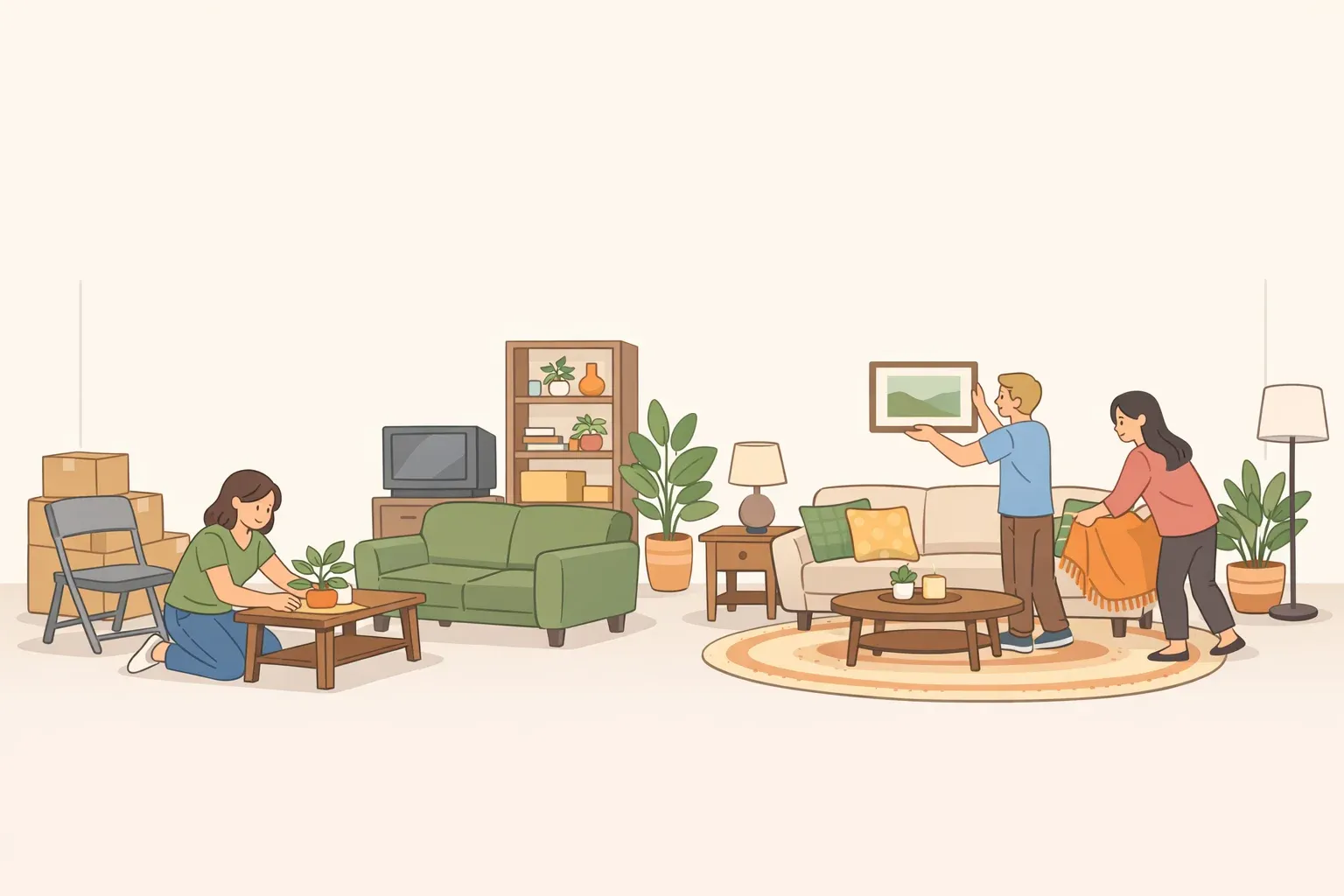
Most first apartment living rooms share the same problem: they're functional but unconsidered. Furniture that arrived by accident, hand-me-downs and whatever fit, arranged by default rather than design. The room works, technically. It just doesn't feel like anyone's. A first apartment living room makeover doesn't have to mean replacing everything. It means replacing the thinking behind the room.
Before you spend a dollar: diagnose what's making the room feel off
The most common mistake in a living room refresh is buying something new before understanding what the room is missing. Three culprits account for most of the problem in most first apartments: a layout that defeats itself, bare walls that signal no one has settled in, and lighting that makes everything look flat.
Walk the room and put three things to a simple test. Does the furniture create a natural place to land, or does it drift toward the walls? Is there anything on the walls that reflects who lives here? Does the light feel warm in the evening, or clinical? Whatever fails worst is where you start. Everything else waits.
Don't buy anything yet. The next step costs nothing and often produces the most visible change.
Step 1 (free): rearrange the furniture to anchor the space
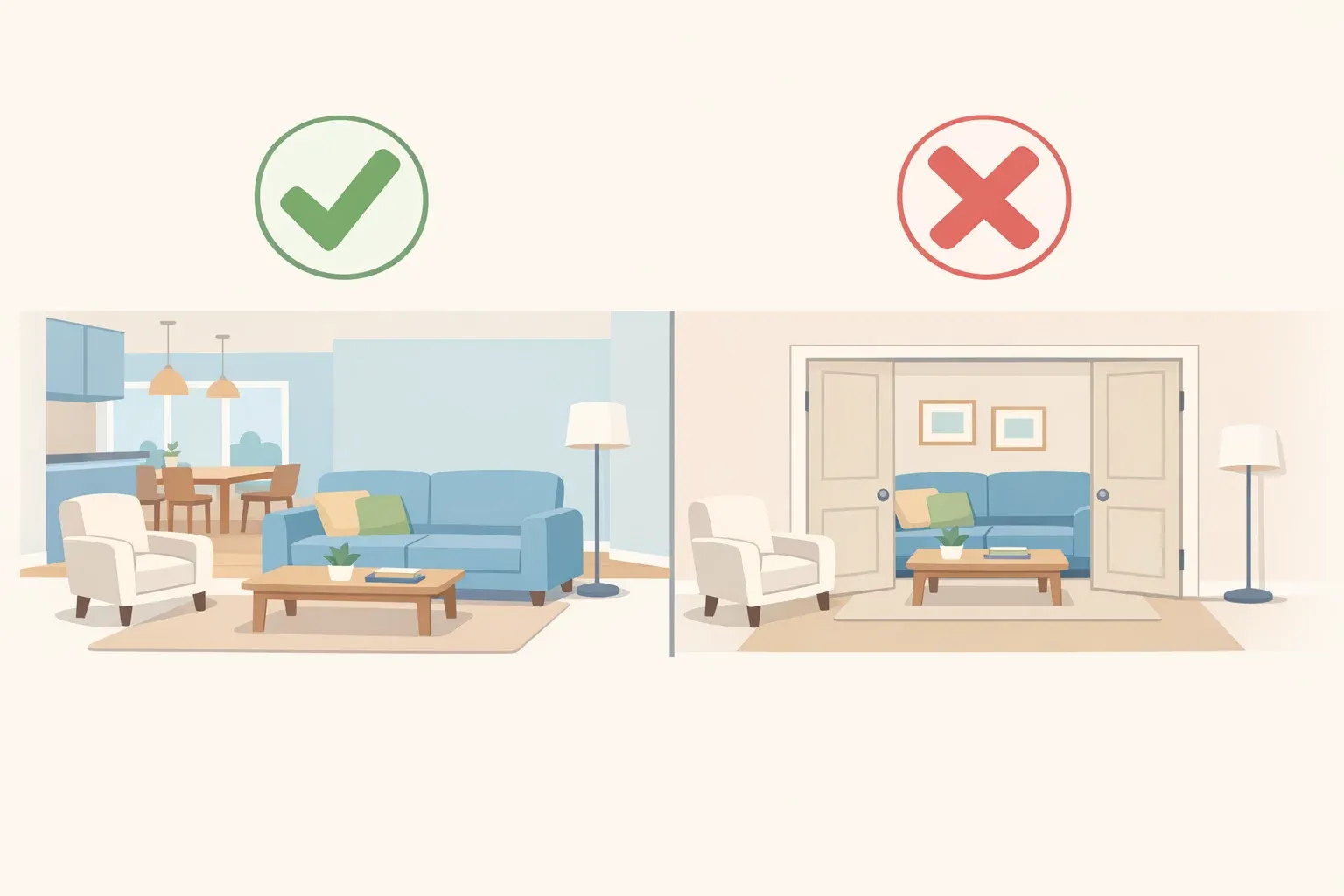
A sofa against the wall tends to feel like furniture that hasn't found a home yet. It pushes seating to the perimeter and leaves the center of the room empty and purposeless.
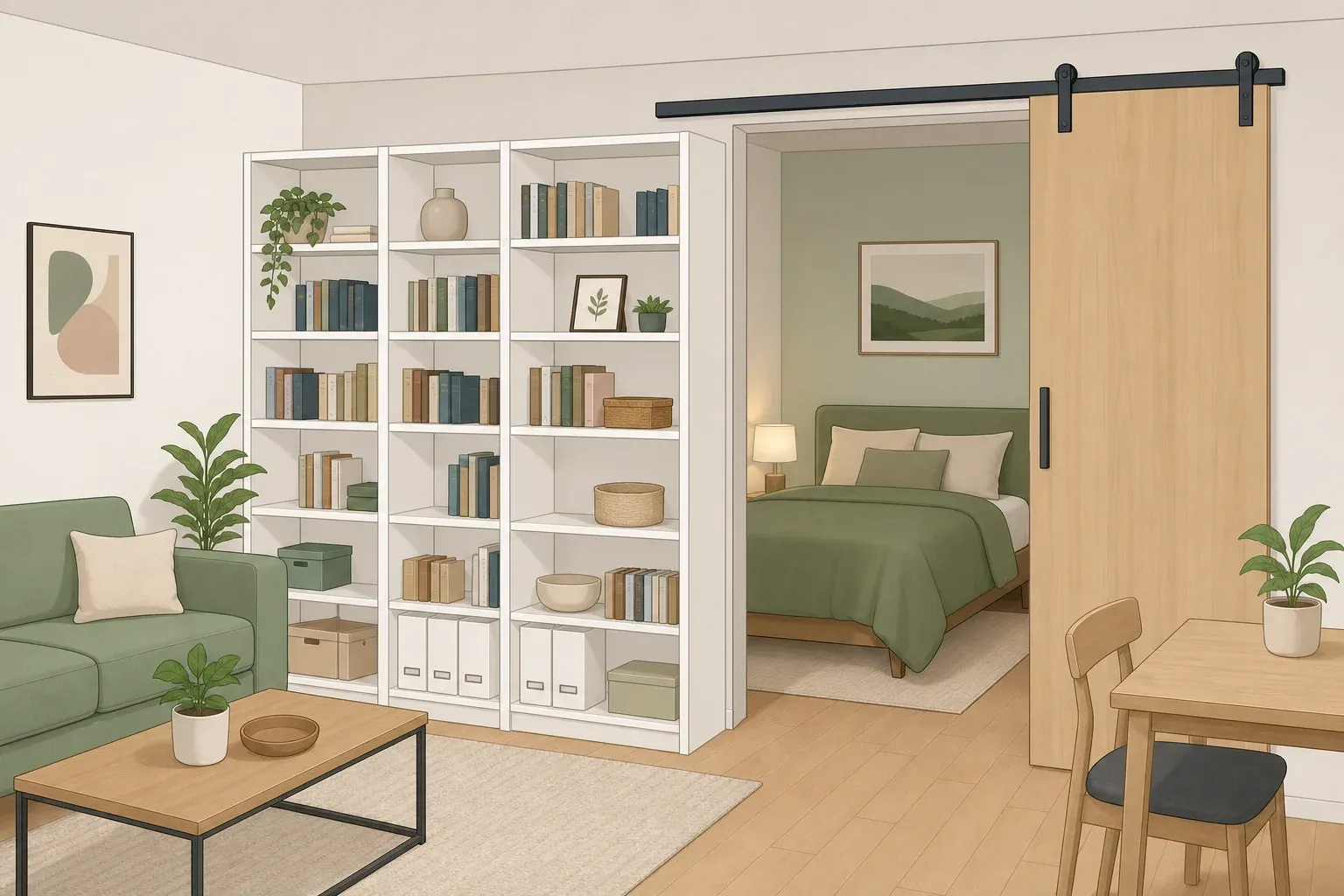
Pull the main seating piece forward and orient it toward a focal point, a window, a television, a large piece of art you're planning to add. The arrangement should define a zone. If there's a rug, use it to anchor that zone: furniture legs on the rug, not floating beside it. A rug that's too small to reach under any leg reads like an afterthought; try to get at least the front legs of the sofa and chairs onto it.
Avoid centering everything by default. In smaller rooms, a slightly asymmetric arrangement often feels more deliberate and less like furniture left wherever the movers stopped. Try a few configurations before committing. It can take one try to find what works, and reassessing in a week costs nothing.
When it does come time to buy something, look for pieces that solve two problems at once. Multifunctional pieces reduce visual clutter without sacrificing function. But evaluate the layout before buying anything. A lot of first apartment living rooms look worse because of where the furniture sits, not what it is.
Step 2 (low cost): add warmth through color and window treatments
Once the layout works, address how warm or cold the room feels. Bare white walls aren't neutral. They amplify every unresolved element around them, making hand-me-down furniture look more mismatched and making empty corners look emptier.
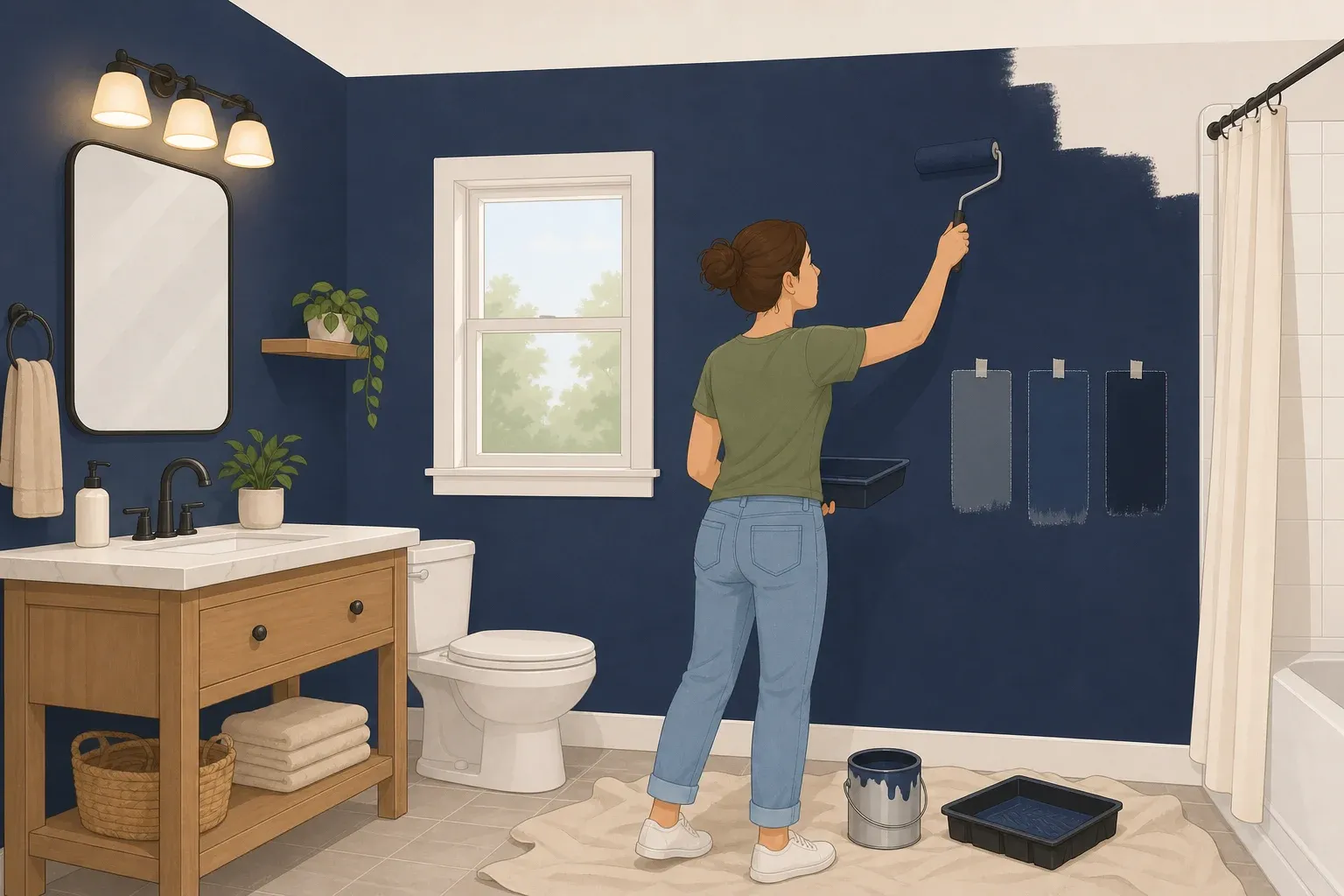
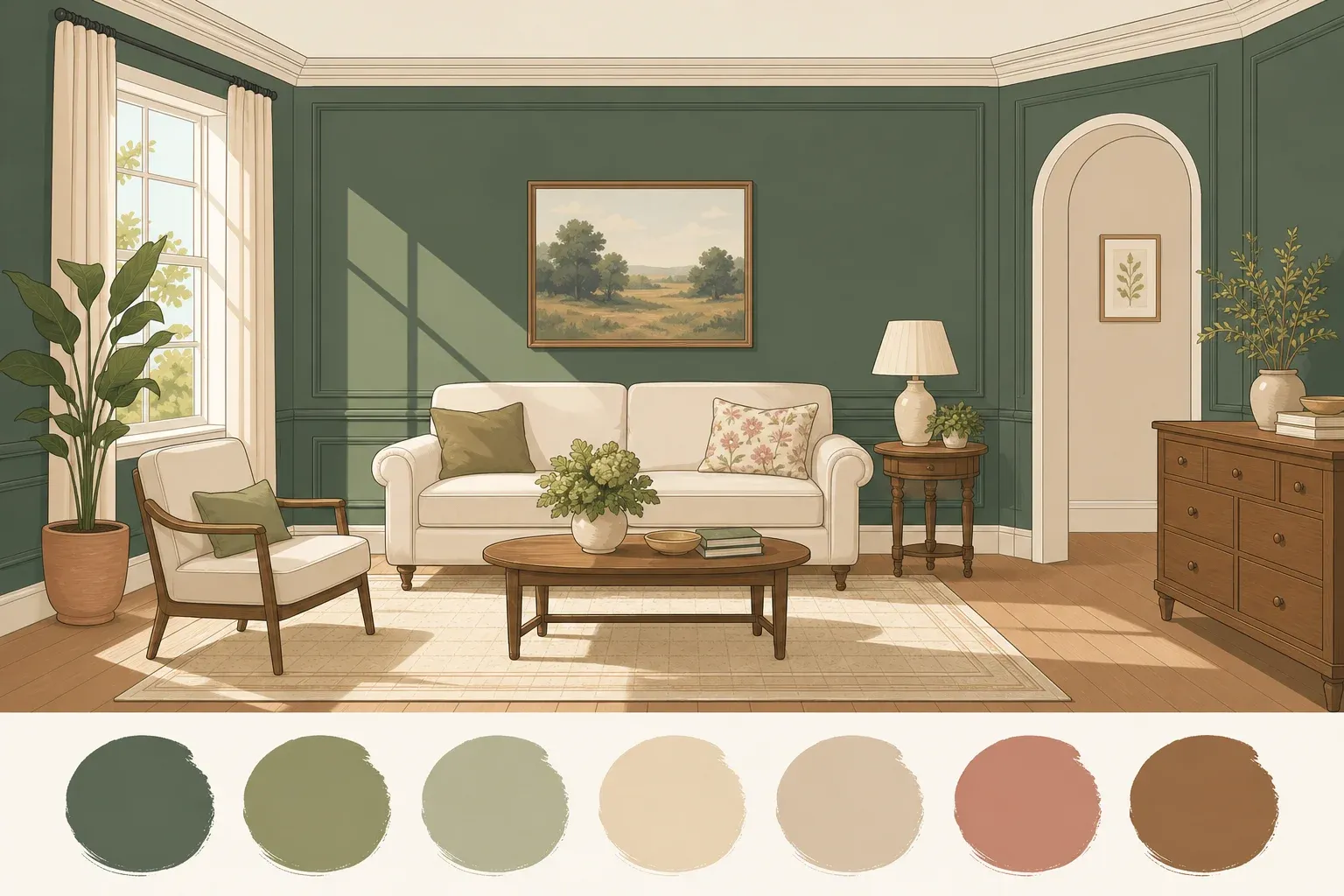
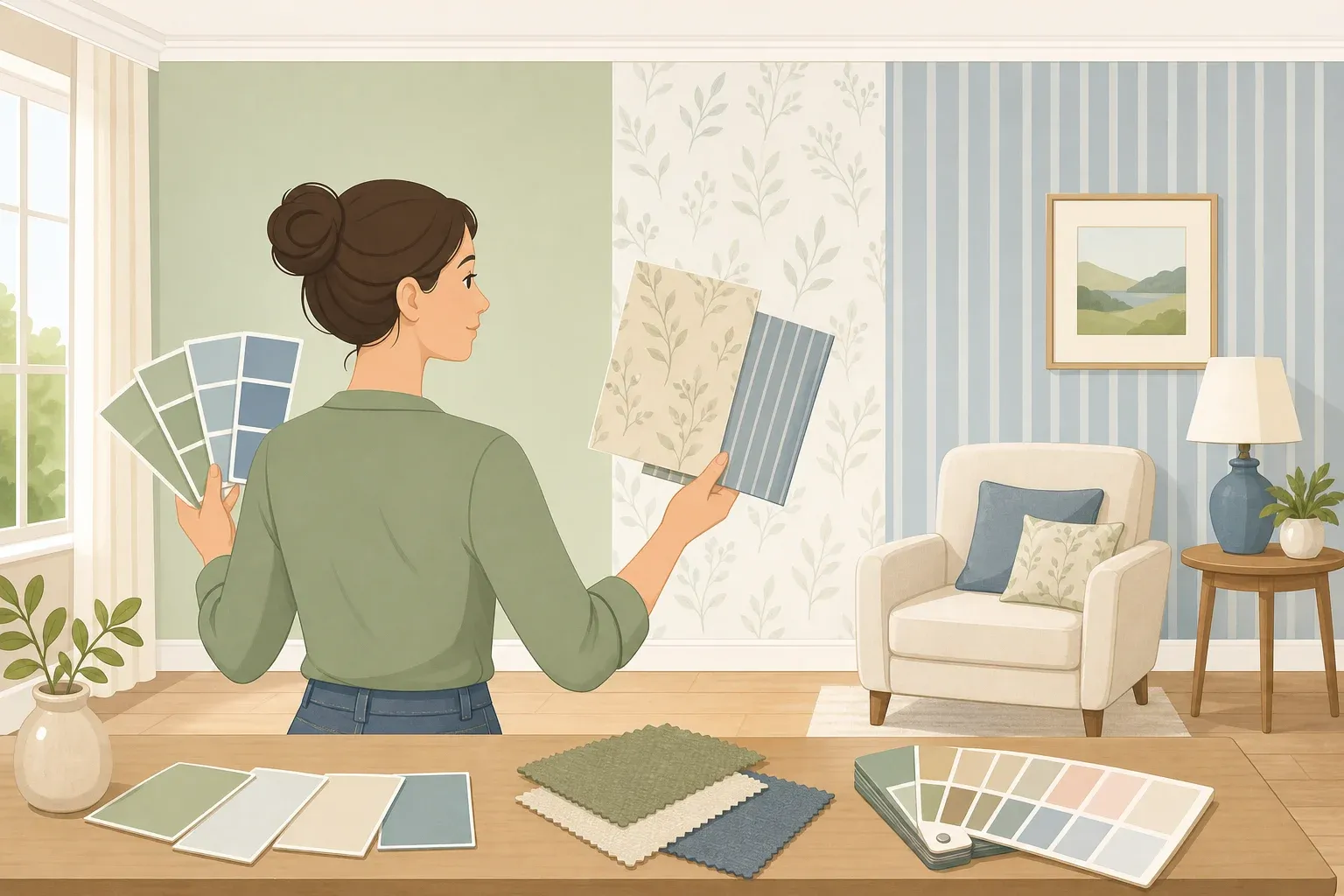
For renters who can paint: a muted, mid-tone wall color carries most of the weight. Colors with warm undertones, sage, terracotta, warm white, dusty rose, tend to read better in rooms that already feel cold than cooler grays and blues do. That's editorial guidance, not a rule, but it's a reasonable place to start.
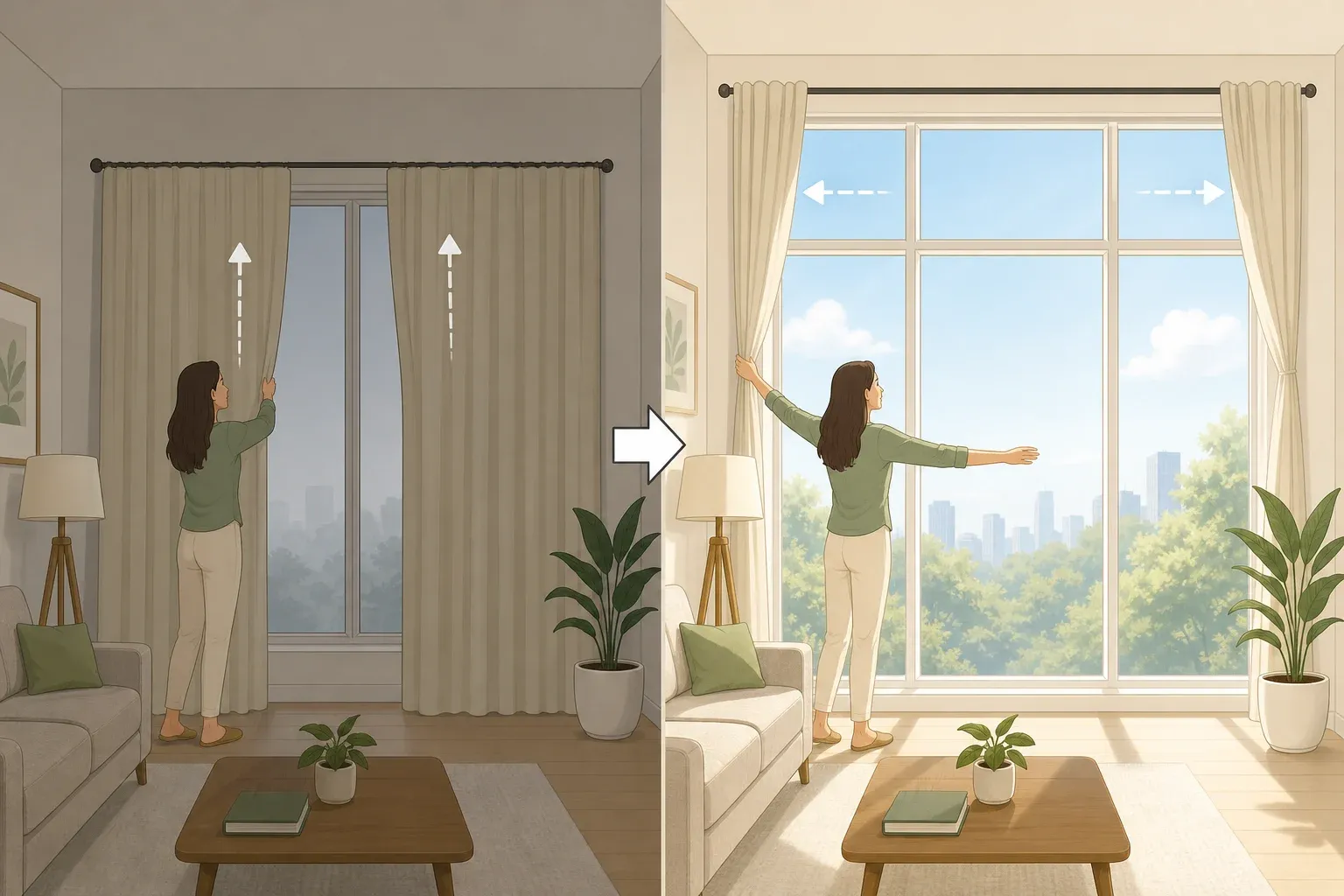
If painting isn't an option: textiles do similar work at lower cost and zero lease risk. A large area rug grounds the seating area; curtains hung 4 to 6 inches above the window frame and extended 6 to 12 inches past the frame on each side make the room feel taller and the window larger. Throw blankets and cushions in a consistent color temperature, all warm or all cool, pull mismatched hand-me-downs into a visual family without replacing them.
Window treatments are worth prioritizing. The detail matters because a window is one of the places your eye naturally returns to. Tension-mounted shades and curtain rods with damage-free hardware work in most rentals and come down cleanly.
One practical note for renters who do get permission to paint: photograph the original wall color and note the existing paint code before you start. You'll need to match it on the way out.
Step 3 (low cost): fix the lighting
Most apartment overhead lighting is built to illuminate a room, not to make it comfortable to be in. A single ceiling fixture produces flat, even light with no depth. The fix is layering: add secondary sources at lower heights to create warmth and variation.
A floor lamp beside the main seating area is a straightforward starting point, casting light at eye level rather than from above. It's renter-safe, reversible, and relatively inexpensive for what it changes about the room.
Check your lease before drilling anything for pendant hardware or window treatments. Most lease agreements address this, and the answer varies.
Step 4 (essential, any budget): put something personal on the walls
This is the step that converts a functional room into one that feels inhabited. An empty wall is the clearest signal that a space hasn't been claimed yet.
Start above the main seating. Scale matters here: a small print on a large wall reads like an accident and often makes the problem worse. As a rough guide, the piece or arrangement above a sofa should span roughly two-thirds of the sofa's width. A large framed print, a canvas, a textile, or a gallery arrangement treated as a single unit all work. What doesn't work is anything that gets lost against the wall.
The most useful art is specific rather than decorative. Personal photographs, secondhand framed prints, architectural drawings, framed fabric. What they share is particularity: they say something about the person who hung them, which is exactly what a "first apartment" room is missing.
Hang at eye level when standing, roughly 57 to 60 inches from the floor to the center of the piece. The most consistent mistake is art hung too high, which disconnects it from the furniture below and makes the whole wall feel unanchored.
Where to go from here
If there's a budget and time constraint, here's how to sequence it: spend the first weekend on layout only, no cost. In the first month, address color and window treatments, and textiles, if painting isn't allowed. Lighting comes next: a floor lamp and any switch plate or shade upgrades. Walls last, but treat them as urgent rather than optional.
The sequence matters because each step makes the next one more readable. Art lands better in a room that's already warm. Lighting works harder once the layout gives it something to illuminate. Start with the furniture, and everything downstream gets easier.

Comments
Be the first, drop a comment!