



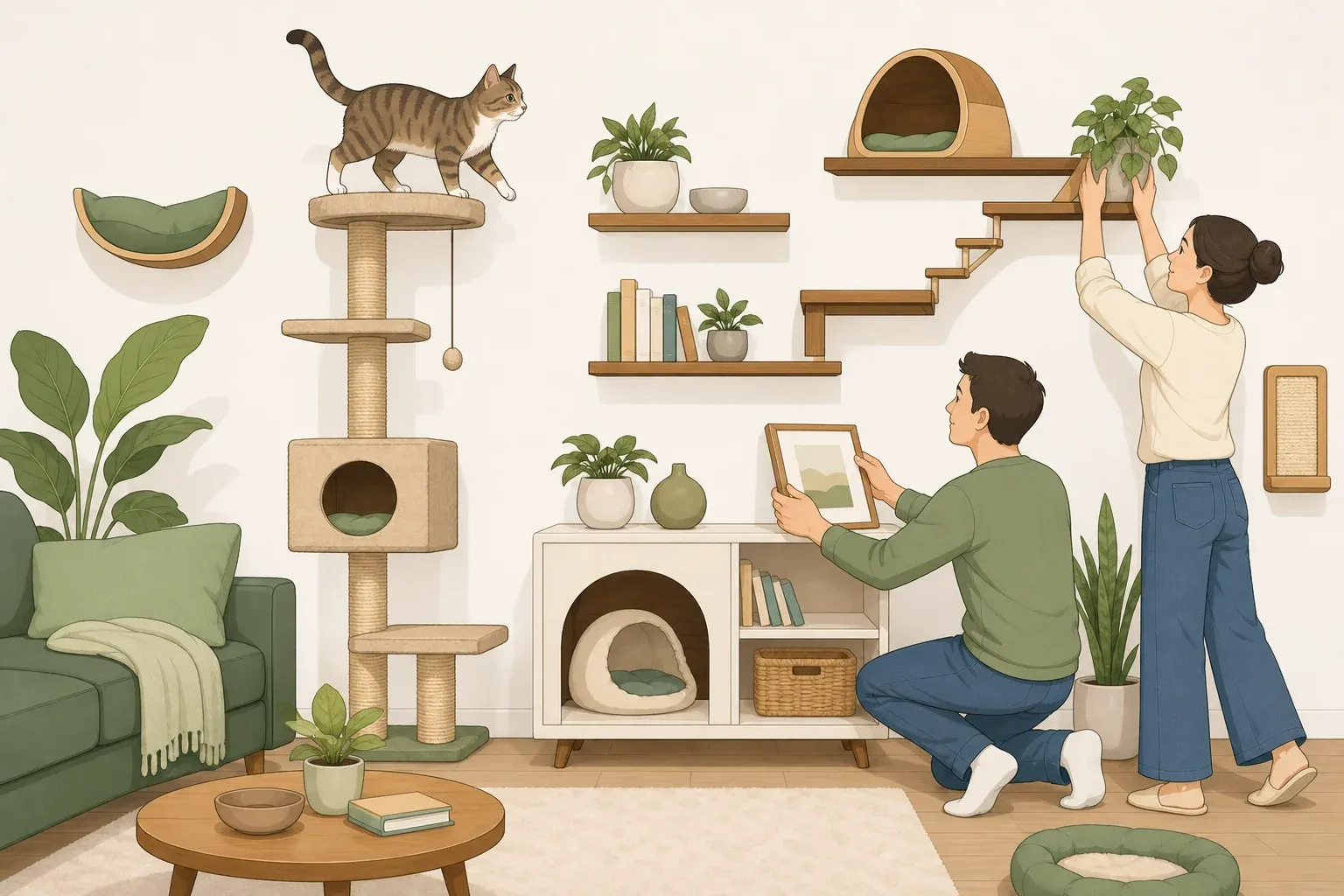
Cat-Friendly Home Decor Ideas: A Room-by-Room Guide
Cat owners hear a lot about choosing between a stylish home and a cat-friendly one. Good cat-friendly home decor ideas don't actually require that trade-off; they require recognizing that most living rooms, bedrooms, and kitchens weren't built with a climbing, scratching, hiding animal in mind, according to International Cat Care, updated last year.
Without a way to climb, scratch, hide, and play, cats can develop boredom, anxiety, and health problems linked to inactivity, including obesity, the same source notes. Minimalist interiors are especially mismatched to a cat's instincts; a home with a bit more visual layering, shelves, nooks, elevated perches, tends to suit them better.
This guide works through cat-safe home decor room by room: where to add height and scratching surfaces in the living room, how to build hideaways and raised beds into the bedroom, where food, water, and litter trays actually belong, and which houseplants are safe around a curious cat. Think of it as pet-friendly interior design for cats, not a separate aesthetic bolted onto a nice room. The furniture and placement changes below are beginner-friendly DIY; wall-mounted shelves just need to go in safely, and renters should lean on freestanding furniture instead of permanent mounting.
What you'll need
- A tape measure, to check ceiling height and clearance along climbing routes
- A cat tree, tower, or set of freestanding shelves sized to the room
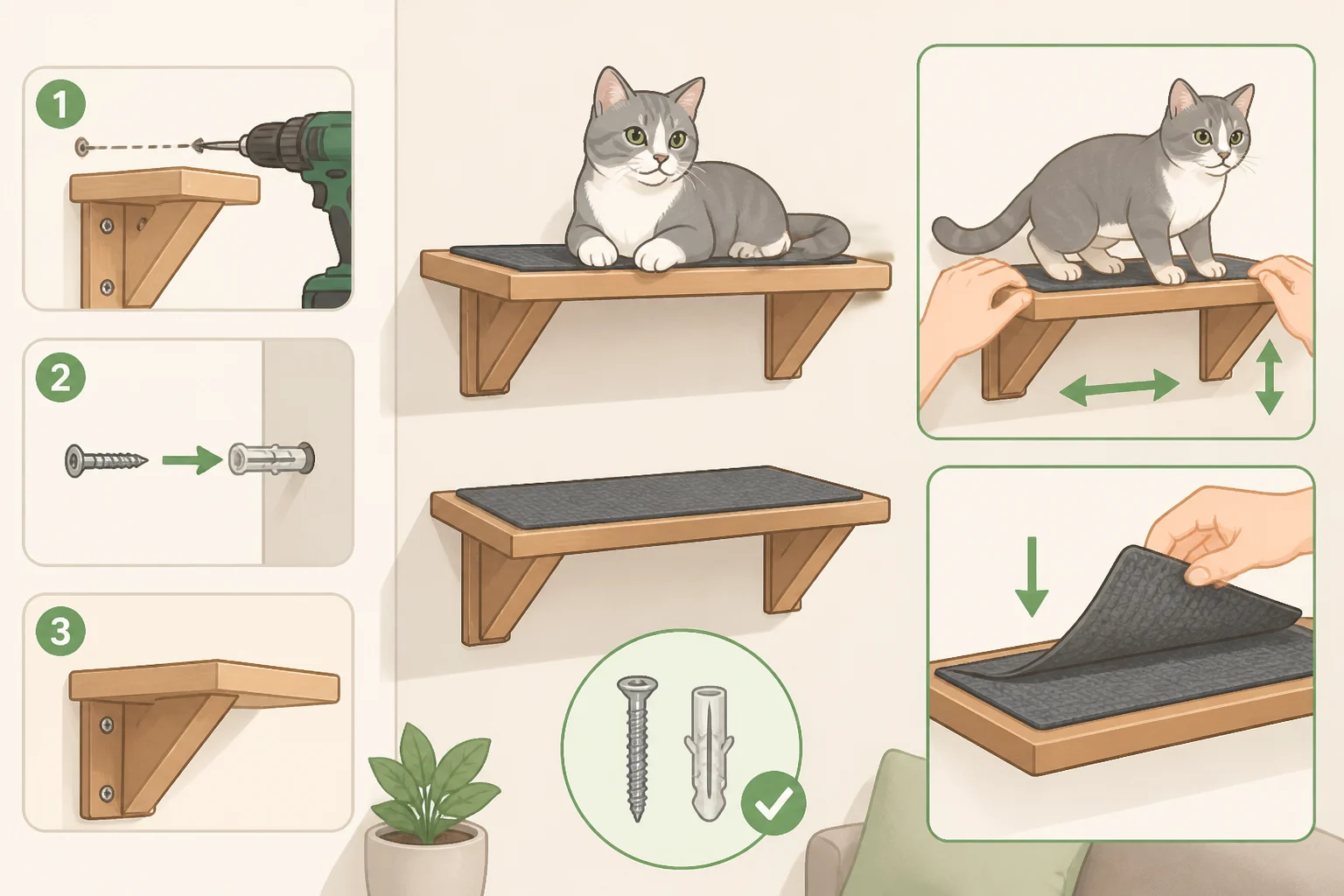
- Wall anchors rated for the shelf's weight, plus the shelf manufacturer's mounting hardware and instructions, if installing anything into drywall or plaster
- A non-slip surface, such as outdoor carpet or a sisal mat, to add grip on top of a wooden shelf; this covers the landing surface only and doesn't substitute for proper wall hardware
- A few washable throws or blankets for warming up a resting spot
- A lidded storage basket or drawer for rotating toys out of sight
- Wide, shallow ceramic or glass bowls for food and water
Before letting a cat onto any mounted shelf, press down on it and confirm it doesn't flex, wobble, or pull away from the wall. Use cat-safe home decor materials and properly anchored furniture in high-traffic areas; a shelf that shifts under weight is a fall risk no decor win is worth.
Map your cat's resources before you shop
Walk through the home with a notebook before buying anything. International Cat Care recommends treating food and water bowls, scratching surfaces, and litter trays as resources to plan for, not clutter to hide: a minimum of one of each per cat, plus one spare, spread around the home rather than clustered in a single corner. Beds work a little differently; cats do best with a few sleeping options in different spots rather than a strict per-cat count.
Crowding resources together matters most in multi-cat households, since it can push cats into competing over access, which can lead to fighting or long-term stress, per International Cat Care.
Material choices affect both looks and comfort. Wide, shallow ceramic or glass bowls give a cat's whiskers room to avoid touching the sides, and some cats find the faint smell of plastic off-putting, per International Cat Care. Glass also lets a cat see where the water line sits.
Before shopping, list what each cat already has access to, room by room. Most gaps show up as "no litter tray upstairs" or "one bowl for three cats," not as "needs more throw pillows."
Living room: vertical space, scratching, and play
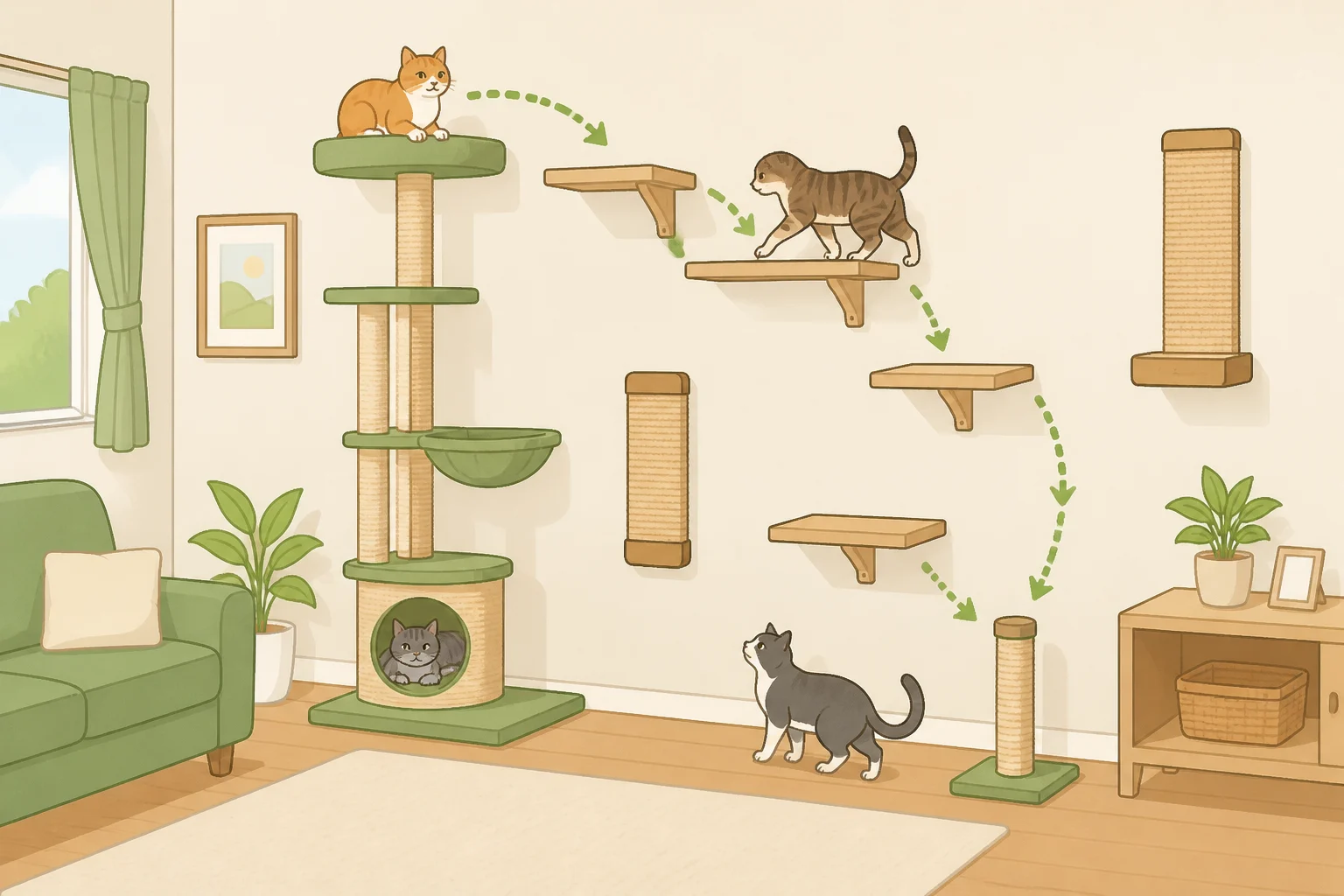
Add height on purpose, not as an afterthought. Cats are natural climbers that feel safest watching a room from above, and a cat tree, wall shelf, cleared section of a bookcase, or an accessible cupboard top all work, as long as the cat has an easy way down, according to International Cat Care.
Mount shelves with a non-slip surface on top, since most wood finishes are slippery underpaw. For anything above a single easy jump, add a lower piece of furniture as an in-between step, especially for older cats or multi-level setups.
Cats need to scratch to maintain their claws and mark territory. Without a suitable surface, they'll use the furniture instead. Offering a few different materials, sisal, cardboard, carpet, mounted vertically or laid flat, can make furniture damage less likely while showing which texture a particular cat prefers, according to International Cat Care and the American Animal Hospital Association.
Place scratchers near the busy parts of the room rather than a tucked-away corner. AAHA notes that positioning scratchers in high-traffic spots helps a cat's marking instinct land where it actually matters to the cat.
Toys left out constantly lose their appeal fast. Store them in a covered basket or drawer and rotate what's available rather than leaving the full collection scattered across the floor; International Cat Care notes that toys which stay out and motionless quickly become predictable and boring. There's no fixed schedule for rotation. Watch for a cat ignoring toys it used to chase, and swap in something that's been out of sight for a while.
Bedroom: hideaways, raised beds, and washable textiles
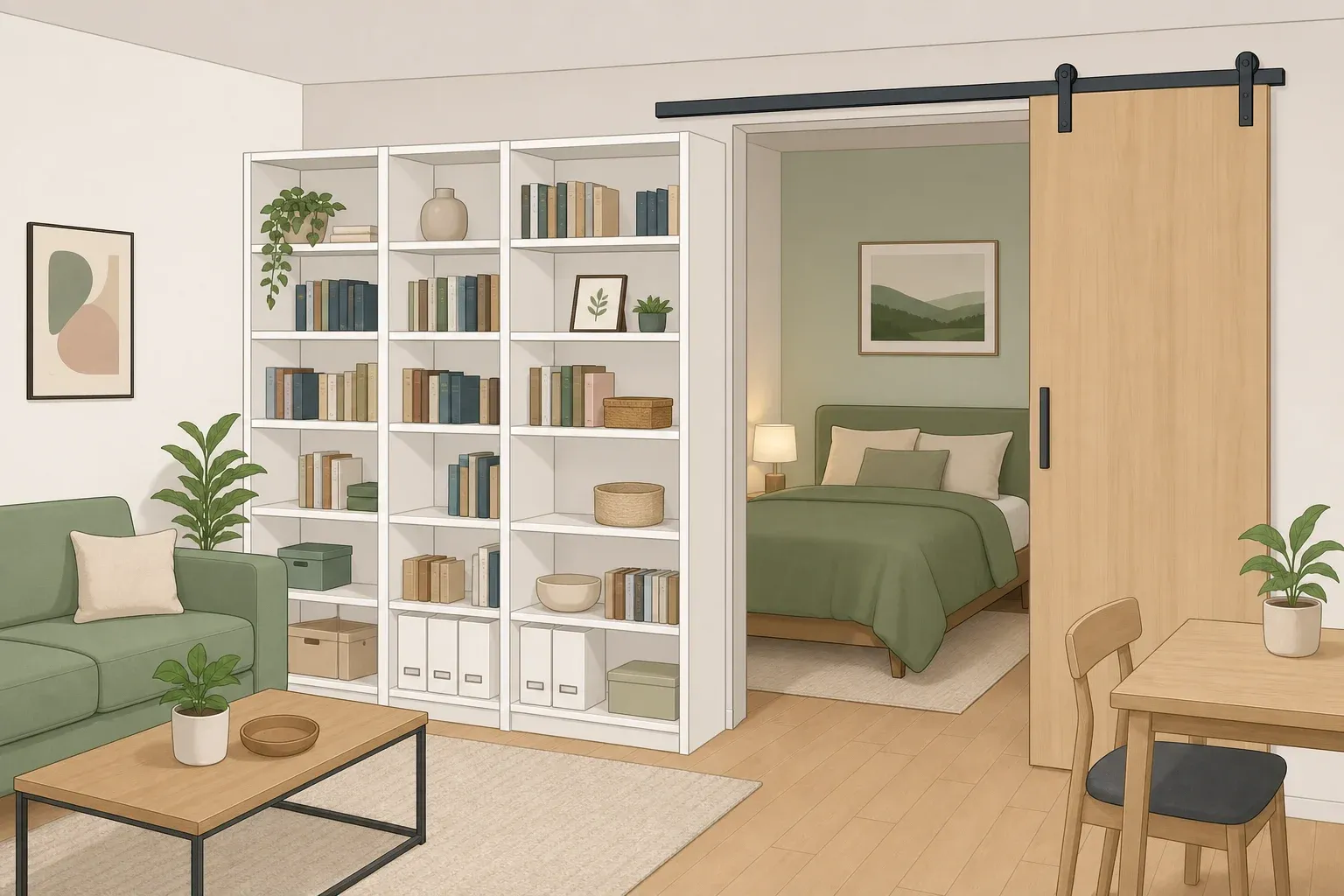
Build hideaways into furniture that's already there. Clearing space under the bed, inside a wardrobe, or behind a dresser gives a cat a private retreat without adding a single visible "pet item" to the room.
International Cat Care notes that taking time out from social demands is a normal part of a cat's day. Once a cat starts using a hideaway, leave it alone unless something about its behavior suggests it isn't well.
Skip the dedicated cat bed unless it genuinely fits the room. Cats often choose a sofa cushion, an armchair, or an owner's bed over anything marketed specifically to them, and a washable throw placed in a cat's already-favorite warm, raised spot can accomplish the same thing without adding clutter. Wash it only when it's visibly soiled; cats gravitate toward their own scent, and washing a blanket too often just makes the spot less appealing, per International Cat Care.
Kitchen or dining area: food and water placement
Feeding and water bowls can sit in plain view and still look intentional. The wide, shallow ceramic or glass bowls from the materials list read as kitchenware rather than pet gear.
Keep water far enough from the food bowl that crumbs can't easily fall into it. International Cat Care flags contaminated water as a common reason cats drink less than they should.
For stylish home decor for cat owners with more than one cat, feed each cat in a separate spot out of sight of the others. Cats are solitary feeders by nature, and a shared feeding station can increase competition or stress even when nothing looks like a fight is happening.
Bathroom, laundry room, or utility space: litter tray placement
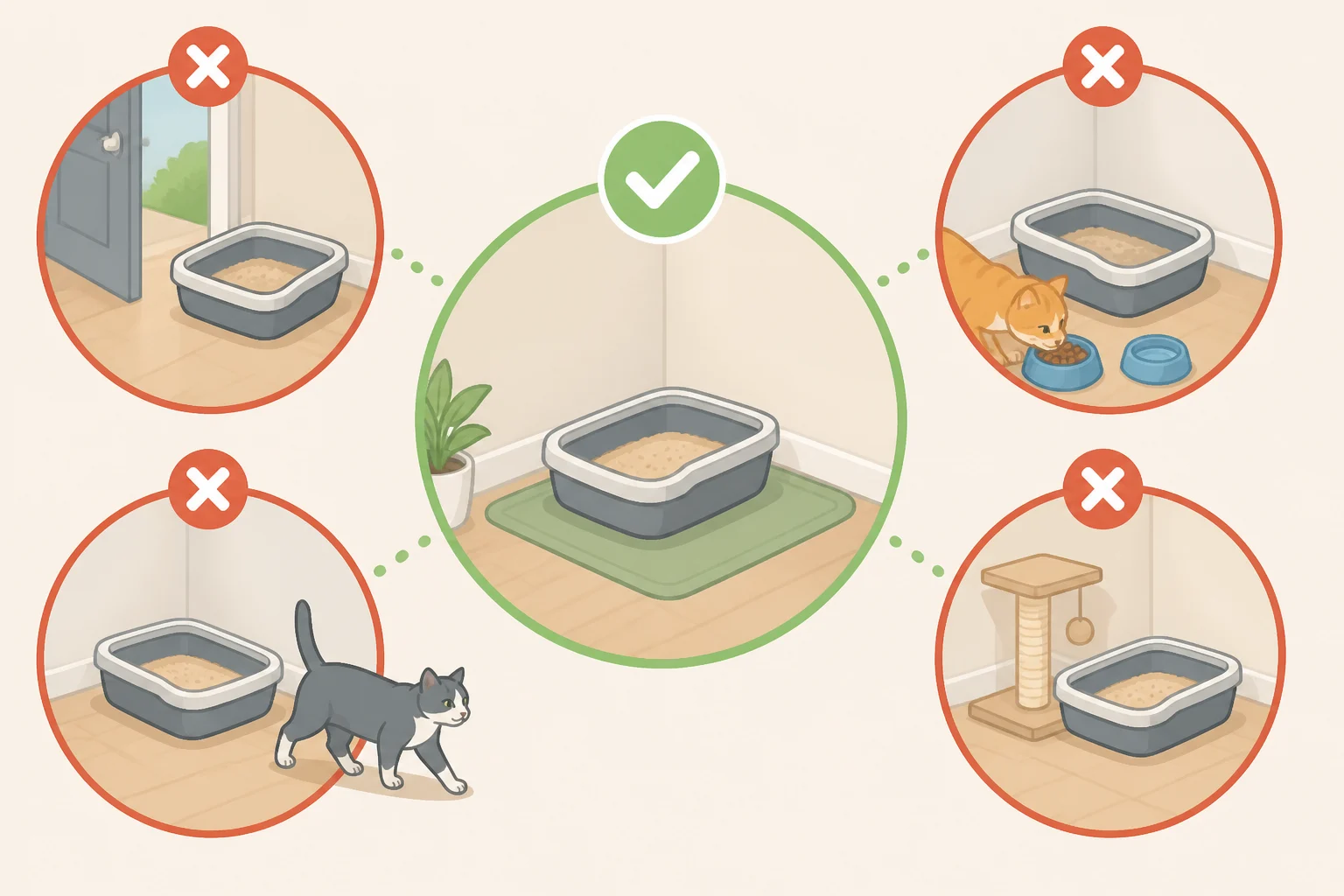
Put litter trays in a quiet, discreet corner away from food, water, full-length windows, and high-traffic walkways, International Cat Care advises. Cats treat exterior doors and cat flaps as potential threat zones, so keeping trays well away from those areas helps a cat feel safe enough to actually use one. Never place two trays side by side; some cats read a pair as a single resource and will avoid both if one is soiled.
Keep the tray itself clean no matter where it sits. International Cat Care recommends removing soiled litter at least twice a day and washing the whole tray weekly, skipping strongly scented cleaners, since cats tend to avoid both scented litter and heavily perfumed trays.
For senior cats, accessibility matters as much as discretion. Trays should have at least one low side so a cat can step in without a real climb, and ideally a tray belongs on every floor of the home. International Cat Care's home modification guide estimates osteoarthritis affects around 60% of cats over age 6, rising to as many as 90% of cats over 12.
If an older cat suddenly struggles to reach a tray it used without issue before, that should prompt a conversation with a veterinarian rather than an assumption that the cat has simply changed its mind.
Any room with windows: cat-proof home decor ideas for glass and perches
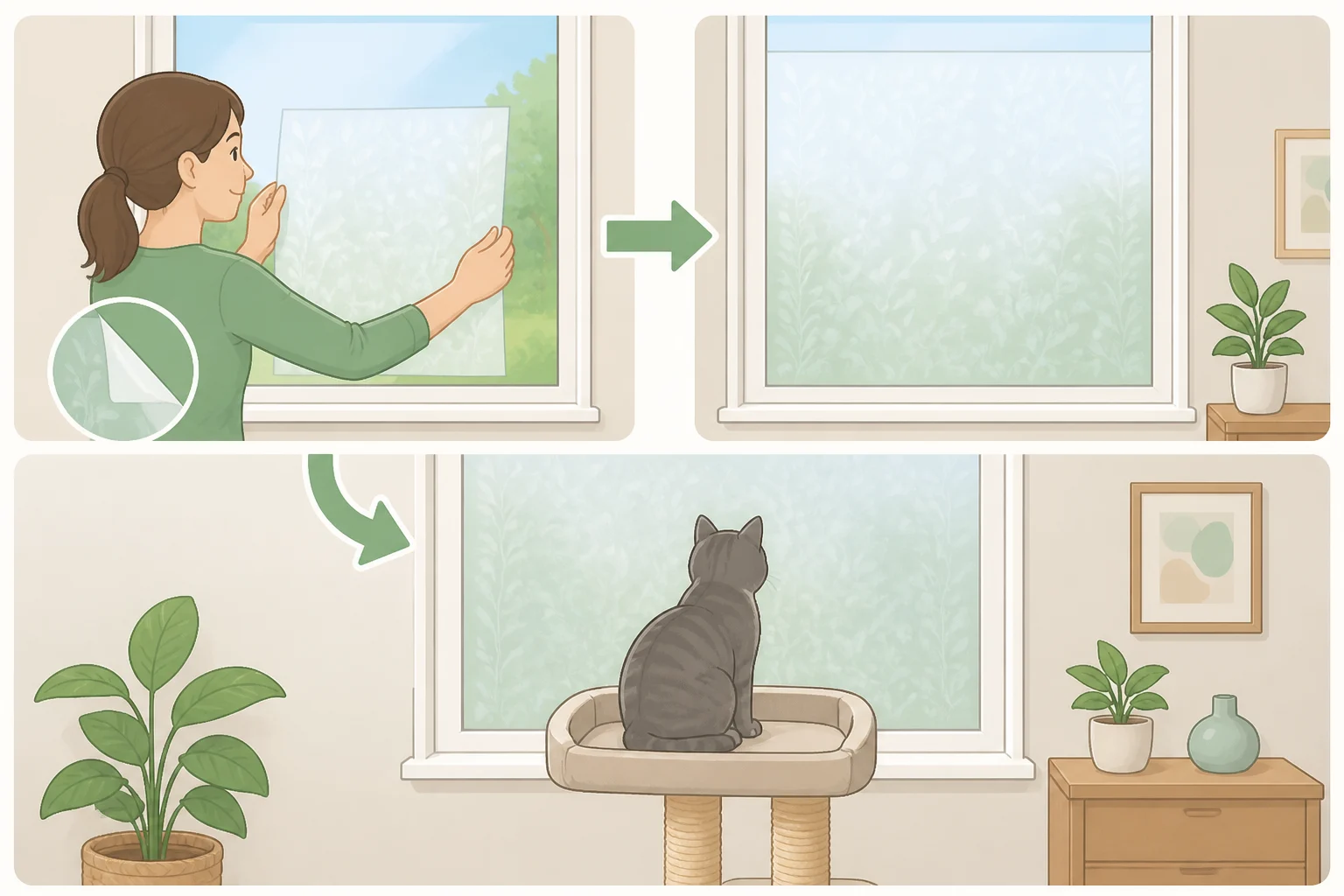
Large, full-length windows are a problem for some cats, not every cat, since they can see outdoor movement without any sense of cover between themselves and whatever's out there.
If a cat seems tense or avoidant around a big window, International Cat Care suggests applying decorative static film to the lower portion of the glass, which can help a cat feel less exposed. Pair it with a perch nearby so the cat has a safe vantage point instead of standing at floor level.
Potted plants near a window can double as camouflage too, helping an anxious cat feel less exposed while looking outside, as long as the species is verified pet-safe first. That verification is covered below.
Cat-safe houseplants and decor
Cats commonly investigate anything new in the house by sniffing, licking, chewing, or eating it, so any plant within reach needs to actually be verified safe, not just assumed decorative because it's sold at a garden center, ASPCA warned earlier this year.
Some common decorative plants should never come into a home with a cat at all. Lilies, including Lilium and Hemerocallis species, are lethal to cats; even brushing against the pollen and grooming it off later can cause kidney failure or death. The safest move is to keep lilies, cut flowers included, out of the house entirely rather than trying to place them out of reach.
Sago palms are sold in many garden and hardware stores as a decorative houseplant, but every part of the plant is toxic, and ingestion can lead to severe illness, including liver damage and death, with the seeds carrying the most concentrated risk.
Tulip and daffodil bulbs are toxic too, with the bulb itself the most concentrated risk if a cat digs one up or chews on it, according to ASPCA's gardening safety guidance.
For cat-safe houseplants and decor that doesn't carry that risk, ASPCA lists roses, sunflowers, zinnias, gerbera daisies, snapdragons, orchids, African violets, Boston ferns, spider plants, and zebra haworthia as non-toxic. Even on that list, any plant can cause mild stomach upset if a cat eats enough of it; "non-toxic" means low risk of serious harm, not an invitation to let a cat graze freely.
If a cat is ever suspected of eating a plant that might be toxic, contact a veterinarian or the ASPCA Animal Poison Control Center at (888) 426-4435 right away rather than waiting to see if symptoms show up.
How to tell the setup is working
Give any changes a week or two, then check for these signs:
- The cat uses the new perch or shelf without slipping or hesitating at a difficult jump.
- The scratching surface shows actual wear, and scratching on furniture drops off.
- Each litter tray stays quiet and accessible, with no two trays sitting side by side.
- Food and water bowls stay clean, with no food debris drifting into the water.
- The cat can get in and out of every hideaway without being cornered or blocked.
- Any new plant has been identified by its botanical name and checked against a toxic-plant list before it came through the door.
If something isn't getting used, don't assume the cat dislikes the item itself. Check placement first: too close to the cat flap, a window, or another resource can be enough to make a cat avoid an otherwise fine spot.
Finish-line guidance
A cat-friendly home isn't one where pet gear disappears. It's one where resources are spread around, scratching and climbing needs are met somewhere visible and usable, and the genuinely dangerous plants, lilies especially, simply aren't in the house.
In multi-cat households, recheck resource counts periodically rather than just once at setup. International Cat Care notes that competition over limited resources can arise once cats reach social maturity, usually somewhere between 18 months and four years old.
If an older cat starts hesitating at a jump it used to make easily, or missing a litter tray it used reliably before, that's worth a veterinary conversation rather than another round of redesign. A veterinarian can help determine whether pain or mobility changes are contributing, rather than guessing from furniture placement alone.
None of this requires matching "pet furniture" collections to pull off. A cleared bookshelf, a washable throw on a favorite chair, and a few inches of adjusted bowl placement do the same job as anything built specifically for a cat.








Comments
Be the first, drop a comment!