



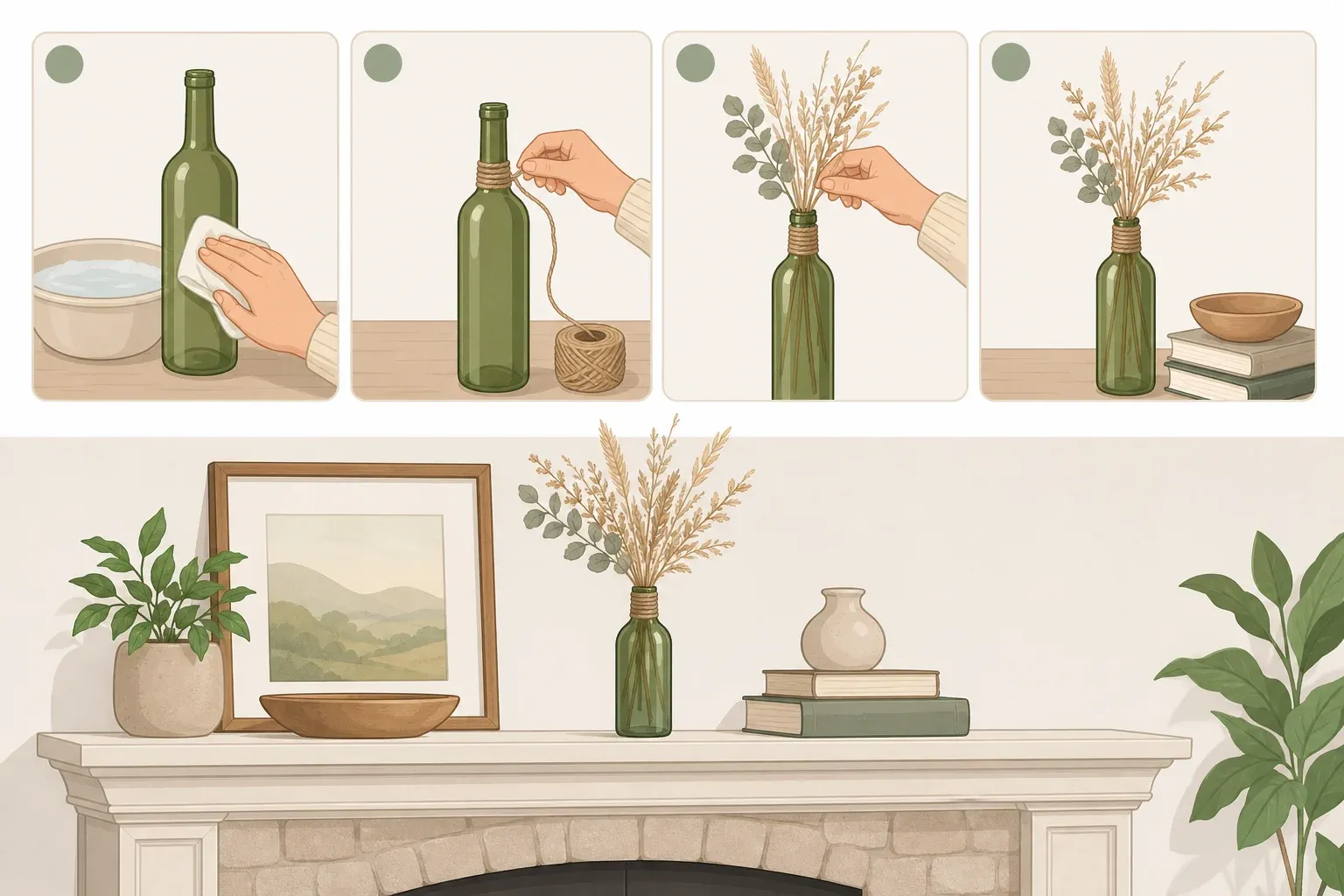
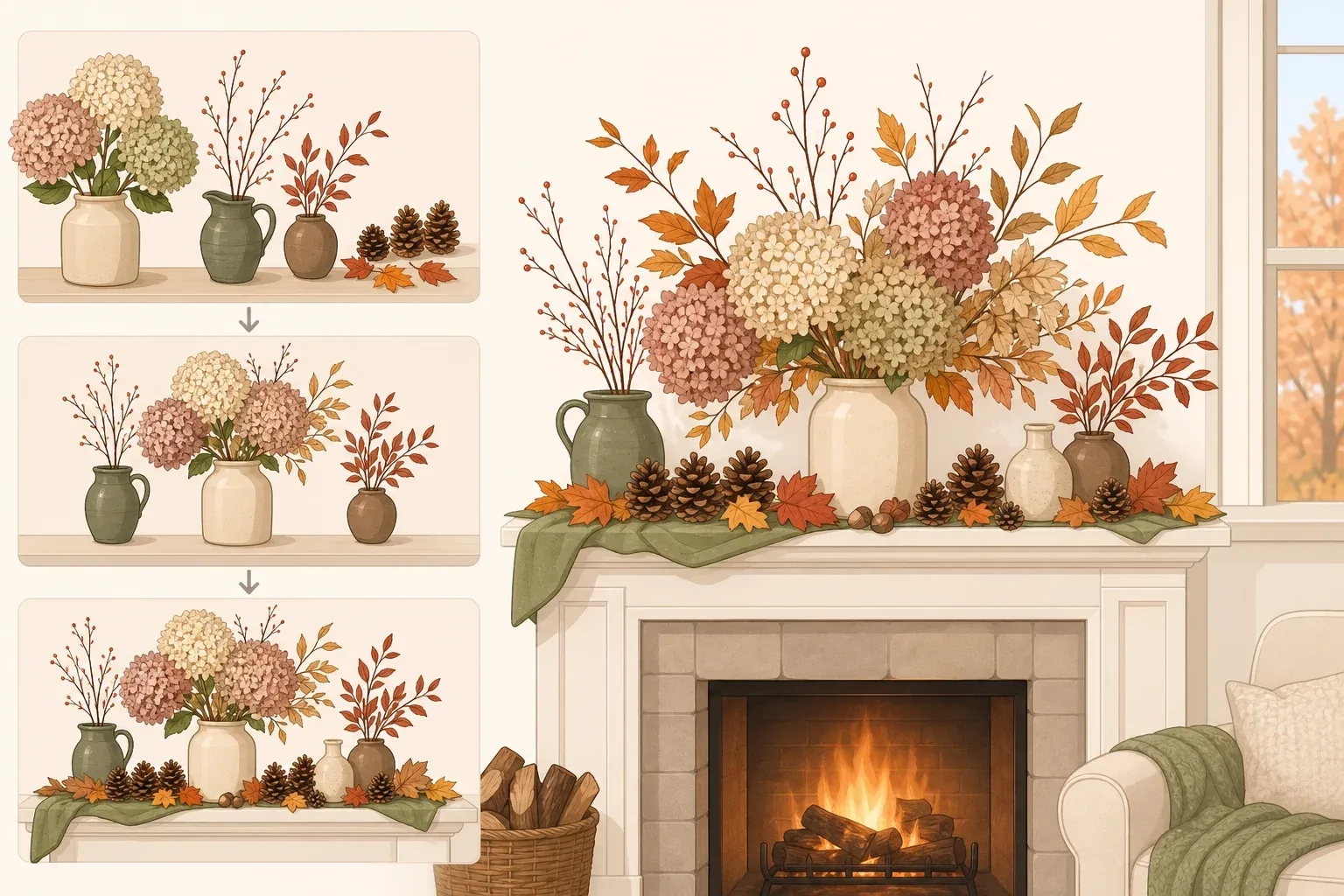
A mantel vignette with one sculptural bottle, a dried stem and deliberate off-center placement can look pulled from a design book without starting on a store shelf or a saved Pinterest board.
This project starts with a single AI-generated reference image, turns that into three visual cues, then rebuilds those cues with inexpensive materials. The goal isn't to reproduce an AI image exactly. It's to borrow its silhouette, color tone and spacing and use them as a starting point.
One thing comes first: fireplace safety. If the mantel sits above a fireplace or insert that gets used, check that model's manual before placing decor there. Fireplace manufacturers specify different clearances for combustible materials, and heat can also damage objects placed on or above a mantel.
Before you start: fireplace check and materials
Check the fireplace or insert manual before gathering anything else. If it does not permit the objects you plan to use in that location, remove them before operating the fireplace.
Dried stems, books and wood risers are combustible. Paint, glass and adhesive products can also be affected by heat even when they are not themselves the main fire risk.
Before buying or gathering materials:
Check the fireplace or insert manual for mantel clearances and restrictions.
Measure the mantel's width and the space between its surface and anything mounted above it.
Decide whether to paint the bottle or leave it as-is.
Gather the bottle, stem, riser and any painting supplies needed.
Use those measurements when generating the AI reference image.
This is a beginner-friendly project that requires no power tools. Allow about an hour of active work, plus any paint drying or curing time.
You'll need:
A thrifted glass bottle or bud vase with a simple silhouette
Paint specifically labeled for use on glass, if you want to change the finish
One dried stem, grass or clean, fully dried branch
A small wood block, book, coaster or similar riser
Painter's tape and something to protect the work surface
If the bottle already fits the color palette, skip the paint entirely. The shape and placement matter more than forcing a particular finish.
Keep the project decorative. Nothing needs to be attached to the mantel, surround, firebox, flue or fireplace insert.
If an AI-generated image shows built-in shelves, recessed lighting, a rebuilt mantel or other structural changes around the fireplace, use those details as visual inspiration only rather than adapting them into this project.
How to use AI for interior design ideas without copying the image
Generative image tools can help you explore a composition before shopping, but treat the result as a sketch rather than a construction plan.
A 2025 PLOS One study tested an interior-design-specific diffusion model against Midjourney, DALL-E 3, Stable Diffusion and two other models. Twenty interior design researchers and professionals rated results across 20 prompts for visual appeal, prompt relevance and practical usability.
The specialized model recorded a win rate above 62% against the other systems in that particular study. That shows a purpose-built model can perform well for interior-design generation, but it does not establish that every design-focused AI tool will outperform a general image generator.
For this project, the specific generator matters less than the prompt and what you take from the result.
Build the prompt around your actual space. For example:
"Minimalist mantel vignette, 36-inch mantel, white surround, neutral clay tones, one tall bottle and one dried stem, asymmetrical placement, no built-ins, no wall changes."
Replace the example dimensions and colors with your own.
Generate several versions. Reject anything that depends on impossible proportions, too many objects or structural changes you do not intend to make.
Once you find a useful reference, pull only three things from it:
Silhouette: Is the main object tall and narrow, short and rounded, or somewhere between?
Color tone: Is the palette warm, cool, matte, earthy or neutral?
Spacing: Is the composition centered or asymmetrical, and how much empty space surrounds it?
Treat those three cues as the design brief.
A separate 2024 Frontiers in Computer Science study explored how generative AI could help designers choose materials and textures. Its 11 participants included professional designers and design students. The study also notes that practical considerations such as cost, sourcing, durability and maintenance can complicate material choices after the visual concept is established.
That's the useful lesson here: let AI help with the look, then make the real-world decisions yourself.
From AI image to real materials: the build
On a narrow mantel, one bottle and one stem may be enough. A wider mantel can handle more negative space and, if needed, one small low object at the opposite end.
Match the silhouette first. Choose the thrifted bottle for its shape rather than its brand or exact color.
Clean the bottle. Wash it thoroughly, rinse it and let it dry. Before painting glass, Plaid recommends removing residual oils with rubbing alcohol or white vinegar and letting the surface dry again.
Prep only as the paint requires. Some glass-paint instructions allow optional light sanding to improve grip or create a matte effect, but it is not a universal requirement. Follow the paint manufacturer's preparation directions.
Paint in the recommended coats. Use a product intended for glass and follow its directions for coat thickness, drying time and final cure. Avoid handling the bottle as if it were finished just because the surface feels dry.
Add the stem. Trim it to suit the bottle and available clearance. Keep the arrangement visually stable rather than making the stem so tall that it dominates the mantel.
Place the riser and arrange off center. Put the bottle toward one side and leave visible open space around it.
Step across the room and look again. Mantel decor is usually viewed from a distance, so judge the proportions from where the room is actually used.
If a wide mantel still feels empty, add one small, low object instead of another tall piece that competes with the bottle.
When the paint, proportions or placement don't look right
If the paint is uneven, check the label before adding another coat. Some finishes require a specific drying or curing period between layers, and recoating too early can make the surface worse.
If the bottle looks too large for the mantel before painting, swap it out. Changing the finish will not solve a proportion problem.
If the planned stem or riser is unavailable, substitute something with the same visual role. A clean branch, two hardcover books or a small tile can work if they preserve the silhouette, tone and spacing you pulled from the reference image.
If the painted finish still looks wrong after following the product directions, use the bottle unpainted. Clear or colored glass with good proportions will usually look more intentional than layers of paint added in an attempt to rescue the wrong finish.
Keep the scope line intact. Recessed lighting, rebuilt shelving, mantel alterations and anything involving the firebox, venting or flue belong outside this simple decorating project.
Finish, style and check before you walk away
Let the paint cure for the full period specified on the product before styling the bottle.
Then revisit the fireplace manual.
If the mantel or objects do not meet the appliance's clearance and temperature requirements, remove the vignette before operating the fireplace. Do not rely on a generic distance because manufacturers specify different mantel and combustible-material clearances for different models.
Avoid using adhesive putty as a default solution on a working fireplace mantel unless both the fireplace and adhesive manufacturers permit it at the temperatures involved. If the mantel is frequently bumped or the bottle cannot sit securely on its own, relocate the arrangement instead.
You can change the dried stem by season or repaint the bottle later while keeping the same basic composition.
Success looks like a vignette with one clear focal shape, deliberate empty space and proportions that work in the actual room. Don't chase a pixel-for-pixel copy of the AI image. The image supplied the sketch; the real mantel sets the rules.
Comments
Be the first, drop a comment!