





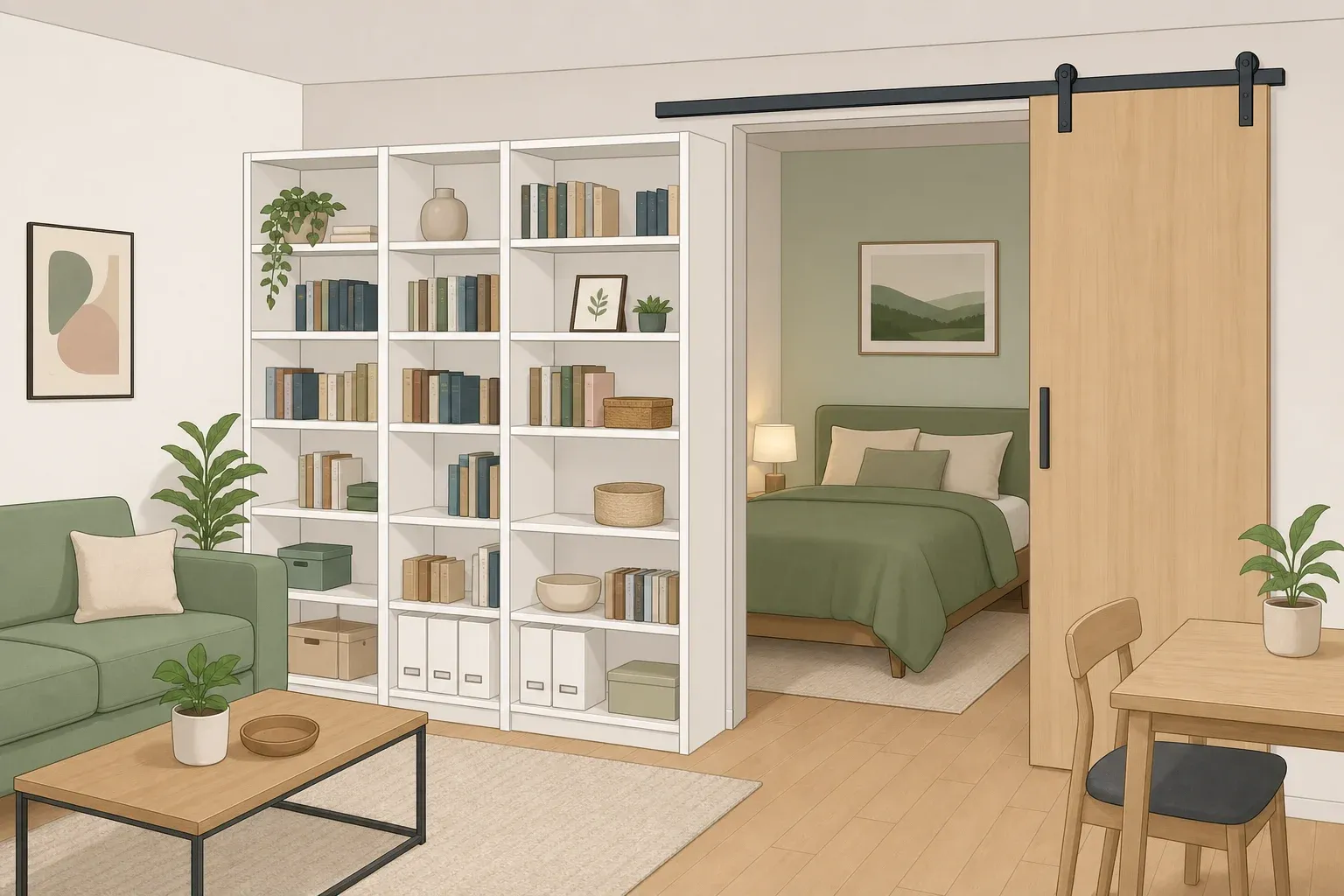
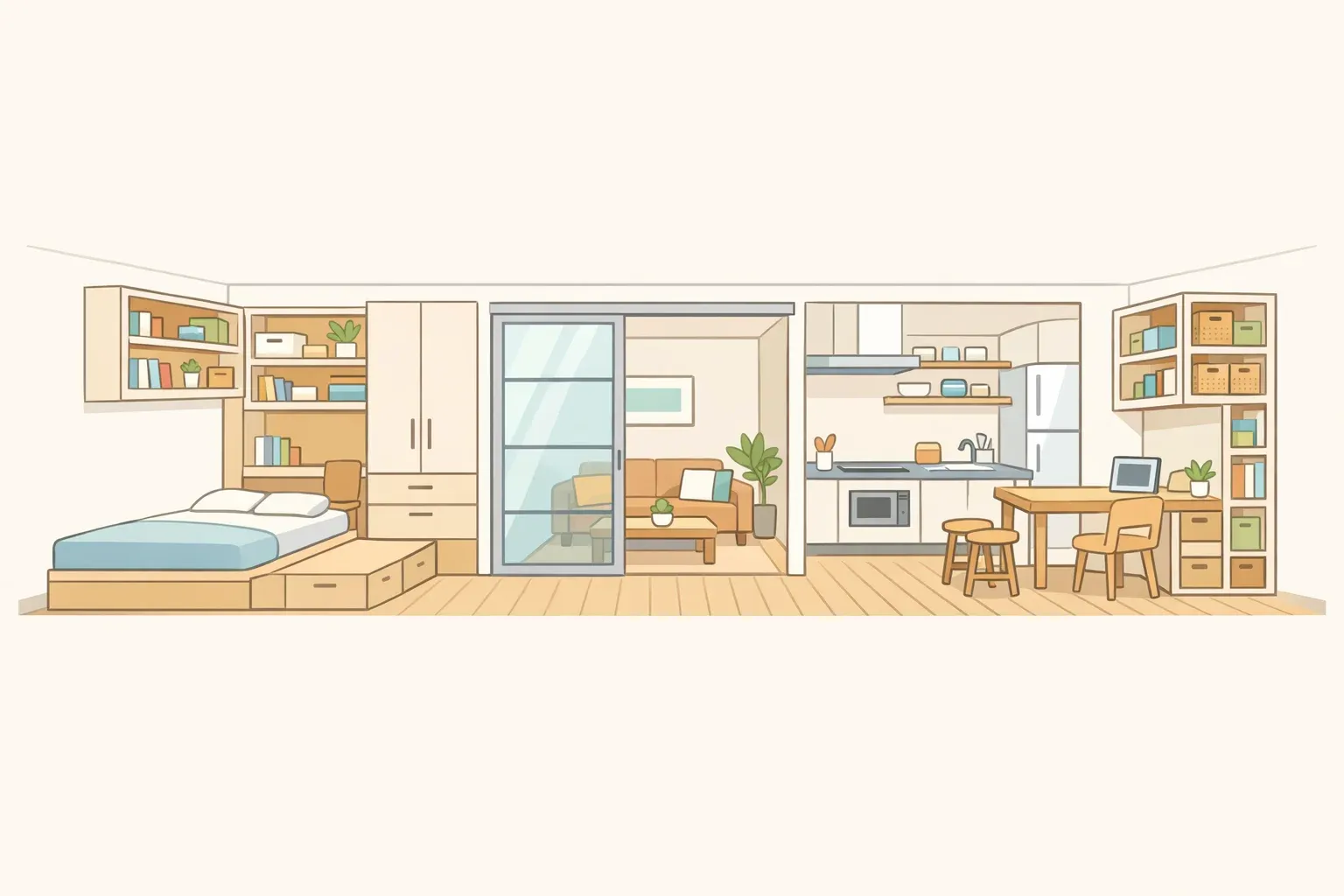
Living in a studio apartment often means your bedroom, living room and storage share the same four walls. Keeping those spaces visually separate can be tricky, especially when every square foot counts. One creative IKEA BILLY bookcase hack shows how ordinary shelving can help a small apartment feel like it has an entirely separate bedroom.
The idea comes from Olamilekan Isaac, who arranged six brown IKEA BILLY bookcases around a sleeping nook and added an IKEA SKYTTA sliding door. According to Apartment Therapy's coverage of the makeover, the project cost $1,100, with Isaac saving money by leaving the furniture's original finish intact.
The transformation offers inspiration for anyone trying to make a studio feel less like one large room. While recreating the enclosed arrangement would require additional installation planning, its underlying design idea is simple: use shelving to establish distinct areas while gaining valuable storage.
How the BILLY bookcase hack transforms a studio
The clever part of Isaac's makeover is that the bookcases serve two purposes. Their height creates a visual boundary around the sleeping area, while their shelves provide space for books, decorative objects and everyday belongings.
Instead of leaving the bed exposed to the entire apartment, the arrangement gives it a more secluded position. From the living area, the furniture reads as a substantial storage feature rather than a conventional room divider.
The brown finish also helps the shelving feel intentional. Rather than painting the units or covering them with decorative panels, Isaac incorporated their existing appearance into the apartment.
His project goes further than a typical bookshelf divider by including a sliding-door entrance. However, the original coverage doesn't document every detail of the furniture connections or door installation. It's best viewed as a decorating concept rather than a ready-made set of construction instructions.
Fortunately, you don't have to reproduce the full enclosure to borrow its most useful ideas.
Three ways to use bookcases to divide a studio
A complete sleeping nook is only one approach. Depending on your apartment's layout, a simpler furniture arrangement may achieve the separation you're looking for.
Create a visual boundary around your bed
Placing a bookcase along an existing wall near the sleeping area can help define where the bedroom zone begins. It also gives you a dedicated place for books, baskets and bedside essentials.
A matching pair of bookcases can create a more coordinated appearance, provided each unit is installed according to its manufacturer's instructions.
This arrangement works particularly well when the bed already occupies a corner. Rather than redesigning the entire apartment, you can reinforce the distinction between sleeping and living areas through furniture placement.
Use shelving to organize a multipurpose room
If your studio doubles as a home office, bookcases can help organize work supplies separately from personal belongings.
Grouping office equipment on one set of shelves and keeping clothing or bedroom accessories elsewhere creates a clearer distinction between activities.
You can emphasize the difference with a desk lamp, an area rug or a change in decorative colors. These touches help define each part of the room without requiring an enclosed layout.
Pair storage with softer room dividers
For a less enclosed look, combine wall-positioned shelving with curtains or a separate folding screen.
Curtains can soften the appearance of a sleeping area, while a folding screen offers flexibility when you want to rearrange the room. Both are useful alternatives if a tall, built-in-looking divider would make the apartment feel crowded.
Choose an arrangement that preserves natural light and comfortable movement. A divider should make the room feel more organized, not smaller.
How to plan your studio layout before buying
The most useful lesson from Isaac's makeover is the importance of measuring first. You can test different arrangements without moving heavy furniture or committing to a particular design.
Start by sketching your studio, including the bed, sofa, windows, doors and existing storage. Note where you naturally walk and which areas receive the most daylight.
Then try this simple planning exercise:
Measure your available space. Record the width and depth of the area where additional storage might fit. Include existing furniture and the space needed to move around it.
Check bookcase dimensions. A standard IKEA BILLY bookcase measures 31½ inches wide, 11 inches deep and 79½ inches tall. Other versions have different dimensions.
Mark furniture footprints. Use painter's tape to outline possible positions on the floor. This helps you see whether a proposed arrangement would crowd your bed, sofa or walking space.
Consider the view from each area. Sit where you normally relax or work and imagine how the shelving would change the room's appearance. Think about which belongings you want visible.
Check lighting and access. Keep windows, doors and ventilation openings unobstructed. Avoid arrangements that make it difficult to move comfortably through the apartment.
Compare a few layouts. Photograph each taped outline before deciding. A single well-positioned bookcase may offer enough separation without the expense or visual weight of several units.
Once you've chosen a layout, review the product's placement and assembly requirements. IKEA specifies that BILLY bookcases must be securely anchored to prevent tipping, so an arrangement that cannot accommodate the required anchoring calls for a different furniture solution.
How much does the IKEA BILLY hack cost?
Part of BILLY's appeal is its relatively accessible price compared with custom cabinetry.
In the United States, IKEA lists the standard white BILLY bookcase at $79. Six would cost $474 before any additional materials, delivery or installation.
For a taller appearance, the oak-effect BILLY with height extension measures 93¼ inches high and is listed at $124. Six of those units would total $744.
These are examples based on current U.S. product listings, not a breakdown of the exact furniture Isaac purchased. Prices vary by country, finish and retailer promotions.
His reported $1,100 makeover also included a sliding-door feature, making it more elaborate than a basic shelving arrangement.
For a smaller budget, start with one or two bookcases and focus on storage and visual organization. Matching baskets, restrained styling and coordinated accessories can help inexpensive shelving look more cohesive without major customization.
Is a sliding door necessary?
The SKYTTA sliding door is one of the most distinctive features of Isaac's apartment. It creates a clear entrance to the sleeping nook and gives the furniture arrangement a more finished appearance.
IKEA offers SKYTTA as a room-divider system, with dedicated rails and specific installation requirements described in its official installation guide.
For most small-space decorating projects, however, a sliding door isn't essential to creating visual separation.
A curtain can make a sleeping corner feel softer, while a folding screen provides a decorative boundary that can be repositioned as needed. Coordinated rugs and lighting can also distinguish the sleeping area without adding another substantial piece of furniture.
These simpler choices are worth considering if you frequently rearrange your apartment or prefer an open, airy atmosphere.
Make the divider feel like part of the room
Even the most practical bookcase arrangement works better when it complements the rest of the apartment.
Choose finishes that coordinate with your existing furniture, and avoid filling every shelf with small objects. A mix of books, baskets and a few decorative pieces creates a calmer appearance than tightly packed miscellaneous storage.
Closed baskets are particularly useful for everyday items that don't need to remain visible. Leaving some shelves less crowded can also make a tall bookcase feel lighter.
If your apartment is short on daylight, consider lighter furniture finishes and keep the area around windows open. In a studio, maintaining a sense of space is just as important as creating separate zones.
Isaac's transformation demonstrates how dramatically familiar furniture can change the way a small home feels. But you don't need six bookcases or a sliding door to get something useful from the idea.
Sometimes, the biggest improvement comes from arranging the storage you already need so that your studio feels like a collection of purposeful spaces rather than one room trying to do everything.





Comments
Be the first, drop a comment!