



By the mid-2020s, cream bouclé was everywhere: curved sofas, accent chairs, ottomans, and soft-edged showrooms. What once felt warm and considered started to feel predictable.
So, is bouclé out of style in 2026? In its all-cream, all-over form, a visible designer-media shift says yes. Designer Lisa Simopoulos identified the problem clearly: once every brand started producing the same cream bouclé silhouettes, the fabric's uniqueness faded, leaving something that reads more like a trend cycle than timeless design, Good Housekeeping reported in a May 30, 2026 article. As recently as May 2025, Architectural Digest was still treating bouclé's future in richer colors and patterns as an open question. The speed of the turn is the story.
The argument here is narrower than "bouclé is dead." The all-cream, every-piece, showroom-copy version has run its course. Understanding why it ran its course helps clarify what to do about it, whether you already own a bouclé piece, are deciding whether to buy one, or want to make a smarter long-term fabric choice.
Why bouclé feels dated in 2026
Bouclé's post-2020 dominance wasn't arbitrary. It was an emotional response with an obvious design language: soft texture, rounded shapes, pale color, and visual calm.
Designer Sara Malek Barney of BANDD/DESIGN has said people were drawn to touch after Covid-19 restrictions, and bouclé's looped surface offered that sensory reassurance. The fabric arrived at the right psychological moment: tangible, soft, and visually quiet.
That same emotional appeal also had a limit. The mass-market acceleration that spread bouclé into every price point stripped it of the quality that made it desirable: the feeling of a distinctive, considered choice. That is a specific indictment of the mass-cream version, not of textured fabric in general.
One honest note about the evidence base: what the sources document is professional consensus across a cluster of shelter publications, not consumer sales data or search-trend analysis. It is a meaningful signal from designers whose clients pay them to stay ahead of this curve. How far that shift has filtered into mainstream purchasing is still playing out.
The cream bouclé look did not fail because it looked bad. It faded because it became too common to feel distinctive.
When to keep bouclé
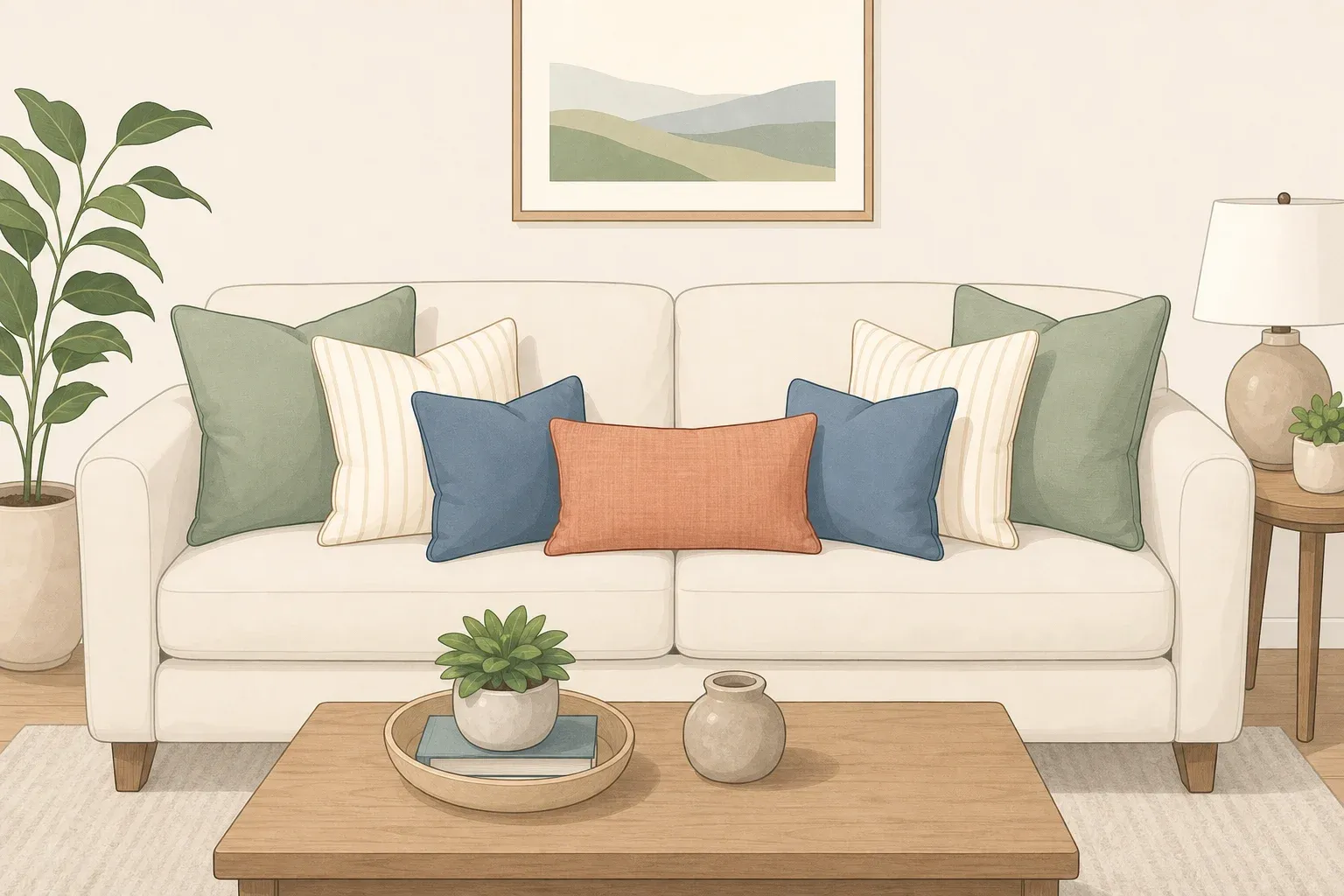
The professional verdict is not extinction. Houston designer Mary Patton predicts homeowners will use bouclé in smaller doses, as part of a layered mix of textures rather than as the dominant surface in a room. Used as one texture among several, it can still work. Used as the defining material for an entire room, it now reads as dated aesthetic shorthand.
There is also a durability argument against using bouclé on primary, high-traffic furniture. Barney has questioned bouclé's practicality for larger pieces, especially in homes with kids and pets. This is professional judgment drawn from client experience, not material-science testing. But the pattern of experience is worth taking seriously.
Where bouclé holds up: accent chairs in lower-traffic spaces, throw pillows, small benches, and decorative applications where the softness reads as a deliberate textural counterpoint. Where it struggles: primary sofas in active households, dining chairs that see daily use, and any context where it becomes the dominant surface material.
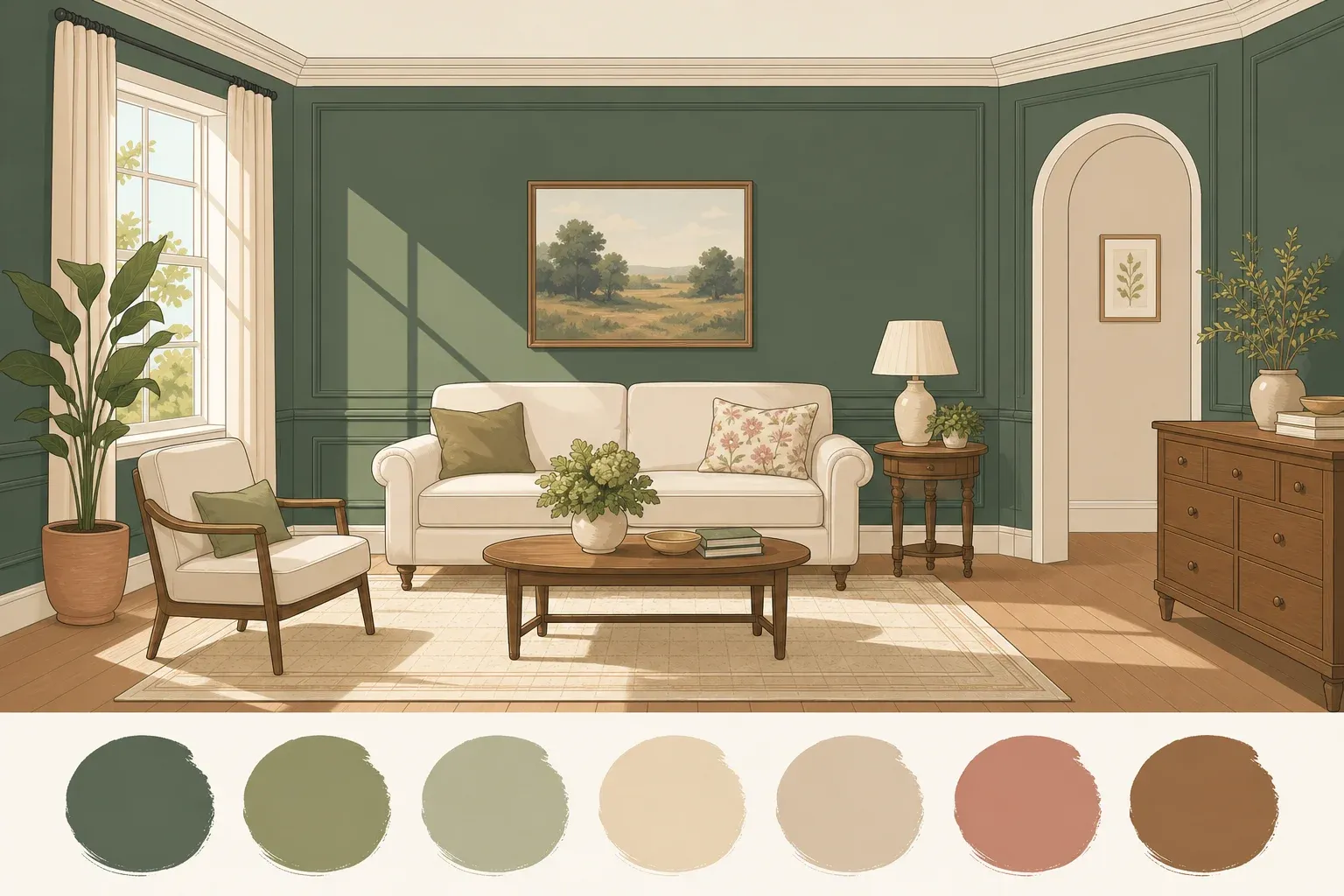
The broader aesthetic shift compounds the problem. By late 2025, designers were already pointing to a move away from white-on-white interiors and toward saturated shades such as burgundy, olive, ochre, and tobacco. Cream bouclé increasingly reads as tied to a specific era rather than as a neutral baseline, especially when it is not balanced with richer colors, varied materials, or more personal styling.
For readers who already own a bouclé piece, a practical triage is:
Keep and restyle: If the piece is in good condition and lives in a lower-traffic room, layer it with richer textures and more saturated color accents. Bouclé as one element in a mixed-material room reads very differently from bouclé as the room's dominant note.
Relocate: A large cream bouclé sofa in a family room may work better in a bedroom, study, or guest room, where durability matters less and the piece is not visually carrying the whole space.
Reupholster: If the frame and structure are strong, reupholstering in one of the alternatives below can preserve the investment. This is worth considering especially if the bouclé is already showing wear.
Replace: Replacement makes the most sense when the piece is both heavily worn and so closely tied to the cream-curved aesthetic that no restyling updates it.
What to use instead of bouclé
The directional story is bigger than any individual fabric. The appetite for warmth and tactility has not gone away; it is shifting toward materials that feel richer, more layered, and less like a showroom default.
The alternatives are not interchangeable. They solve different problems, and matching material to household reality is more useful than simply asking what is trending.
How to choose the right bouclé alternative
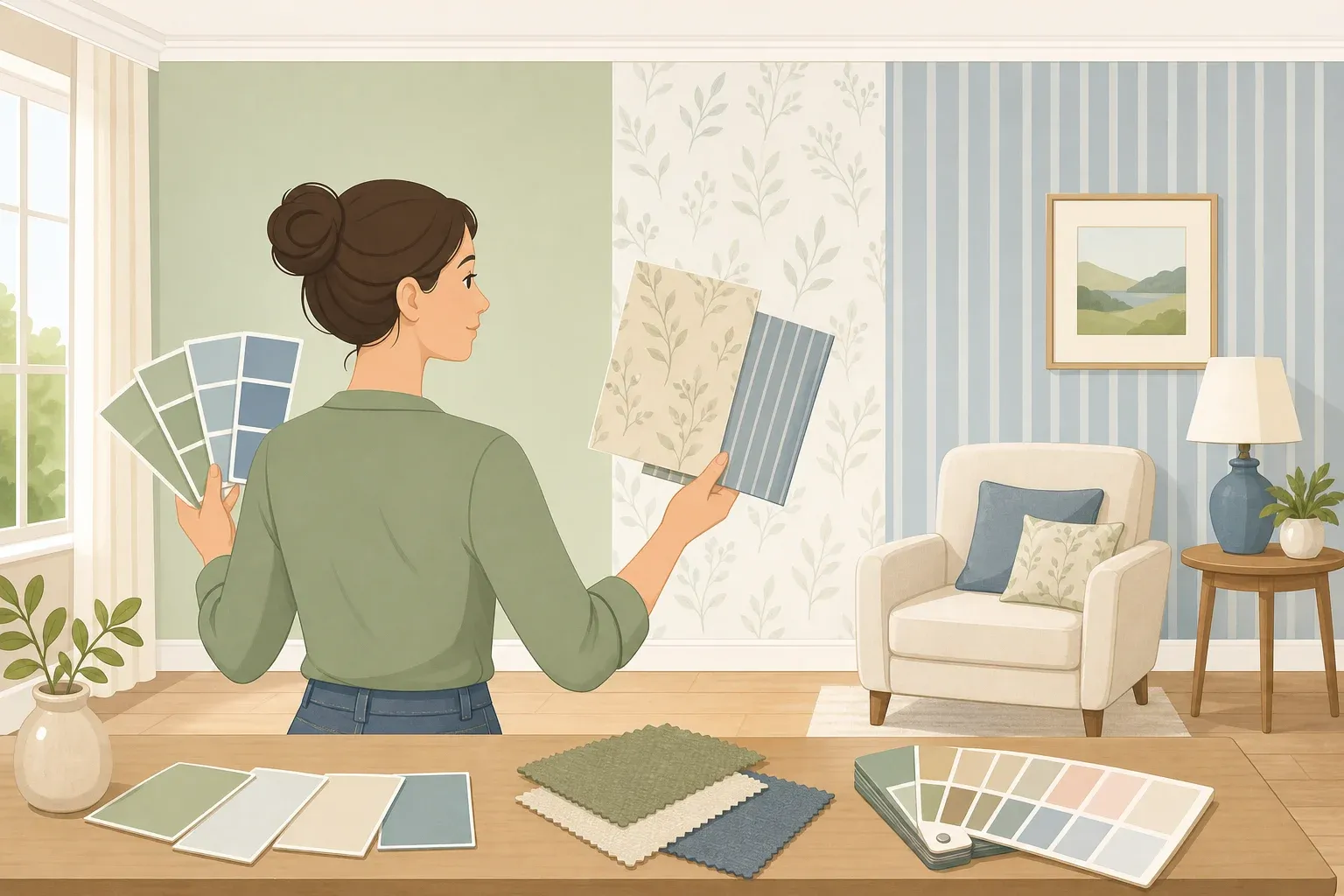
Choose by how the piece will actually be used. For a main sofa in a busy household, start with performance chenille, protected leather, or another performance-rated fabric that lists a cleaning code and durability information. For a formal accent chair, mohair, velvet, wool blends, or heritage woven fabrics can give the same sense of texture with more depth. For renters or budget refreshes, skip the large upholstery purchase and update the room with pillows, throws, a patterned ottoman, or a darker wood accent piece instead.
Before buying, check the fabric's cleaning code, whether the covers are removable, whether the weave looks tight enough to resist snagging, and whether the color will show lint, pet hair, or spills. A fabric that fits your household will age better than one chosen only because it looks current.
For formal rooms: mohair and velvet
Mohair is one of the strongest alternatives if you want texture without the overexposed cream-bouclé look. It has depth, softness, and a more elevated finish, which makes it especially useful for accent chairs and smaller sofas in formal living rooms, parlors, bedrooms, or reading corners.
The honest caveat: mohair usually costs more than mass-market upholstery fabrics. It makes the most sense on pieces where the visual payoff is high and the daily wear is manageable.
Velvet is another strong choice for rooms where color and mood matter. It holds deep shades beautifully, especially olive, burgundy, chocolate, navy, ochre, and tobacco. The trade-off is maintenance. Velvet can show pressure marks and imprints more readily than some other fabrics, so it is better for lower-traffic formal spaces than for the sofa that absorbs daily household life.
For kids and pets: leather and performance chenille
Protected leather can handle many everyday cleaning and wear concerns better than pale woven upholstery, though performance varies by leather type and finish. If you have pets, kids, or a sofa that gets used every day, look for protected or finished leather rather than delicate suede, nubuck, or untreated aniline leather.
Performance chenille occupies a different lane. It offers softness and texture without the same maintenance demands as pale bouclé or velvet. For primary seating in active households, it is one of the most practical starting points.
For hiding wear: patterned upholstery
Patterned upholstery is also gaining ground, with retailers such as CB2 and Lulu and Georgia expanding into more checks, stripes, grids, and wildlife motifs, Architectural Digest reported in September 2025. That makes pattern a practical choice, not just a style choice.
Stripes, checks, florals, and small-scale prints solve the cream-bouclé problem differently than a richer solid does. Visual complexity individualizes the piece and makes everyday wear less visible than it would be on a solid pale fabric.
If you are nervous about pattern, start small. Try a patterned ottoman, bench, side chair, or slipcovered piece before committing to a large printed sofa.
When bouclé still works
Bouclé can still feel stylish when it is not carrying the whole room. Designers quoted by Livingetc in May 2026 described bouclé as a fabric that can still work when used thoughtfully, especially when balanced with wood, velvet, linen, color, or other contrasting materials.
That means the question is not simply whether bouclé is "in" or "out." The better question is whether the specific piece feels intentional. A single bouclé chair in a layered room can still look warm and tactile. A matching set of cream bouclé pieces in a beige-on-beige space is more likely to feel frozen in a past trend cycle.
Choose by how you live
The bouclé story is a useful lens on something larger. People are still drawn to texture, softness, and comfort, but the most current interiors are less interested in copy-paste minimalism and more interested in materials that age well, perform well, and feel personal.
The most durable standard is simple: choose by traffic, maintenance tolerance, and color commitment. A fabric that holds up to how your household actually lives, deepens with use rather than degrading, and carries color you will not tire of quickly is worth more than anything that merely signals the current moment.
The cream-everywhere bouclé look has had its moment. But the appetite for warmth and texture is still here.

Comments
Be the first, drop a comment!