



Small entryway mirror ideas: placement tips for bigger, brighter spaces
Before buying anything, check what your entryway mirror will reflect. That single step determines whether a mirror opens up a cramped entry or just adds another object to a cluttered wall. Placement does the heavy lifting here, not the frame finish, not the price point.
This guide walks through selecting, positioning, and styling a mirror to make a small entryway feel substantially larger and brighter. No renovation required. By the end, you'll have a mirror type matched to your specific layout and a placement plan ready to execute.
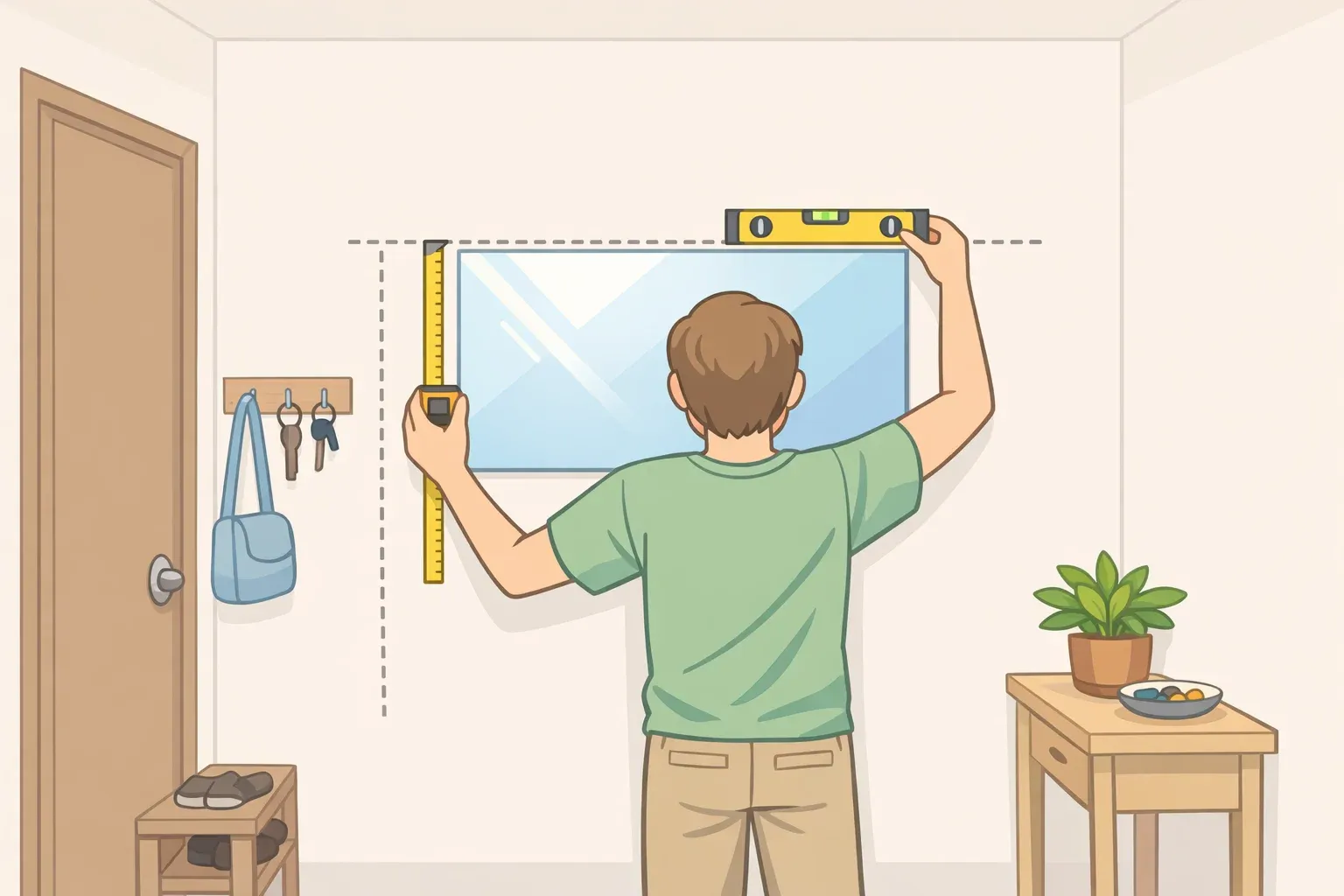
Before you start: Gather a tape measure, stud finder, level, and appropriate wall anchors. For drywall, use toggle bolts rather than standard nails for anything over 10 lbs. Mirrors over 25 lbs require anchors rated for at least 50 lbs, secured at both top and bottom to prevent sagging, per The Decor Advisor last month. That's the full installation prep. Every other decision in this guide is about where to put the mirror and which one to choose.
Why a mirror outperforms every other small-entry upgrade
When Apartment Therapy surveyed interior designers on the single most valuable addition to a small entryway, they chose a mirror over entry tables, baskets, and hooks. The reasoning: a mirror amplifies light and creates the illusion of more space at the same time. Most other options address storage or style; few do both without adding visual bulk.
There's also a practical payoff that hooks can't deliver. Designer Ashley Macuga of Collected Interiors points out that an entryway mirror lets you do a final check before heading out, ensuring you "feel chic and confident" a small thing that lands every single day, per Apartment Therapy.
The brightening effect is real, but worth stating precisely. A well-positioned mirror can increase measured daylight levels by up to 30%, according to light-meter testing documented by The Decor Advisor last month. Near an artificial light source, positioning the mirror to catch a sconce or overhead fixture can double perceived brightness, according to the same source. The "3x brighter" framing that circulates on social media is anecdotal. The 30% figure is the most credible quantified claim in the research.
Step 1: Match your mirror type to your entry
The first decision isn't shape or finish. It's which type of mirror suits your specific situation.
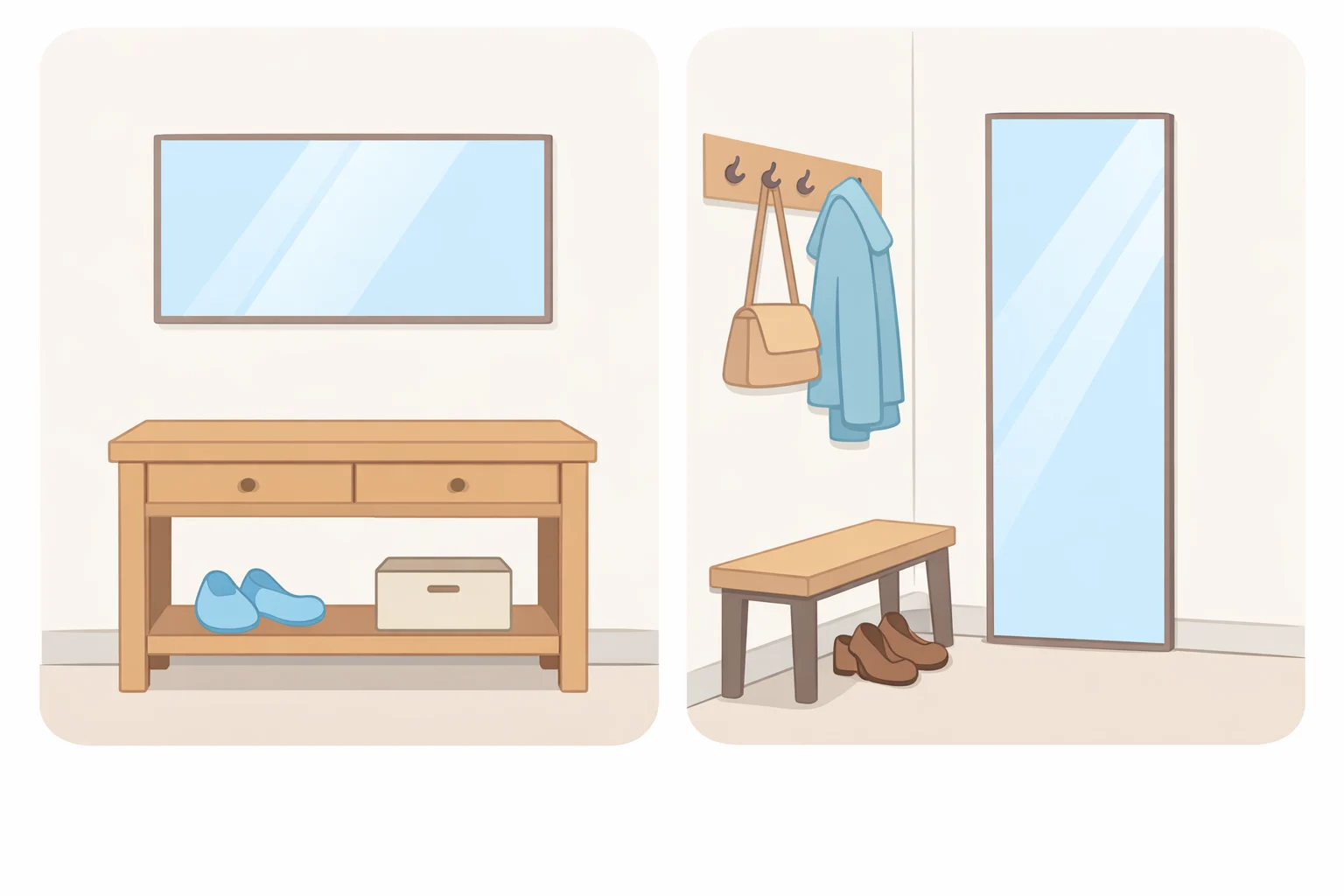
If your entry has a console table or a dedicated focal wall: A wall-hung mirror is the right choice. Size it to 60–75% of the console table's width; Shopica calls this the single most important sizing rule. For a 90 cm console, that means a mirror roughly 55–68 cm wide. Leave 10–15 cm between the top of the console and the mirror's bottom edge so the two pieces read as a composed unit rather than stacked furniture.
If your entry is too narrow for furniture, or you want a full length mirror for a small entryway: A full-length or floor-leaning mirror does more work in less wall space. Apartment Therapy highlighted a 56" x 15" full-length format this week as well-suited to tight apartment entries: tall enough to create real visual depth, narrow enough to keep the entry passable. One commenter described the switch as looking "into another room" which is precisely the effect a well-placed full-length mirror generates.
If your entry has no surface for storage: A mirror with a built-in shelf or integrated hook rail consolidates two functions onto a single wall section, keeping floor space clear for traffic. Apartment Therapy noted that this format works especially well in very small entries, freeing up floor flow while still providing somewhere to drop keys or hang a jacket.
Sizing for narrow entries specifically: For hallways under 1.5 meters wide, a mirror 50–70 cm wide and 90–120 cm tall draws the eye upward, adding apparent height as well as depth, per Shopica. Standard-width entries between 1.5 and 2 meters can go wider 70–90 cm without overwhelming the space.
With the mirror type chosen, placement is where most of the spatial effect is created or lost.
Mirror placement for a small entryway: light, depth, and what it reflects
Placement determines whether the mirror opens up the space or just occupies it. Two variables matter most: where on the wall it goes, and what it faces.
Where to hang it
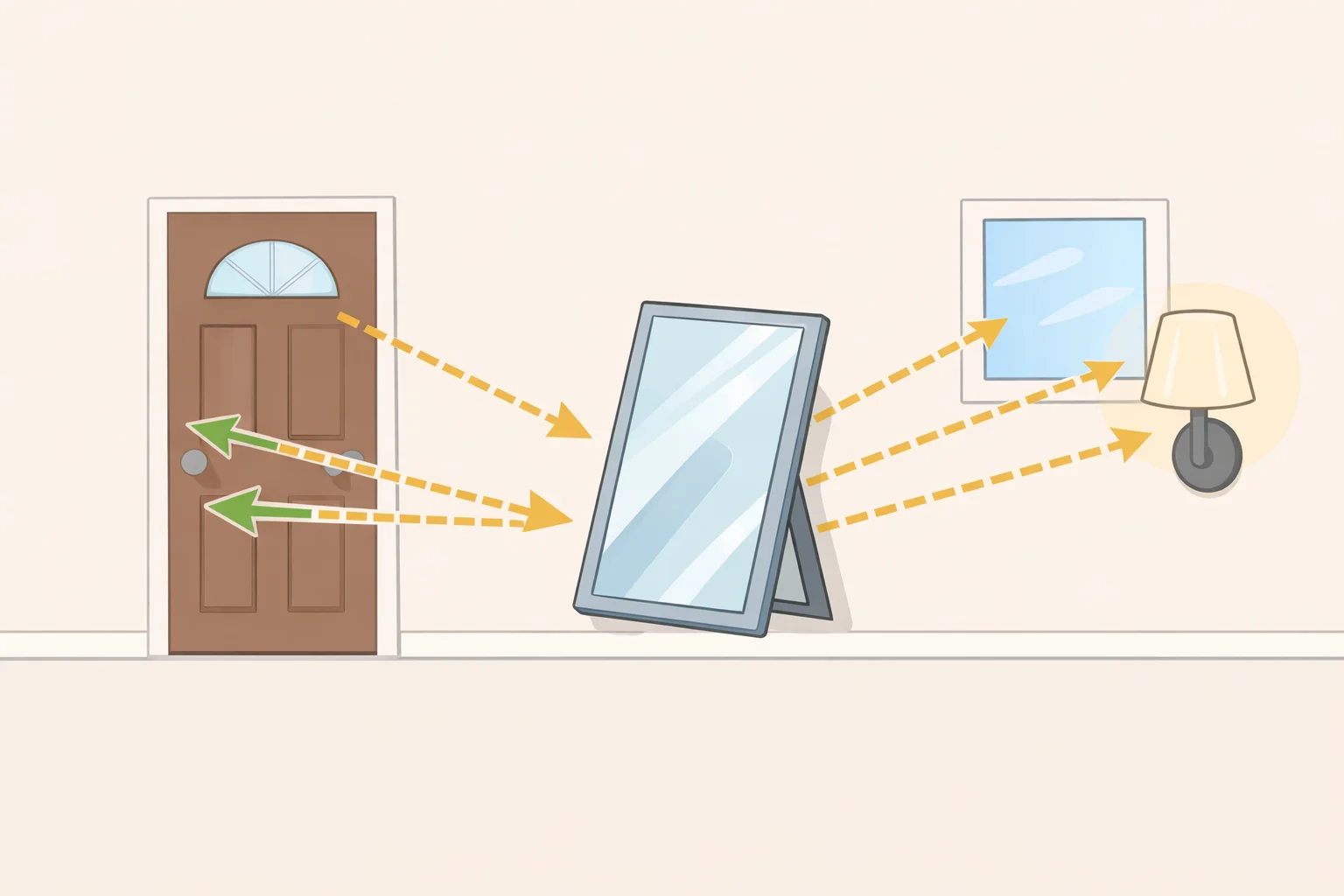
The strongest position for most entries is on the wall adjacent to or angled toward the front door. According to Camden Isle, this catches incoming light and reflects the entry path, making the foyer feel deeper and more open. For L-shaped or very narrow entries, a side wall works for the same reason: it captures light without constricting the walkway.
Placing a mirror directly opposite the front door maximizes depth and light bounce on paper. Both Camden Isle and The Feng Shui Decor note, though, that a head-on placement can make the entry feel abrupt. Feng shui practitioners specifically caution against it, suggesting the mirror pushes energy back out through the door. Whether or not that framing resonates, both sources reach the same practical conclusion: angling the mirror toward the door rather than directly opposing it tends to feel more welcoming.
How high
Center the mirror between 57 and 65 inches from the floor. Camden Isle recommends 57–65 inches for foyer settings; The Decor Advisor gives a range of 56–64 inches for most households. Adjust slightly upward if the mirror sits above a tall console.
The most common mistake is hanging too high. At picture-rail height, the mirror reflects ceiling and upper wall rather than light sources or the room itself, and loses most of its spatial effect.
Orienting toward light
When the entry has a window, position the mirror adjacent to or facing it. This alignment can increase measured daylight by up to 30%, per The Decor Advisor. For entries without natural light, angle the mirror to intercept a wall sconce or overhead fixture at roughly 15–30 degrees; at that angle, positioning the mirror toward an artificial source can double perceived brightness, according to the same source.
One pitfall worth flagging: placing a mirror directly opposite a bare bulb or unshaded window bounces hard light into the eye line rather than diffusing it around the room. If glare appears after installation, The Decor Advisor recommends shifting the mirror 2–4 inches sideways or adjusting its tilt slightly. Both fixes resolve most glare without sacrificing the brightening effect.
Check what it reflects before you drill
Stand at the wall where the mirror will hang and look at what sits in its line of sight at eye level. This step is not optional. The Feng Shui Decor frames it plainly: mirrors are amplifiers. Aimed at a window, a tidy console, or a plant, a mirror expands the entry. Aimed at a coat pile, open storage, or visual clutter, it doubles the disorder.
If the sight line is cluttered, either clear the reflection zone or shift the mirror angle before committing. The Shopica rule is blunt: always point the mirror at something worth reflecting a window, a plant, good light never at a blank wall or a messy corner.
One more thing: avoid positioning two mirrors so they face each other directly. The resulting infinite reflection reads as visual chaos rather than spaciousness, per Camden Isle.
Step 3: Choose shape and frame to reinforce the effect
With placement settled, shape and frame become style choices with a practical dimension they affect how the space feels and, to a lesser degree, how much light the mirror bounces.
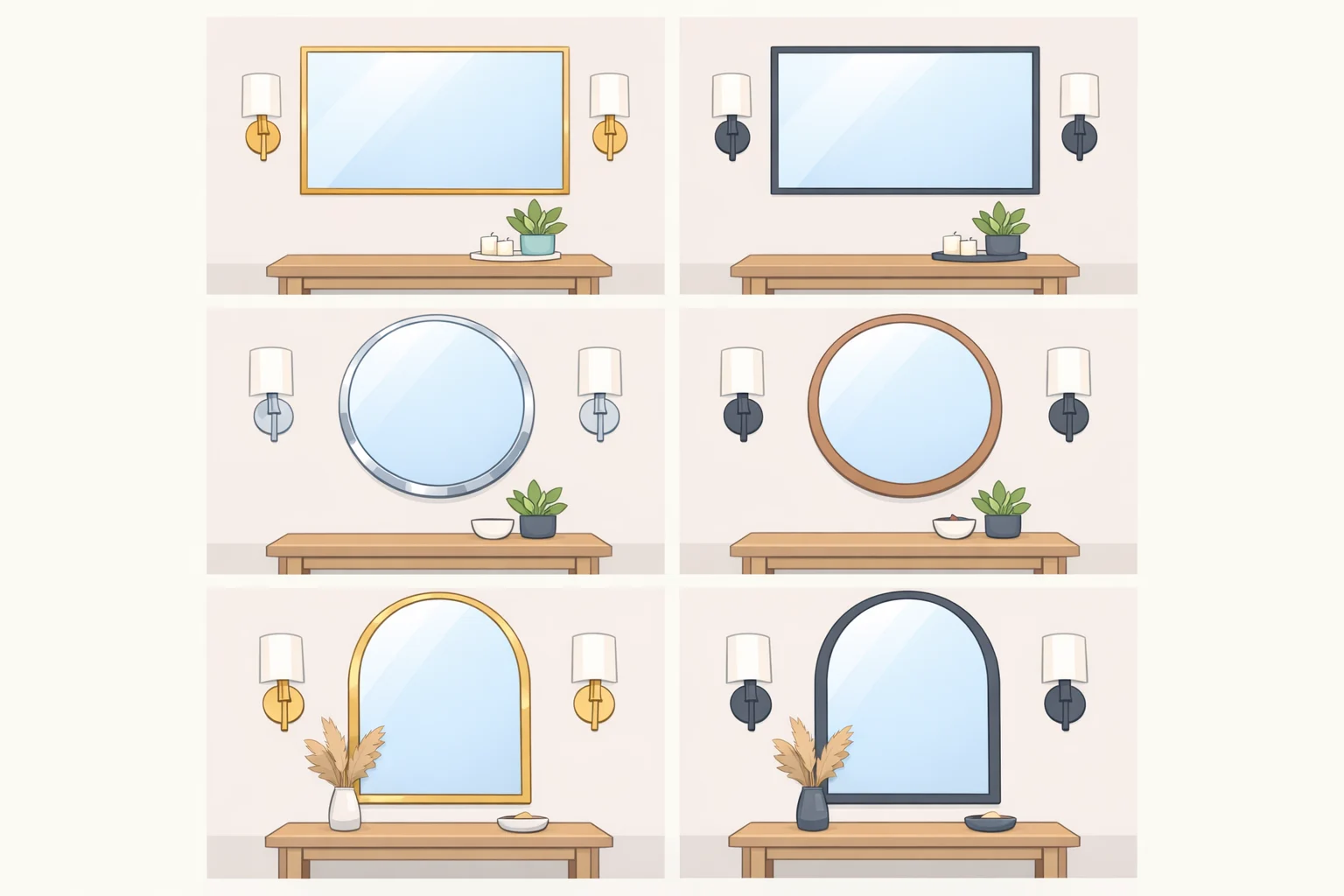
Rectangular mirrors extend apparent height in vertical orientation, which suits most narrow entries. Turned horizontal on a longer wall, the same format can visually widen a tight corridor, per The Decor Advisor. Structured and orderly, they're a natural fit for modern and transitional spaces.
Round and oval mirrors soften entries with hard angles. Hung above a console table, the curved form contrasts the table's straight edge in a way that reads as deliberate rather than accidental, notes Camden Isle. The Feng Shui Decor adds that curved forms generally feel calmer in high-traffic transition spaces.
An arched mirror in an entryway combines the height of a rectangle with a softened top. It's a popular format right now precisely because it reads well across a wide range of interior styles without firmly committing to any of them. Apartment Therapy described an arched mirror as "simple, stylish, and instantly opens up the space" this week.
Frame finish affects light output. Metallic frames, particularly chrome or polished brass, can increase perceived brightness by roughly 10–15% compared to matte or dark finishes, according to The Decor Advisor. In a dim entry, a reflective frame reinforces the mirror's brightening effect. Dark wood and matte black frames suit entries that already receive strong natural light.
Quick decision reference for your entryway mirror for small space
Use this as a starting point, not a rigid prescription:
- Entry under 1.5m wide, no furniture: Full-length or tall slim mirror (50–70 cm wide, 90–120 cm tall); lean or wall-mount on a side wall aimed toward the door or nearest light source.
- Entry with console table: Wall mirror sized to 60–75% of console width; center at 57–65 inches from floor; leave 10–15 cm clearance above the console surface.
- Very small entry with no surface for storage: Mirror with integrated shelf or hook rail consolidates two functions and keeps floor space open.
- No natural light in entry: Position mirror at 15–30 degrees from a wall sconce or overhead fixture; metallic frame amplifies the effect.
- Reflection zone is cluttered: Shift mirror angle before hanging, or clear the sight line. Mirrors amplify whatever they face, and disorder is no exception.
Three decisions drive the outcome: choose the mirror type based on your wall width and whether you have furniture to anchor it to; test the reflection before drilling; then set height and light direction. Get those right and making a small entryway look bigger stops being a question of budget or renovation. It's just a question of where exactly to put the anchor.



Comments
Be the first, drop a comment!