



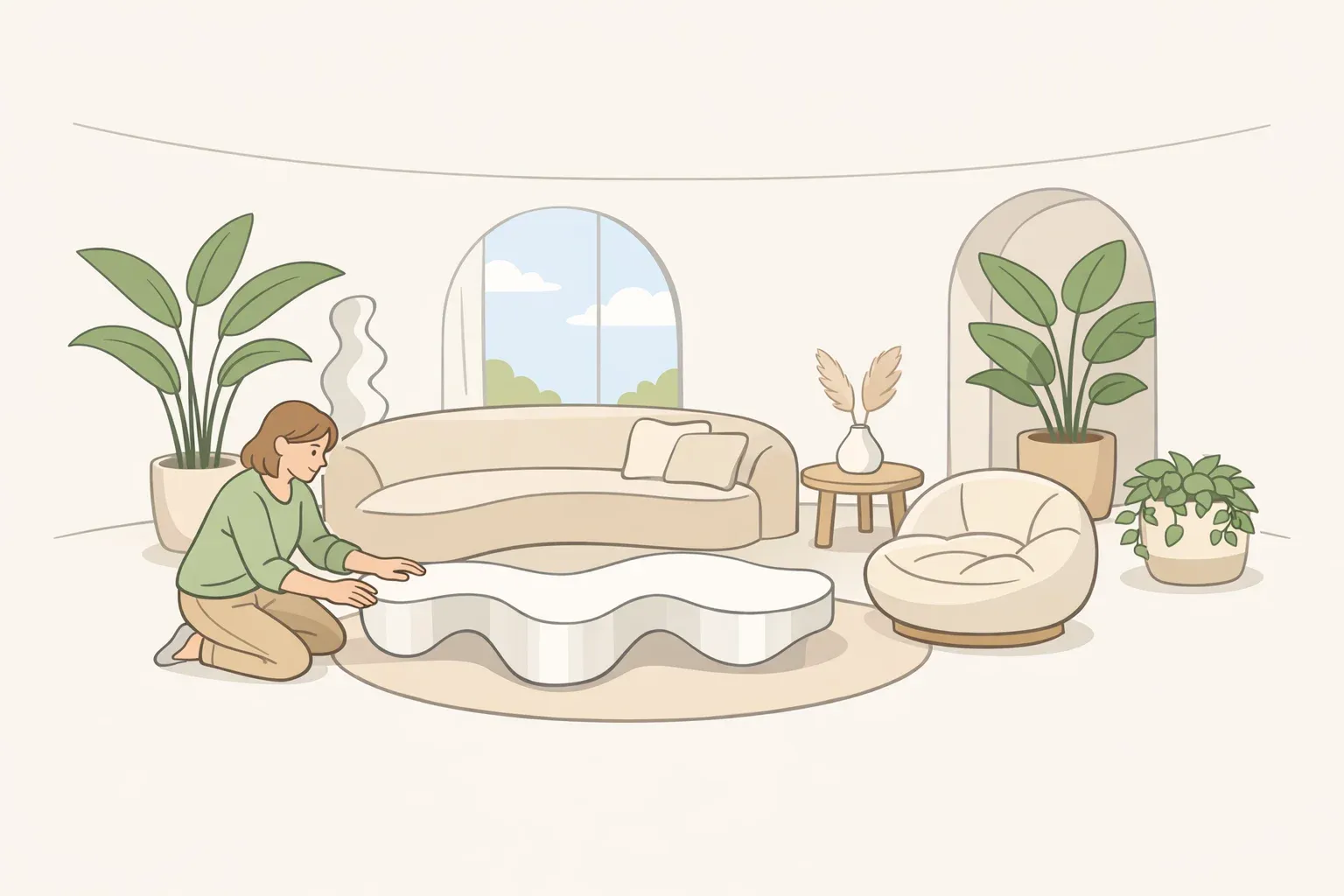
Searches for "curved walls" and "arched doorways" are surging. That visible shift appears to be one symptom of a bigger change in how people think about what a home should do.
The trend gets framed as aesthetic, but the stronger case for soft architecture interior design is functional: spaces that adapt more easily to how life changes, draw on natural forms and materials, and offer psychological benefits that are real, if often overstated in coverage like that.
Curves are part of the story. They're not the whole story.
When homes became offices, classrooms, and recovery spaces simultaneously during the pandemic, extended confinement made people acutely aware of what their spaces were missing. Homes with poor natural light, inadequate ventilation, and no access to greenery were linked to higher rates of stress, anxiety, and depression. That experience didn't just create a desire for nicer rooms. It created demand for completely different ones.
What follows explains what soft architecture actually means as a design concept, what the research on curves and wellbeing does and doesn't support, and how to apply the underlying logic at home from structural renovation down to changes that cost nothing.
What soft architecture interior design means and why it's bigger than rounded furniture
So what is soft architecture, exactly? The clearest definition: it treats a space as something that should respond to how people live, rather than dictate a fixed pattern of use. As ArchDaily explained, the concept treats a building "not as a finished object, but as a living system that evolves." In its fullest architectural expression, that can mean kinetic facades or energy-generating textiles.
Kennedy & Violich Architecture's Soft House in Hamburg, for instance, combines flexible solar textiles with a timber structure so the building reacts to the sun's movement and generates its own energy. In a home, the concept lands somewhere more grounded: flexible layouts, softer transitions between rooms, materials that age well, spaces that don't fight you when your life changes.
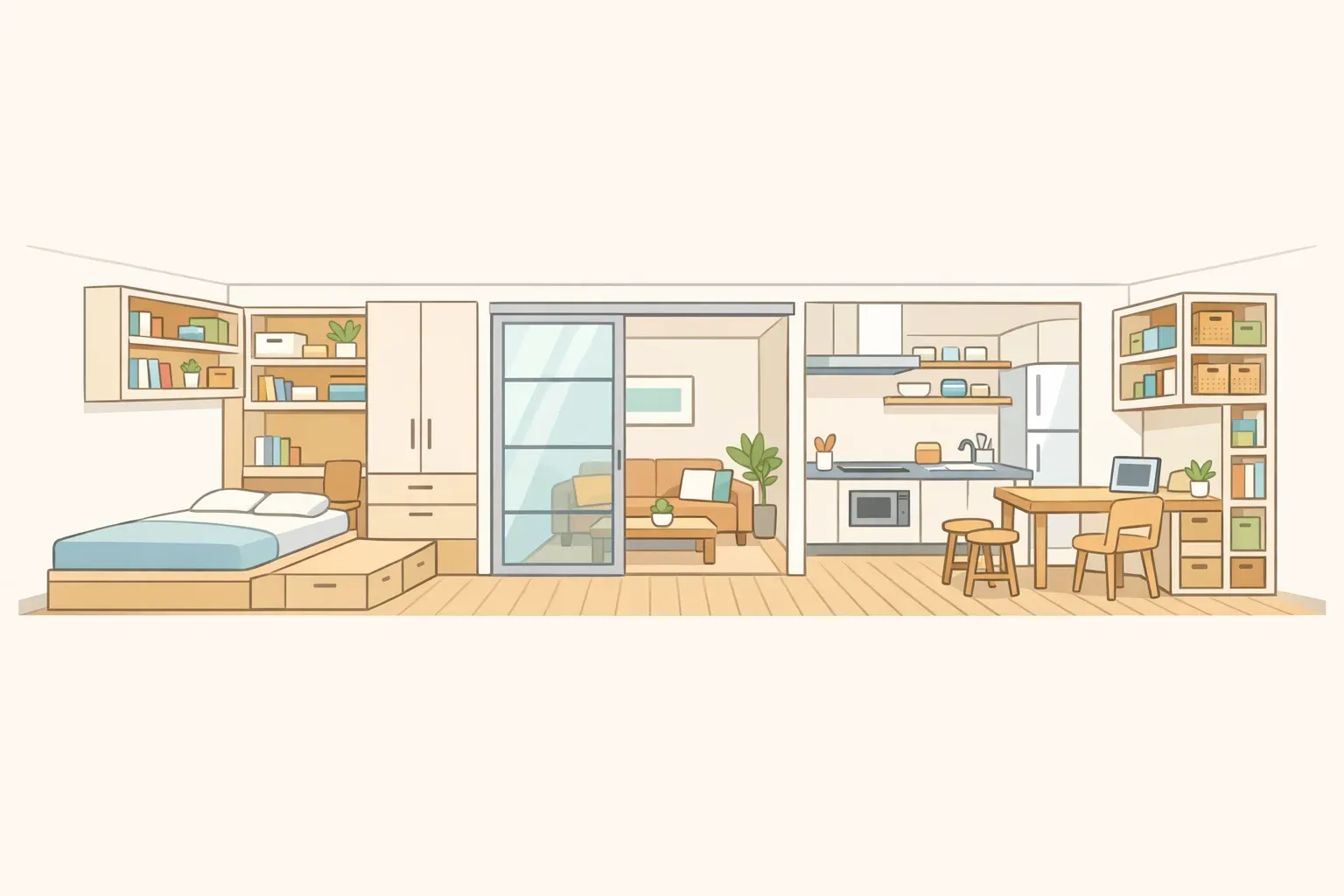
The concept operates on two registers at once. The first is visual: curves, arches, organic forms, rounded edges, natural materials. The second is functional: removing rigid divisions, designing in more daylight, building in flexibility rather than prescription. These aren't in tension. They usually reinforce each other.
Conflating them leads to the mistaken idea that buying curved furniture is the point. It isn't. The underlying disposition matters more: a home should accommodate life, not just frame it.
Stockholm's Cloudy Outlines apartment shows both registers working together. Note Design Studio stripped a 19th-century apartment to its shell, knocked down internal walls to create a more connected floor plan, and repositioned the main corridor to run along the window-lined facade, converting a dark internal passageway into a light-filled spine, according to Dezeen.
Then came the billowy stucco moulding throughout, giving the ceilings a soft, cloudy quality. The structural move and the decorative move followed the same logic: reduce hard edges, increase light, let the space breathe.
ArchDaily notes that in design terms, "softness" refers less to how something feels to the touch than to how a space relates to time, use, and its occupants. Think of the difference between a room with one designated purpose and a room that can shift. The first is rigid. The second is soft, regardless of whether it has a single curved surface.
The psychology of softer homes: what research supports, and where it gets complicated
A widely repeated claim in design media holds that humans are neurologically wired to prefer curved forms, that our brains instinctively associate them with calm and safety, and that angular shapes trigger a low-level sense of threat. It's a coherent story. It also isn't well supported by the best available experimental evidence.
A 2025 study published in Scientific Reports found the opposite of what conventional wisdom predicts: a small but statistically significant overall preference for angular furniture. Researchers had 196 participants virtually furnish a living room using items that varied systematically between angular and curved forms.
The effect was driven almost entirely by male participants, who selected more angular items on average; female participants showed no consistent preference either way. Personality traits explained none of the variance. The effect size was small (d = −0.19), meaning the difference, while real, was not large.
A single virtual experiment isn't a verdict. But it's a peer-reviewed result with a clear methodology, and it matters precisely because of what it complicates. Individual preferences for room forms are more variable and context-dependent than confident trend coverage implies. "Curves are universally calming" is a simplification; treat it as one.
The stronger scientific case isn't specifically for curves. It's for the broader cluster of qualities that curved, organic, nature-adjacent interiors tend to bring with them. The 2025 biophilic design review links homes with poor natural light, no greenery, and inadequate air circulation to higher stress and depression.
The same review cites studies finding that indoor plants are associated with stress reduction and improved air quality, and that consistent natural light exposure supports circadian rhythm and reduces rates of seasonal affective disorder. Readers should treat specific figures from this review as indicative rather than definitive, since it summarizes older studies loosely rather than presenting new data.
Organic forms, shapes that feel borrowed from nature rather than manufactured, appear in the design literature as one of 14 biophilic motifs with documented wellbeing potential. They appear on that list alongside natural light, water features, vegetation, natural materials, and spatial variety. Not ahead of them. A room with more daylight, a few plants, and natural-material surfaces will likely do more for how you feel than one with rounded furniture and no windows.
Applying soft architecture at home: a practical framework by effort level
Think in three tiers: layout and light, materials and surfaces, forms and decoration, ordered roughly by impact and by the magnitude of change required. The first tier tends to matter most. The third is where trend coverage spends most of its time.
Tier 1: Layout and light (highest impact, often structural)
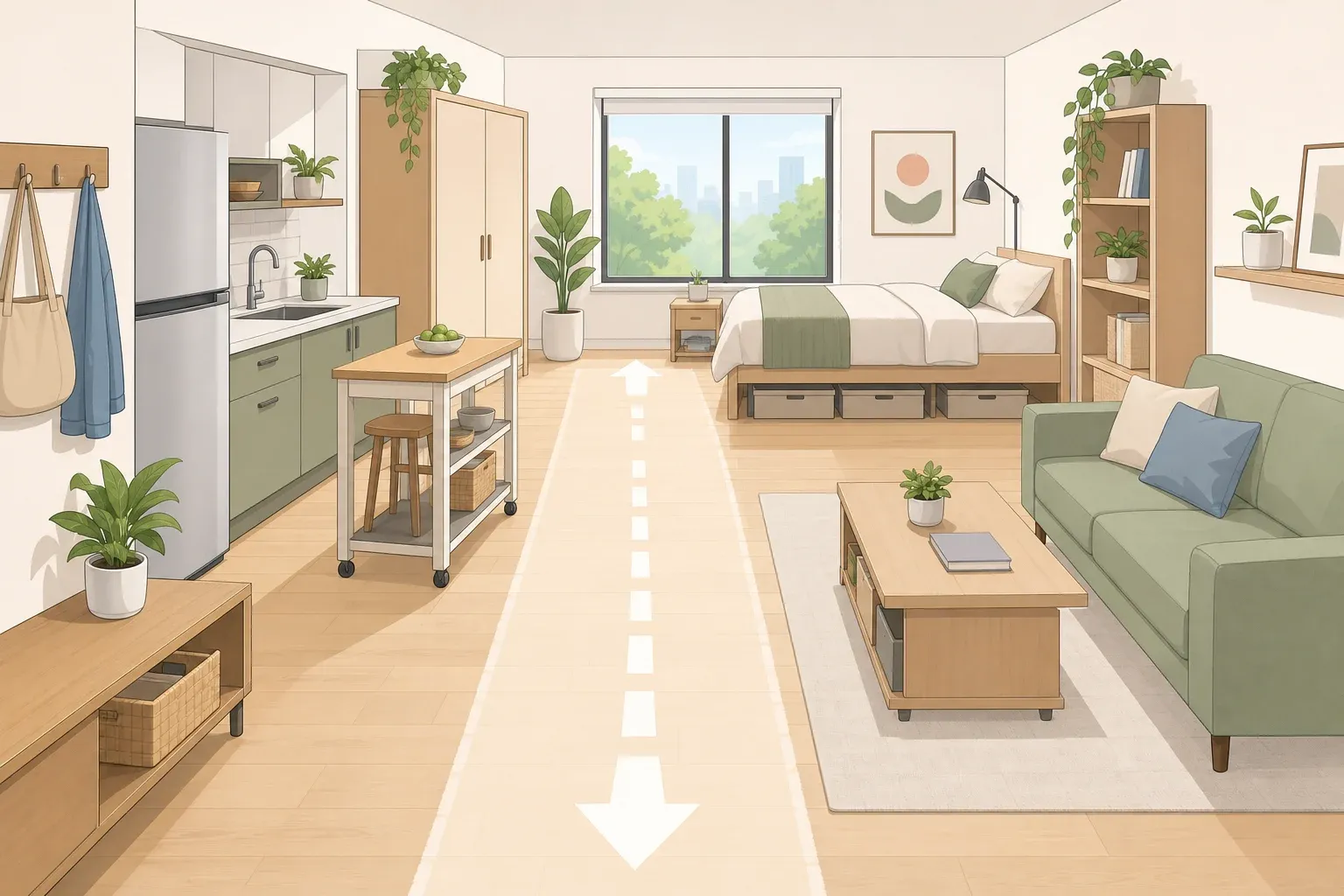
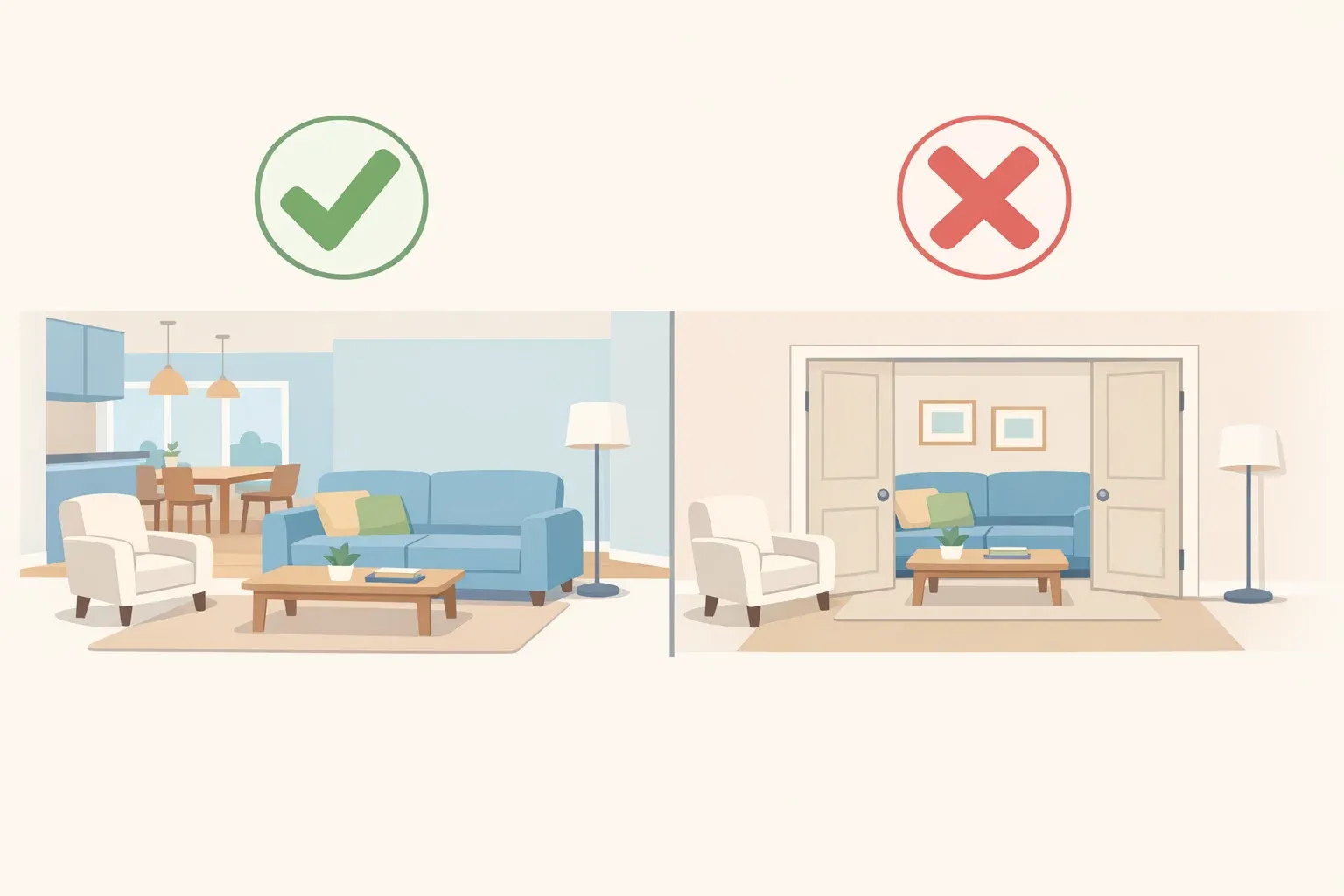
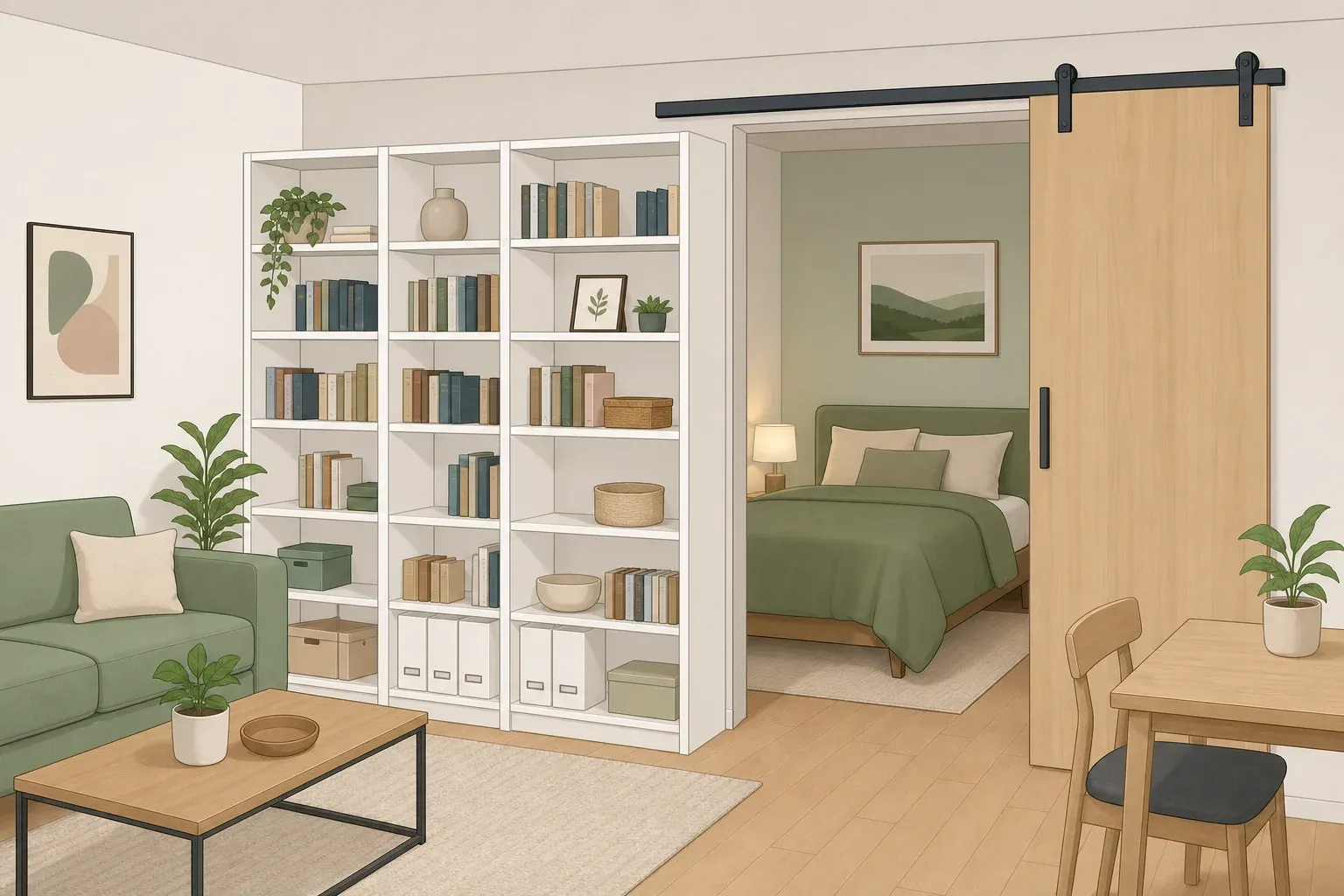
Removing internal walls to connect spaces and improve light flow is the foundational move in residential soft architecture. It changes how a home feels and functions more than any surface treatment.
The Cloudy Outlines project used exactly this approach, stripping and reconnecting the floor plan before adding any decorative softening, with the repositioned corridor running parallel to the building's window-lined facade now flooded with natural light, per Dezeen.
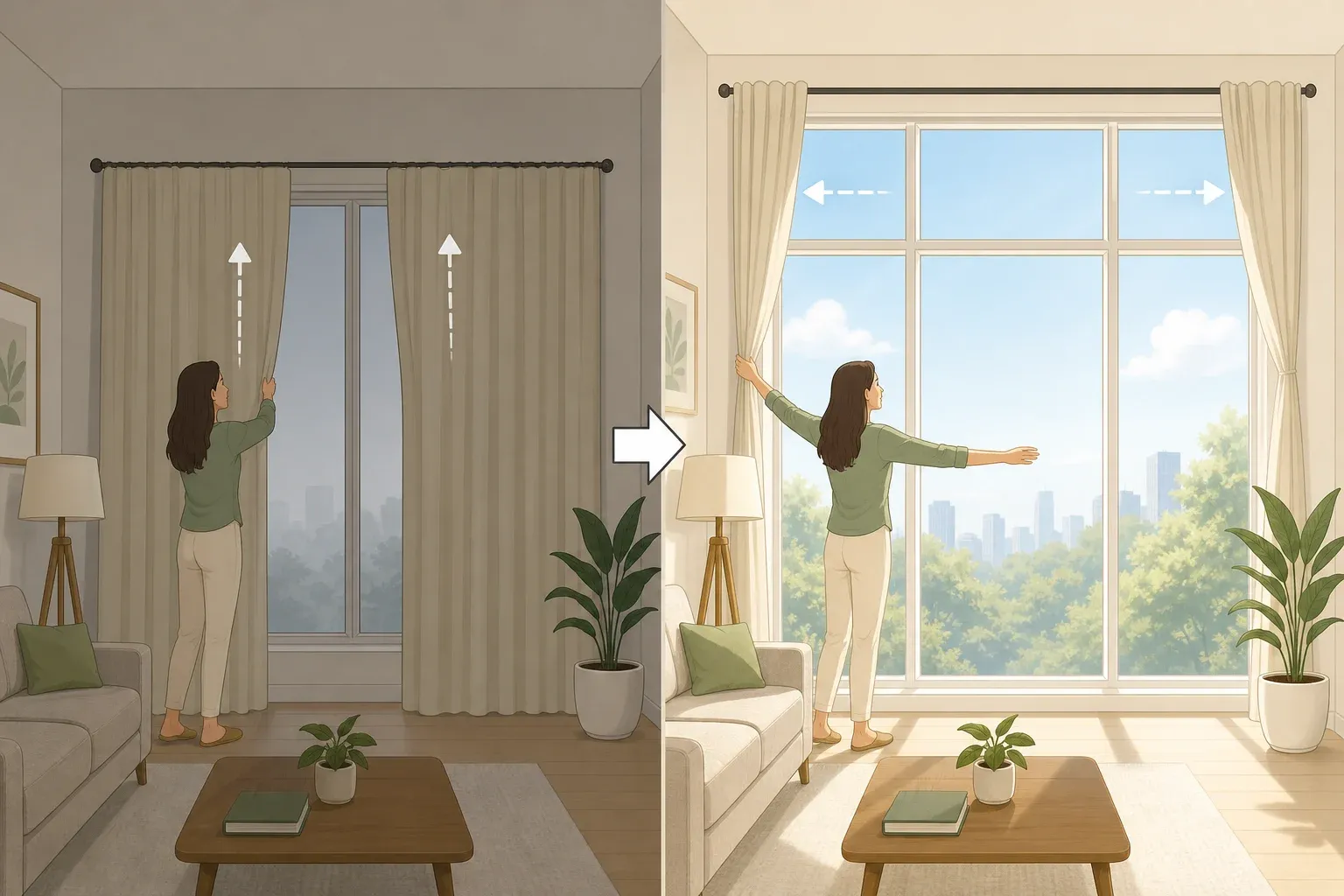
Maximizing natural light carries the strongest backing in the wellbeing literature. The 2025 biophilic review links regular natural light exposure to better sleep regulation and lower incidence of stress-related conditions.
Repositioned corridors, larger openings, and glazed internal partitions are all tools for getting there. This is also the tier where professional help is usually required, and costs are real; the same review acknowledges that sophisticated daylighting and ventilation systems are among the main cost barriers to biophilic design at scale.
Tier 2: Materials and surfaces (moderate investment, accessible)
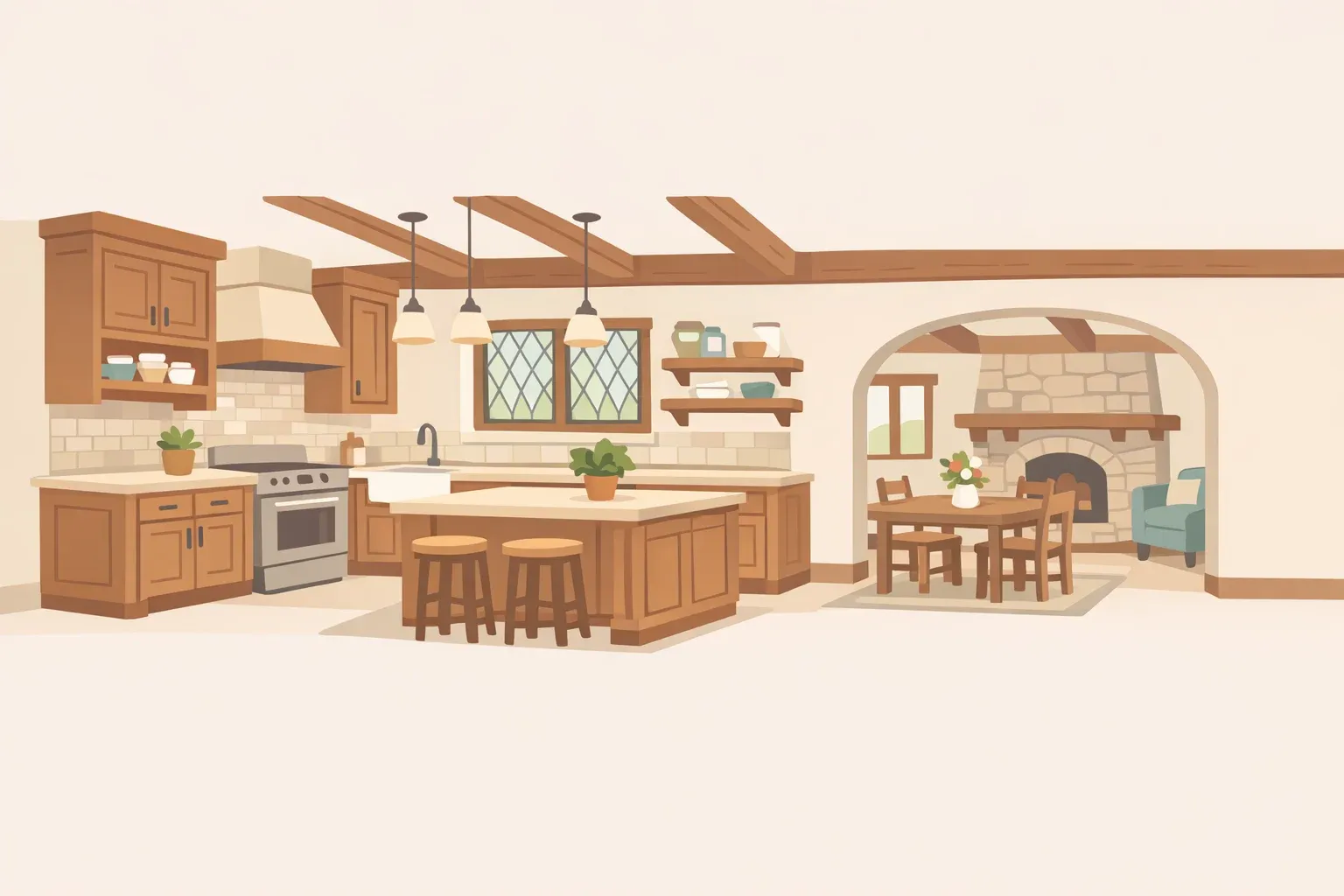
Natural materials, timber, stone, linen, woven textiles, and plaster are the practical vocabulary of soft architecture in most homes. They introduce tactile and sensory qualities that the biophilic design literature associates with reduced cognitive load and a calmer sensory environment. Stucco and lime plaster are particularly useful for adding surface softness, curves, undulations, and rounded transitions without structural intervention.
New manufacturing tools, including 3D printing and flexible framing systems, are also making curved structural elements more buildable and affordable than they were, the Los Angeles Times reported this past July. For homeowners, this means arched doorways and curved partition walls are a more realistic standalone option than they were a decade ago, even outside a full renovation.
Tier 3: Curved furniture interior design and decoration (lowest barrier, most talked about)
Rounded and curved furniture is the most accessible entry point and the most discussed. It's also where the evidence for specific wellbeing benefits is weakest. Based on the 2025 Scientific Reports study, form preference in furniture is genuinely variable. Don't buy curved pieces because you've been told curves are calming. Buy them if they fit the space and suit you.
Indoor plants belong in this tier for accessibility but near the top for evidence. Low-cost, no contractor required, and the literature consistently points toward stress reduction and mood support as outcomes. A plant in a window is more evidence-backed than a curved sofa in a dark room.
One guardrail for all three tiers: rounded edges home design works when it changes how a space functions and feels as a whole. Soft corners on furniture in an otherwise dark, rigid, poorly ventilated room don't move the needle much. Prioritize light and openness first.
What this shift is actually about
The disappearance of hard edges at home reflects something more durable than a trend cycle. Spaces that adapt rather than dictate, that draw on natural forms and materials because those things have modest but real connections to how people feel, that treat flexibility as a feature rather than an afterthought: this is a shift in expectation, not just in taste.
The 2025 Scientific Reports study found that furniture form preferences vary by individual, are not explained by personality, and showed only a small effect overall. The broader wellbeing case rests on light, ventilation, greenery, and adaptable layouts, not curves specifically. 3D printing and flexible framing are making curved residential construction progressively more buildable and less expensive, so the visual vocabulary will spread regardless.
The real question is whether the underlying principle travels with the aesthetic. Soft architecture becomes a shopping list, a curved sofa here, an arched mirror there, when it gets detached from the spatial logic that gives it meaning. The homes that get this right won't just look different. They'll work differently.
For the theoretical framework, ArchDaily's explainer is the best single starting point. For the wellbeing evidence, go to peer-reviewed biophilic design research and treat secondary summaries with appropriate skepticism until the empirical picture sharpens.

Comments
Be the first, drop a comment!