



Layered Drapery Trend: A Design Guide for Every Room
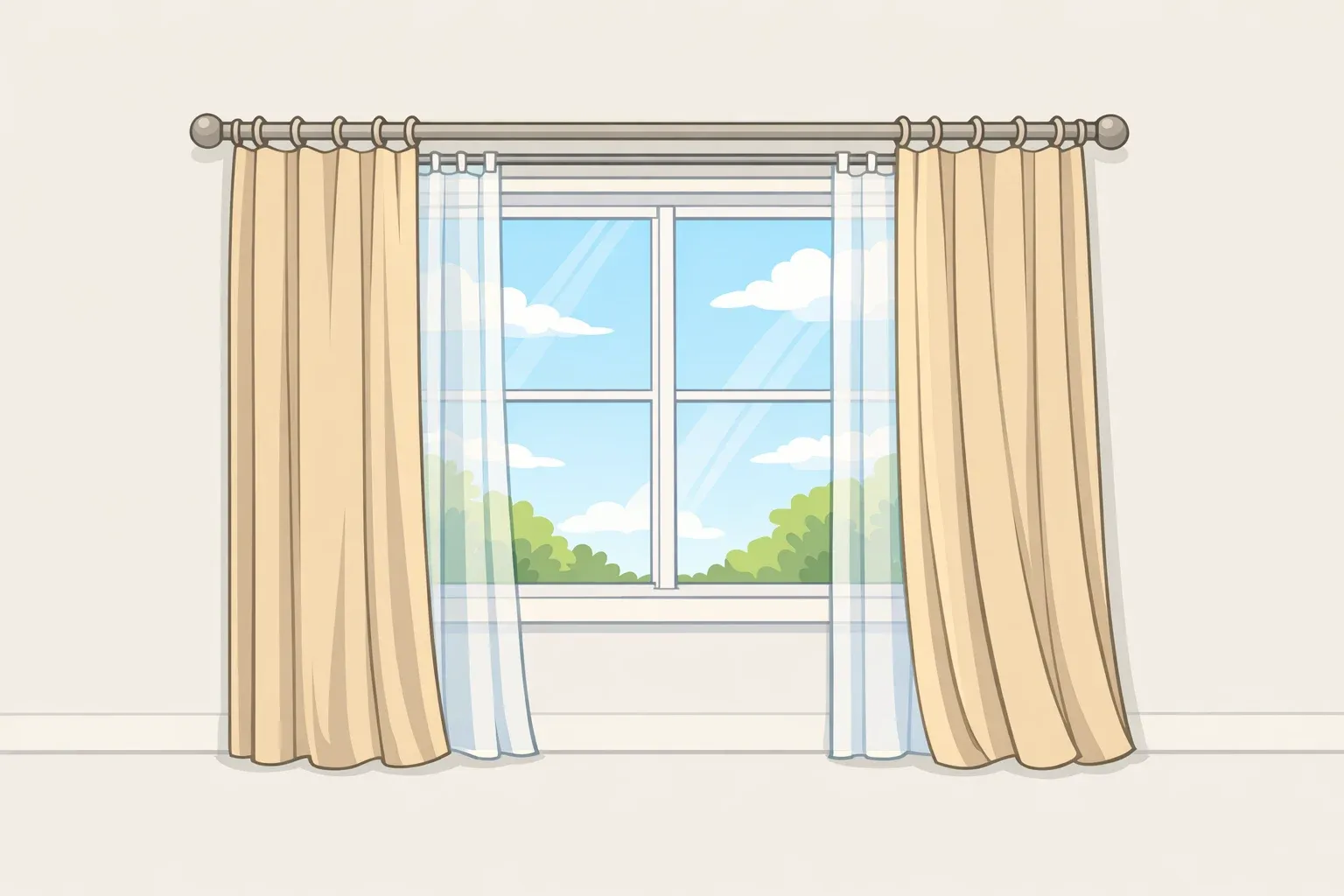
A growing number of designers are recommending two layers of window treatment instead of one, and the reasoning has nothing to do with decorative flourish. New York interior designer Sarah Lederman describes the payoff as adding "depth and visual richness that a single layer might not achieve, without taking up additional square footage" (Architectural Digest, 2 weeks ago). The layered drapery trend, as designers are now describing it, adds nothing to the floor plan and quite a lot to how a room actually feels.
It is not a cheap fix. Tailored drapery, quality rods and the hardware to mount them properly all cost real money. But it is a low-disruption one: no renovation, no new furniture, just a rethink of what is already hanging on the wall.
The timing lines up with something bigger. The layered drapery trend is surfacing alongside a broader retreat from stark, showroom-perfect rooms toward interiors designers are calling "warm minimalism" or "midimalism," different labels pointing at the same underlying instinct toward texture and personality (Good Housekeeping, 7 months ago; Shear & Wood, 4 months ago). What follows traces that shift, then gets specific about what actually works when you hang a second layer over your windows.
The shift designers keep describing, just not by the same name
Several designers describe a move away from stark, sterile minimalism, and the language keeps circling the same complaint. Sarah Storms of Styled by Storms puts it plainly: true minimalism "can feel stark and sterile, which [is] the opposite of how you want your home to feel" (Good Housekeeping, 7 months ago).
Designers agree on the direction more than they agree on what to call it. Peggy Haddad calls the emerging style "midimalism," describing it as "layered, lived-in, warm, textured... but never cluttered," while other designers reach for "warm minimalism" to describe what sounds like the same impulse (Good Housekeeping, 7 months ago). Treat these as two labels for one pole of the conversation rather than competing trends.
Lucinda Chambers, the former fashion director of British Vogue, offers a personal-voice version of the same pattern without claiming to represent it. She says comfort is where she starts when decorating a room, and that "style is secondary" (House Beautiful UK, 6 months ago). Her home is not evidence of a trend on its own, but it shows how a comfort-first instinct plays out for someone with a trained eye.
The clearest number in this conversation comes from a retailer rather than an academic study. Temple & Webster found that 67% of surveyed Australians say meaningful objects give a home its "soul," alongside a 64% jump in sales of warm-toned furniture (The Interiors Addict, 6 months ago). That data is retailer-sourced and specific to Australia. It is real evidence of appetite for warmer, more personal rooms, but it does not prove that layered drapery itself is being widely adopted elsewhere. A cost-of-living explanation offered by one Australian design blog, which frames the shift as a response to economic pressure and global uncertainty, is worth noting as one interpretation rather than a demonstrated cause (Shear & Wood, 4 months ago), and it is weaker evidence than the designer consensus on comfort and texture that shows up independently across multiple outlets.
How the layered drapery trend works in real rooms
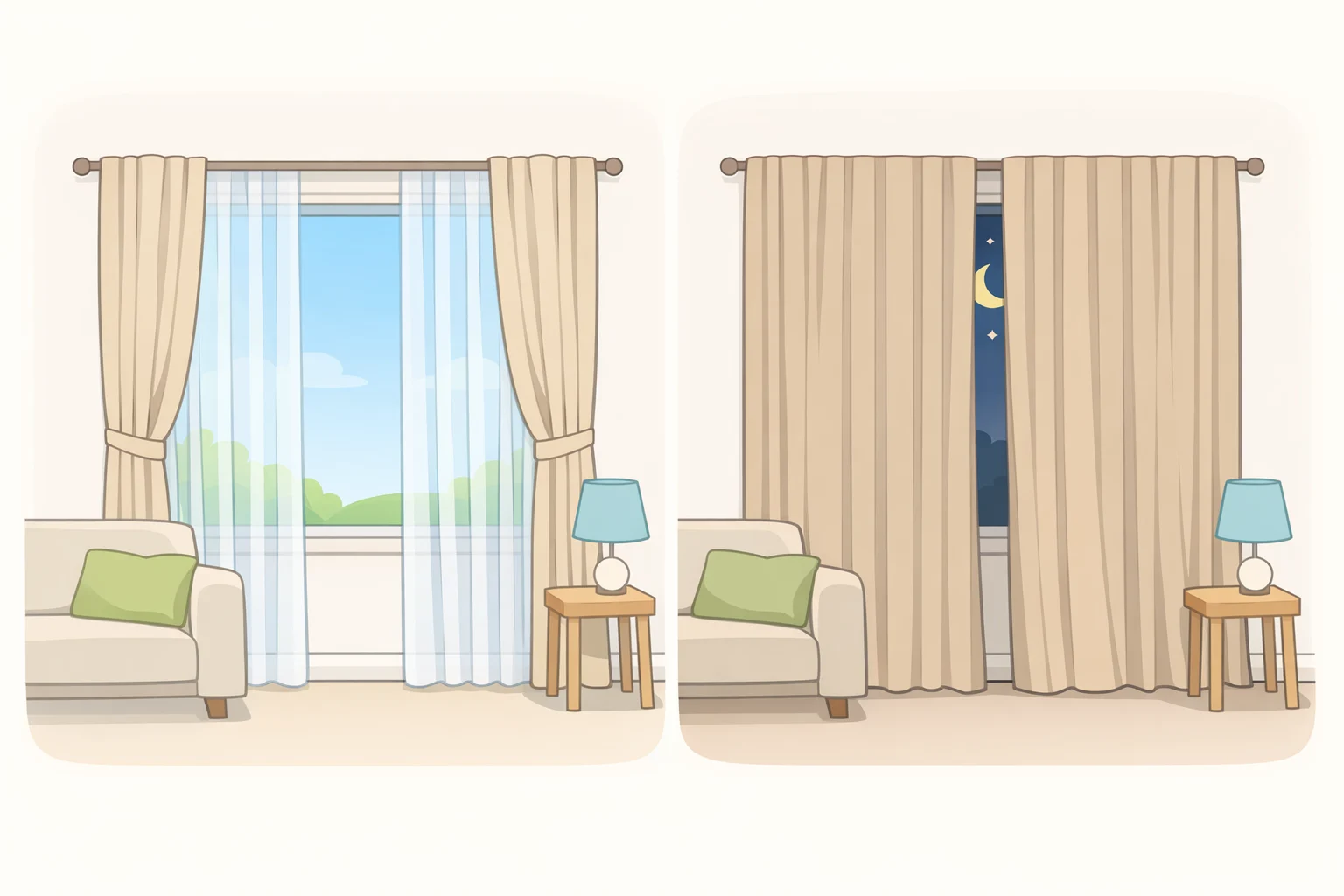
The wider shift favors rooms that flex between moods rather than holding one fixed, polished look all day. Layered window treatments are one of the few design moves that deliver that literally, not just visually, and the room itself never has to look one-dimensional to pull it off (Architectural Digest, 2 weeks ago).
Most homes already have enough coverage for basic privacy: a set of tasteful drapes or a set of functional blinds is usually all it takes to keep a room from being visible to the street (Architectural Digest, 2 weeks ago). The designer move goes further than that baseline. It means doubling up on drapery, or combining curtains and blinds together, to build something with more atmosphere than a single treatment can offer (Architectural Digest, 2 weeks ago).
Everhem cofounder Haley Weidenbaum frames the technique as solving a daily problem rather than a stylistic one. She describes it as a solution for spaces that need to move "from airy and bright during the day to cozy and secluded at night" (Architectural Digest, 2 weeks ago). Combining sheers, curtains, blinds or shades can offer more adjustable privacy, sound absorption and coziness than a single layer, similar to the multiple window treatments found in five-star hotel rooms (Architectural Digest, 2 weeks ago). Warmth and flexibility are not abstract here. They are mountable hardware and fabric choices, sitting on the wall above the window.
How to layer curtains, sheers and blinds
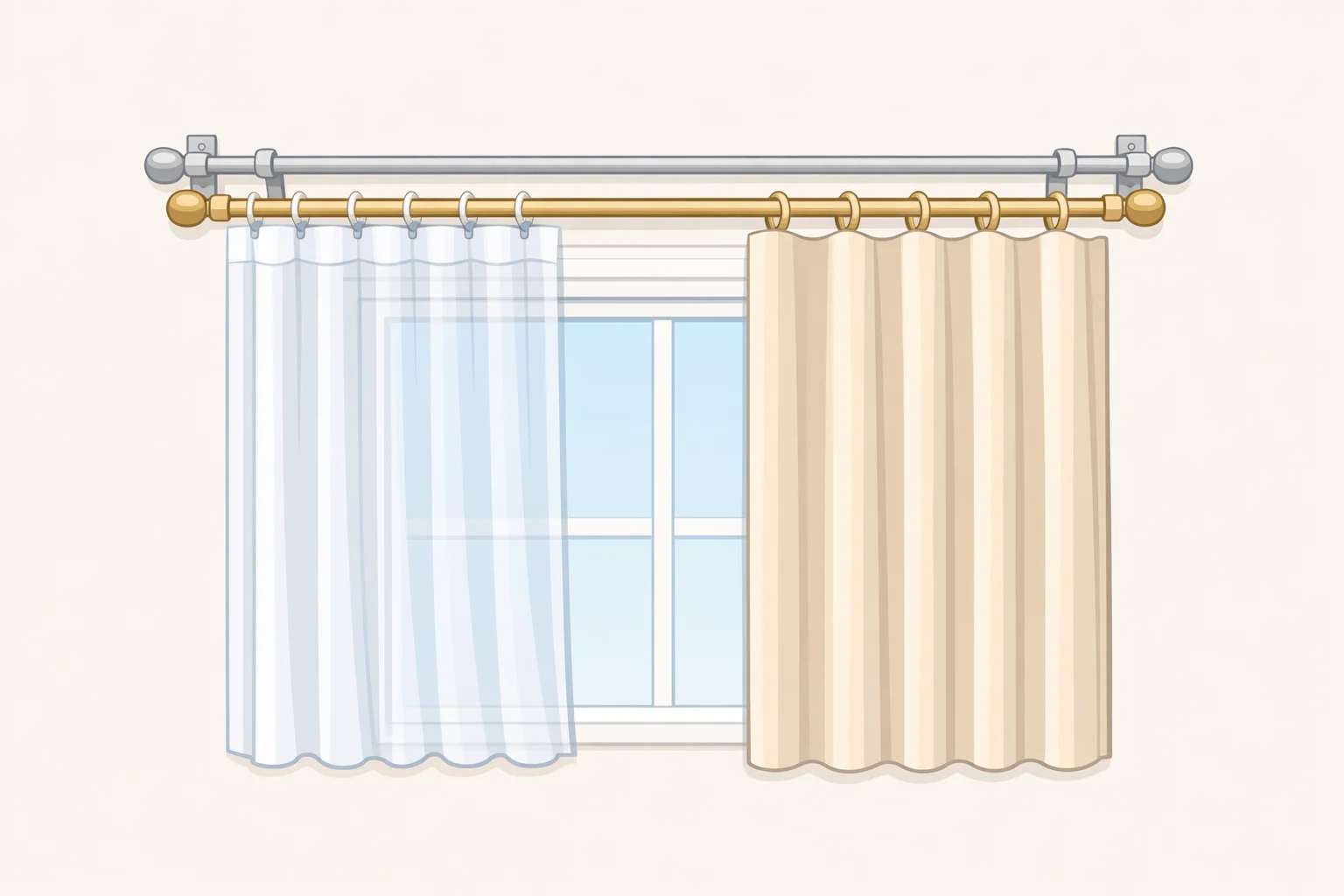
Sequencing is the first decision, and it is simpler than it sounds. Sheers sit closest to the glass for daytime light; heavier drapery hangs outside that layer for evening privacy and coziness (Architectural Digest, 2 weeks ago).
Bulk is a common risk with double layer curtains, and there is a specific way to head it off. Weidenbaum recommends mounting hardware high and wide, either a thin double rod or an inside mount paired with an outside mount, so the fabric does not feel heavy and the window does not appear smaller than it is (Architectural Digest, 2 weeks ago). Placing shades or blinds inside the window trim and curtains outside, mounted up near the ceiling, also elongates a room's visual line and creates the illusion of higher ceilings without covering up architectural details (Architectural Digest, 2 weeks ago).
Choosing between sheer-plus-drapery and shade-plus-drapery
Most people layering curtains and blinds together are really choosing between two setups, and the choice comes down to what the room needs first. Sheer-plus-drapery suits rooms where daylight is the priority now and privacy can wait until evening. Shade-plus-drapery suits rooms where stronger, more precise light control matters, or where the drapery's job is really to dress up the architecture rather than manage the light at all.
Architect Suzanne Lovell frames that division cleanly: shades and screens handle the "functional demands" of a space, particularly limiting sunlight, while drapery acts as "an extension of ceiling height," accentuating or emboldening a room's architecture (Architectural Digest, 2 weeks ago). When shades take the first layer instead of sheers, designers advise keeping a similar light-filtration level across both layers so they work together rather than fighting each other for control of the room's light (Architectural Digest, 2 weeks ago).
Material pairings worth trying
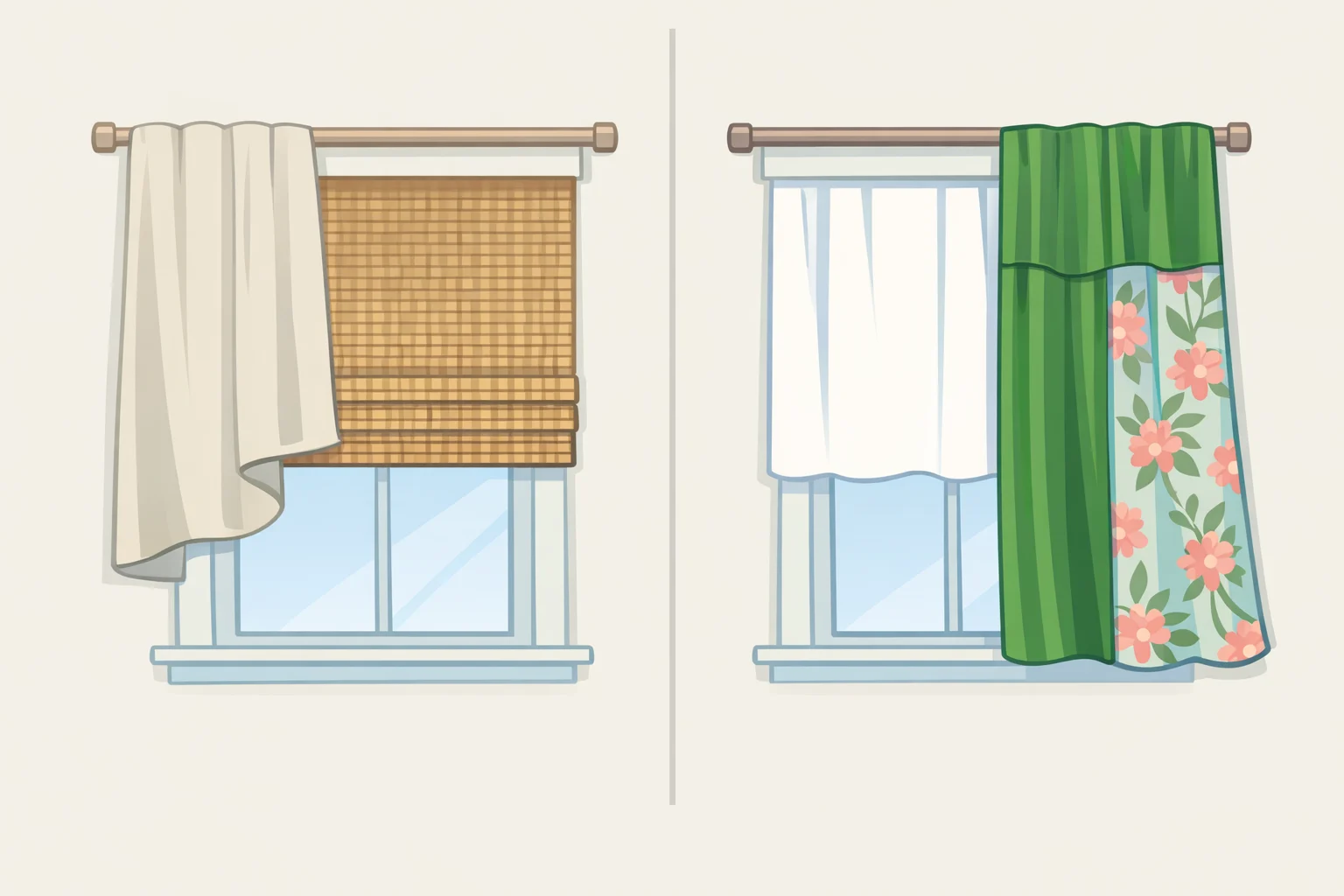
Some contrast between the two layers helps prevent them from looking overly matched and flat, according to Boston-based designer Nina Farmer. Her rule of thumb: fabrics "do not always need to be dramatically different, but there should be some level of contrast... so the layers feel purposeful and harmonious" (Architectural Digest, 2 weeks ago).
Two pairings show up repeatedly in the reporting, and they land in noticeably different places. A woven bamboo shade under an airy linen drape produces a relaxed, textural look (Architectural Digest, 2 weeks ago). For rooms that need more coverage and a bit more formality, a thinner cotton layer under a heavier velvet or patterned fabric creates balance and lends the window a sense of structure (Architectural Digest, 2 weeks ago).
There is a look worth avoiding on the finishing end, too. Studio Peake founder Sarah Peake favors a "soft fold style" over formal pleating specifically because layered treatments "sometimes" read as overly formal, pairing a sheer linen with a Roman blind for a result she describes as "cozy, full of texture and light" (Architectural Digest, 2 weeks ago).
Installation checklist
Pulling the whole technique together, the recurring advice from designers boils down to a short list:
- Mount hardware high and wide, either a thin double rod or an inside mount paired with an outside mount, to keep fabric from feeling heavy.
- Place shades or blinds inside the window trim and hang curtains outside, up toward the ceiling, to elongate the room's visual line.
- Match light-filtration levels between layers when shades serve as the base, so the two treatments cooperate rather than compete.
- Build in some material contrast rather than matching fabrics exactly, so the pairing feels intentional.
- Favor a soft fold over stiff, formal pleating if the goal is a relaxed rather than dressed-up finish.
Where layered curtains work, and where they don't
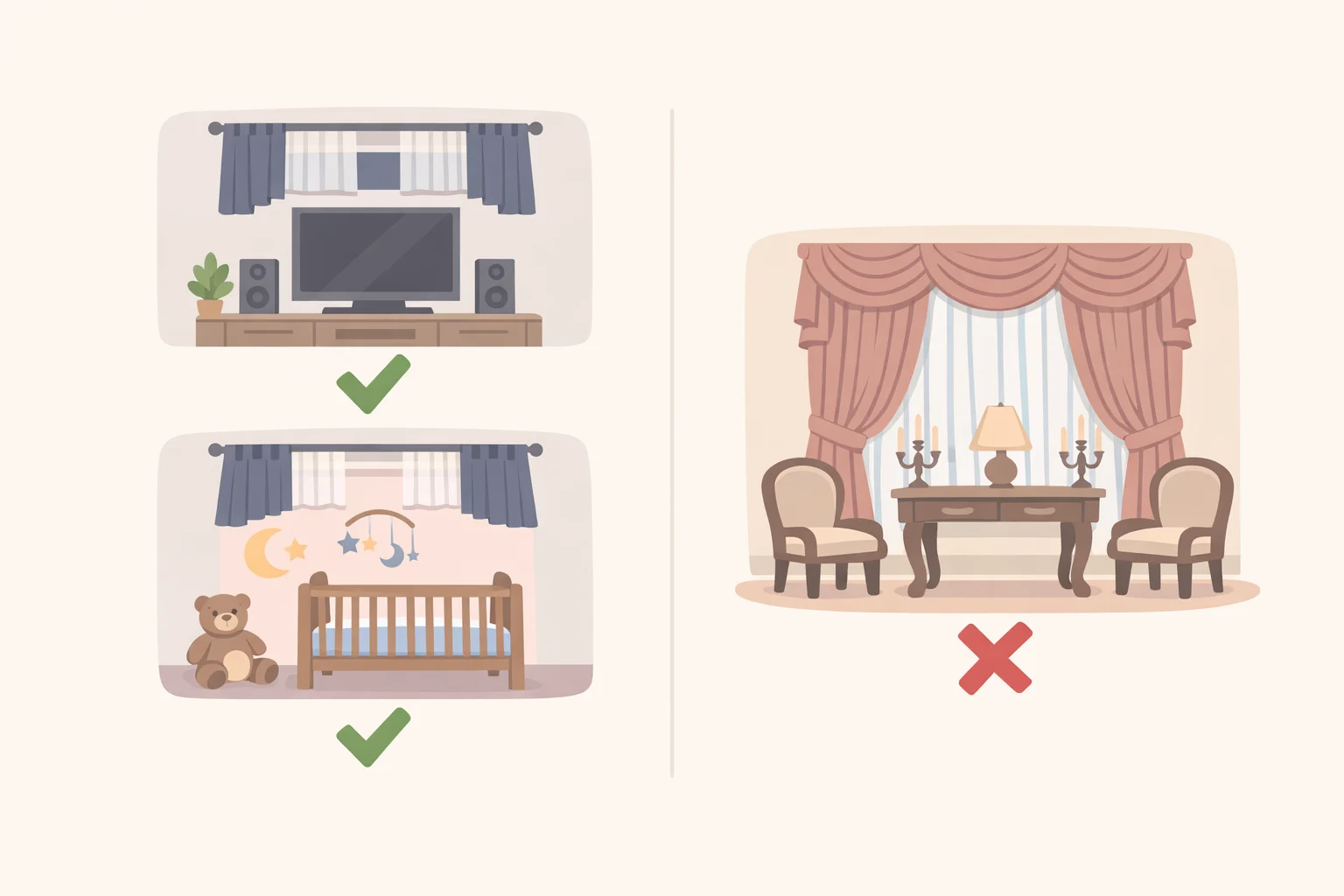
Not every room needs two layers, and the reporting is fairly specific about where the technique earns its keep. Media rooms that need to block glare and nurseries with shifting sleep schedules are the clearest fits, along with any room that genuinely needs to swing between bright and secluded over the course of a day (Architectural Digest, 2 weeks ago). Rooms with strong architectural detail, tall ceilings, crown molding, anything worth showing off, are also good candidates, since that is precisely where Lovell's drapery-as-architecture logic applies most directly (Architectural Digest, 2 weeks ago).
It is worth being honest about where the technique can backfire. Over-matched fabrics or heavy, formal pleating carry a real risk of tipping a layered window from cozy into stiff and overly formal, which is exactly what Sarah Peake's soft-fold approach and Nina Farmer's contrast principle are designed to head off (Architectural Digest, 2 weeks ago). High-and-wide mounting and matched light-filtration levels reduce the two most cited risks, visual bulk and clashing layers, but neither guarantees the result on its own; both depend on the fabric choices made alongside them (Architectural Digest, 2 weeks ago).
None of this requires signing up for a named aesthetic. Layered curtains can be added to a single problem window, in a single room, without asking the rest of the house to match.
What to take from this
The technique itself is well documented and designer-tested: sheers or shades paired with drapery, mounted high and wide, with intentional contrast in material and matched light levels between layers (Architectural Digest, 2 weeks ago). The broader claim, that "warm minimalism" is remaking homes at scale, remains directional rather than proven, resting on converging designer opinion and one market's retail data rather than independent, global adoption figures (Good Housekeeping, 7 months ago; The Interiors Addict, 6 months ago).
That uncertainty about the bigger trend does not change what is useful about the smaller one. Readers do not need to adopt midimalism, warm minimalism, or any other named aesthetic to benefit from treating windows as a place to layer, for light control, privacy and texture. It is a specific, well-tested change that makes a room feel more considered, whatever the rest of the house ends up being called.







Comments
Be the first, drop a comment!