



Jeremiah Brent outdoor design trend explained for 2026
House Beautiful's tour of a 10,500-square-foot Los Angeles home designed by Jeremiah Brent put outdoor space at the center of the story, not as a finishing touch but as something engineered around gathering. Separately, landscape designers across five U.S. cities are reporting the same client demand: smaller, more defined outdoor zones built for comfort and conversation rather than visual effect. Where those two threads meet is where the Jeremiah Brent outdoor design trend for 2026 comes into focus.
The shift has a practical definition. Defined outdoor pockets layered for shade, seating, and small-group use are replacing the single, sweeping hardscape patio that photographs well and gets used twice a summer. Designers interviewed by Landscape Professionals in Tennessee, Colorado, Arizona, Ohio, and North Carolina all described a move in this direction. The timing is not random.
What the Jeremiah Brent outdoor trend actually looks like on the ground
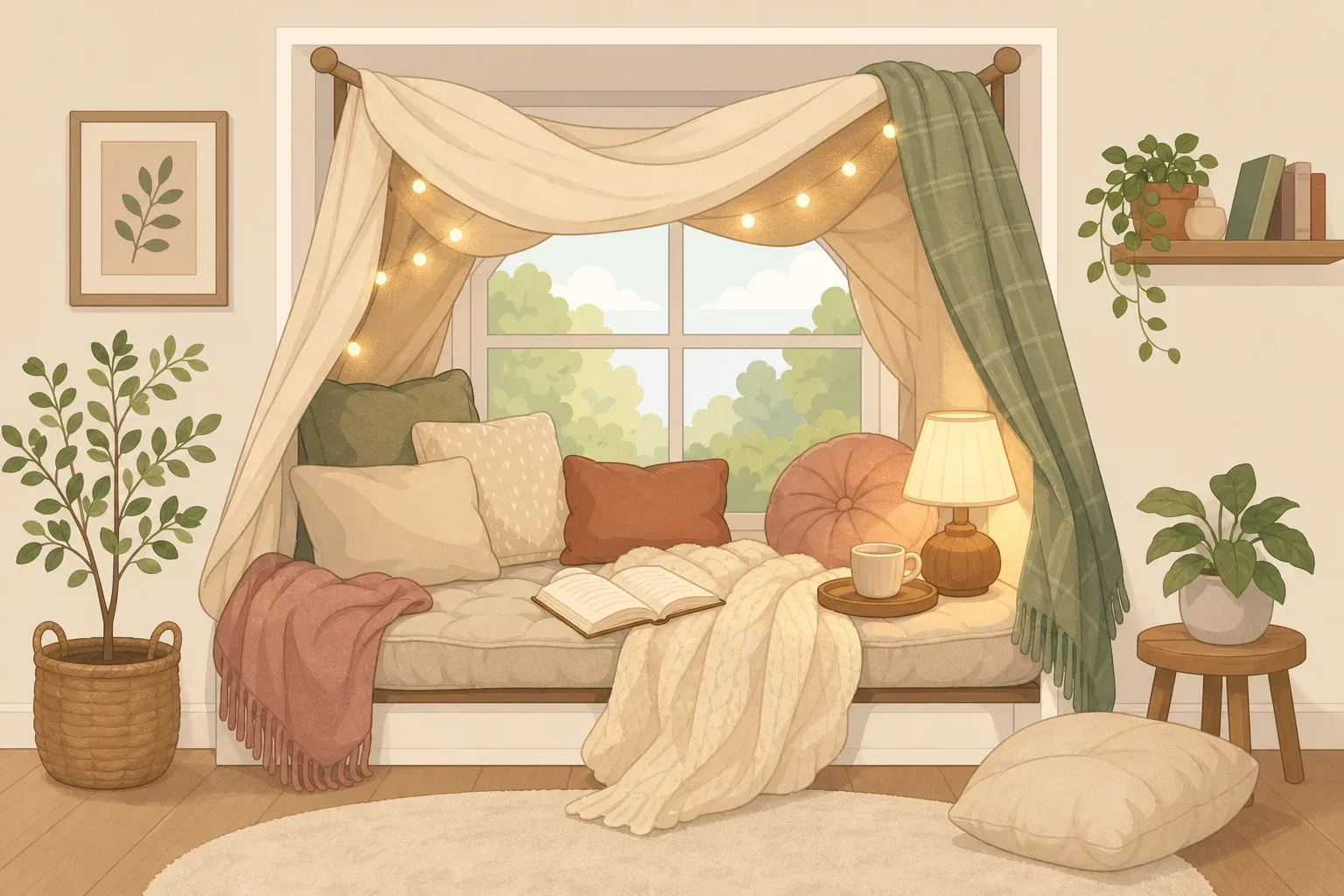
Tara Piergies-Baker of The Addison Group, based in Nashville, described the coming shift in plain terms: "A very strong trend that I expect to really explode in 2026 is these small, intimate spaces," specifically invoking the word "nook" and connecting it to an older tradition of garden rooms rather than large, hard-paved expanses. "It's less of these big, huge, open, clean, hard spaces, and much more of a personal, comfy, intimate aesthetic of a little nook with a comfortable chair," she told Landscape Professionals last December.
Jake Leman of Singing Hills Landscape in Aurora, Colorado, put it in functional terms: "Homeowners want a space that feels like a retreat and is somewhere to unwind, but also flexible enough for casual entertaining, small groups when needed," per the same report. The operative word is flexible. Not a showpiece. Not a performance space.
The design logic behind this involves four practical levers:
- Zoning: dividing the yard into defined pockets rather than one continuous surface
- Seating orientation: arranging chairs inward, toward a fire feature or table, rather than outward toward the view
- Enclosure and shade: using pergolas, screens, hedges, or overhead structures to create the psychological sense of being "in" a space
- Proximity to the house: locating the primary gathering zone close enough to a door or window that inside and outside feel connected
That last point runs through Brent's House Beautiful project directly. An open window overlooking a yard is "so romantic," he told the magazine earlier this spring. That feeling is engineered, not stumbled into.
Dan Waters of Creative Environments in Tempe, Arizona, noted that fire pits are now outpacing fireplaces in client requests because they pull people toward each other rather than positioning them as an audience, according to Landscape Professionals. "Furniture that once you sit down, besides maybe getting up to grab a drink, you want to relax and enjoy the fire and the company," Waters said. The seating geometry is deliberate.
How the indoor-outdoor connection makes intimate spaces work
The nook doesn't function in isolation. Its relationship to the house is a design discipline in its own right.
Piergies-Baker described "a continued blurring of the interior to the exterior, as far as architecture to landscape architecture," with porches gaining retractable screens and heaters and protected garden zones tied to interior rooms through deliberate sightlines. "Then you have another zone that's more of a protected garden space, and there are these real connections visually from the inside of the home to the exterior," she explained. The point isn't more square footage. It's making the outdoor zone feel like a room that happens to have open sky above it.
Brent's L.A. project executed this directly. The indoor-adjacent bar area used wicker Rohé Noordwolde barstools, a custom slate and bronze table by J. Pickens, and white oak millwork chosen specifically to make it feel like "you've gone out, even on a night in," he said. The guest suite got its own separate outdoor zone designed to feel like "a vacationesque getaway for anyone visiting." The whole property, Brent said, feels like "a nest." That language isn't styling talk; it describes an intent.
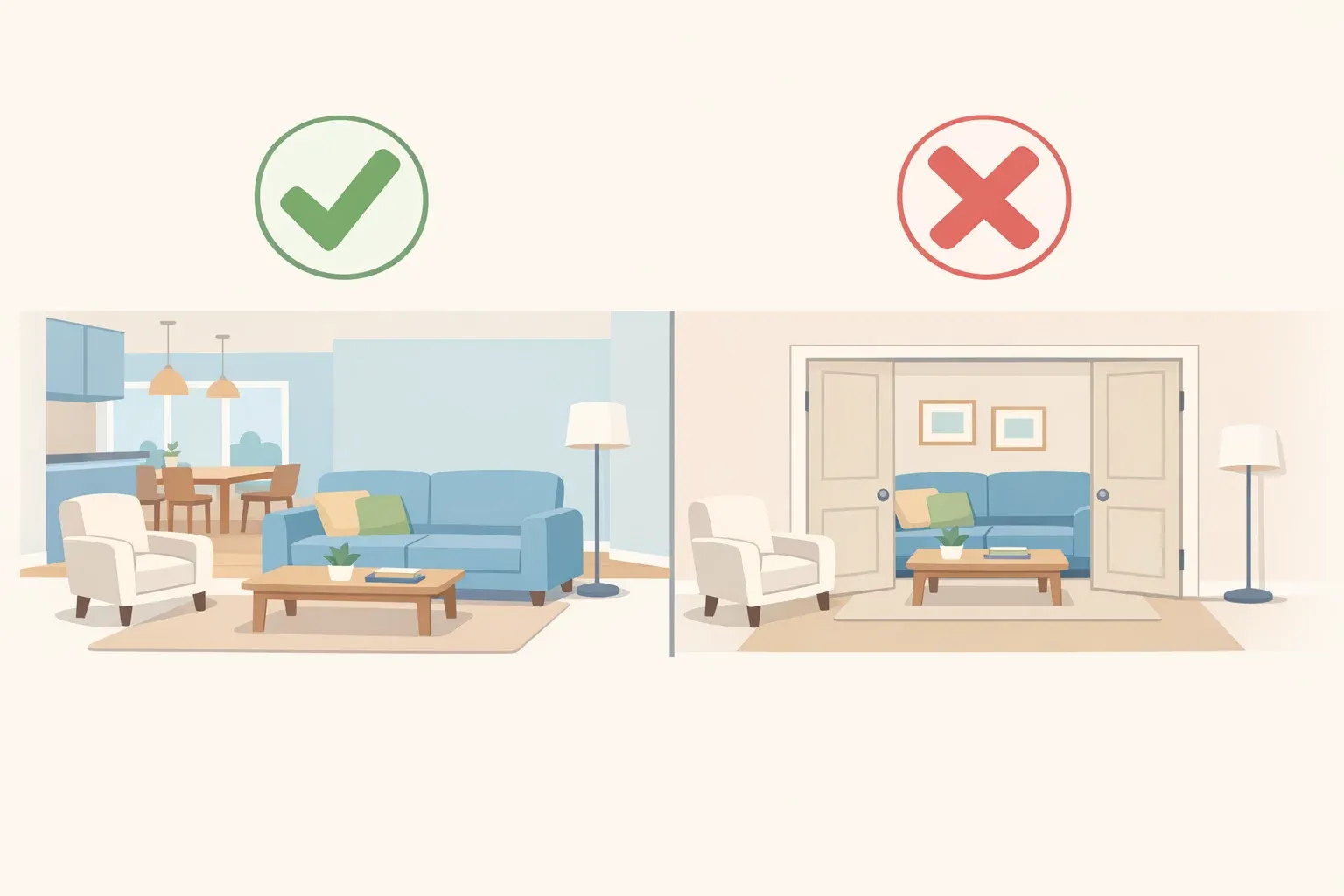
Tim McAuliffe of The Outdoor Living Designer in Wilmington, North Carolina, described the seamless indoor-to-outdoor transition as one of the most sought-after features among his clients, suggesting pocket doors or barn doors as the physical mechanism, per Landscape Professionals. Nick Berger of Hidden Creek Landscaping in Hilliard, Ohio, pointed to accordion doors and four- to five-panel sliding systems as another popular approach, making interior living space and an exterior pocket feel like a single room rather than adjacent ones.
Outdoor furniture has tracked the same direction. Tobias Petri, managing director of design studio Holzrausch, observed that outdoor pieces are now "indistinguishable from indoor pieces in terms of design," with durability built into the material choice rather than announced through industrial aesthetics, per Martha Stewart. Interior designer Vanessa DeLeon separately noted that color palettes are shifting toward warmer, homelier tones, specifically warm taupes, terracotta, and olive greens, that reinforce continuity between environments rather than signaling a hard break from indoors to out, per the same report.
Applying this at any scale
The design principles don't require a 10,000-square-foot property. Waters noted that homeowners are increasingly reclaiming front courtyards and side yards as usable gathering spaces, describing "the desire to have a space that we can come outside in the front and relax," he told Landscape Professionals. A balcony with two deep chairs, a side table, and a shade structure applies the same logic as Brent's guest suite courtyard. The scale changes; the intent doesn't.
On materials, the consistent direction across multiple regional markets is natural texture over manufactured uniformity. Leman cited limestone, warm-toned pavers, and wood accents as remaining in strong demand, while McAuliffe pointed to stone, gravel, and reclaimed wood specifically, per Landscape Professionals. Piergies-Baker put the trade-off plainly: rather than 40 linear feet of manufactured stone for an outdoor kitchen, clients are now choosing 20 to 30 linear feet of natural stacked stone paired with high-end appliances. DeLeon echoed the same direction, noting that raw stone, reclaimed wood, and clay finishes are becoming the surface language of choice, per Martha Stewart. Spend on one good surface or structure rather than spreading the budget across visual filler.
Brent's own decision-making filter translates directly here. His question for any design element: "Why should we have this object? What problem does it solve? And the problem is not always, you know, something that you need to solve. It could be bringing joy to your life," he said. Applied outdoors, that filter produces a useful checklist: Does this seating make people stay longer? Does this feature draw people toward each other? Does this material feel good underfoot?
Under inflation pressure, Leman noted that many clients are choosing to invest in high-quality foundational elements now and layer in smaller finishes as budgets allow, per Landscape Professionals. The structure, the surface, the shade come first. Everything else is phased.
Why this direction has staying power
What makes this shift credible is the independence of the sources describing it. Brent is speaking from active project work published earlier this spring. The landscape professionals surveyed by Landscape Professionals last December work in Tennessee, Colorado, Arizona, Ohio, and North Carolina. Their client bases don't overlap. Yet they're describing the same correction in the same terms.
The wellness dimension adds another layer. Tyler Bigham of Alterra Landscape Design in Richardson, Texas, said that "shade structures, water features, and quiet seating areas will continue to be important as clients look for comfort and wellness in their outdoor spaces," per Landscape Professionals. Piergies-Baker has separately seen higher demand for smaller, high-end pools and reflection ponds, with cold plunge pools and meditation spaces increasingly folded into the intimate outdoor living framework, per the same report. The throughline is consistent: people want to feel something outside, not just look at something.
Brent's definition of taste as "the execution of personalization" points to where this ends up, per House Beautiful. Outdoor spaces that look nothing alike but feel completely right for the people who use them. That's the opposite of a trend you copy. It's a standard you apply, and one that doesn't expire when the feed moves on.
Comments
Be the first, drop a comment!