



What the Modern Folklore Interior Design Trend Actually Means
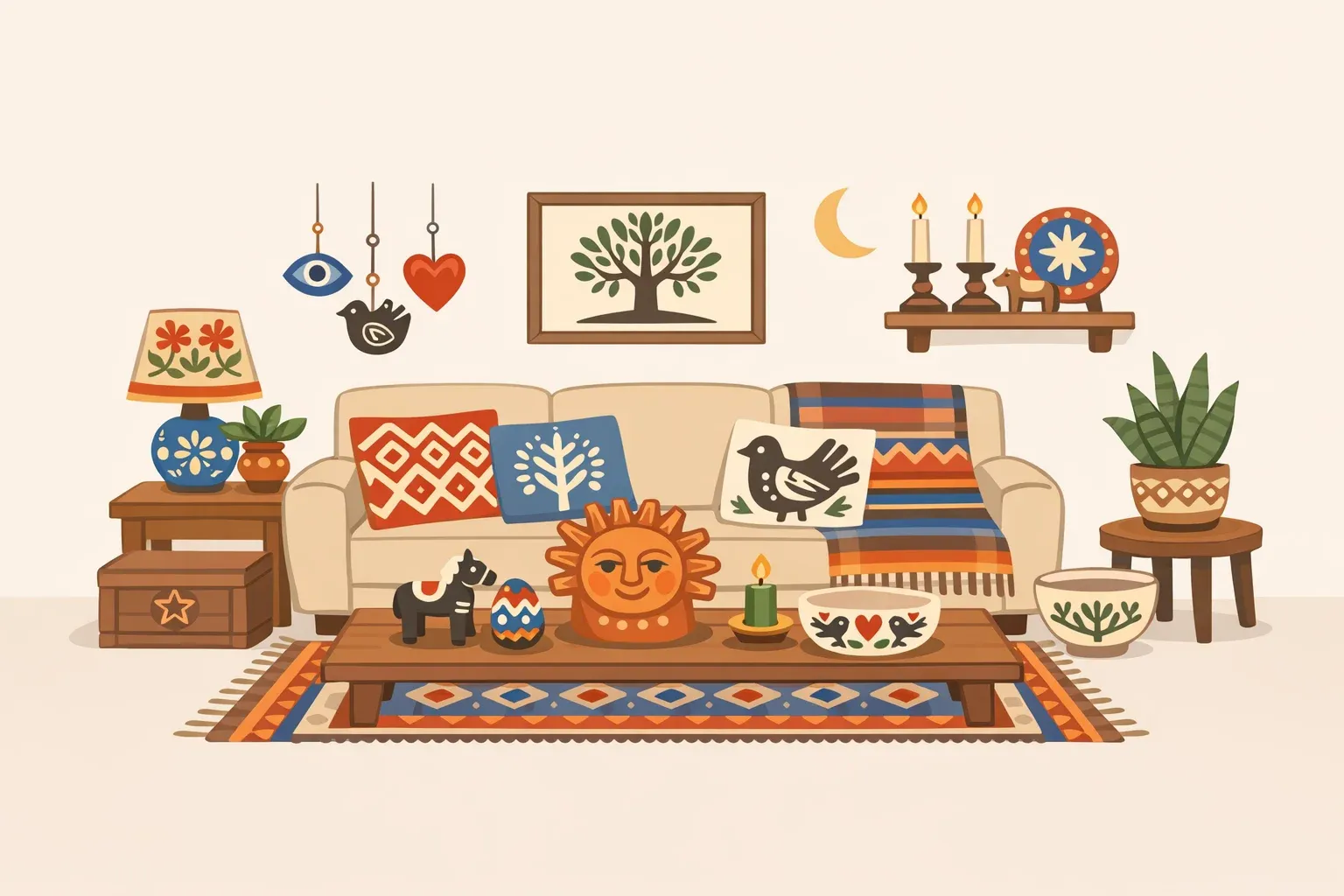
The rooms getting serious attention in 2026 are not the ones with white walls and concealed storage. They are layered with handmade ceramics, regional textile motifs, inherited objects, and symbolic pattern. Spaces that look like they accumulated meaning over decades rather than arrived complete from a single retailer.
That shift is what this piece is about. The modern folklore interior design trend is coherent enough to deserve a proper definition. What follows explains what it actually is, what separates it from cottagecore, maximalism, and vintage-inspired eclectic interiors, and how to bring it into a home without producing something that reads as a themed set. The focus is the livable, personal version most people will encounter, not the AI-mediated avant-garde branch, which exists and will be noted briefly.
Three signals suggest the momentum is real. Designer Chrissie Anthony Haim describes the client shift plainly: after years of white, minimal interiors, people are craving depth, personality, and character, House Beautiful reported this past spring. Maison&Objet formally named "Neo-Folklore" a central design direction at its January 2026 edition, presenting heritage craft and cultural symbolism as the aesthetic language of the near future, Maison&Objet previewed last October. And IKEA's OMMJÄNGE collection, drawn from 19th-century Swedish folk art and built for apartments under 50 square meters, positions itself explicitly as "maximalism with meaning," a direct counter to sterile minimalism at mass-market price and scale.
None of these sources prove that minimalism is finished. Together, they represent a client shift, a trade-fair forecast, and a retail launch converging in the same direction at the same time. That is harder to dismiss as coincidence than any single data point.
What's driving the return of nostalgic interior design trends
Two pressures are converging, and they are not the same thing.
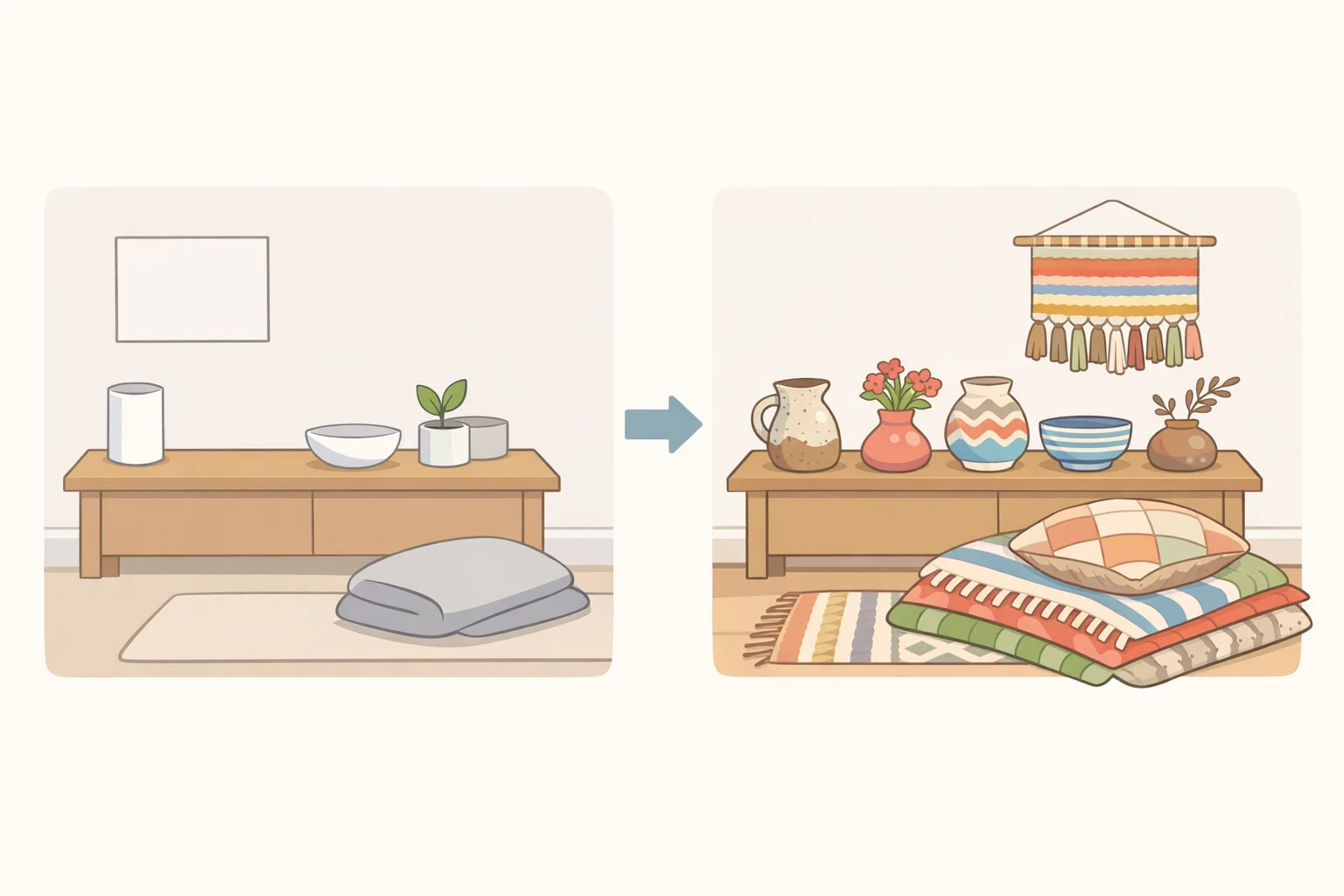
The first is aesthetic exhaustion. A decade of minimal interiors, shaped as much by the algorithm as by daily life, produced spaces that photograph cleanly and feel generic to inhabit. The second is closer to emotional need: in a heavily digitized environment, objects that are visibly handmade, locally rooted, or personally significant carry a weight that mass-produced items cannot. Nostalgia opens the door. The desire for craft and meaning is what keeps people inside.
The nostalgia signal is easy to track. By January, TikTok searches for 2016 had spiked, with over 55 million videos using a filter that recreates the rose-tinted warmth of early Instagram photography. Designer Nathan Turner reads this as longing for a moment when social media felt "a little bit more carefree." That era was also, as designer Sasha Bikoff notes, a high point for maximalism: jewel tones, bold pattern, unashamed color saturation. The nostalgia is partly for the aesthetic permission that came with it, ELLE Decor reported in January.
Permission alone does not explain the full appetite. Kim Lewis connects the hunger for handmade objects directly to digital overload: after AI and mass production, she argues, pieces with visible craft and genuine history bring a personality that nothing algorithmic can replicate, House Beautiful reported. House & Garden frames it as something more structural: a yearning for connection to the handmade, the seasonal, and the natural world that minimalism was never designed to provide.
Maison&Objet's Neo-Folklore also incorporates an AI-mediated branch of the trend, where heritage symbols are processed through digital tools and synthetic materials. That experimental end of the spectrum remains well removed from what most people will bring into their homes.
How revivals actually function is illustrated by Turner's recent work. Rather than reproducing the 2016 rose-quartz palette, he completed a library that deepens it into burgundies and plums: the same sensibility reinterpreted rather than replicated, ELLE Decor reported. That distinction matters when trying to understand what modern folklore decor looks like applied to a wall.
Storytelling through home decor: what modern folklore is and how it differs from vintage-inspired eclectic interiors
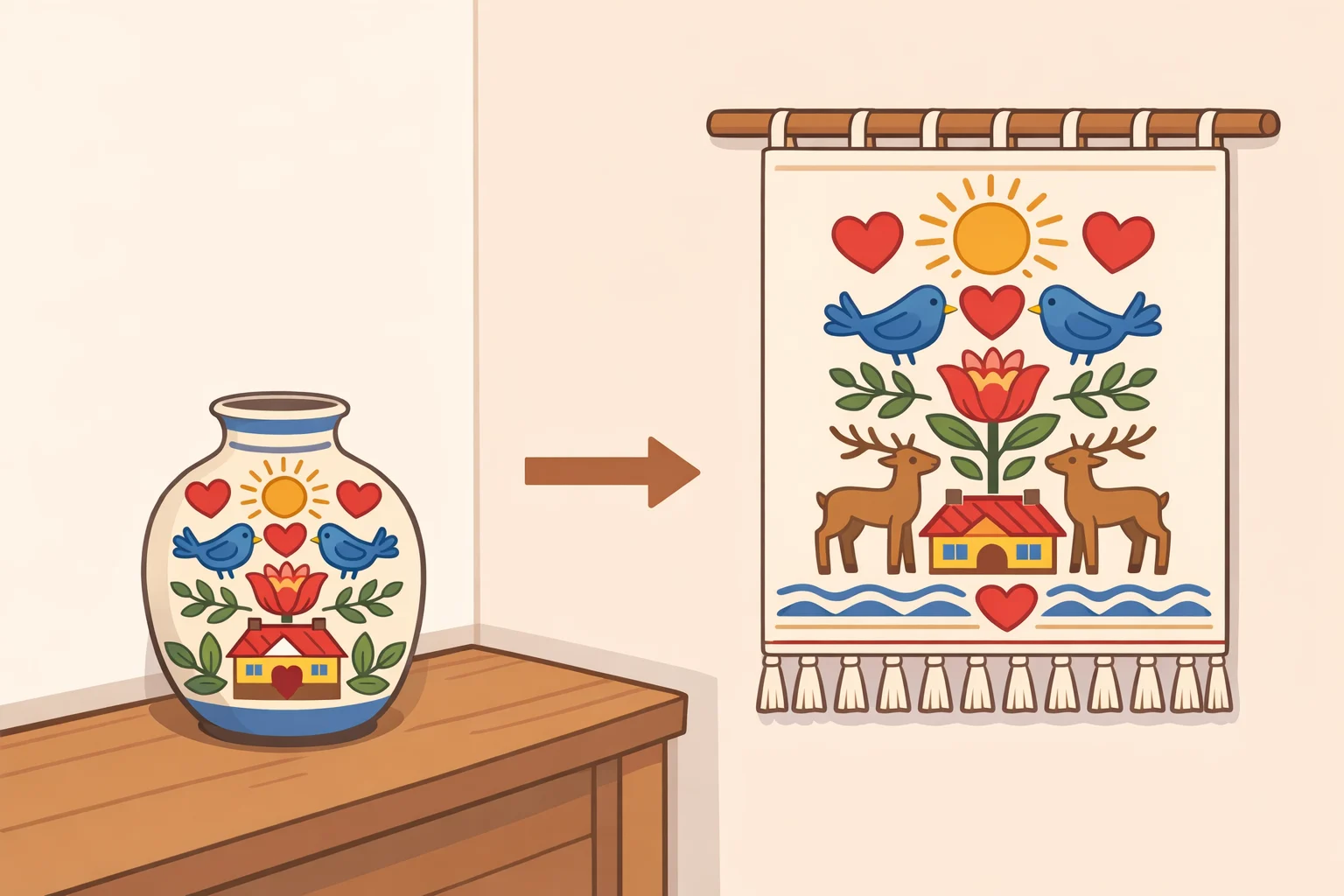
Modern folklore is defined by three qualities working together: handcraft and material authenticity, symbolic or narrative motifs rooted in a cultural or personal tradition, and a sense that the space was collected over time rather than styled at once.
Cottagecore shares the softness, not the symbolic layer. It is pastoral and romantic, aesthetic-first, with meaning optional. Maximalism shares the boldness but not the craft ethic; visual abundance is the point and story is not required. A vintage-inspired eclectic interior can have layering, mixed eras, and genuine objects, and still miss the mark if those objects have no story connecting them. What distinguishes modern folklore is legible meaning. Every significant object earns its place because it refers to something.
Ceramicist Freyja Lee describes craft traditions as a language passed down through generations: basket weaving, pot-making, oral storytelling. Her slipware ceramics depicting sirens, Apollo, and Eros carry that lineage directly into contemporary objects, House & Garden reported last October. The pieces are not decorative for decoration's sake. They hold narrative.
Textile designer Beki Bright's screen-printed corn dolly motif illustrates the defining quality concisely. Developed after inheriting her grandfather's collection of corn dolls, and referencing harvest traditions tied to the Durham chandelier, a single cushion functions simultaneously as personal tribute, regional history, and nearly forgotten rural craft, House & Garden noted. Three layers of meaning in one object. That density of reference is what separates this aesthetic from its neighbors.
The Green Man, a foliate-head motif associated with spring and rebirth depicted by Shropshire ceramicist Prue Piper, is prominent enough to have appeared on King Charles III's Coronation invitations. It shows how long-standing folk symbols move between sacred, civic, and domestic registers without losing their weight, House & Garden reported. The symbol is old. Its capacity to mean something is not.
At the mass-market end, IKEA's OMMJÄNGE collection translates the aesthetic into accessible form: solid pine, wool, glass, hand-woven poplar baskets, wire-forged hooks. Familiar craft materials recontextualized for apartment living rather than museum display, City Magazine reported last year. Designer Maria Vinka drew inspiration from a vibrant 1846 Swedish bridal portrait, and the resulting collection treats folk art as a living source rather than a heritage exhibit: neither nostalgic nor too serious, in the designers' own words.
Kim Lewis supplies the cohesion test: every element, whether color, vintage pieces, or sculptural details, should feel like part of a larger story rather than a series of independent styling decisions, House Beautiful reported. Remove the connective story and you have an eclectic interior. Keep it and you have folklore.
Where the modern folklore interior design trend shows up and how to bring it home
The trend is visible across design scales, from trade-fair forecasting to high-street retail to independent makers working in techniques that are rapidly disappearing.
Maison&Objet's Neo-Folklore framework, structured as six distinct design worlds ranging from grounded heritage craft to more speculative cross-cultural hybrids, signals that this direction has been formally built into design forecasting for 2026 and beyond. That kind of institutional codification matters: it shapes what gets into development pipelines.
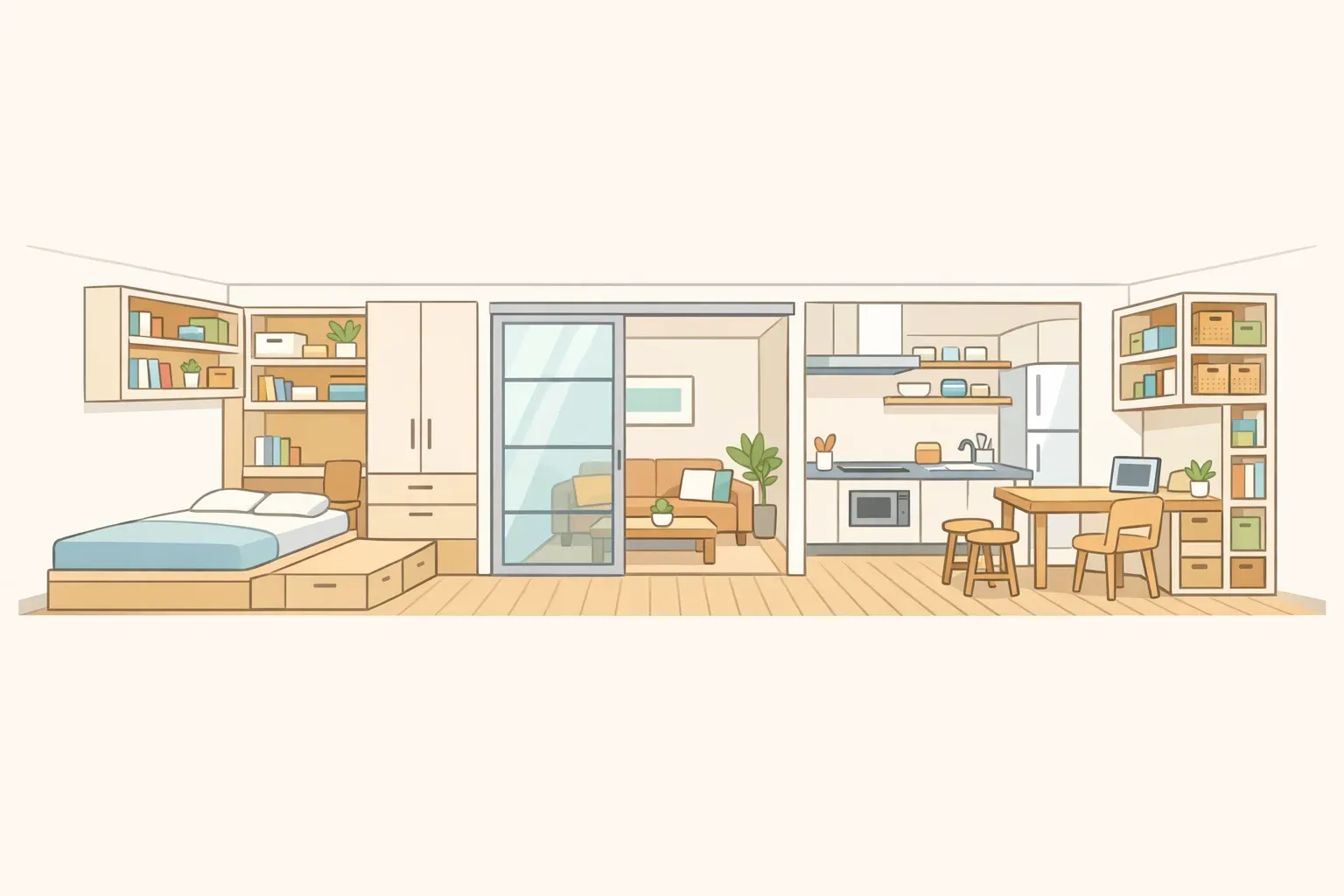
IKEA's OMMJÄNGE sits at the mainstream end of that pipeline. Poplar baskets woven using traditional methods, lanterns referencing historical bridal dress, folding tables designed for the space constraints of contemporary apartment living: the collection demonstrates that whimsical home decor has moved past the design press and into the shopping cart, City Magazine reported.
At the independent maker level, the objects that most directly embody the trend's values come from artists working with slipware, screen-printing, repoussé, and chasing, some of them endangered techniques. Silverware artist Bryony Knox, who has created pieces for HRH Princess Anne and Winchester Cathedral, works with repoussé and chasing to produce objects that carry centuries of craft knowledge in their surface.
The practical argument for this aesthetic is that its most distinctive quality, the sense that it was not assembled from a single retailer, is also forgiving to execute. Small, deliberate moves with genuine craft objects and personally meaningful motifs work. The failure mode is assembling the look without the story: objects chosen for visual interest rather than narrative produce clutter, not folklore.
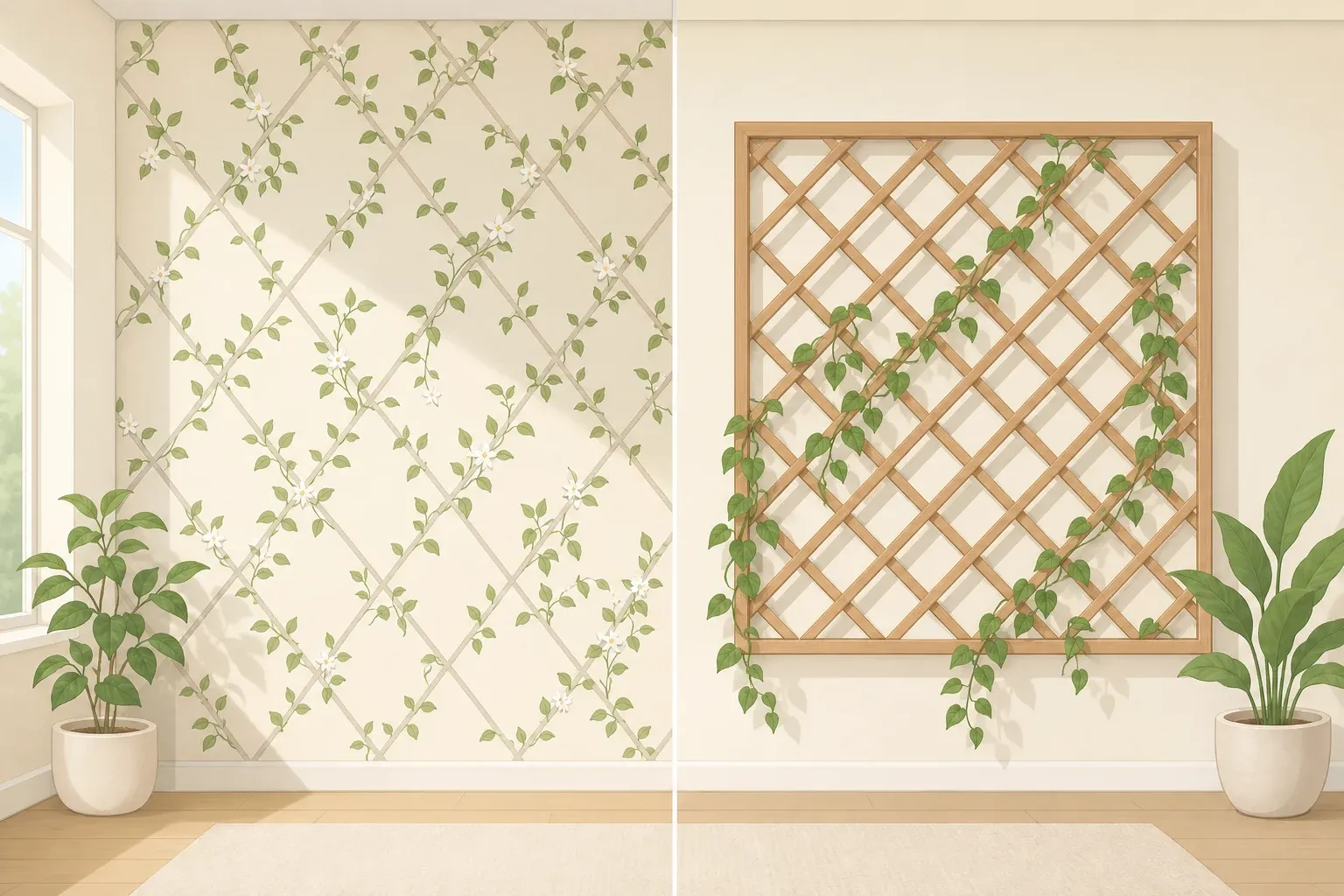
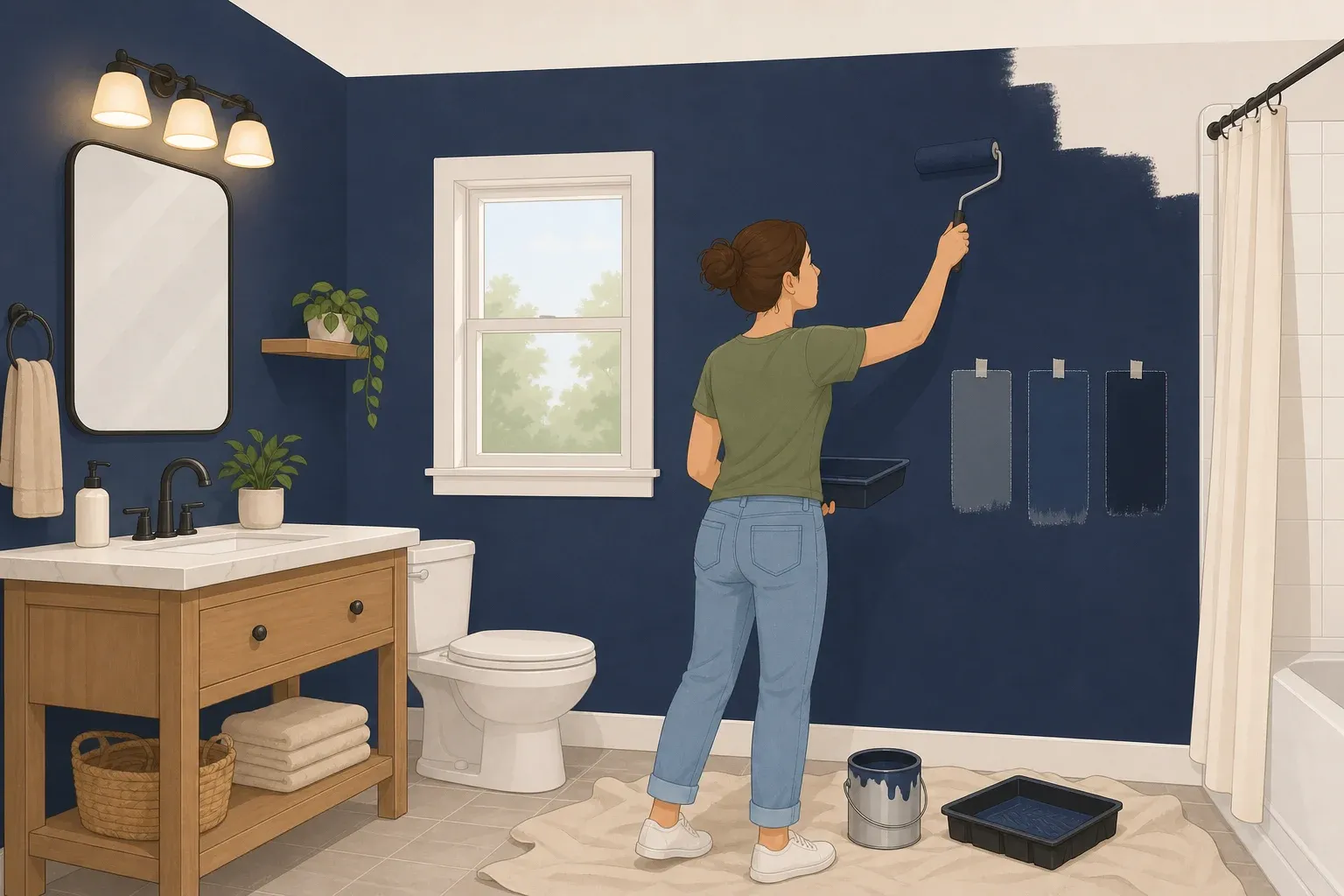
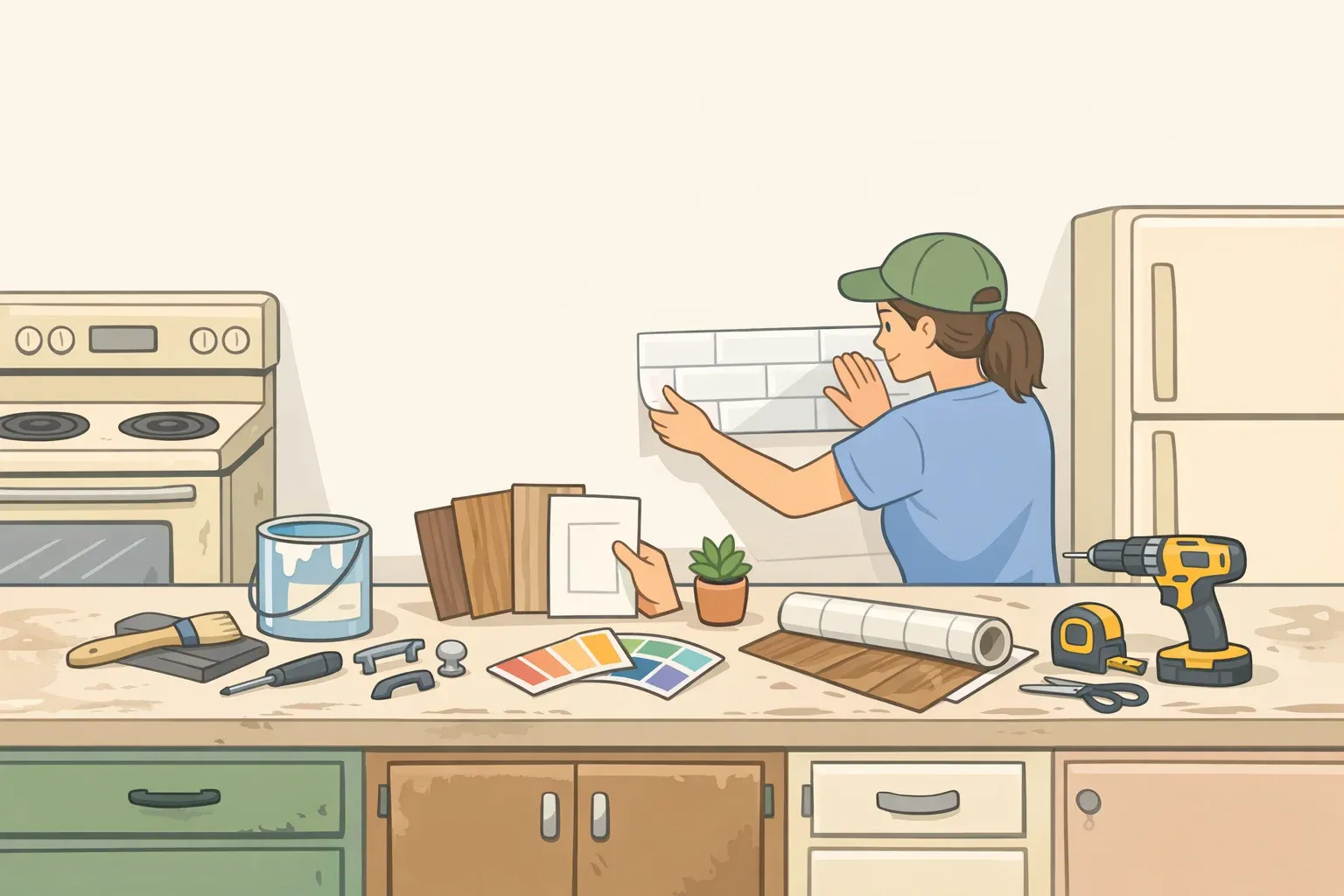
Introducing this sensibility does not require a full redesign. Designers point to practical starting points: treating the ceiling as a fifth wall with a bold paint color or wallpaper, painting a closet interior in a deep jewel tone, swapping cabinet hardware for pieces with genuine character, House Beautiful reports. For anyone for whom a full room transformation is out of reach, House & Garden positions folklore-inspired homewares, ceramics and screen-printed textiles referencing seasonal superstition and rural motifs, as the natural entry point.
From there, a few principles extend the advice practically:
-
Start with one anchor object that has a story you can name. A handmade ceramic, a screen-printed textile, an inherited piece. If you cannot describe where it came from or what the motif refers to, it is décor. If you can, it functions as folklore.
-
Choose symbolic pattern intentionally. Corn dollies reference harvest ritual; the Green Man signals renewal; woodland creatures carry regional legend. The motif does not need to be ancient, but it should connect to something you actually know. Draw from your own context, family history, regional tradition, a place that matters, before reaching for the unfamiliar.
-
Collect rather than shop a look. Craft fairs, regional heritage markets, and thrift stores produce the mix-of-eras quality that no single branded collection can replicate. A room that looks gathered over time reads differently from one that arrived in a single delivery.
-
Use material as a first signal. Pine, wool, hand-thrown ceramics, woven baskets, patinated metal: these carry the tactile register of the trend before any motif or pattern does. Swapping one synthetic surface for a natural material shifts a room's tone immediately.
One caution worth stating directly: folk motifs carry specific histories and community meaning. Drawing from traditions you understand or have a genuine connection to produces work with depth. Borrowing unfamiliar symbols for their aesthetic surface produces something shallower. The most durable version of this trend is personal, rooted in the homeowner's own geography, memory, and inheritance.
The staying power minimalism never had
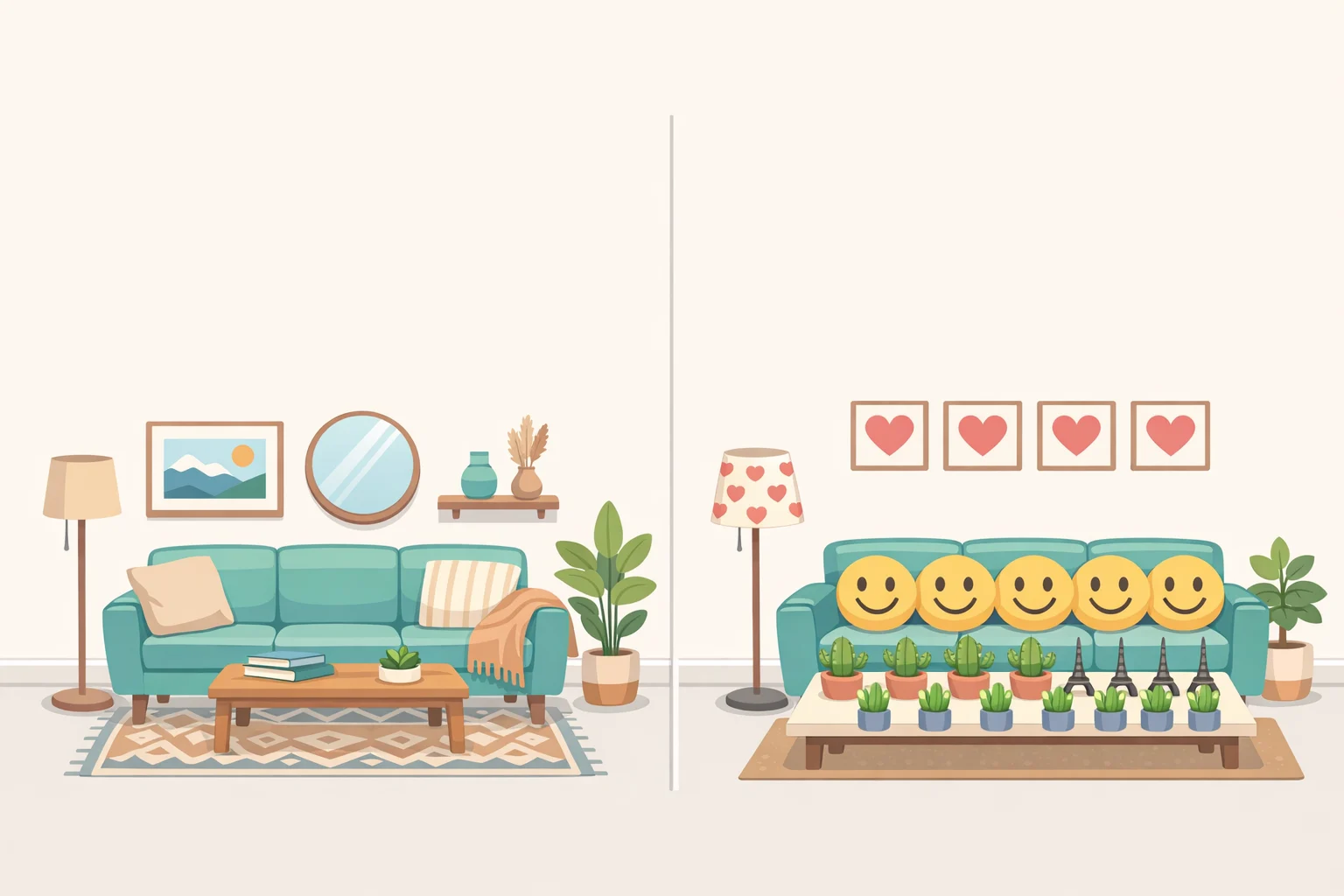
The demand driving modern folklore is structural, not seasonal. House & Garden identifies it as a response to something minimalism was never built to address: a yearning for connection to the handmade, the seasonal, and the natural world. Clean white walls and concealed storage suppress that need rather than meet it.
The trend also has genuine range. Maison&Objet's Neo-Folklore spans from grounded heritage craft to AI-mediated cultural hybrids, suggesting the direction will continue to branch rather than converge. The avant-garde end will keep exploring digital symbolism and synthetic materials. The mainstream version will stay rooted in craft and personal history. A single dominant look is unlikely to emerge, which may be precisely what gives it durability.
The risk, as the design industry scales and packages this aesthetic, is that retail flattens what makes it work. The same folk symbols landing on thousands of shelves until the specificity that gave them weight is gone. That is the distinction Kim Lewis draws when she says whimsy is not about adding something random but building something meaningful, House Beautiful reported. The rooms that hold up will be the ones where the homeowner can explain every significant piece: the inherited object, the regional motif, the symbol chosen for a reason. The look can be purchased. The meaning has to come from somewhere else.

Comments
Be the first, drop a comment!