



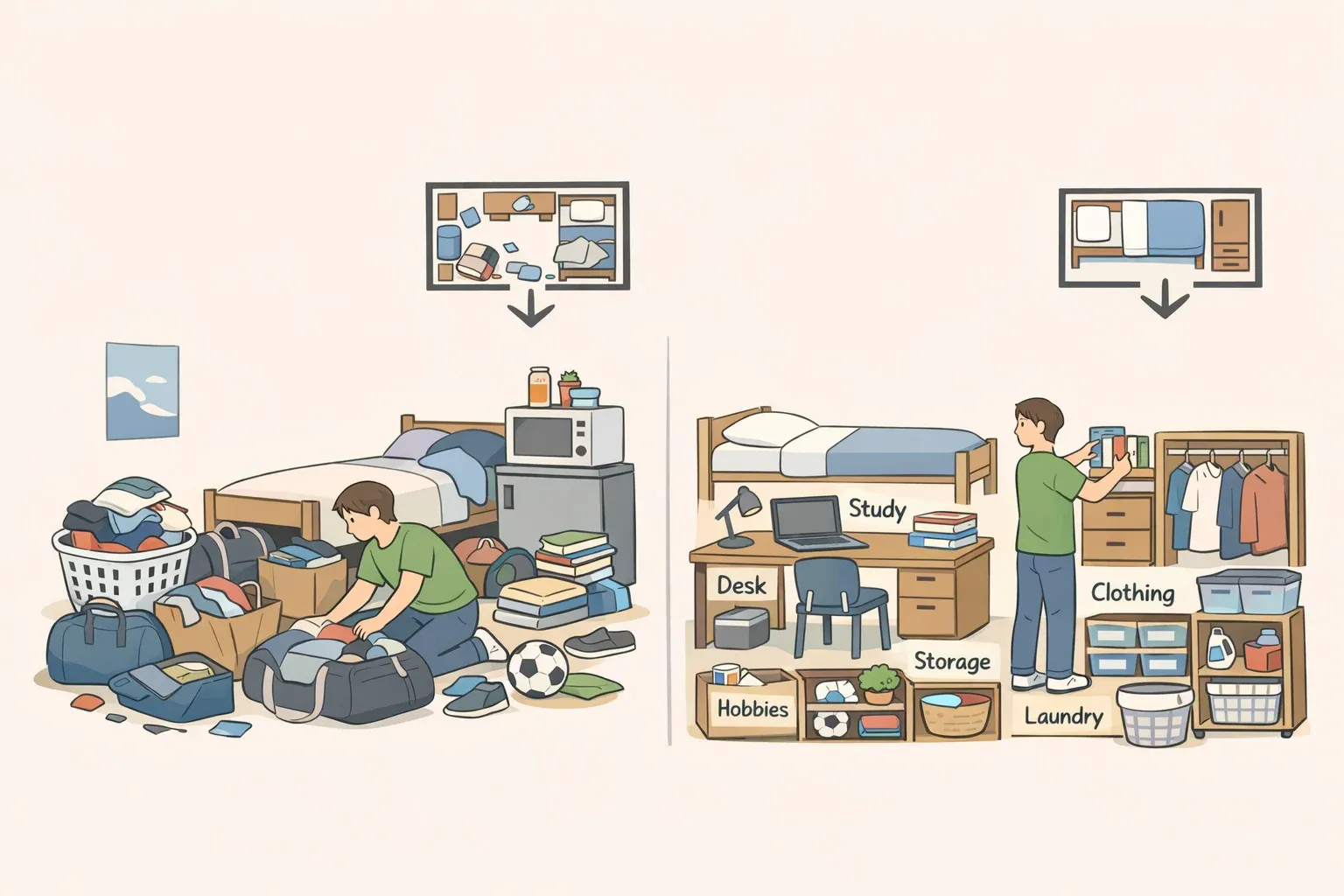
A dorm room has to function as a bedroom, study area, storage space, and shared living area—all within a limited footprint. Decorating without first checking the room's dimensions and housing rules can lead to duplicate purchases, damaged walls, blocked walkways, and storage that does not fit.
Start with the room itself rather than an inspiration photo. These eight common dorm decorating mistakes are easier to avoid when students measure first, coordinate with their roommate, and treat decor as the final step rather than the starting point.
Before you shop
Get your room assignment and floor plan, then confirm:
Room and furniture dimensions
Bed height and approved lofting options
Furniture supplied by the school
Permitted adhesives and wall fasteners
Lighting, power strip, and appliance rules
Restrictions on rugs, fabric hangings, and outside furniture
Housing policies vary by school and sometimes by residence hall. Columbia Housing's decoration and wall-hanging rules, for example, permit only certain hanging products and prohibit attaching items to ceilings or fire-safety equipment. Use the handbook for the assigned building instead of relying on a retailer's dorm-shopping list.
Mistake 1: Shopping before checking the room and roommate list
Before buying anything bulky or expensive, confirm what the school provides and what your roommate plans to bring. Skipping either check can result in duplicate appliances, storage that does not fit, or furniture the room does not need.
Residence halls differ in the storage and furniture they provide. Review the floor plan and furniture inventory before ordering drawers, shelving, rugs, or under-bed containers. Interior designer Beth Diana Smith recommends waiting until students have seen the room or confirmed its dimensions to avoid buying pieces that are unnecessary or incorrectly sized.
Coordinate shared purchases before move-in. At minimum, decide who will bring larger items such as a refrigerator, microwave, rug, cleaning supplies, or communal storage. Matching accessories are optional; avoiding expensive duplicates is the priority.
Students traveling by plane or public transportation may also need to delay bulky purchases. As St. Louis Magazine reported in its dorm-room planning guide, buying large essentials near campus can be more practical than transporting them. Consider ordering items for local pickup, shopping after seeing the room, or checking nearby secondhand stores during the first week.
Mistake 2: Using floor space before vertical space
Floor-standing storage can block walkways and make a small room harder to navigate. Before adding drawers or carts, identify the housing-approved storage options available on doors, walls, and existing furniture.
Use permitted over-the-door organizers, hooks, or lightweight wall storage before buying another freestanding unit. Some schools restrict the adhesives, fasteners, and door-mounted products students may use, so confirm the rules before installation.
Do not place heavy objects on adhesive shelves or hooks unless both the product instructions and housing policy permit the load. An overloaded mount can damage the wall, break belongings, or injure someone below it.
The top of a mini-fridge may provide room for a lightweight bin, but only if the manufacturer's instructions and housing rules allow it. Keep ventilation openings clear, do not place heat-producing appliances on top, and avoid unstable add-on shelving.
Map the approved storage areas before buying furniture that consumes floor space.
Mistake 3: Ignoring approved under-bed storage
Check whether the assigned bed can be raised or lofted before buying risers or a lofting kit. Some residence halls allow only school-provided equipment, while others require housing staff to adjust the bed.
If raising the bed is permitted, measure the resulting clearance before ordering drawers, bins, or other furniture for the area underneath. Products marketed as "dorm size" do not follow one universal set of dimensions.
When lofting is not allowed, low-profile bins can still make use of the existing clearance. Measure from the floor to the lowest part of the frame, including any center supports, and choose containers that can slide out without catching. Label the front so frequently used items remain easy to find.
Set the approved bed height before unpacking, while the floor is clear and housing staff are available to help if needed.
Mistake 4: Buying too many single-purpose organizers
Storage products can create clutter when each one serves only a narrow purpose. Before buying an organizer, decide what it will hold, where it will fit, and whether the room already includes furniture that can do the same job.
A small number of coordinating containers can make open storage look more orderly, but do not buy matching sets until the room has been measured. Function, fit, and accessibility matter more than whether every bin uses the same color or material.
Clear plastic bins are affordable and make contents easy to identify. Fabric cubes, baskets, and rolling carts may work better in visible areas. Choose based on durability, ventilation, weight, and how often the contents will be used.
Favor pieces that serve more than one purpose, such as a storage ottoman that also provides seating or a rolling cart that can move between the desk and bedside. Never use storage furniture as a stepstool unless the manufacturer specifically designed and rated it for that use.
Mistake 5: Overlooking lighting and basic comfort
A desk lamp, bedside light, and comfortable sleep setup will usually improve daily life more than another decorative accessory. Confirm which lamp types and bulbs the residence hall permits before buying them.
Use approved desk and bedside lamps to create separate lighting for studying and winding down. Warm-toned LED bulbs can soften harsh overhead lighting, but students should still check permitted wattages and fixture types. Some residence halls prohibit string lights, LED strips, extension cords, or lamps that produce excessive heat.
Do not overload outlets or connect one power strip to another. The U.S. Fire Administration advises college students to use only power strips with internal overload protection and to keep lamps, light fixtures, and bulbs away from combustible materials.
Keep electrical cords visible and out from under rugs, bedding, and furniture. Replace devices with damaged or loose cords rather than covering the damage with tape.
For the bed, confirm the mattress size before ordering sheets or a topper; many residence halls use Twin XL mattresses. Choose washable bedding and limit extra pillows or throws if they will have to be moved every night.
Mistake 6: Buying a rug without measuring
Measure the open floor area after confirming the furniture layout. A rug should fit without blocking the door, bunching beneath movable furniture, covering electrical cords, or narrowing the route to the exit.
Use painter's tape to mark the proposed rug dimensions on the floor before ordering. Account for the door swing, desk-chair movement, vents, and any clearance required around a heater or appliance.
If the floor is slick, use a housing-approved nonslip pad. Avoid stacking rugs or leaving curled corners that could become trip hazards.
A larger rug may visually connect both sides of the room, but it is not automatically the better choice. Safe placement and an accurate fit are more useful than following a general decorating rule.
Mistake 7: Accepting the default furniture layout
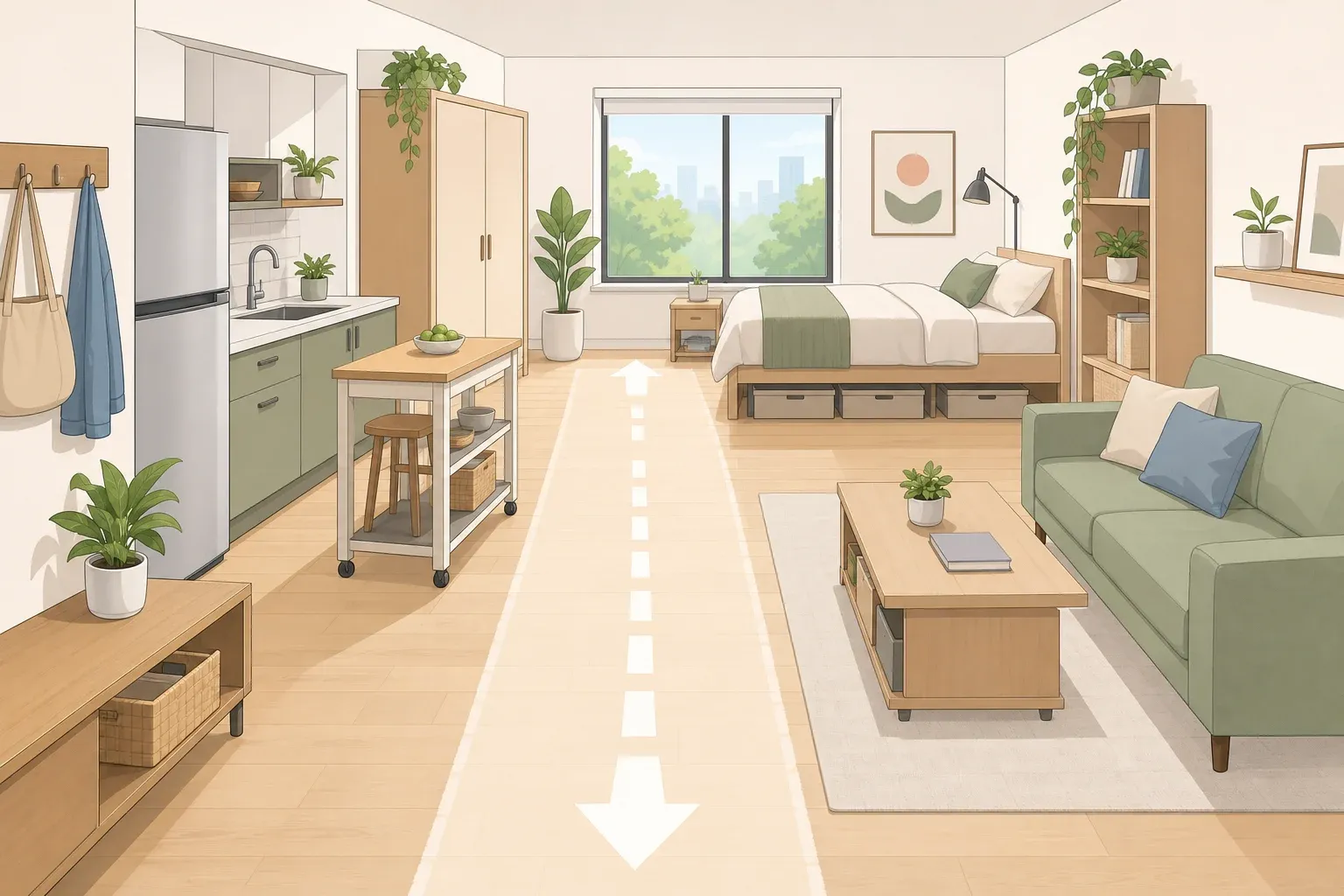
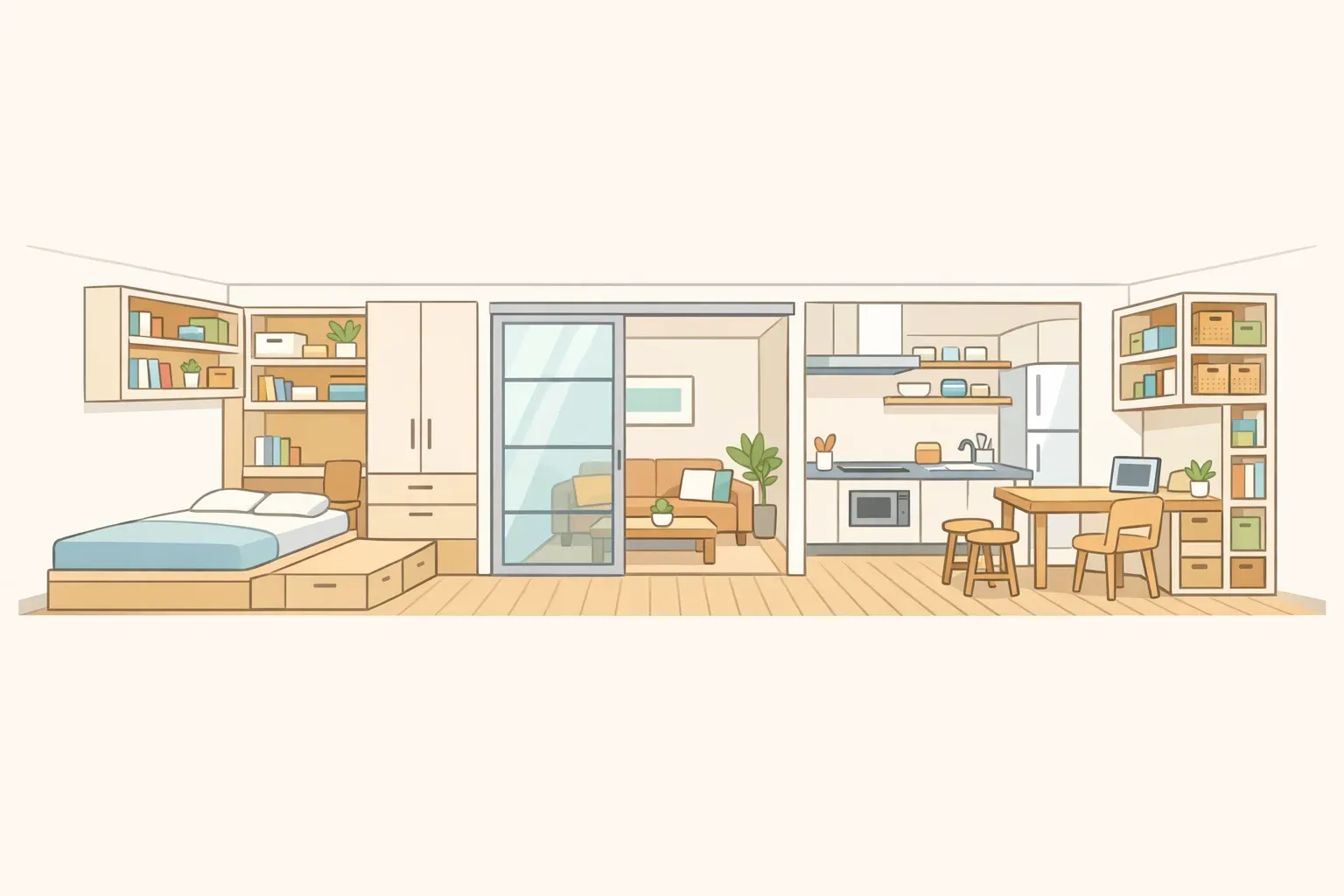
Sketch one or two possible layouts with your roommate before move-in, but do not move furniture until you know what the room and housing staff allow. Plan for clear walking paths, access to outlets and vents, and enough space for both desk chairs to move.
In one Dorm Therapy room-planning example, roommates created more distinct personal areas by moving their beds to opposite corners and positioning them perpendicular to each other. That arrangement worked for their room, but it is not a universal template.
The best layout depends on the room's shape, fixed furniture, windows, outlets, and exit path. Do not place furniture where it blocks a door, vent, radiator, sprinkler, detector, or electrical panel.
Agree on personal and shared zones, then test the arrangement before unpacking. Both roommates should be able to reach their bed, desk, closet, and exit without moving the other person's belongings.
Mistake 8: Decorating before the room works
Wait until the furniture, storage, lighting, and shared zones are functional before adding decorative items. This reduces the chance of buying pieces that block useful surfaces or crowd a room that already feels full.
Add a small number of personal items after move-in, such as photos, approved artwork, or bedding in a consistent color palette. Leave some wall, desk, and shelf space open so the room can accommodate books, supplies, and other belongings collected during the semester.
Do not cover sprinklers, smoke detectors, vents, lights, windows, or exit routes. Keep fabric away from lamps and electrical equipment, and do not assume a product marketed as "dorm-friendly" complies with the school's rules.
Before buying a decorative item, ask whether it is permitted, where it will go, and how it will be packed or stored at the end of the school year.
A final dorm-shopping check
Before adding an item to the cart, ask four questions:
Is it allowed in the assigned residence hall?
Does it fit the measured space?
Does the roommate already plan to bring it?
Will it solve a recurring storage, lighting, comfort, or organization problem?
If an item is prohibited, does not fit, or duplicates something already covered, leave it off the list. If its purpose is still unclear, wait until after move-in.
A measuring tape, the housing handbook, and a short roommate conversation will prevent most avoidable purchases. Once the room's practical needs are covered, the remaining space can be decorated with far more confidence.





Comments
Be the first, drop a comment!