



How to make a dark living room brighter with curtains
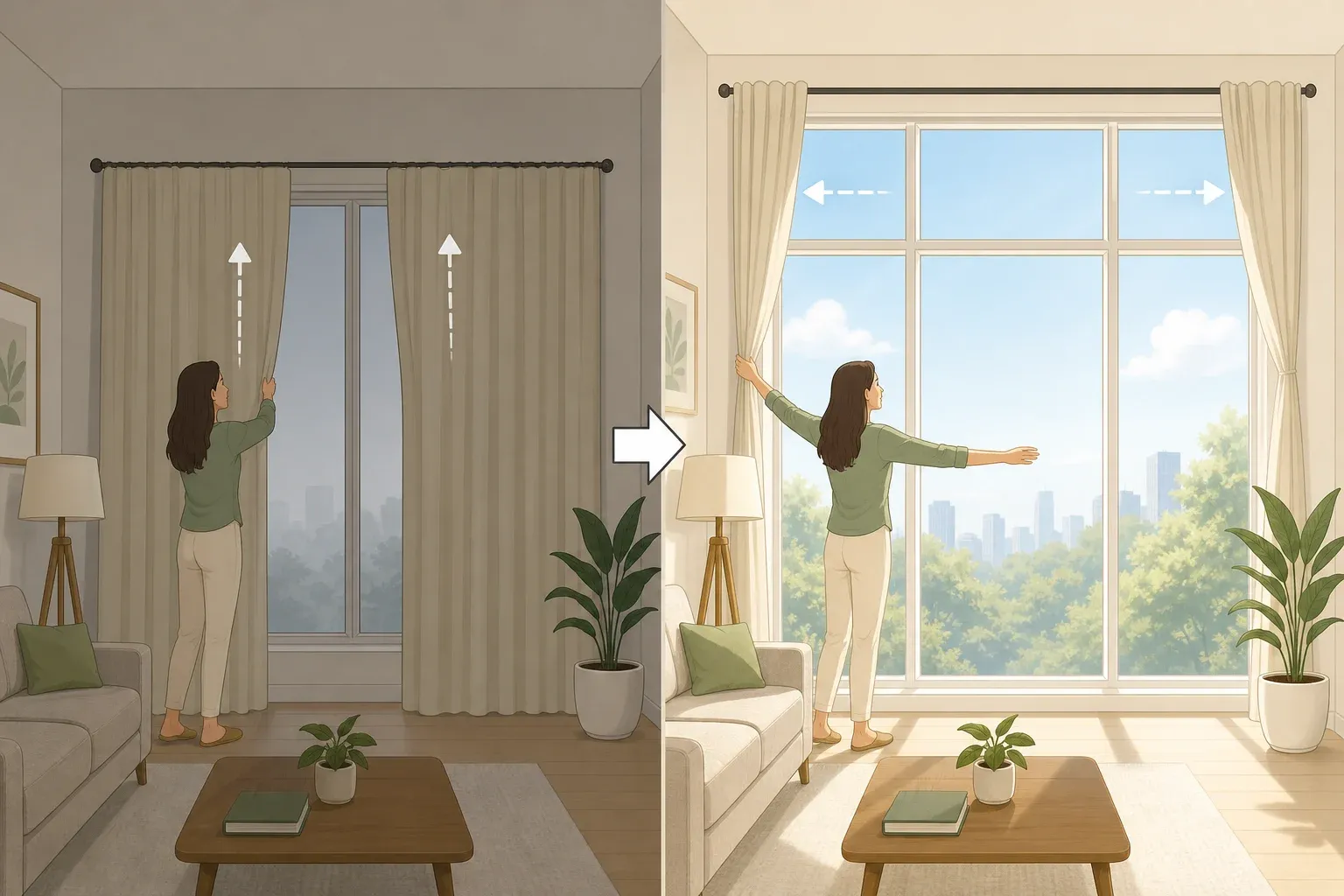
Before buying new paint or swapping in brighter lamps, check the curtain rod first. Moving it higher and wider than the window frame is one of the simplest curtain hacks to brighten a dark room: pushed fully open, the panels clear the glass instead of overlapping it, so daylight reaches the whole windowpane instead of just the center. That's the basic method behind how to make a dark living room brighter with curtains, and it doesn't require tearing anything apart.
Designer Alvin Wayne tells Architectural Digest to always hang curtains high and wide, since it makes a room feel taller and the window feel larger. Bob Vila reports that the same placement spreads light more evenly through a room and draws the eye upward. A living room project featured by Livingetc carried curtains across an entire wall, extending them to "allow the eye to travel without interruption."
This works by exposing more of the glass already in the wall and pairing it with fabric that doesn't block daylight when the panels are open. It won't enlarge a window that's genuinely small or sits in deep shade, and it's not a substitute for the other fixes near the end of this guide, like trimming an overgrown tree or repainting a wall. Here's the order to work through it: check the wall and floor space around the window, confirm what's involved before drilling, measure and mount the rod, then pick fabric for privacy, glare, and drafts.
Check whether your room can support this fix
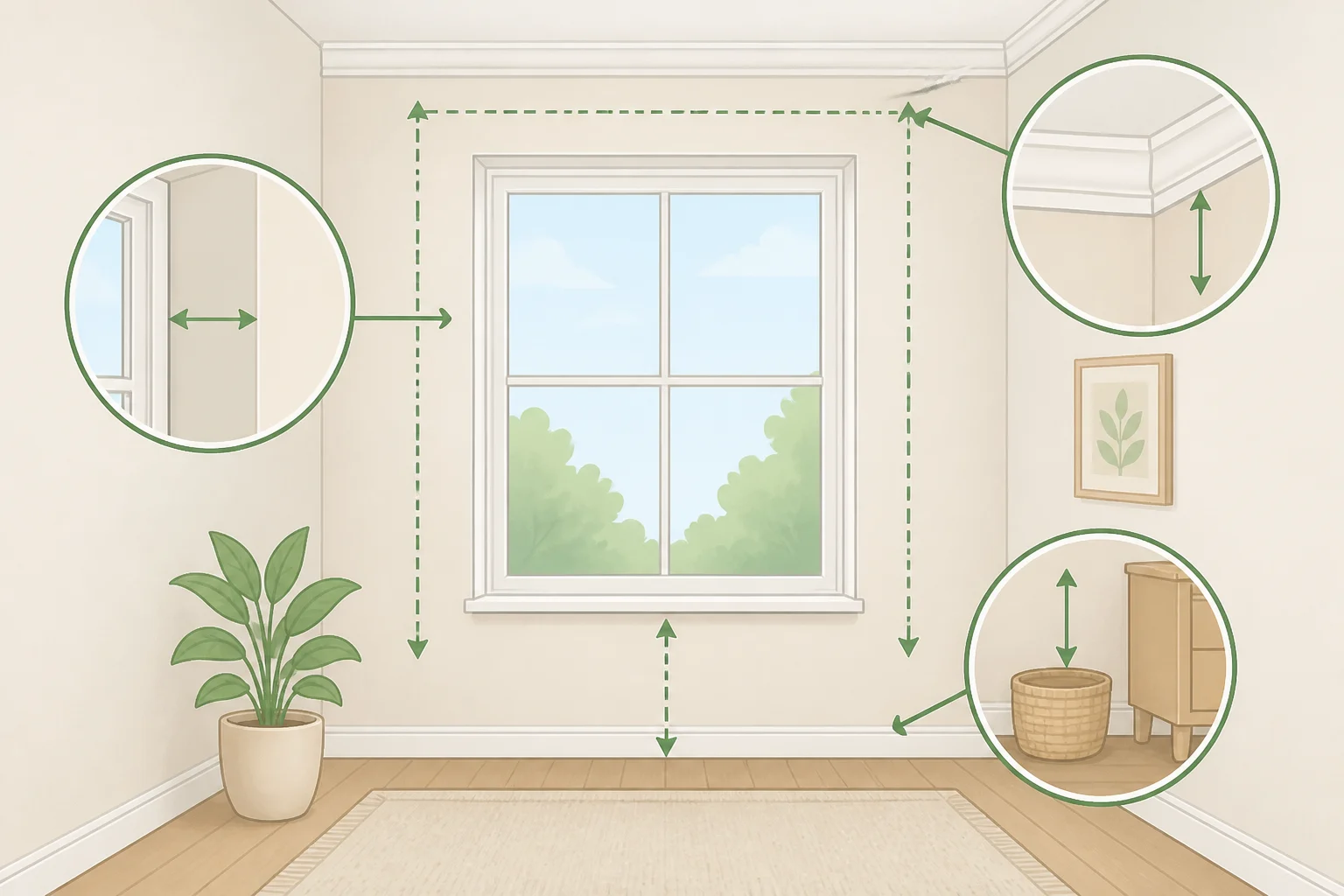
Hanging curtains high and wide is a straightforward project for most living rooms. For a standard drywall installation, many beginners can handle it with basic tools; older walls, double rods, or uncertain framing call for more caution, covered in the drilling note below.
Start by checking the wall space on both sides of the window. Homes & Gardens notes that curtain width only needs to clear the glass if the panels will actually be opened and closed; purely decorative, stationary panels have more flexibility when wall space is tight.
Next, check ceiling and molding clearance above the frame. Crown molding, a soffit, or a short gap to the ceiling limits how high a rod can realistically go, and knowing that limit now saves a wasted bracket hole later.
Then look at what sits on the floor in front of the window. If a sofa, radiator, or walkway would block a full floor-length panel from swinging open cleanly, Homes & Gardens recommends choosing shades instead of defaulting to short panels, which the site notes can look dated in a living room.
If there's no usable wall space on either side of the window at all, this is the point to switch strategies. Shades will do more for the room than forcing a curtain installation that can't fully open.
How to hang curtains high and wide for more light

What you'll need: a curtain rod with enough extension to clear the glass on both sides, wall anchors rated for your wall type and for the combined weight of rod plus panels, a drill, a tape measure, a level, and a stud finder if you have one.
Before you drill, confirm what kind of wall you're working with. Drywall accepts standard anchors rated for the rod and panel weight, but plaster, masonry, or a wall with unknown framing needs hardware matched to that material, so follow the anchor manufacturer's load rating rather than guessing. A stud finder can locate framing, but it can't reliably rule out wiring or plumbing behind the wall. If a drill bit hits unusual resistance, or the wall behaves in a way that doesn't match a clean path through drywall or a stud, stop and check the hardware instructions, or get help before continuing. Take this more seriously with masonry walls, heavier layered curtains, or any real uncertainty about what's behind the drywall.
- Measure your stack-back and your window's glass width. Hold the folded panel against the wall beside the window, or check the spec sheet if buying new fabric; heavier or pleated fabric bunches wider than sheers. Measure the glass itself, not the outer edge of the casing or trim, since those can differ by a few inches and change how far the rod actually needs to extend to clear the window.
- Decide whether the panels need to open, then size the rod. If panels are purely decorative and will stay pushed to the sides, Homes & Gardens notes that width matters less, and a stationary panel on a simple French return rod can work in a tighter space. If panels need to open and close, choose a rod long enough for the window plus the space each panel occupies when pushed fully open, and test the folded panel against the wall rather than estimating. Follow the rod manufacturer's maximum span and bracket-spacing instructions for the specific hardware chosen, since those numbers vary by brand and rod style.
- Mark the rod height above the window casing. Use the highest position that still leaves clearance below the ceiling or molding checked earlier. Going above the top of the frame, not just level with the glass, is what Bob Vila and Architectural Digest link to a taller, brighter-feeling room.
- Mark bracket positions and plan for the load. For a long span or a double rod carrying two layers, confirm the hardware's maximum supported span and weight rating actually covers the panels before buying. Livingetc recommends sturdy, simplifyd hardware so two layers hang without sagging or looking bulky. If the rod's instructions call for a center support bracket, use one, but check first whether it lands where an opening panel needs to slide past; if it does, shift the support or choose a heading style that parts somewhere else. Use a level to keep both end brackets even.
- Install the rated anchors and mount the rod. Use the anchor type confirmed in the drilling note above, matched to the wall and the combined weight of rod and panels, then check that the rod sits level once both brackets are up.
- Hang the rod and panels, then measure down to the floor for length. Measure from the rod's actual mounted height, not the window frame, to the floor before buying or hemming panels, since raising the rod changes this number. Homes & Gardens advises floor-length curtains for the most finished look even when the window itself stops short of the floor, as long as the floor space checked earlier allows it.
Push the panels fully open once everything is hung. Clearing the glass means the fabric rests beside the frame, not draped over its edge. If any part of a panel still covers the window, the rod needs to go wider, not higher. If furniture or a wall edge stops a panel from reaching that fully open position no matter how wide the rod goes, the room doesn't have enough stack-back space; switch to a stationary panel pushed back on a French return rod, or move to shades instead, per the wall-space check above.
Choose sheer curtains and light-filtering fabric for a dark living room
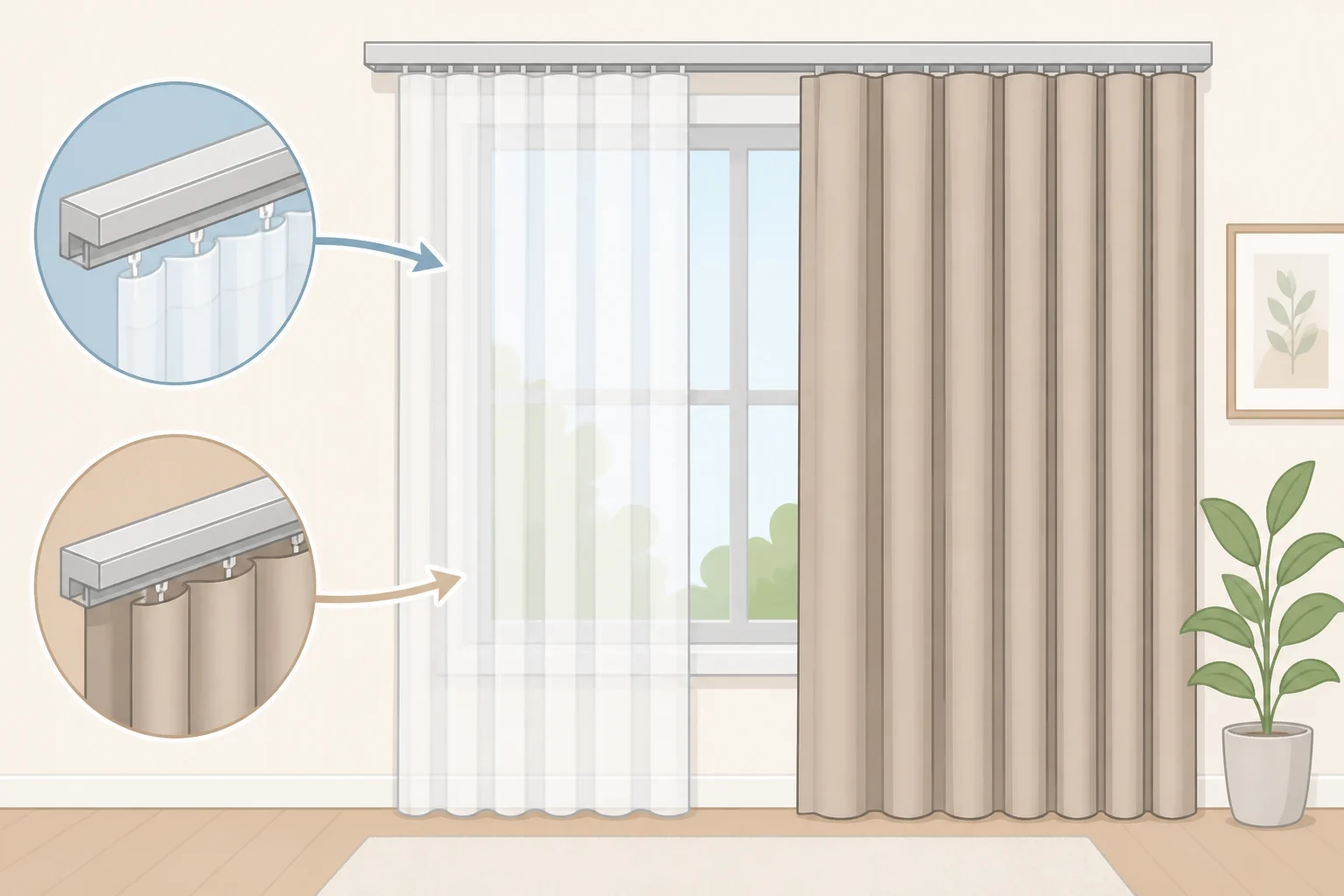
Placement controls how much glass is exposed; fabric controls how much light passes through once the panels are drawn. Light-filtering window treatments for dark rooms earn their keep here, after the rod placement is already doing the heavy lifting.
- Daytime brightness is the main goal and privacy isn't a big concern: go with light linen, cotton, or sheer panels. The Spruce notes these fabrics help a room feel bigger and a ceiling feel higher, and a sheer layer specifically allows soft, diffused daylight while keeping a sense of openness even when closed, according to a designer quoted by Livingetc.
- The room faces the street, gets intense afternoon sun, or needs nighttime privacy: many layered setups place a sheer nearest the glass with a solid or blackout panel on an outer track, giving daytime diffusion from the sheer and nighttime privacy from the outer layer. Alvin Wayne describes pairing blackout curtains with sheers underneath as adding "softness and versatility" to a room, per Architectural Digest.
- The room is drafty, echoey, or in an older or exposed home: keep or add a heavier outer layer. The Spruce points to heavier fabric adding structure, warmth, and grounding in these spaces. The fix here is a light sheer underneath for daytime brightness, not replacing the heavy panel outright.
- Glare on a TV or screen is the real issue: Homes & Gardens lists television glare as one of the practical reasons to choose shades over curtains in a living room. Bob Vila points to top-down/bottom-up shades as a way to admit light from the top of the window while preserving privacy below, worth running alongside or instead of curtains on a street-facing media wall.
- Budget is tight: Homes & Gardens recommends plain neutral linen with a leading-edge trim as a budget-saving stand-in for custom drapery.
A few specific problems are worth flagging on their own:
- Need nighttime privacy? Use a lined or heavier outer layer, and add a sheer too if daytime diffusion also matters.
- Room feels drafty or echoey? Keep the heavier outer layer and add a sheer underneath instead of removing it.
- No usable wall space for drapes? Switch to shades rather than forcing short panels into a tight spot.
Finish-line guidance
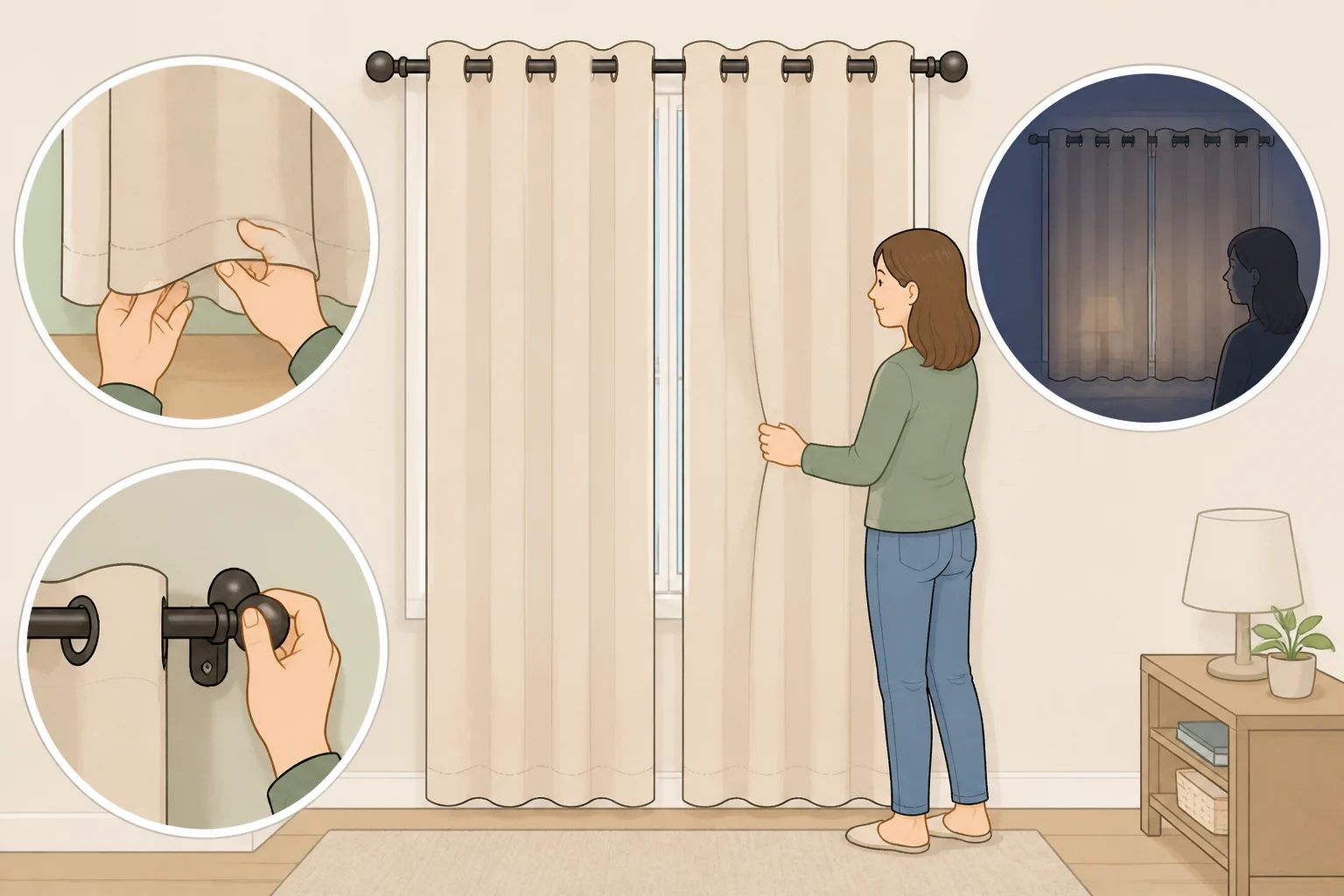
Once the rod is up, give the whole setup a once-over before judging the room. Tug the rod gently to confirm it feels solid against the wall, check that hems meet the floor the way intended, and close the panels at night to see whether they deliver the privacy the room needs. Any one of those failing is the specific thing to fix, not a sign to start over.
If the room still feels dim after all that, the window itself, not the curtains, may be the limiting factor. Growing branches, leaves, or flowers near the window can block sunlight over time, Bob Vila notes, so check for overgrowth worth trimming back. Keeping the glass clean also changes how bright the room feels during the day, the same guide adds, and it costs nothing but a window washing.
Look at what's standing next to the window, too. Bob Vila points out that tall cabinets or shelving placed right beside a window can block a surprising amount of light, so move them if they're crowding the glass. Wall and ceiling paint matters as well: a light reflectance value of 70 or higher, listed on the back of a paint chip card or on the paint company's website, can maximize luminosity when paired with light flooring like pale hardwood or tile, Bob Vila notes. A mirror hung where it catches incoming daylight is another move the same source backs; exactly where to place it is worth testing in the room rather than following a fixed rule.
If the panels already clear the glass and meet the room's privacy needs, address the window, walls, or furnishings before buying more fabric. An exact color match isn't what makes the room brighter. Rod placement and fabric opacity are doing the real work, and once those two are right, the rest is fine-tuning.







Comments
Be the first, drop a comment!