



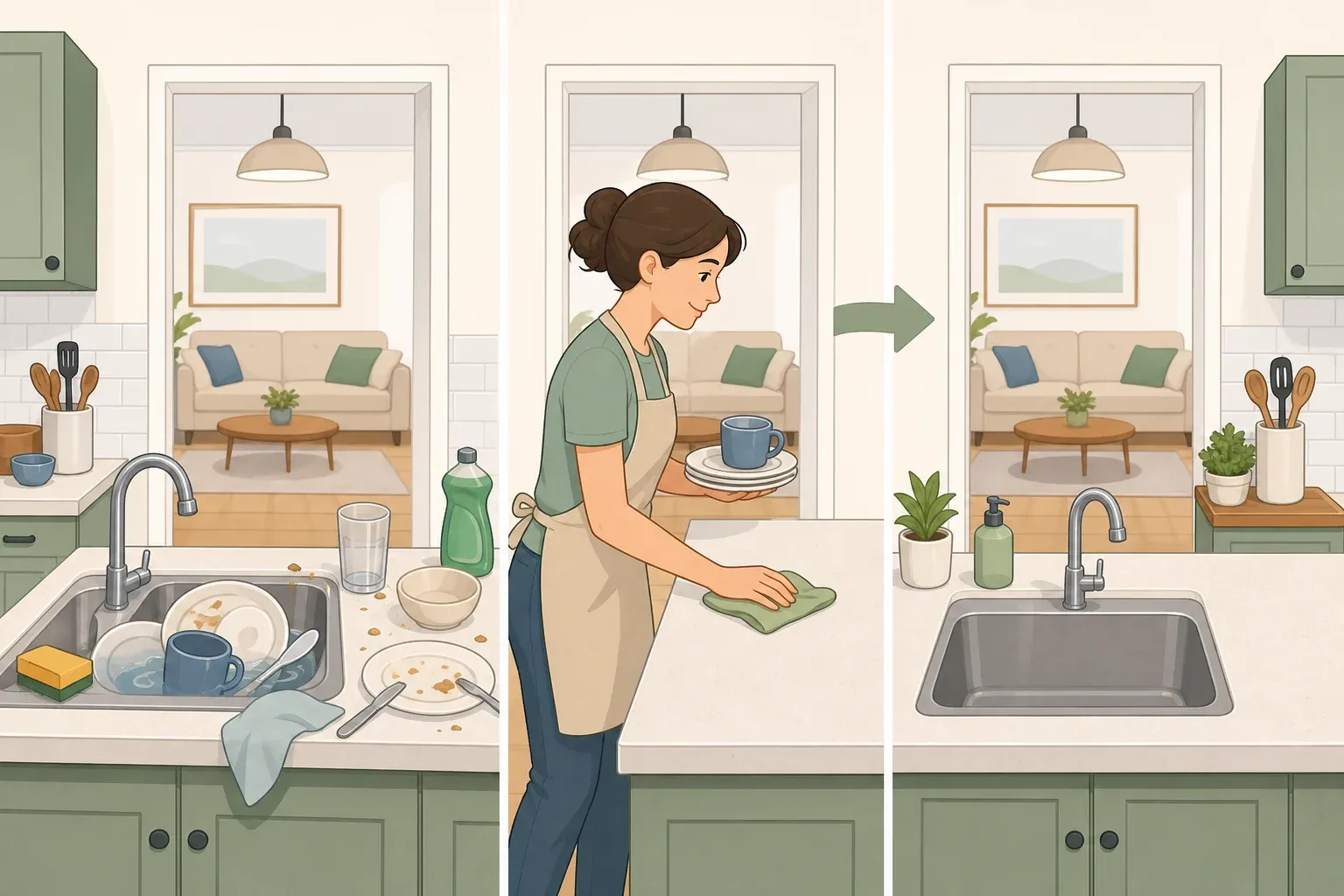
Kitchen Details Guests Notice First: How to Reset Fast
Before anyone rings the doorbell, walk to the exact spot where guests step into the kitchen and look straight ahead. That's where the kitchen details guests notice first concentrate: a stack of dishes in the sink, trash that needs to go out, unopened mail, a bag of takeout containers still sitting on the counter. Start with the view from the doorway. Clear visible chores before you rearrange decorative items, since that's the most efficient use of whatever time is left before people show up.
This is a priority system, not a study of what guests notice walking into a kitchen. No research tracks that specifically. A UT Austin Liberal Arts interview with personality researcher Sam Gosling, published about three weeks ago, describes his career-long question of whether personal spaces reveal something about the people who keep them, beyond what a questionnaire would show. That's a reason to take a visible room seriously, not proof of what happens the moment a guest walks into yours.
This guide covers three things: a 20-to-30-minute full reset, a five-minute version built from three moves if time's short, and a fallback order for when the kitchen can't be fully cleared before the doorbell rings. A kitchen that looks used isn't the problem this fixes. A kitchen that still shows an unfinished task is.
What guests notice first in a kitchen: check the entry view
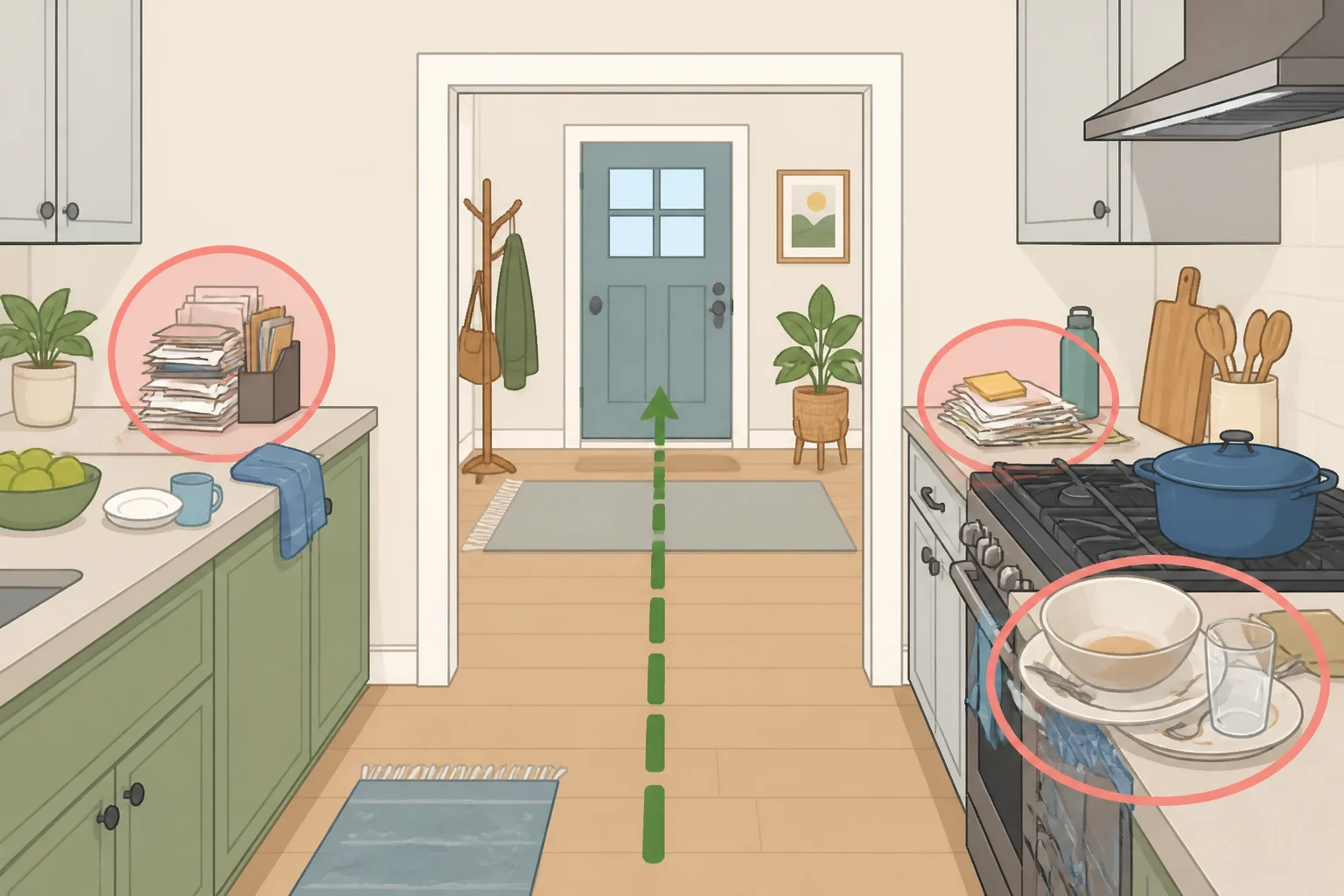
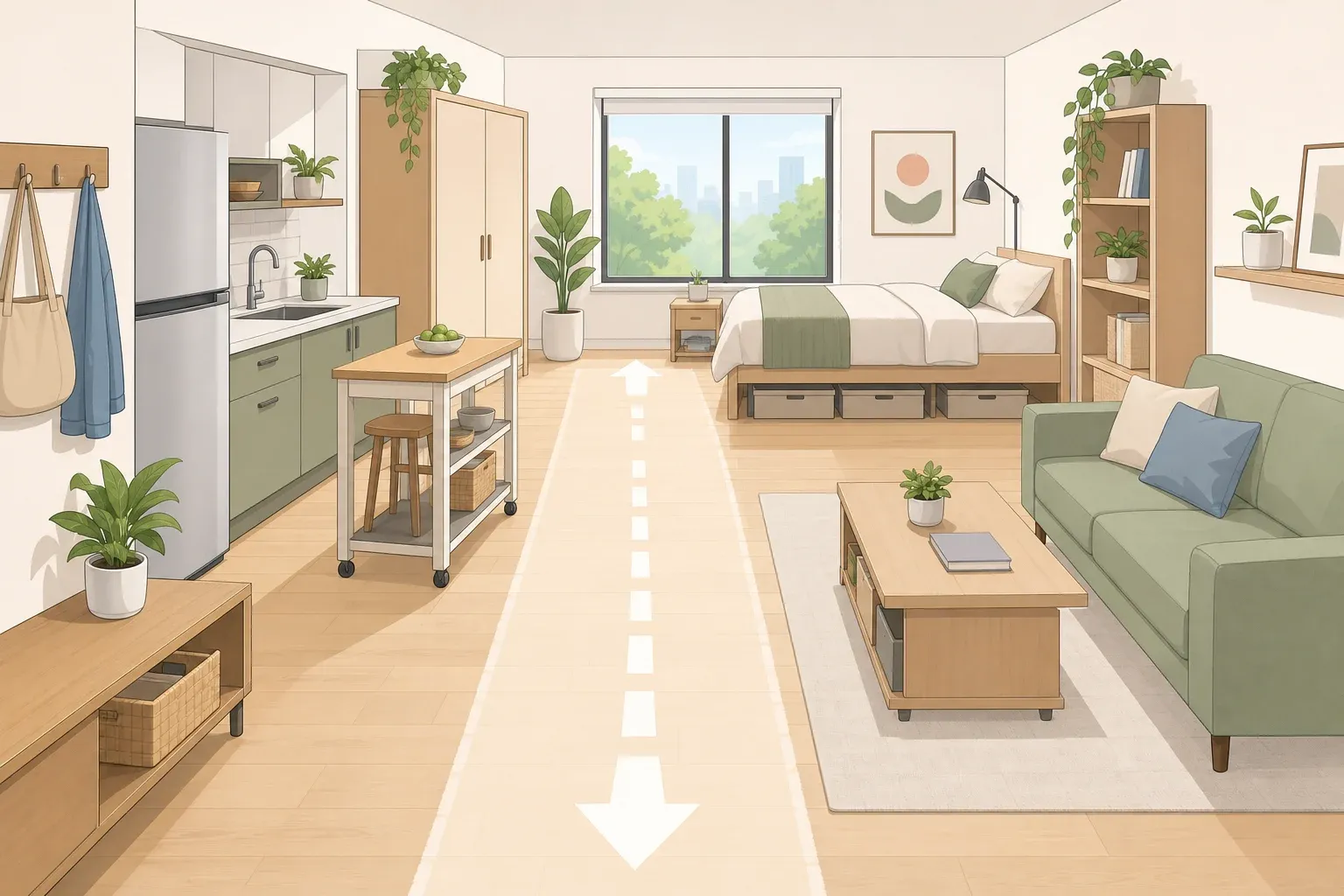
Stand where guests will actually walk in, not at the stove or wherever you usually work. Look straight ahead at eye level and take in everything in that direct line: countertops, the stovetop, open shelving, the table if it's visible from the door.
Use one decision rule while you work: a task pile is anything that signals an unfinished chore, like dirty dishes, mail, chargers, food packaging, or a bin about to overflow. Leave items that make the kitchen look used on purpose, like a cutting board, a fruit bowl, dish towels, or a coffee setup still out. The goal is a surface that doesn't broadcast unfinished work, not a stripped, empty counter. That's the standard to keep in mind through every step below.
What you'll need
- Skill level: beginner-friendly. No tools, purchases, or design decisions required.
- Materials: a trash bag, all-purpose cleaner and a cloth, a basket or tray for redistributing loose items, dish soap.
- Time: 20 to 30 minutes for a full reset, or five minutes using the shortcut below. Treat both as rough windows. A deeply stacked sink or a full dishwasher will push past either one.
Before you start
Identify the doorway or entry point guests will actually use. That's usually not the same spot you cook from, and it's easy to clean the wrong view if you skip this step.
The Psychology Today Ireland article on home environment, published about 16 months ago, summarizes research connecting organized homes with healthier behaviors and home neatness with lower self-reported stress. That's general research on homes, not a study of guests walking into kitchens, but it's a reasonable case for spending the next 20 minutes on this instead of skipping it.
If you have 5 minutes
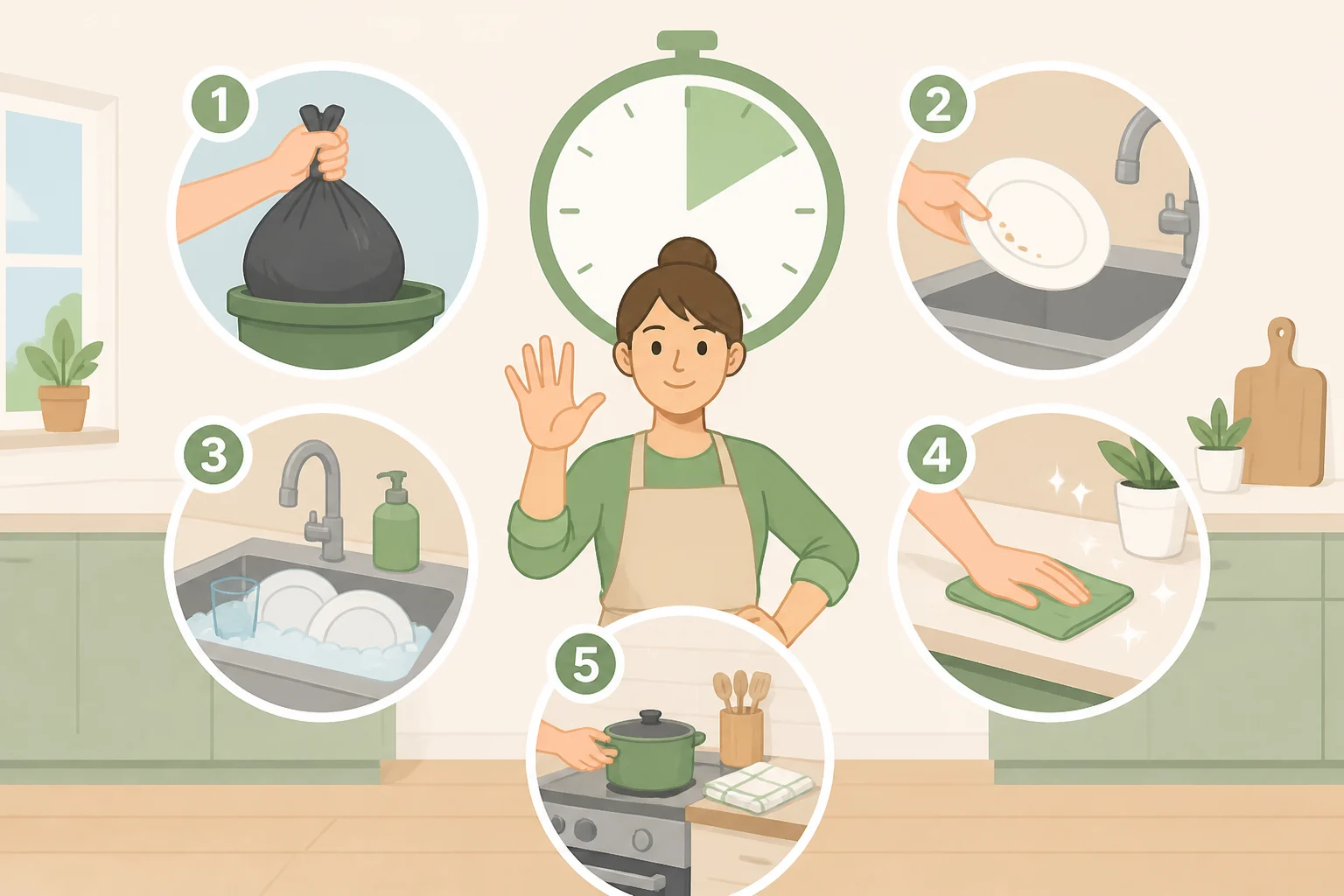
Short on time? Do only these three things, in order:
- Take the trash out.
- Clear the sink, or load the dishwasher and shut the door on the mess inside.
- Remove the single most distracting item still sitting in direct view from the doorway.
Stop there. This is triage, not a deep clean.
Step-by-step: reset the sightline
-
Stand at the entry point and take stock. Look straight ahead and note what's in that direct line of sight. Every kitchen is different, so treat this as a quick personal checklist rather than a fixed number of items to find. Roughly two minutes.
-
Remove the trash and the odor source, not just the smell. Take the bin out and deal with whatever's actually causing a lingering cooking smell instead of spraying over it. Run the exhaust fan, and open a window if the weather and your building's layout allow it. If a garbage disposal is holding food scraps, clear it according to the unit's instructions, with water running and your hand kept out of the opening. Don't reach in to clear a jam; shut it off and check the manual instead. Roughly three to five minutes, longer if the odor source turns out to be something you missed on the first pass.
-
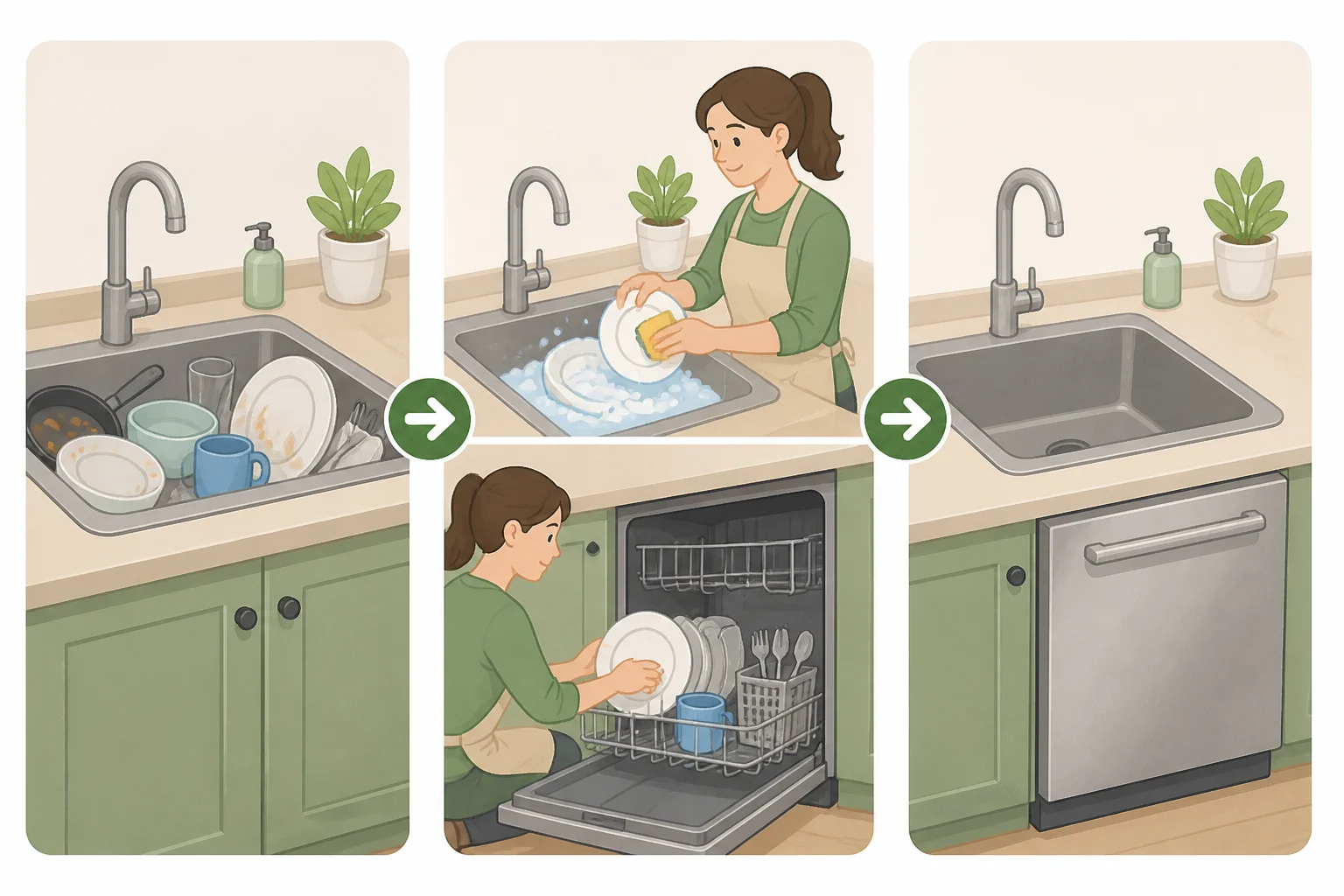
Clear the sink. Wash what you can, or load the dishwasher and close it. If there's genuinely no time to wash anything, moving the overflow into a closed dishwasher is a reasonable short-term fix for what's visible, but only for items that are actually dishwasher-safe. Skip pots and pans that aren't rated for it, knives, and anything that could leak or spill; those are better left stacked neatly in the sink until you can wash them by hand. A full sink reads as unfinished work faster than almost anything else in the room, so prioritize it even if other spots are messier. Five to 15 minutes depending on how much is piled up.
-
Sort what's left using the task-pile rule. Move mail, chargers, and loose clutter into a drawer, tray, or basket, out of the direct sightline. Return perishable food to the refrigerator promptly, and discard anything visibly spoiled. Don't hide questionable food in a cabinet or pantry just to clear counter space faster; deal with it properly instead. About five minutes.
-
Wipe the surface guests will actually see. Focus on the counter in direct view, the cabinet handles, and the edge of the sink, rather than spreading the same effort across the whole kitchen. Check appliance fronts too; a smudged fridge door or a toaster with crumbs down the side sits in the same frame as the counter. Wipe the whole visible stretch, not just the middle of it. A clean patch next to a dirty trash lid still reads as unfinished. About three minutes.
-
Recheck from the doorway. If one item still catches your eye, fix just that one thing and look again. About a minute.
Decisions you'll run into
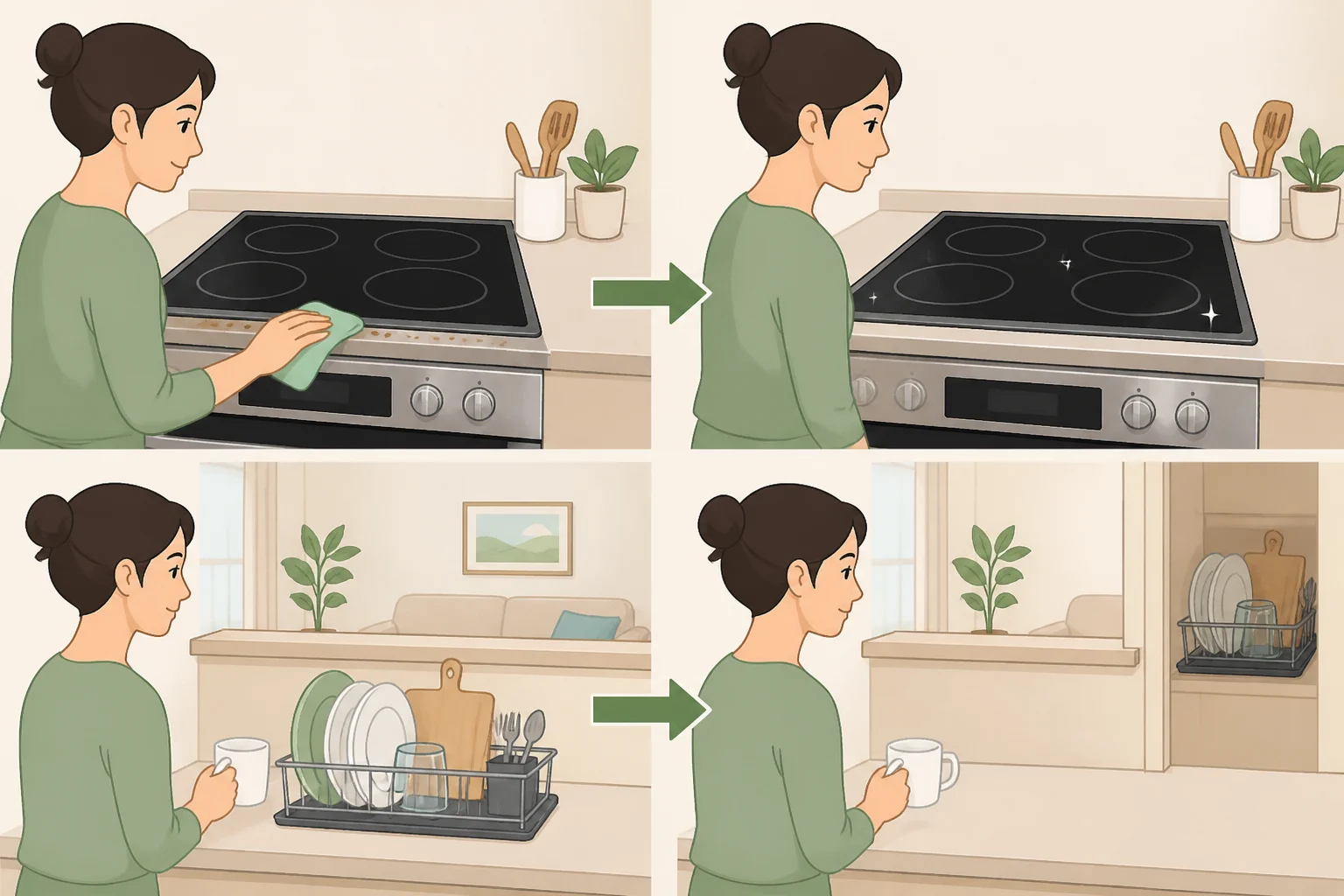
A few spots trip people up because they sit just outside the main counter view but still land inside the sightline, or because the obvious fix creates a new problem.
- Dishwasher already full or mid-cycle: stack rinsed dishes neatly in the sink against the back wall instead of trying to force more into an occupied machine. A tidy stack reads better than a jammed door that won't close.
- Drying rack in view: empty it into cabinets if there's time. If there isn't, slide it to the side of the counter farthest from the doorway rather than leaving it dead center, and don't pile more dishes into it just to clear the sink. That only relocates the problem.
- Odor that lingers after the trash is out: check under the sink and inside the disposal for the actual source before reaching for a candle or spray. A scent layered over a lingering smell usually reads as covering something up rather than fixing it.
- Stove with splatters in the sightline: wipe the cooktop and the front edge of the stove itself, not just the counter beside it. A greasy stovetop is just as visible as a full sink from most entry points.
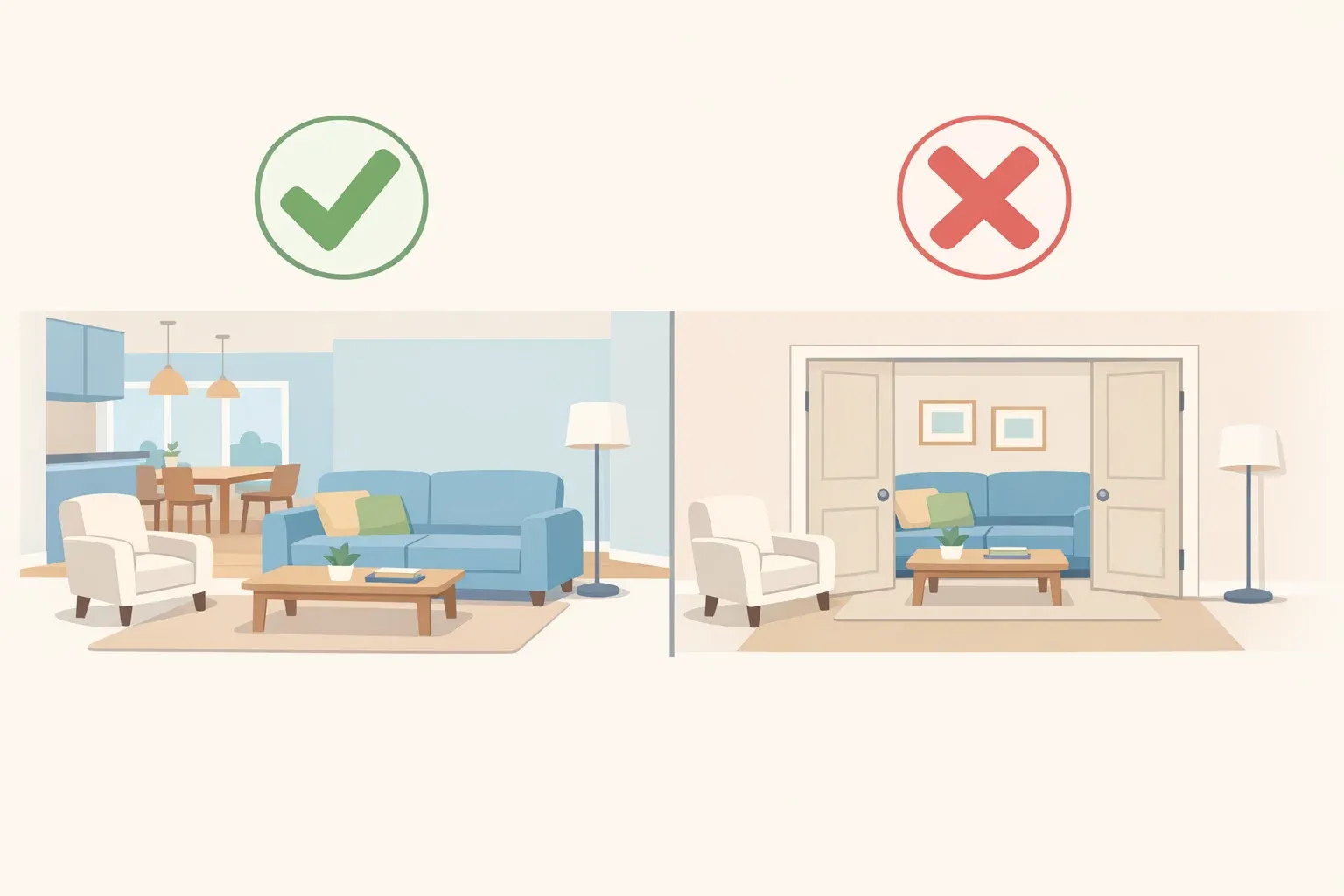
- Open-concept or galley layout: handle the entry sightline first. If the living room or dining area is visible from the same spot, treat it as a second, lower-priority pass only after the kitchen view is done, since that's a different room with its own clutter sources.
- Countertop appliances: a coffee maker or toaster in regular use reads as lived-in and can stay. A blender with dried-on batter or a mixer still out from the last use counts as a task pile.
- Open shelving: check it in the same sweep, not separately. Stacked dishes or jars look intentional; loose mail or tools sitting on a shelf read the same as counter clutter.
- Floors and towels: a damp towel on the oven handle or a spill on the floor reads the same way a full sink does. Handle it in the same pass instead of saving it for later.
- Pet bowls: empty and wipe them, then shift just outside the direct sightline if there's room. No need to move them to another room entirely.
Do not hide these items
Stashing clutter out of sight works for mail and chargers. It doesn't work for everything, and shoving the wrong thing into a cabinet creates a bigger problem than the one it solves.
- Food scraps or spoiled leftovers: bag them and take them out with the trash instead of tucking them away.
- Sharp knives or loose glass: don't stash them in a drawer that isn't their usual home; that's a hazard for whoever opens it later looking for something else.
- Wet towels or sponges: don't seal them inside a closed cabinet. They'll mildew faster than they'll dry.
- Cleaning products: keep them where they already live, not moved next to food storage or dishware to make room on the counter.
- Anything leaking or likely to leak: that belongs in the sink or a lined bin, not behind a closed cabinet door.
When you can't fully clear it
If time runs out mid-reset, follow this order instead of trying to do everything at once:
- Remove what can physically leave the room right now: trash, mail, an empty pet bowl, loose laundry.
- Contain what can't be removed inside something closed, like a shut dishwasher door, a lidded bin, or a cabinet, following the do-not-hide guidance above.
- Prioritize the single most visible surface, the one in direct line from the doorway, over other messy spots outside that frame, even if those spots are objectively worse.
Stop once the trash is out, the sink is contained, and the single most distracting item is gone. Chasing more than that past the stop point is wasted time you don't have.
Finish-line guidance
Success looks like a doorway view with nothing reading as an unfinished chore: no overflowing trash, no dish pile, no stray mail, while the everyday items that make the kitchen feel lived-in, the cutting board, the fruit bowl, the coffee setup, stay right where they were. That's the standard, not a bare counter.
If the room still feels off after all that, check lighting next. The same Psychology Today Ireland piece notes that natural light and home colors are linked to how comfortable and happy people report feeling in a space, which makes a lighting check a reasonable last step rather than a reason to redo the sightline work from scratch.
Redo this check every time you host. Trash and dish piles build up fast in a kitchen that gets used daily, so don't expect last week's reset to hold for tonight. Don't chase a specific object count. This is a repeatable five-to-30-minute pass before guests arrive, not a renovation project, and it's not a verdict on how well you keep house.



Comments
Be the first, drop a comment!