



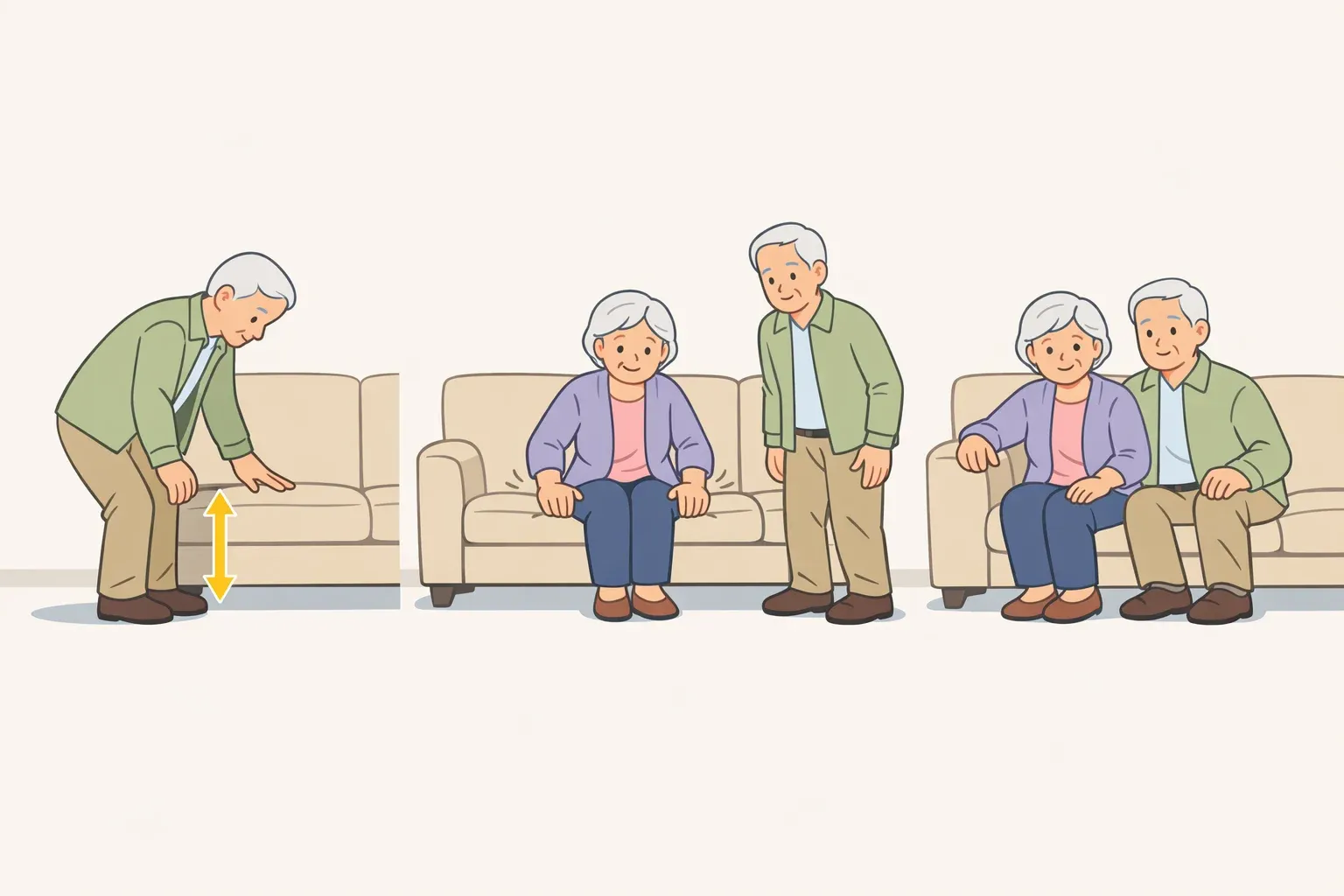
How to choose a comfortable sofa for elderly parents: 3 tests
If you're figuring out how to choose a comfortable sofa for elderly parents, ignore the showroom first impression. The sofa that feels welcoming during a thirty-second test can become genuinely difficult to use after six months of daily sitting. The gap between "feels comfortable" and "works comfortably over time" comes down to three things you can verify in person: seat height under load, cushion firmness, and armrest usability.
This guide is about comfort as usability whether a person can sit down, stay supported, and stand back up without effort. That's especially relevant for older adults with knee stiffness, hip pain, or reduced leg strength, but it's a reasonable standard for anyone buying a sofa they plan to use every day.
A few findings worth knowing before you start:
- Maxi Home, a Singapore retailer that works frequently with elderly buyers, says the single most common complaint it hears about sofas for older parents is that the seat is too low.
- Research tracking 25 skeletal points and converting them into 12 key joint angles found the trunk-thigh angle to be the most important factor in whether elderly users could rise safely a variable heavily influenced by seat height (IJERPH, 2022).
- A separate ergonomics study confirmed that spinal alignment and muscle relaxation are statistically significant predictors of perceived comfort (Procedia of Multidisciplinary Research, 2025).
What you need before you start: a tape measure, and ideally the person who will use the sofa with you in the showroom. Spec sheets are a reasonable first filter. They are not a substitute for an actual sit.
Step 1: find the right sofa seat height for elderly parents
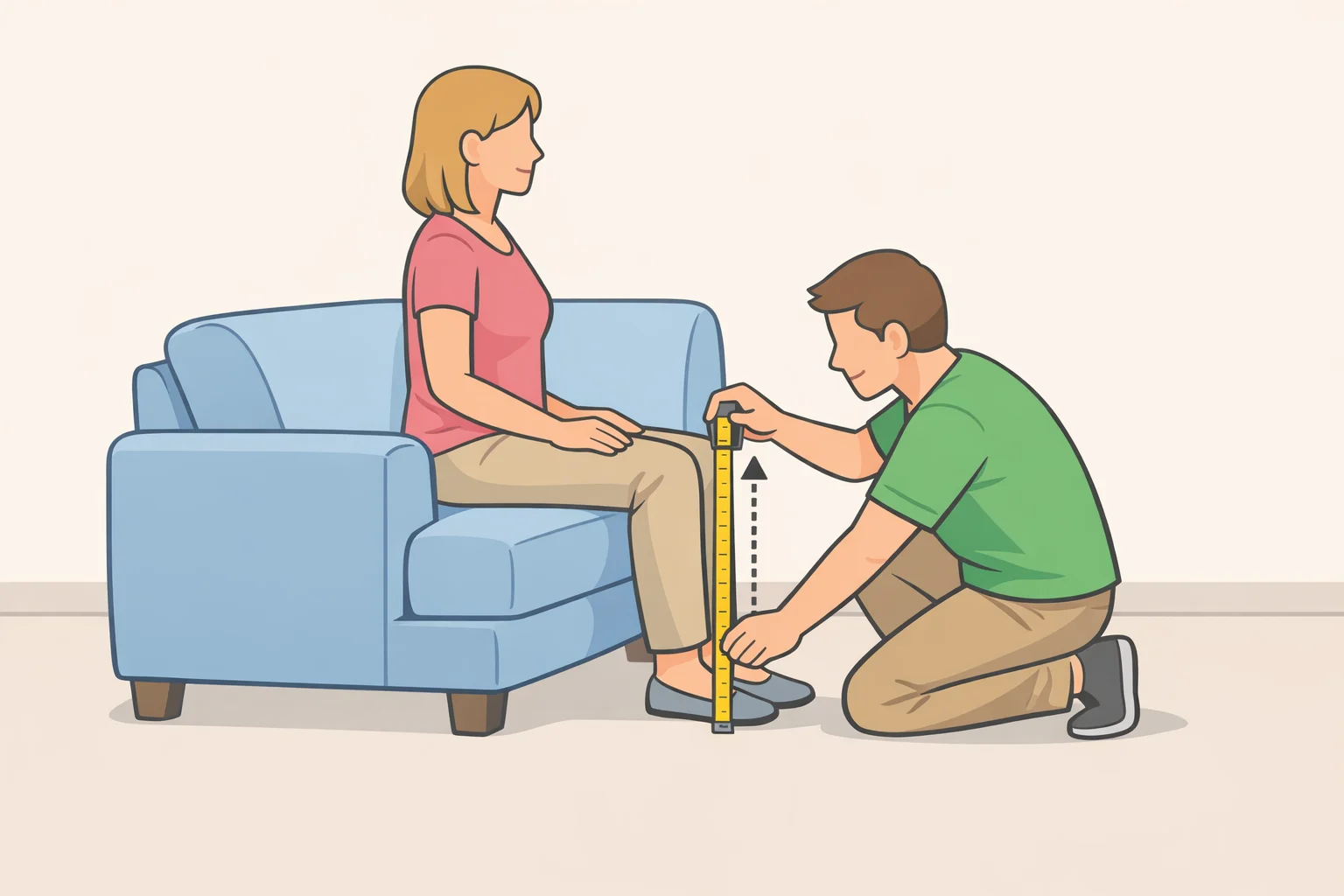
The target sit height for most adults measured while someone is seated on the cushion under their full weight is 17 to 20 inches, or roughly 43 to 51 cm (Ventura Interiors, 2026). For older adults or anyone with knee stiffness or hip pain, staying toward the upper end of that range 45 to 50 cm under load makes independent movement noticeably easier (Maxi Home, 2026).
The problem with labels: seat height is measured on an empty sofa. Sit on it, and the cushion compresses. A sofa listed at 48 cm can drop to 43 cm under a person's weight if the foam is too soft, moving from comfortably within range to outside it with no change to the frame (Maxi Home, 2026). Ventura Interiors (2026) makes the same point directly: always test sit height, not measured height.
The mechanics are worth understanding. When a seat is too low, the knees end up higher than the hips, which increases lower-back strain and requires substantially more leg strength to stand (Ventura Interiors, 2026). Too high, and the seat edge cuts into the backs of the legs and restricts circulation. Taller adults generally do better toward 20 inches; shorter adults toward 17 to 18, where feet can rest flat without dangling.
To measure loaded height in the showroom: sit fully back, then have someone measure from the floor to the top of the cushion at the point level with your hip. That's the number that matters.
A useful benchmark before you shop: measure the height of a chair at home that already feels comfortable. If it sits at 46 cm and feels right, that's your reference point (Ventura Interiors, 2026).
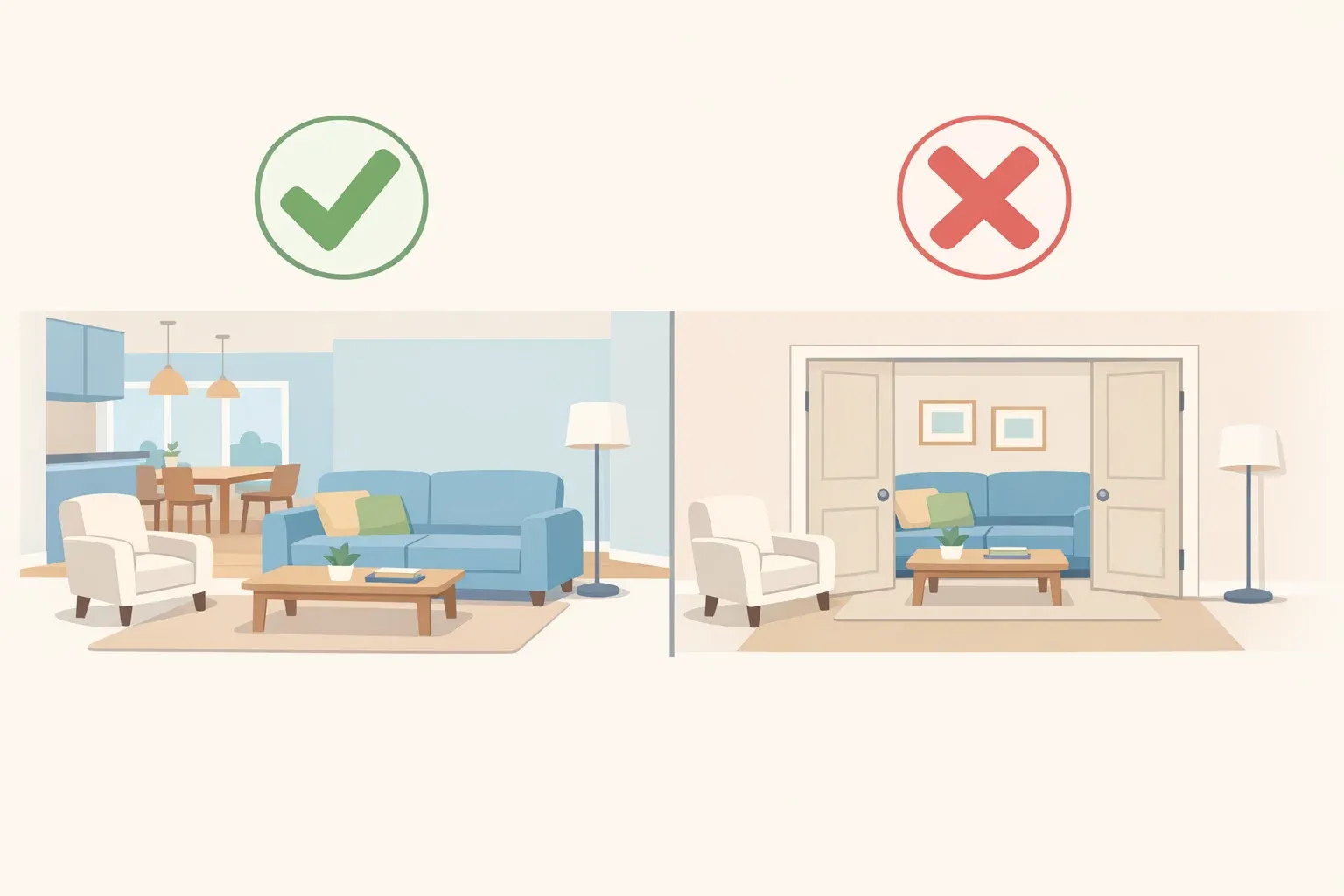
Style and ergonomics genuinely conflict here. Low-profile sofas sit around 40 cm and are popular in open-plan interiors precisely because they make ceilings look higher and rooms feel less crowded (Ventura Interiors, 2026). That's a real design advantage. It's also a direct tradeoff against usability for anyone who finds a 40 cm seat hard to rise from.
Watch for these red flags:
- Knees noticeably higher than hips when seated fully back
- Feet that dangle or can't rest flat on the floor
- A backward-sloping seat pan a rearward tilt of even a few degrees increases the effort required to lean forward and stand, which matters especially for older sitters (Biomimetics, 2023)
- Seats in the 15 to 16 inch range, common in minimalist contemporary designs, which sit well below the ergonomic target
Step 2: check cushion firmness before you trust the sit height
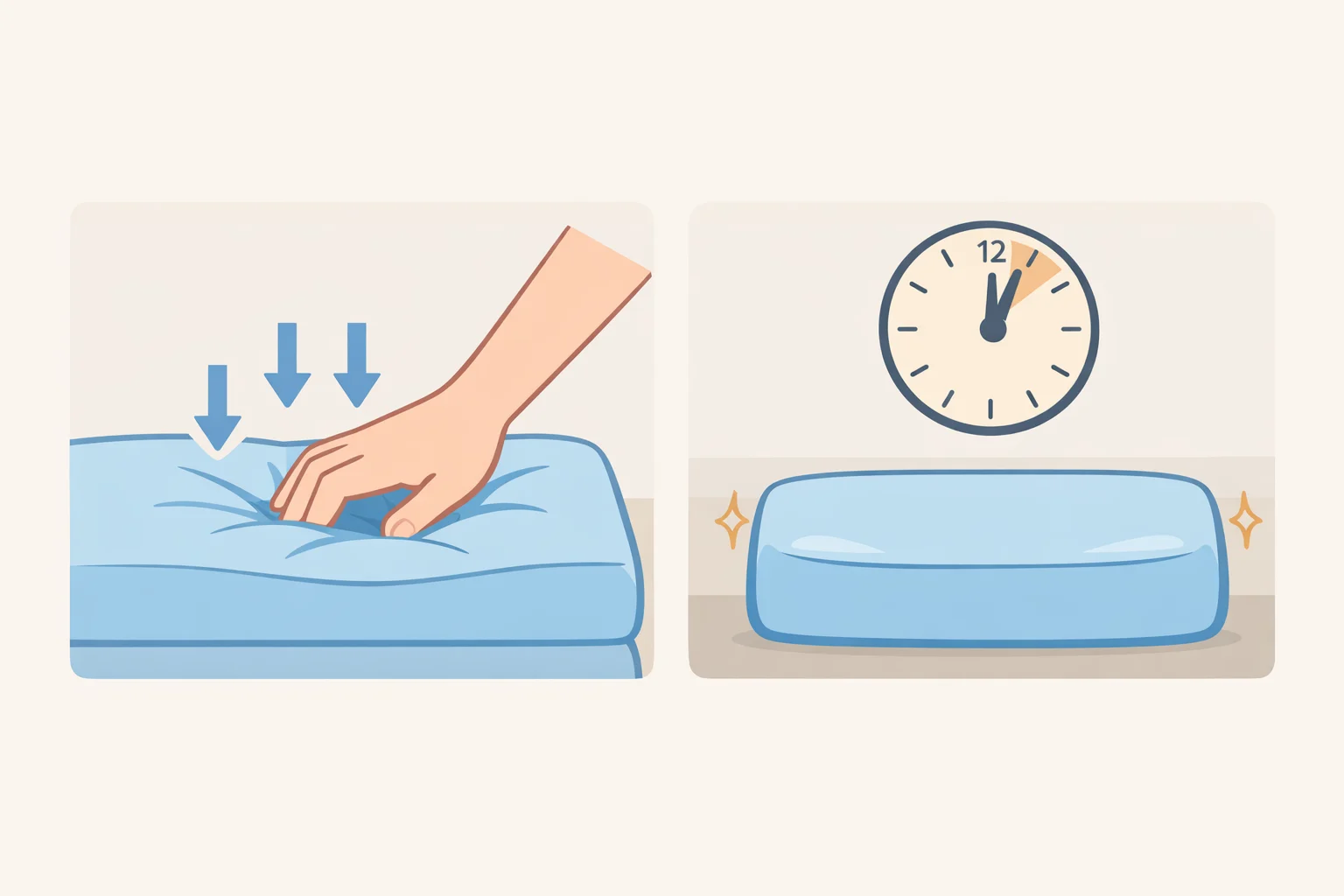
Seat height and cushion firmness are connected. A sofa can have the right frame height and still perform like a low sofa if the foam is too soft the cushion compresses beyond the target range under load, then keeps compressing as months of daily use take their toll.
The instinct when buying for comfort is to choose the softest, most enveloping option. For everyday usability, Maxi Home (2026) identifies this as the factor most people get wrong. Very soft foam high-loft fibre fills or foam below roughly 28 kg/m³ sinks significantly under body weight and becomes unstable at exactly the moment a person needs to push forward to stand. The target range is what the trade calls "supportive medium": foam density of 32 to 40 kg/m³, which compresses enough to feel comfortable across a long sit while still providing a stable platform for rising.
Durability compounds the problem. Ventura Interiors (2026) notes that a cheap sofa will sag within months, effectively lowering seat height and undermining posture. Soft foam degrades faster than firm foam. A cushion that starts at 48 cm can settle to 44 cm after a year of regular use (Maxi Home, 2026). The seat you tested in the store is not the seat you'll have in a year.
Foam density is a useful retail proxy, not a complete comfort guarantee fit to the individual still matters. But it's the best objective measure available during a showroom visit.
Seat depth is worth a secondary check. Standard sofa seat depth runs 20 to 24 inches (Ventura Interiors, 2026). If the depth is too great, shorter or older sitters can't keep their backs against the backrest while their feet rest flat, which undermines whatever height and firmness advantage the sofa has. Sitting fully back with feet lifted off the floor, or with the back unsupported, means the depth is wrong for that user.
What to check in the store:
- Ask for the foam density rating. A figure in the 32–40 kg/m³ range is the target. If the retailer can't provide it, note that.
- Press the cushion firmly and release. Supportive foam returns its shape quickly. Foam that stays depressed for several seconds is likely too soft.
- Sit for 10 to 15 minutes. If you feel yourself continuing to sink during that time, the foam density is too low (Maxi Home, 2026) and the seat will sit lower still after a year of daily use.
Step 3: evaluate the armrests as a standing aid, not just a rest
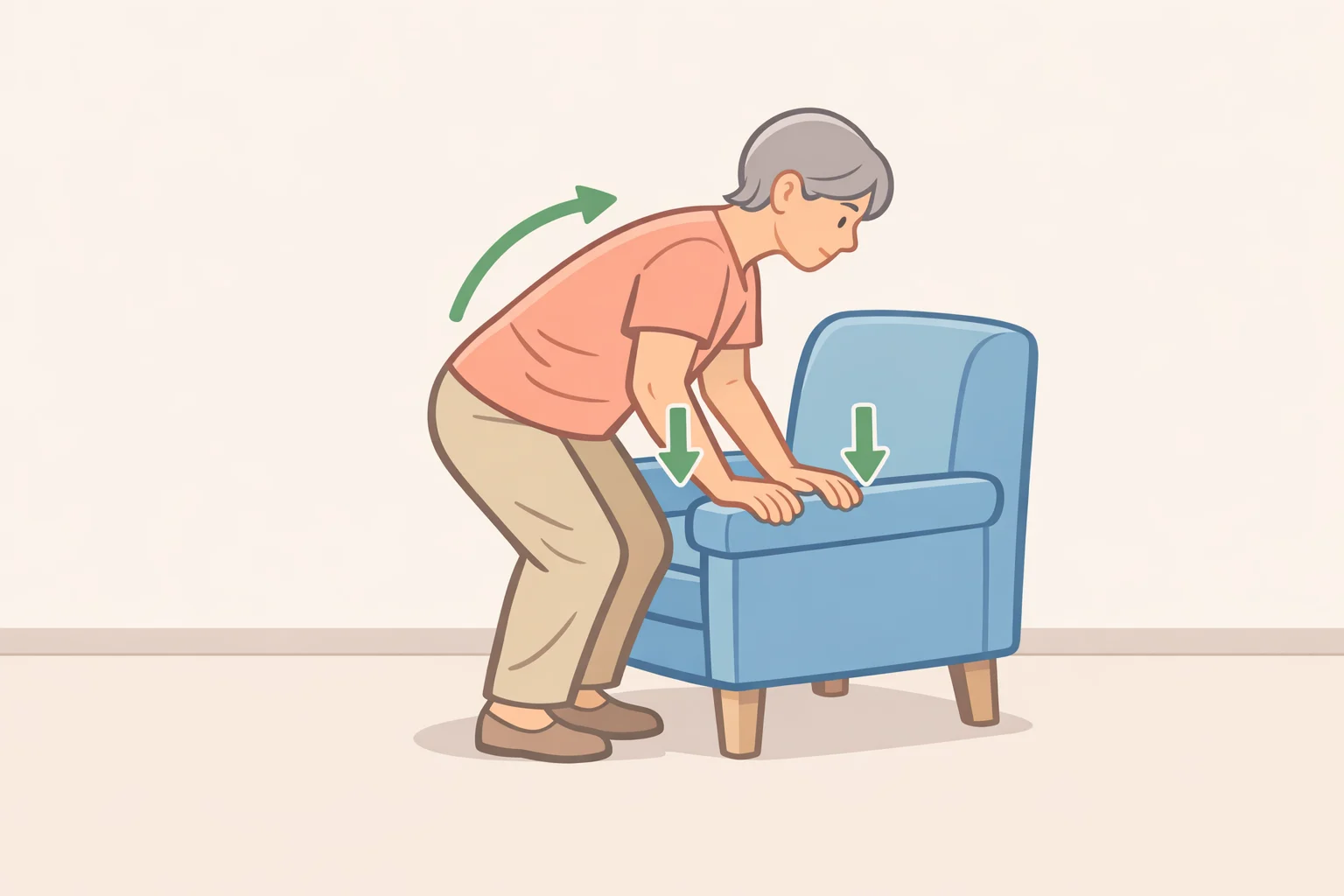
Armrests serve two functions: resting elbows during a long sit, and providing a push point for standing up. On most decorative or contemporary sofas, they're designed for the first function only. For older users, the second is what matters.
When a person leans forward to rise, they place their hands where their arms naturally fall with elbows at roughly 90 degrees. As Maxi Home (2026) explains, for most adults that position is 55 to 65 cm from the floor when seated. An armrest below 55 cm tends to require awkward shoulder positioning to push from, making the movement harder.
Width and reach both matter. Armrests around 12 cm or wider at the top surface give a meaningful grip area to push from; narrow decorative arms offer little. Armrests that stop 10 to 15 cm back from the front edge of the seat are nearly useless for standing assistance, because rising shifts body weight forward. The handhold needs to be where the hands end up, not where they start (Maxi Home, 2026).
The armrest check in the showroom:
- Sit fully back, then lean forward into a standing position naturally. Place your hands on the armrests as you would when rising. If you have to reach significantly downward or inward, the position is wrong.
- Check whether the armrest extends close to the front of the seat. If your hands land near the middle of your thighs, the armrest won't be there when needed.
- Press down on the armrest top surface. It should be firm enough to push from. A padded armrest that compresses under hand pressure offers less mechanical advantage.
When one sofa won't work for everyone
The 45–50 cm / 32–40 kg/m³ / 55–65 cm targets cover most elderly sitters well. But households rarely have just one person with one set of needs.
A shorter parent say, under 160 cm may find that a seat at the upper end of the ergonomic range leaves their feet dangling, which creates its own instability. For a shorter user, 45 cm loaded is often the practical ceiling, not the floor. A taller parent with limited hip mobility may need 50 cm or just above. These cases pull in opposite directions, and no single sofa resolves them cleanly.
When one parent has knee pain and the other doesn't, the temptation is to split the difference. The better approach, as Maxi Home (2026) suggests, is a two-piece configuration: a standard sofa for general use alongside a dedicated armchair optimized for the person with the more specific needs. A high-back armchair with firm seating and well-positioned arms, placed near the television or wherever the family gathers, can be the better solution altogether without constraining the rest of the room's seating.
Standard ergonomic seat-height formulas based on user height also don't generalize reliably to seniors, whose body proportions shift with age in ways those calculations don't account for (Biomimetics, 2023). That's exactly why the in-person test matters more than any published figure.
One more consideration if the elderly parent uses a walking stick, rollator, or wheelchair: clear floor space around the seating area matters as much as the sofa itself (Maxi Home, 2026). A sofa that performs well on every other metric becomes a problem if there's no room to maneuver alongside it.
A 3-minute showroom checklist
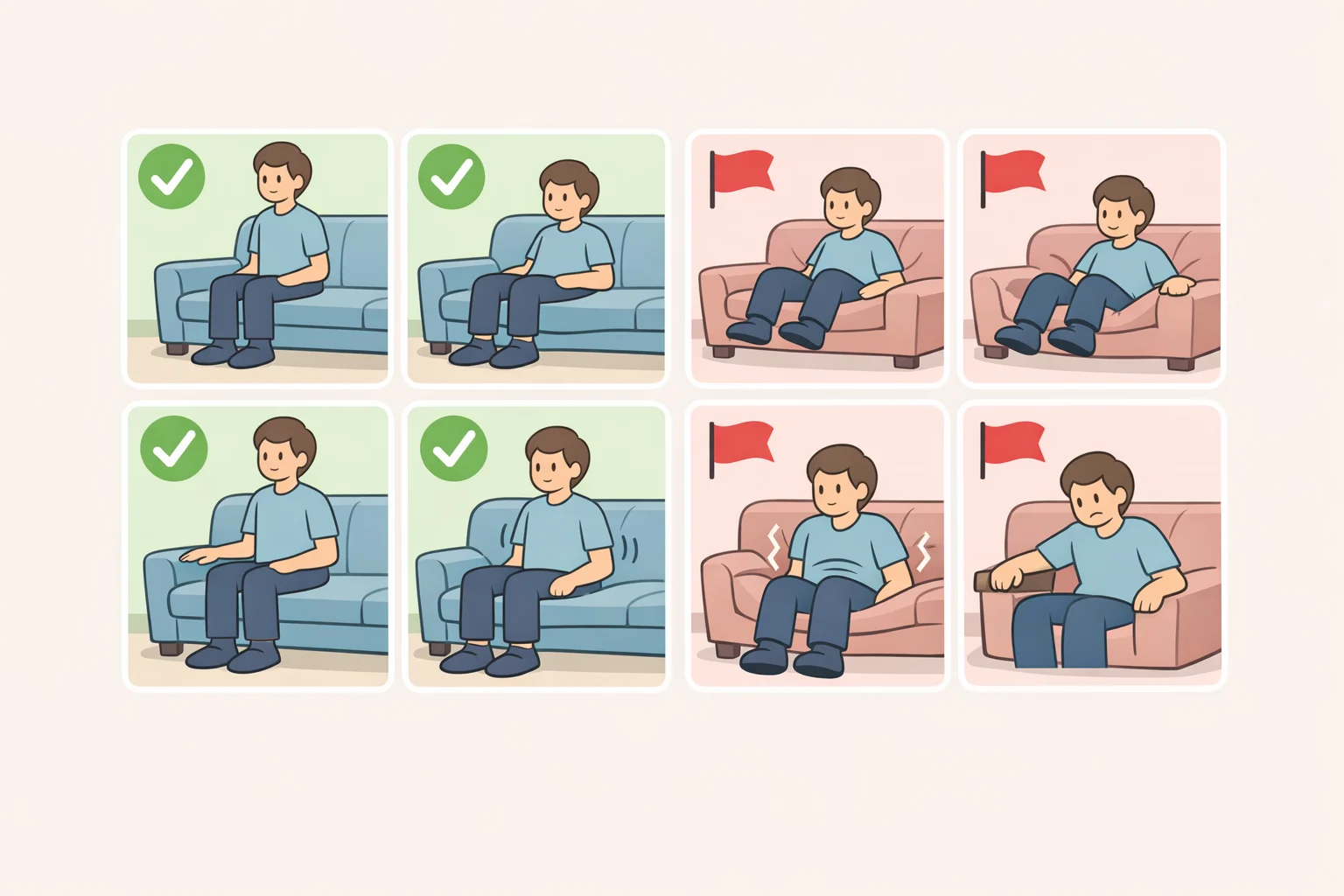
Before committing to any sofa:
Green lights:
- Sit height of 45–50 cm under load, feet flat, knees at roughly 90 degrees
- Foam that holds firm after 15 minutes without progressive sinking
- Armrests at 55–65 cm from the floor, wide enough to grip, extending close to the seat front
Red flags:
- Knees higher than hips once seated fully back
- Continuous sinking during a 15-minute sit
- Seat depth so generous that the backrest becomes inaccessible with feet on the floor
- Backward-sloping seat pan comfortable for lounging, harder for rising
- Narrow or recessed armrests, or none at all
If a sofa misses on one variable, seat height and armrest usability are the ones that matter most for an older parent's daily independence. A sofa can be forgiven for being slightly firmer than ideal. It cannot be forgiven for being impossible to get out of.
If you must compromise, compromise on style first, depth second, softness never.
What to do next
The test is straightforward: take the person who will use the sofa to the store, sit for fifteen minutes, then stand up the way they normally would and notice whether the sofa helps or fights them. Do it twice on any sofa that's a serious candidate.
Before you go, measure the height of the most comfortable chair in the house. That number is your benchmark. Any sofa that can't match it under load is probably the wrong sofa, regardless of how good it looks on the showroom floor.



Comments
Be the first, drop a comment!