



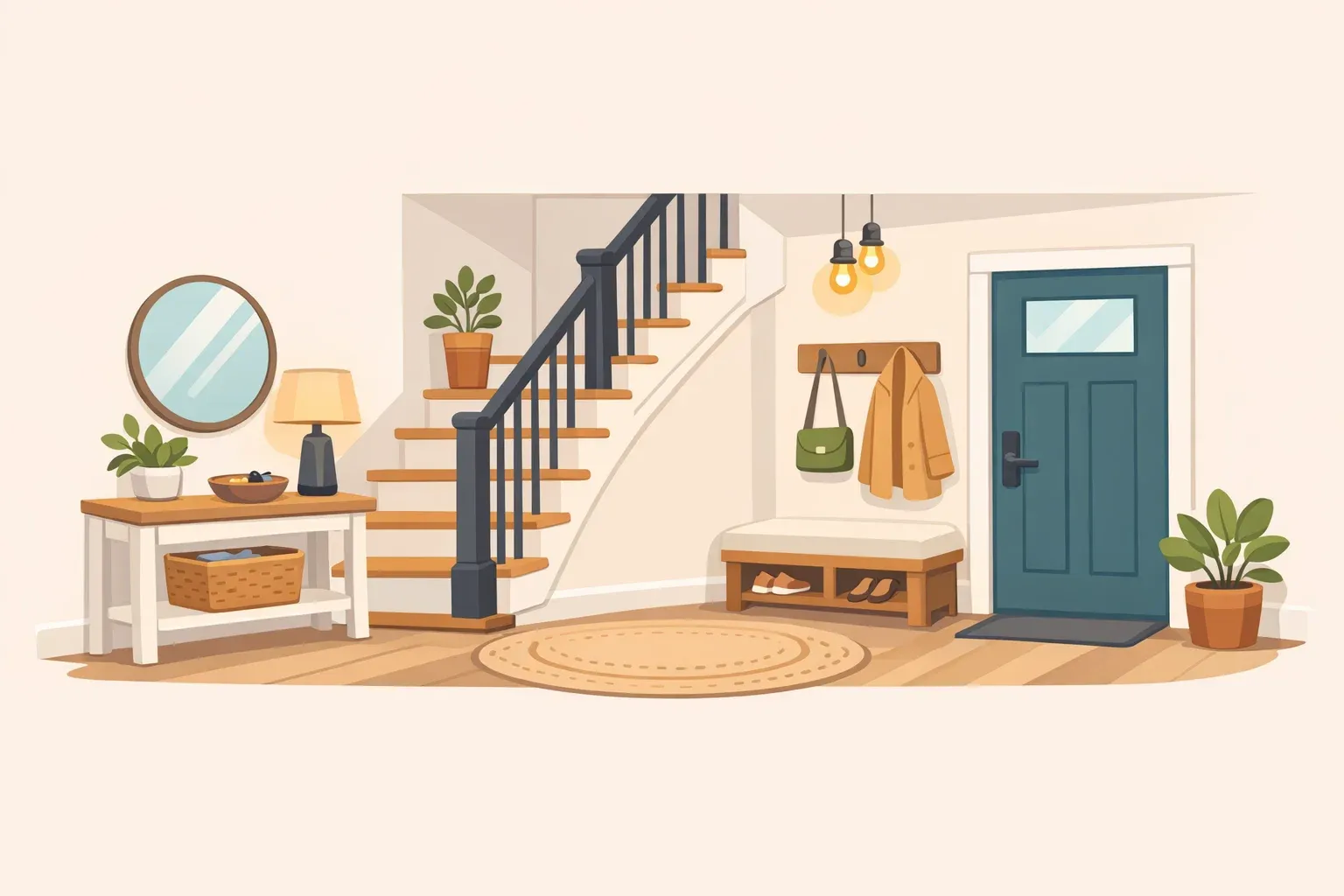
Choosing the first room to renovate can be difficult when the budget will not stretch to a kitchen or bathroom. An entryway offers a practical alternative: It is compact, used every day, and easy to update in stages.
A Santa Barbara homeowner demonstrated both the potential and the risks in an April 2026 entryway renovation. Renovating her 52-square-foot entryway and adjoining staircase cost $19,414, but the work included stairs, tile installation, carpentry, door glass, and painting — far more than a simple cosmetic refresh.
The entryway can be a smart first project when the home has no urgent repair problems, the space affects daily routines, and the work can remain limited in scope. It is not automatically the right starting point for every house.
Fix urgent problems before cosmetic ones
Do not spend on paint, lighting, or storage until serious safety and maintenance problems are under control. Water intrusion, unsafe wiring, structural movement, damaged stairs, unreliable locks, and deteriorated flooring should come first.
Inspect the entryway for water stains, soft flooring, rot around the frame, loose steps or railings, damaged fixtures, tripping hazards, and signs of recurring moisture. Reserve part of the budget for unexpected repairs instead of assigning every dollar to visible finishes.
Older homes require another precaution. Work in a pre-1978 home can disturb lead-based paint and create hazardous dust. The Environmental Protection Agency recommends checking for lead hazards and following lead-safe renovation practices. Electrical work, structural changes, exterior-door alterations, and stair repairs may also require qualified professionals and local permits.
Selling soon? Consider visible exterior fixes
Homeowners preparing to sell should compare an interior entryway makeover with targeted exterior improvements.
According to Zonda's 2025 Cost vs. Value Report, garage-door replacement ranked first nationally among the projects studied, with an estimated 267.7% of its cost recouped at resale. Steel entry-door replacement followed at 216.4%, and eight of the report's 10 highest-ranked projects were exterior replacements.
Those figures are national estimates, not guaranteed profits. Results vary with local prices, buyer expectations, installation quality, and the condition of the property.
Do not replace a functional door solely because a national report gives the project a strong average return. Repairing and repainting a sound door may make more sense when it operates securely and shows only cosmetic wear. A new door will not correct peeling trim, poor lighting, loose steps, or a damaged threshold.
Staying put? Improve the entrance you use
The most useful entrance may not be the formal front foyer. Many households enter through a garage, side door, mudroom, or kitchen doorway. Improve the arrival zone where shoes, bags, coats, keys, and deliveries actually accumulate.
Observe the space for several days before planning the makeover. Note what lands on the floor, which items need to remain within reach, and where people naturally stop.
Inspect the door before redesigning the space around it. Repair or replace it first if it is rotting, leaking, difficult to secure, or badly warped. If it operates safely and seals properly, direct the budget toward lighting, storage, paint, or flooring.
Drafts do not always require a new door. Weatherstripping, caulking, or sealing gaps around the frame may improve comfort at a much lower cost. ENERGY STAR lists weatherstripping and door sealing among the accessible air-sealing projects homeowners can consider.
Plan the entryway makeover in eight steps
Start with the problems the entryway needs to solve, not with products that look appealing online.
1. Choose the entrance that matters most
Unless curb appeal or resale is the primary goal, renovate the entrance the household uses most often.
2. Inspect for damage
Check the door, frame, threshold, floor, stairs, locks, outlets, and light fixtures. Address leaks, rot, loose components, and tripping hazards before changing the room's appearance.
3. Measure carefully
Record wall widths, ceiling height, doorway width, and the area required for the door to open fully. Include trim, vents, outlets, and other obstructions.
A bench or cabinet must leave enough room for the door and foot traffic, not merely fit along the wall.
4. Divide the budget
Separate the total into repairs, labor, lighting, storage, surfaces, decoration, and contingency funds. Set aside the contingency before shopping.
5. Test the layout
Use painter's tape or cardboard to mark the dimensions of a bench, cabinet, or shelf. Temporary hooks and baskets can reveal which storage locations the household will actually use.
6. Complete skilled work first
Finish electrical work, door repairs, flooring preparation, and carpentry before painting or installing storage. This reduces the risk of damaging new finishes.
7. Add durable storage and surfaces
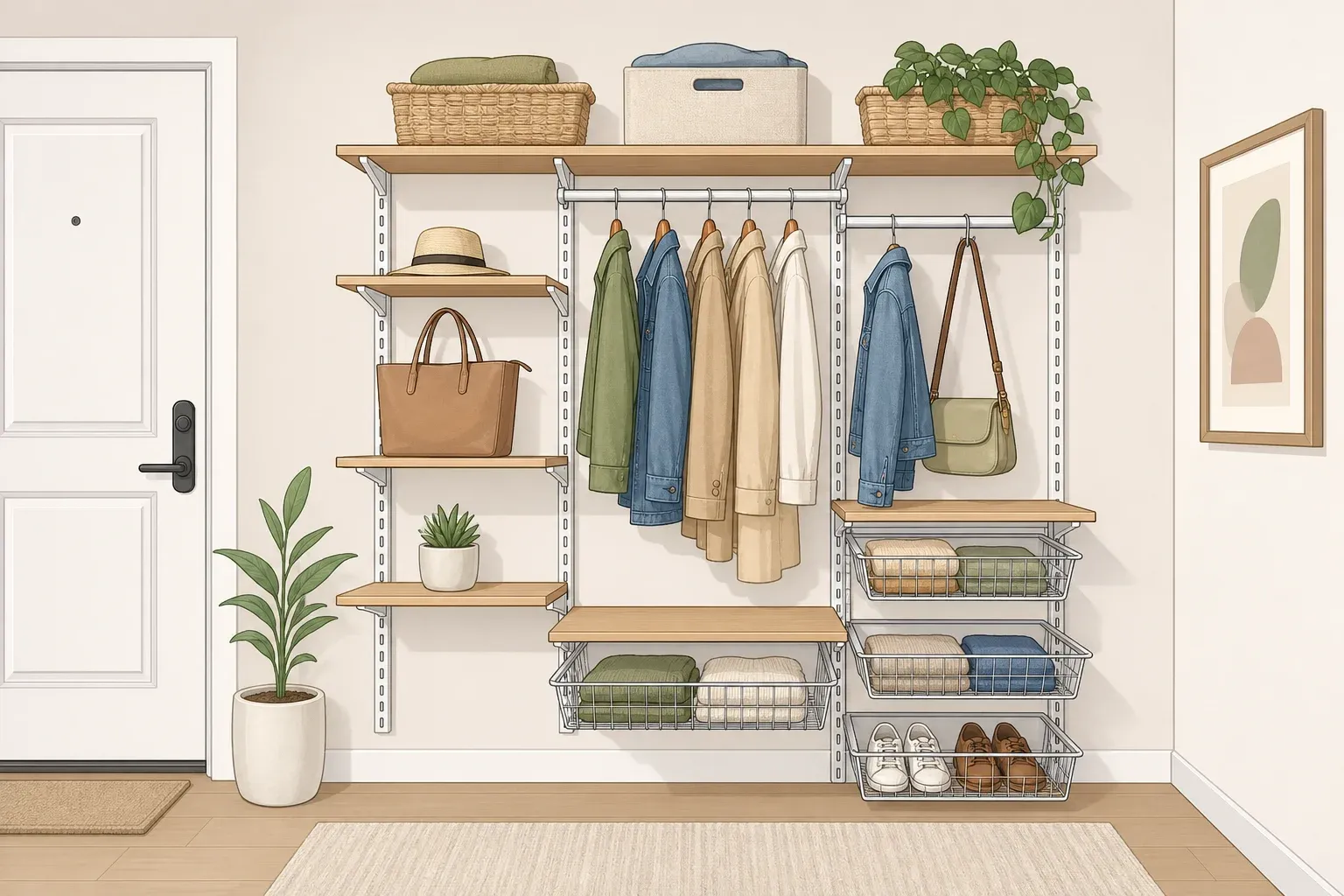
Choose washable paint, easy-clean flooring or rugs, sturdy hardware, and materials designed for frequent use. Closed shoe cabinets reduce visual clutter, while open hooks may work better for everyday coats and bags.
8. Decorate last
Add a mirror, artwork, plant, or runner only after the room functions properly. One focal feature usually creates a cleaner impression than several small accessories.
Know what can push the project over budget
A basic entryway refresh can begin with a few hundred dollars when limited to paint, simple hardware, a light fixture, or modest storage. Professional installation, flooring, glass, carpentry, or stair work can push the project into four or five figures.
In the featured Santa Barbara renovation, stair work, tile installation, and carpentry accounted for $12,208, or about 63% of the total. Those costs reflected the construction needs of that project, not work every entryway requires.
Expect the budget to rise if the project includes:
Stair or railing replacement
Subfloor repair
Structural carpentry
New wiring or relocated fixtures
Exterior-door resizing
Professional tile installation
Custom built-ins
Water, mold, pest, or rot remediation
Restoring an existing feature may cost less than replacing it, but not always. Compare the full price of refinishing and repairing a door with the cost of a suitable replacement, including labor, glass, locks, weatherstripping, and frame repairs.
View paint, tile, flooring, and wallpaper samples in the actual entryway before ordering. Check flooring for water resistance, scratching, and ease of cleaning rather than judging it only by appearance.
Decide whether the entryway should come first
Ask three questions before spending:
Is there a safety, water, structural, or electrical problem that must be fixed first?
Is the goal better daily function or a stronger presentation for an upcoming sale?
Can the project stay contained, or will it trigger major construction?
When the home is sound and the goal is daily improvement, the most-used entryway can be a strong place to begin. Its limited footprint makes planning more manageable, while better lighting, storage, and durable finishes can improve everyday routines.
When a sale is approaching, compare an interior makeover with targeted exterior repairs before committing the budget. A clean, functional entrance may improve the home's first impression, but national resale figures cannot predict the result for one property.
The entryway should never come before essential repairs. Once those are handled, however, it can deliver a noticeable improvement without the cost and disruption of remodeling a major room. Keep the project centered on function, choose durable materials, and stop before unnecessary construction turns a small makeover into a major renovation.




Comments
Be the first, drop a comment!