



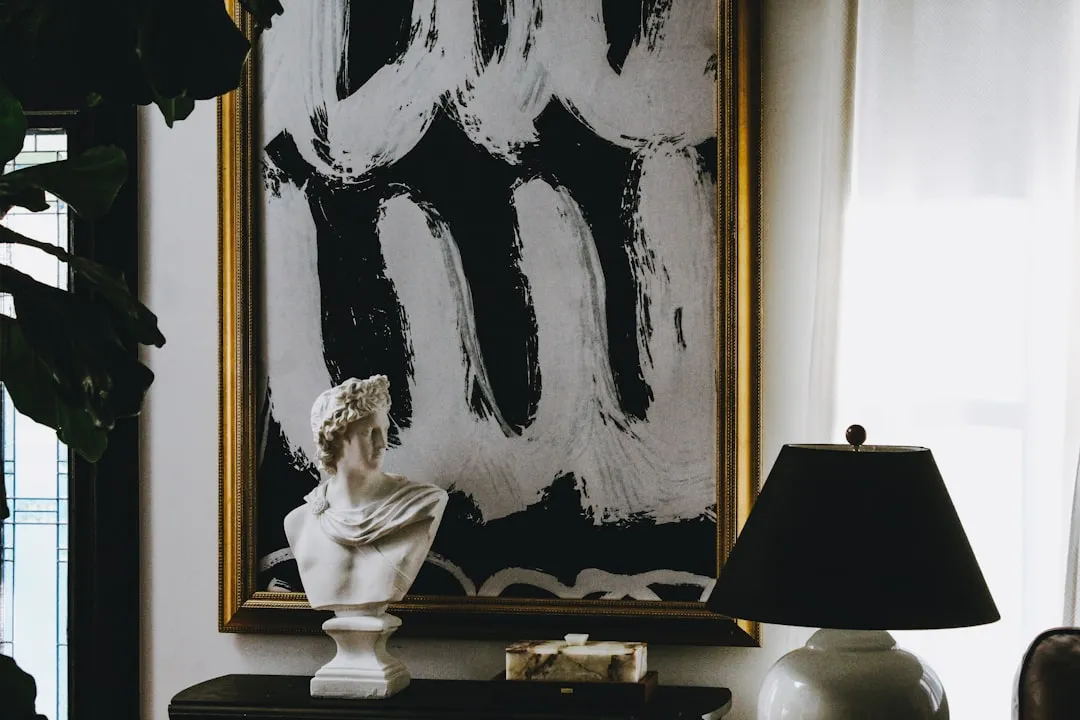
Walk through a luxury listing staged with original artwork, and you are not meant to think about the staging. You are meant to feel that the house already belongs to someone with taste, and that buying it means stepping into that lifestyle.
In luxury staging, that is not just decoration. It is a buyer-perception strategy. Fine art can help a high-end home feel more specific, memorable, and intentional, especially when competing properties have similar square footage, finishes, and locations.
The broad-market case for staging is supported by recent agent survey data, but the evidence is strongest as reported market experience rather than controlled proof of a price lift. A May 2025 National Association of Realtors survey, based on 1,266 usable responses from active Realtors, found that 29% of real estate agents reported a 1%–10% increase in dollar value offered for staged homes, while 49% of sellers' agents observed reduced time on market. That same report found that 83% of buyers' agents said staging made it easier for buyers to visualize a property as a future home.
That evidence supports staging generally. It does not prove that original art, by itself, raises sale prices or shortens time on market. That distinction matters. Fine art can be a useful part of luxury staging, but it should be treated as one tool within a broader presentation strategy, not as a guaranteed pricing mechanism.
Why luxury staging increasingly favors original art
The logic of fine art in luxury staging is easiest to understand at the upper end of the market. In a midpriced home, neutral furniture and simple wall art may be enough to help buyers imagine how a room could function. In a luxury home, especially one competing against other polished listings, buyers may be comparing finished lifestyle presentations rather than imagining potential from scratch.
Generic art can make a space feel complete in photos, but it can also make a high-end room feel interchangeable. Original art does something different. A one-of-one work cannot be reproduced overnight for the listing two blocks away. At the luxury tier, that non-repeatability can suggest that money, care, and judgment were applied to the room rather than pulled from a standard rental catalog.
There is also broader consumer-research support for the idea that visual art can influence how people perceive non-art objects around it. In a 2008 Journal of Marketing Research article on art infusion, researchers Henrik Hagtvedt and Vanessa M. Patrick found that the presence of visual art can create a favorable spillover effect on evaluations of consumer products through luxury perceptions. That research was not about real estate staging, so it should not be stretched into proof that artwork increases home values. It does, however, support the practical idea that art can change how surrounding objects and environments are perceived.
The safer claim is this: original art may help a luxury listing feel more curated, distinctive, and memorable. It has not been proven to create a measurable price lift independent of staging quality, photography, architecture, pricing, or market conditions.
Where fine art has the most impact
Fine art matters most where buyers form their first impression. That usually means the rooms used in listing photos, video tours, social media clips, and private marketing materials.
Prioritize the spaces that carry the listing:
Entry or foyer
Living room
Dining area
Primary bedroom
Stairwell or double-height wall
Office, library, or lounge
Any room with a major view or architectural feature
The goal is not to place original art everywhere. The goal is to use it where it can anchor the room visually and make the home feel more intentional.
Scale matters. A small piece above a large sofa, fireplace, or console can make a room feel unfinished. In large luxury spaces, one substantial work often reads better than several small pieces. The art should match the architecture and mood of the property without competing with the home itself.
Original works also have a different effect in person than they do in photos. In a listing image, a high-quality print may look similar to an original painting or photograph. In the room, buyers may notice texture, surface, scale, and material presence. Even when they do not consciously identify those details, the space can feel more layered and less generic.
How to choose art for luxury staging
Fine art should support the property's story, not the seller's personal taste. Before choosing pieces, start with the home itself.
A glassy modern home may call for large abstract works, sculptural pieces, or bold photography. A historic estate may be better served by quieter landscapes, portraits, works on paper, or pieces that echo the home's period details. A coastal property may benefit from art that references light, water, texture, or place without becoming theme decor.
The safest choices are distinctive but not distracting. Avoid art that is overtly political, religious, erotic, violent, or intensely personal unless the listing strategy is intentionally niche. Buyers should remember the room, not leave debating the artwork.
Use these practical rules:
Choose art that fits the room's scale.
Keep the palette connected to the staging, but not overly matched.
Avoid pieces that make the home feel like a gallery instead of a residence.
Do not use valuable work in rooms where it will look visually unsupported.
Let one or two strong pieces carry the presentation instead of overfilling every wall.
Choose art that makes the listing feel specific, not staged from a formula.
If the property has a clear buyer profile, let that guide the art. A formal estate, urban penthouse, wine-country compound, and minimalist beach house should not all receive the same staging package.
What to document before using original art
Fine art creates practical questions that ordinary staging accessories may not. Those questions should be answered before the work is installed.
At minimum, agents, sellers, and stagers should document:
Who owns each piece
Whether the art is on loan, rented, seller-owned, or stager-owned
Who carries insurance
The condition of the work before installation
Who is responsible if the piece is damaged
Whether the art is available for separate purchase
Whether the art conveys with the sale
When and how the art will be removed if it does not convey
Do not assume buyers understand staging conventions. If the art does not come with the home, say so clearly in listing materials, at showings when relevant, and in the purchase agreement. A buyer who falls in love with a staged room may reasonably ask whether the furnishings or artwork are included. The answer should already be clear. If you are the seller, ask your agent or stager for a written inventory before the home is photographed or shown.
This is especially important when original art is used as part of the home's overall presentation. The more the art contributes to the listing's identity, the more important it is to separate marketing effect from sale terms.
Be careful with virtual staging and AI-edited images
Fine art can appear in a listing through physical staging, virtual staging, or AI-edited images. Those are not the same thing.
If artwork, furniture, fixtures, views, landscaping, or other property elements are digitally added, removed, or changed in listing images, disclosure may be required depending on the jurisdiction. In California, AB 723 requires real estate brokers, salespeople, or people acting on their behalf to disclose digitally altered real estate images and provide access to the original, unaltered version.
Even outside California, the trust principle is simple: do not let a digitally staged image imply that a room, finish, view, or feature exists when it does not. If art is physically staged, buyers can experience it in the home. If it is digitally inserted, the image should be labeled clearly so buyers understand what they are seeing.
When fine art is worth it
Fine art makes the strongest case when the listing is expensive enough, visible enough, and design-forward enough for the difference to matter.
It is most useful when:
The home is competing with other highly polished luxury listings.
The rooms are large enough to need stronger visual anchors.
The architecture benefits from a more curated presentation.
The buyer pool is likely to notice design quality.
The art appears in key listing photos or walkthrough spaces.
The seller, stager, and agent have clear documentation for ownership, insurance, and conveyance.
It is harder to justify when the property is below the luxury tier, when the art is placed in secondary rooms, when the pieces are inconsistent with the home, or when the budget would be better spent on cleaning, repairs, paint, lighting, landscaping, or photography.
Fine art should not be used to hide defects, distract from pricing problems, or make a poorly prepared home look more elevated than it is. It works best when the property is already strong and the staging needs to sharpen the emotional and visual impression.
Use original art selectively
The most credible case for fine art in luxury staging is not that it guarantees a higher sale price. It is that original art can help a high-end listing feel more specific, more finished, and less interchangeable.
That matters in luxury real estate, where buyers are not just evaluating rooms. They are evaluating taste, lifestyle, and whether the home feels worth its price compared with the next one.
The best approach is selective and documented. Use original art in the rooms that matter most. Choose pieces that fit the property rather than overpower it. Make ownership, insurance, and sale terms clear before the first showing. Be transparent when images are virtually staged or digitally altered.
Fine art can strengthen a luxury listing's presentation, but it is not a substitute for accurate pricing, strong photography, clean disclosure, or a well-prepared home. It is the right tool when it supports the room, the buyer, and the story the listing is trying to tell.








Comments
Be the first, drop a comment!