



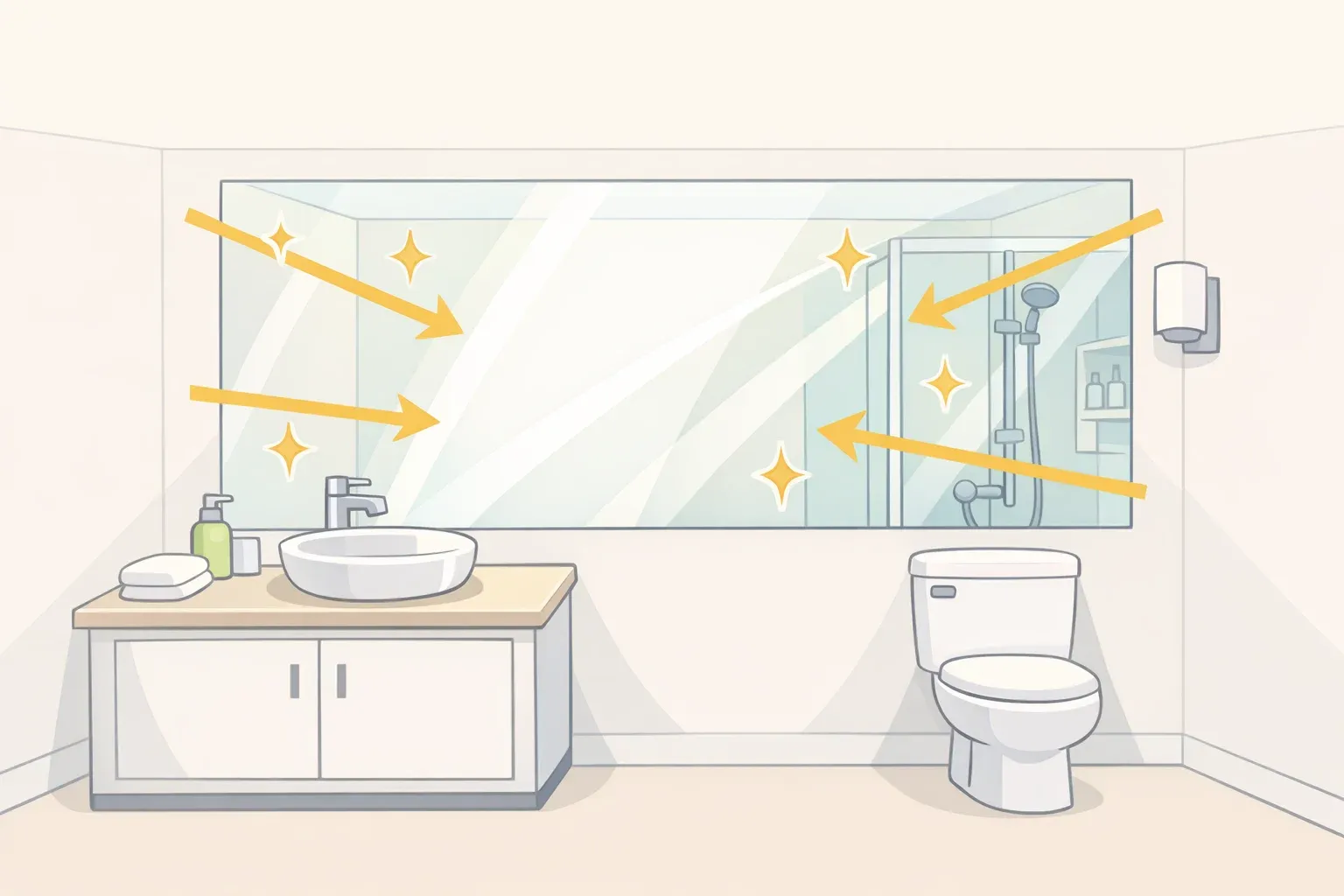
A small bathroom looks bigger when the eye meets fewer interruptions and more light. Every decision here, from tile size to fixture height to mirror placement, is an expression of that principle. The strategies below are organized by effort level so you can skip to what's realistic right now.
Start here: what size bathroom do you have?
Your footprint determines which tips apply:
3×9 ft (27 sq ft): Powder room only. Skip the shower sections.
4×8 ft (32 sq ft): Minimum viable full bath with a corner shower. Vanity depth is critical.
5×8 ft (40 sq ft): The most common real-world footprint. All sections apply.
Under 36 inches wide: A full bath with a shower is not code-feasible. Powder room planning only.
Under 48 inches wide: An 18-inch vanity is required to maintain a 30-inch walkway without moving plumbing.
Three mistakes cancel out almost everything else: dark contrasting grout, clutter on the vanity counter, and a door that swings into the walkway. They're addressed in the final section.
How to make a small bathroom look bigger with light and mirrors
Effort level: Weekend fix to moderate upgrade
Start here. Light and reflection deliver the most immediate spatial impact with the least disruption. A room with correct lighting and a proper mirror will feel meaningfully larger before a single tile is changed.
1. Use one large mirror, not two small ones. A single frameless mirror wider than the vanity, spanning close to the full wall width, visually doubles the room's perceived depth and bounces every available light source back through the space. Multiple smaller mirrors subdivide the wall and add visual noise. In rooms under 48 inches wide, go frameless; only heavy frames add visual weight that a narrow space cannot absorb, acting as a border that shrinks the wall.
2. Mount the mirror opposite the window. In window-facing layouts, spanning the mirror at least 80 percent of the vanity wall width bounces natural light back toward the entry and makes the bathroom feel deeper from the doorway. No electrical work required.
3. Switch to a mirrored medicine cabinet. Storage and reflection in one wall footprint. Modern designs with arched profiles, cane-panel doors, and slim metal frames bear no resemblance to contractor-grade 1970s models. A mirrored cabinet can be custom-fitted to the full wall width, with a sconce providing lighting without consuming any surface space.
4. Layer the lighting. A single overhead fixture casts shadows downward and makes the room look flat regardless of wattage. Light from multiple heights eliminates those shadows and creates the impression of volume.
5. Add sconces at face height. Wall sconces flanking the mirror, or a backlit mirror, eliminate the downward shadow pattern. When mounting sconces, establish the bulb's actual position first, then work backward to the junction box location. Fixture shape determines correct mounting height, and skipping this sequence is a common and expensive wiring error.
6. Install an LED backlit mirror. At $200–$600, a backlit mirror handles vanity lighting and the mirror in one unit, often with integrated defogging and dimming. For any bathroom currently relying on overhead-only illumination, this single swap changes how the space reads.
7. Put dimmers on every circuit. Bright light for task use, lower light for ambient use. The same fixtures serve both purposes. Keep LED color temperature at 2700K; Foyr recommends this warmer range specifically for narrow bathrooms.
8. Light the shower niche and add under-vanity strips. Lighting inside the shower niche turns storage into a visual focal point and eliminates the need for an overhead shower fixture. LED strips mounted beneath a floating vanity graze the floor and amplify the floating effect. Budget $100–$300 for the strips.
Small bathroom design ideas for surfaces: fewer materials, fewer interruptions (tips 9–15)
Effort level: Weekend fix for paint and grout; remodel-level for tile
Once lighting is working, surfaces do one job: make the room read as a single unbroken space. The most effective small bathrooms use a maximum of two to three materials: one tile for floors and shower walls, one countertop surface, and one metal finish for all hardware. Apply that limit first, then work through the tips below.
9. Use large-format tile. Tiles 12×24 inches or larger reduce grout line count across floors and walls. Fewer grout lines mean fewer visual interruptions; surfaces read as larger, flatter planes. Small mosaic tiles do the opposite; they multiply the grid and fragment what you're trying to unify. Orient the long axis toward the far wall to extend perceived depth.
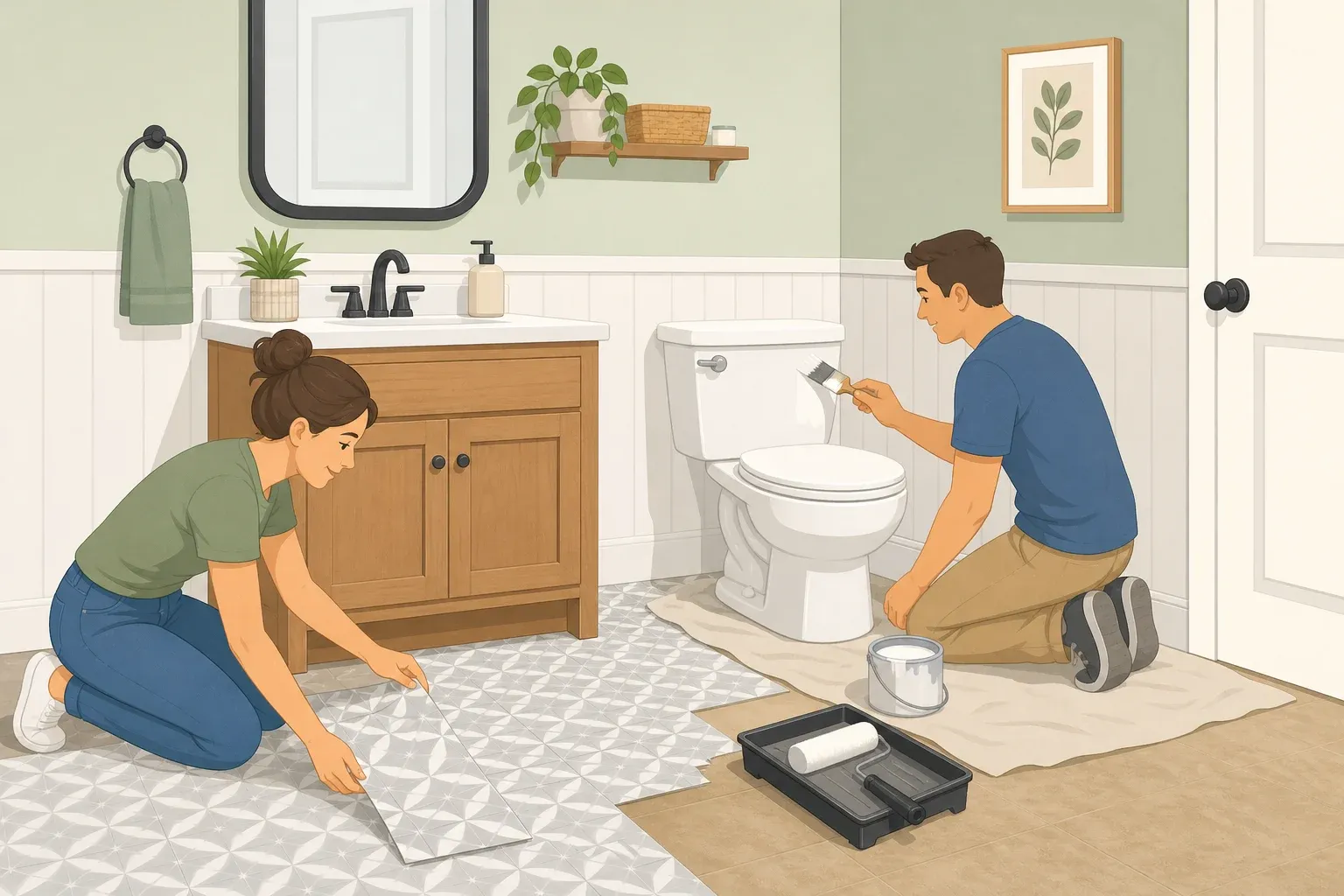
10. Match grout color to tile. Contrasting grout turns every joint into a visible line. Matching grout makes joints nearly invisible, at zero cost premium, whether setting new tile or regrouting over existing. One exception: use a slightly darker grout on the shower floor only. Pure white accumulates mold quickly.
11. Run the same floor tile into the shower. When floor tile stops at a curb, and a different tile begins inside, the brain registers two rooms. Continuous tile merges the zones and can increase apparent room size by 20–30 percent. Best achieved with large-format tile and a linear drain. A curbless shower adds $800–$1,500 over a standard curbed design.
12. Take the shower tile to the ceiling. Stopping at 48 or 60 inches and switching to painted drywall creates a hard horizontal line that caps visual height and introduces a moisture vulnerability at the transition. Full-height tile adds $500–$1,100 in material and labor for a small shower.
13. Pre-lay marble-look porcelain before installation. On placement: Use marble on walls, not shower floors. Light marble stains readily from personal care products, even when sealed.
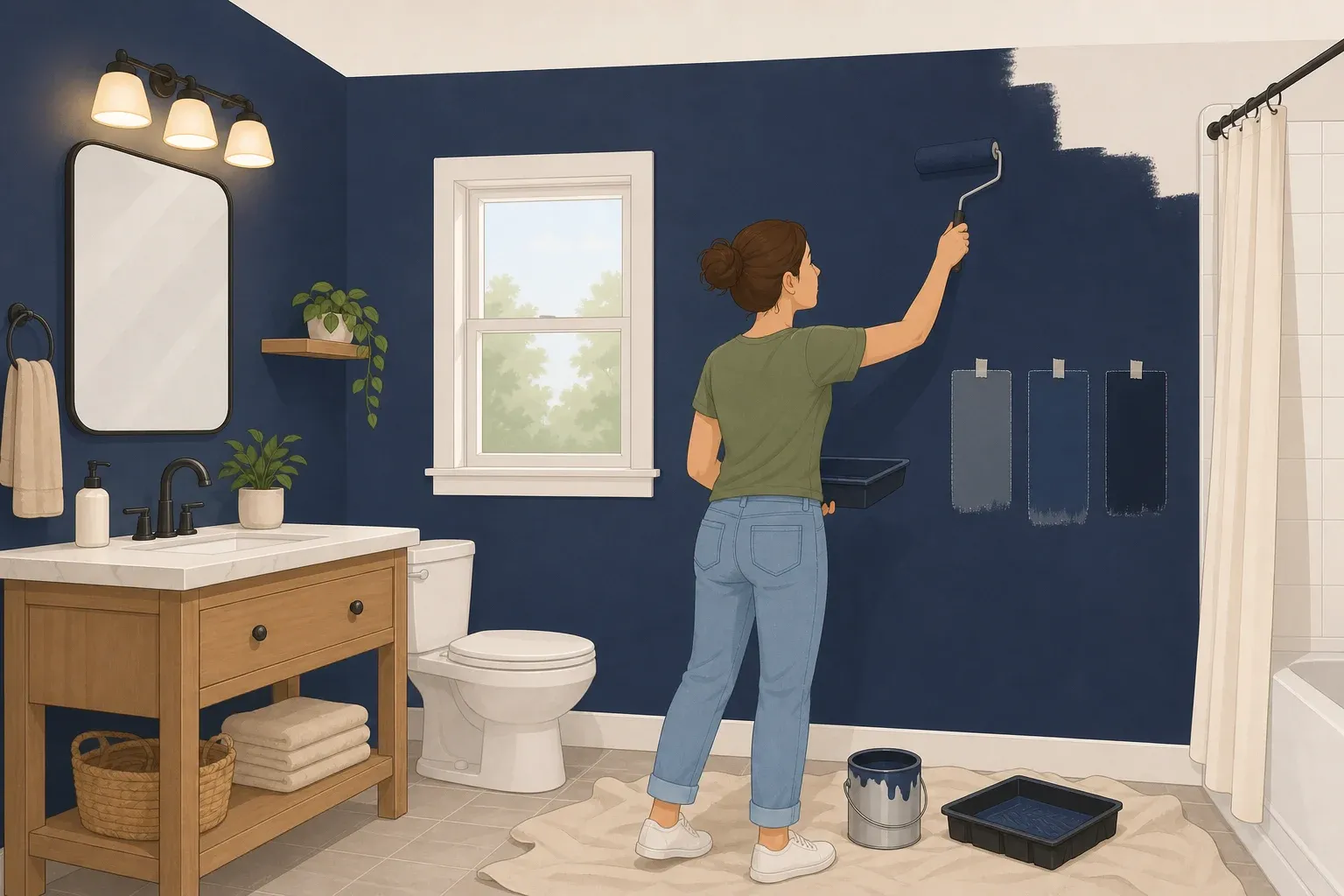
14. Paint trim, ceiling, and doors the same tone as the walls. Stopping color at the trim creates a border that visually fragments the room. One continuous tone reads as one continuous space. A ceiling shade slightly lighter than the walls draws the eye upward.
15. Choose warm whites and pale pastels over stark white. Soft whites, warm off-whites, sage, pale pink, butter yellow, these reflect light and push walls visually further apart. Stark white reads as clinical; a warm white with a slight cream undertone avoids that without sacrificing reflectivity.
Bold color is a different conversation. Designers describe bathrooms as "jewel boxes" where dramatic choices feel curated rather than overwhelming . That logic works best in powder rooms with low daily traffic. For a primary bathroom used every day, anchor the design in timeless materials and add personality through towels, art, and accessory items that can be updated without a remodel.
Small bathroom storage ideas: clear the surfaces to reclaim the room
Effort level: Free to moderate, with one remodel-level option
Clutter on the vanity counter is one of the three things designers most consistently identify as shrinking small bathrooms. A clear counter has a direct and immediate effect on how large the room feels.
16. Clear the counter to an absolute minimum. One soap dispenser, one or two daily-use items. Everything else belongs in a cabinet, drawer, or bag. If the counter can't be cleared in under a minute, the storage plan needs to come before any other design decision.
17. Add in-cabinet outlets and powered pull-out drawers. Items with a dedicated charging location inside a cabinet stay off the counter permanently, no daily discipline required.
18. Reconfigure the vanity interior and add recessed niches. Many standard vanities include a false drawer front at the top that wastes the full depth of that cavity. When walls can be opened, recessed niches go further, using the dead space between studs for shelves or tall storage units, consuming no floor footprint.
19. Add wall-mounted glass shelves. Transparent shelves hold items without adding visual mass. Budget $100–$250 for two to three shelves installed. For renters who can't drill, suction-mounted hooks and over-door organizers move items off the counter and floor without wall penetration.
20. Unify storage hardware with plumbing fixtures. Hooks, rails, pulls, and handles should share the same metal finish as plumbing fixtures. Mixed metals work when one finish dominates the major pieces and a second appears only in accents, not when they alternate randomly.
Small bathroom layout, fixtures, and shower: structural decisions that unlock everything else
Effort level: Remodel-level. Highest priority if any construction is planned
Layout decisions control how a bathroom feels at entry. No finish corrects bad circulation, and no mirror compensates for a vanity that consumes the only walkway. If walls are open, spend here first.
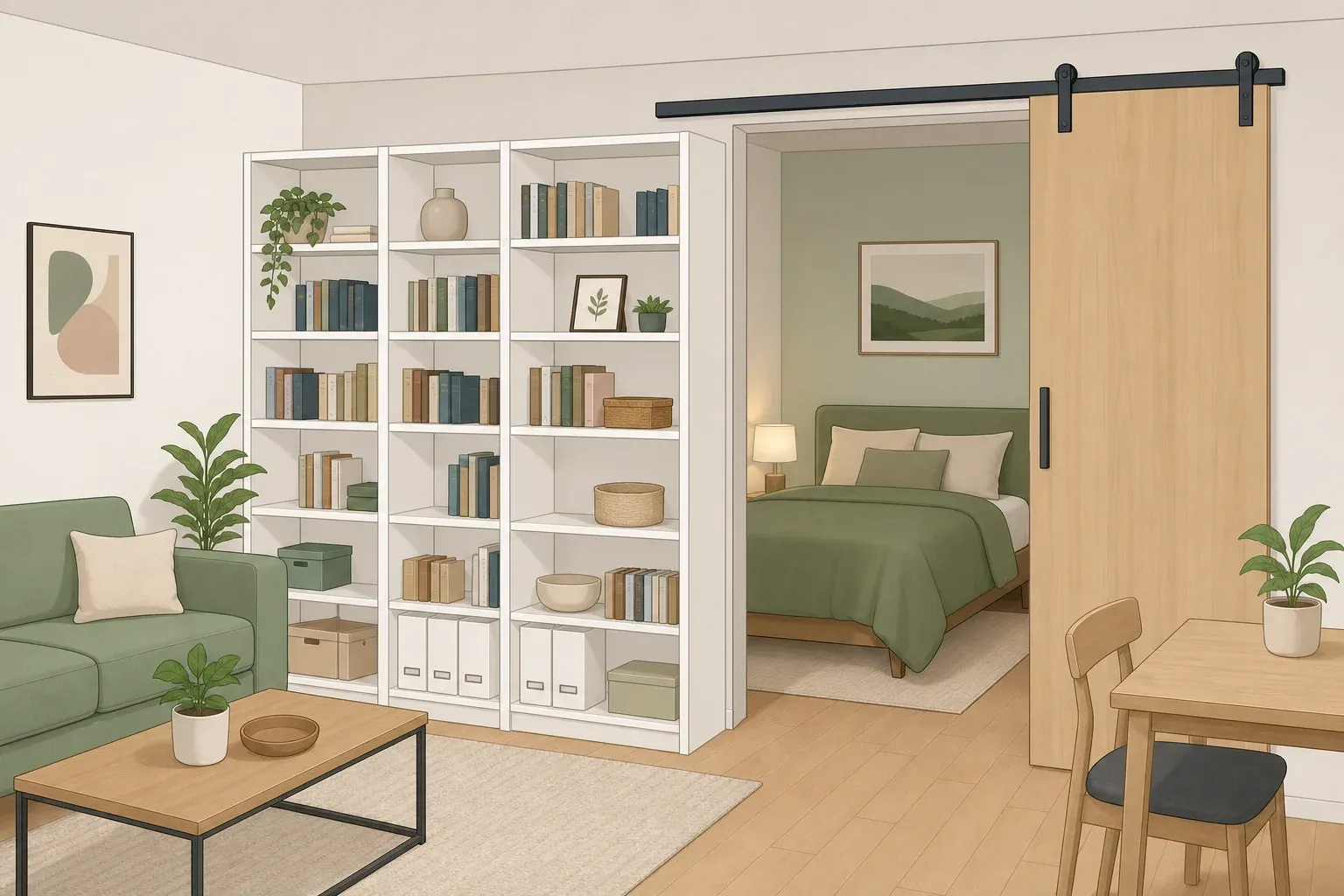
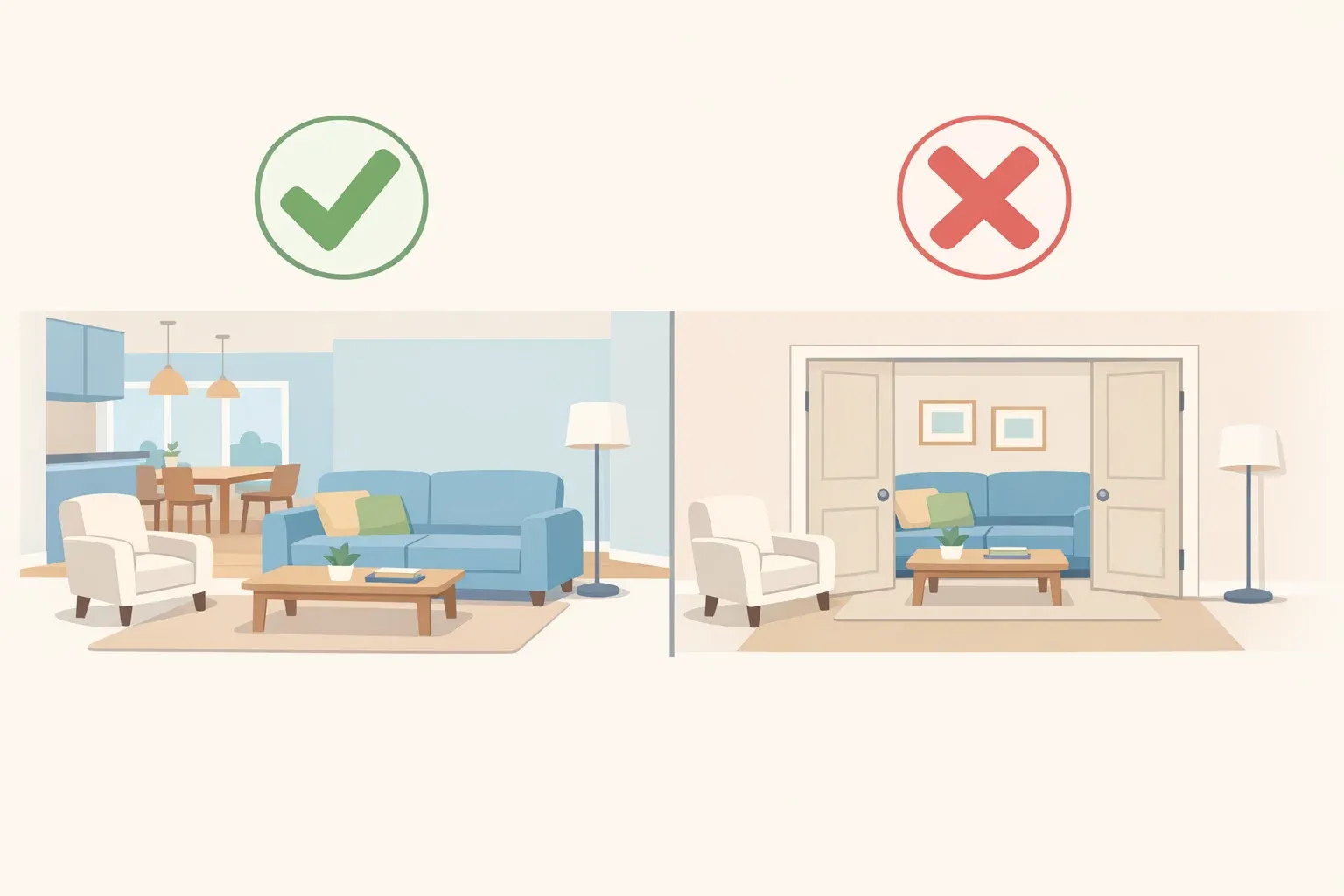
21. Replace an inward-swinging door with a pocket door. A standard door requires a 30-inch arc of clear floor space. In a 40–50-square-foot bathroom, the arc lands directly in the main walkway. A pocket door recovers 7–9 square feet of usable floor area. Installation during a remodel runs $800–$1,500, including framing. Don't substitute a barn-style slider exterior-track sliding doors, which don't seal, provide no sound privacy, and create a collision hazard at the opening.
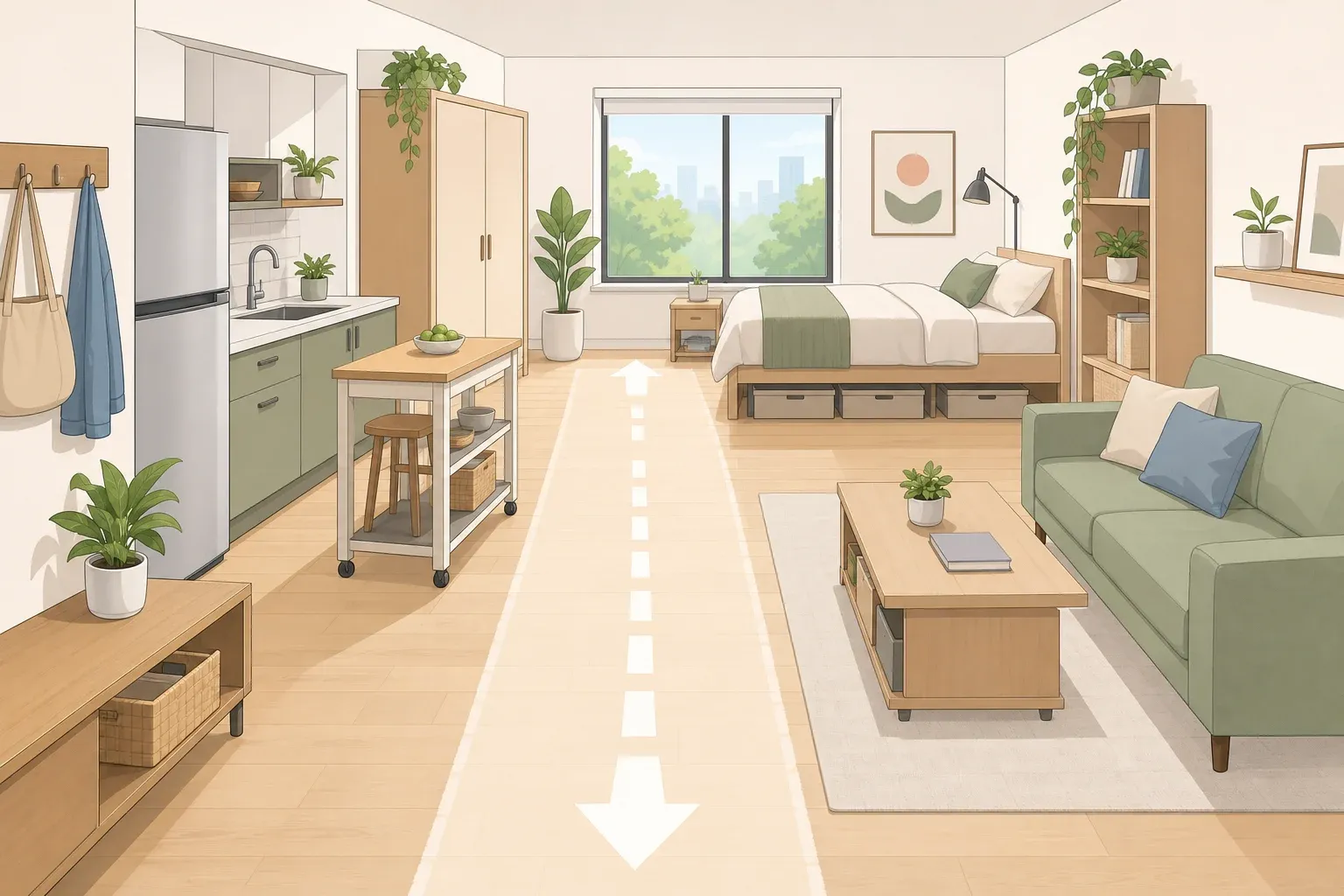
22. Choose the right layout for your width. The linear galley has all fixtures on one service wall, opposite wall open as circulation works best in rooms under 4 feet wide, where concentrating plumbing on a single wall is the only viable option. The split two-wall configuration, vanity on one long wall with the toilet opposite, is more effective in 5–6-foot-wide rooms because it creates a genuine central corridor rather than a squeeze-through lane. In corridors under 48 inches wide, reducing vanity depth from 21 to 18 inches restores 3 inches of walkway clearance without moving the plumbing rough-in.
23. Install floating fixtures. A wall-hung vanity exposes 8–12 inches of floor beneath it, extending visible tile from wall to wall. A wall-hung toilet recovers 6–8 inches of front clearance, according to Foyr. Note that wall-hung toilets typically require an in-wall carrier system to confirm wall depth and framing before specifying. A floating vanity costs $100–$300 more than a comparable floor-standing model, plus $100–$200 for wall blocking. If wall-hung fixtures aren't possible due to plumbing constraints, a slim floor-standing vanity with visible legs and an open shelf below applies the same principle: exposed floor reads as square footage.
24. Choose the right vanity finish. High-gloss and light wood finishes reflect light. Dark matte finishes absorb it. In a bathroom with one window or none, every reflective surface contributes.
25. Replace a shower curtain or framed enclosure with frameless clear glass. A curtain visually closes off the largest single zone in the room. Frameless glass lets the eye travel from the entry to the back shower wall in one uninterrupted line, and the room reads as one space instead of two cramped ones. Frameless enclosures run $1,800–$3,500 installed versus $800–$1,500 for framed. If frameless glass is out of budget, any clear or semi-clear enclosure outperforms an opaque one the priority is the unbroken sight line.
26. Consider a wet room conversion for rooms under 5 feet wide. A waterproofed continuous floor with a linear drain removes the shower enclosure boundary entirely. Where any enclosure door would push walkway clearance below the minimum, this is often the cleaner solution, per Foyr.
27. Add natural light whenever walls are open. It costs little relative to construction already underway and is expensive to add afterward.
28. Position the shower valve near the entrance, not under the head. This lets the water warm before stepping in, a functional detail worth getting right once rather than tolerating daily.
The mistakes that cancel out everything else
Every spatial gain above can be undone. These are the most common ways it happens and the quick correction for each:
Dark contrasting grout against light tile. Turns every grout joint into a visible grid. Match grout to tile. Zero cost.
A cluttered vanity counter. Undoes tile continuity, mirror scale, and lighting gains simultaneously. Route everything into drawers, cabinets, or recessed storage. Free.
A door that swings into the walkway. The most recoverable square footage at the lowest design complexity. Pocket door, $800–$1,500 during a remodel.
Busy patterned tile in a primary bathroom. Hexagons, chevrons, mixed mosaics fragment the surfaces this guide works to unify. One quiet tile pattern at large format beats any mix.
Trendy finishes in a high-use bathroom. Bold choices date quickly and are expensive to reverse. Save dramatic finishes for powder rooms with low traffic.
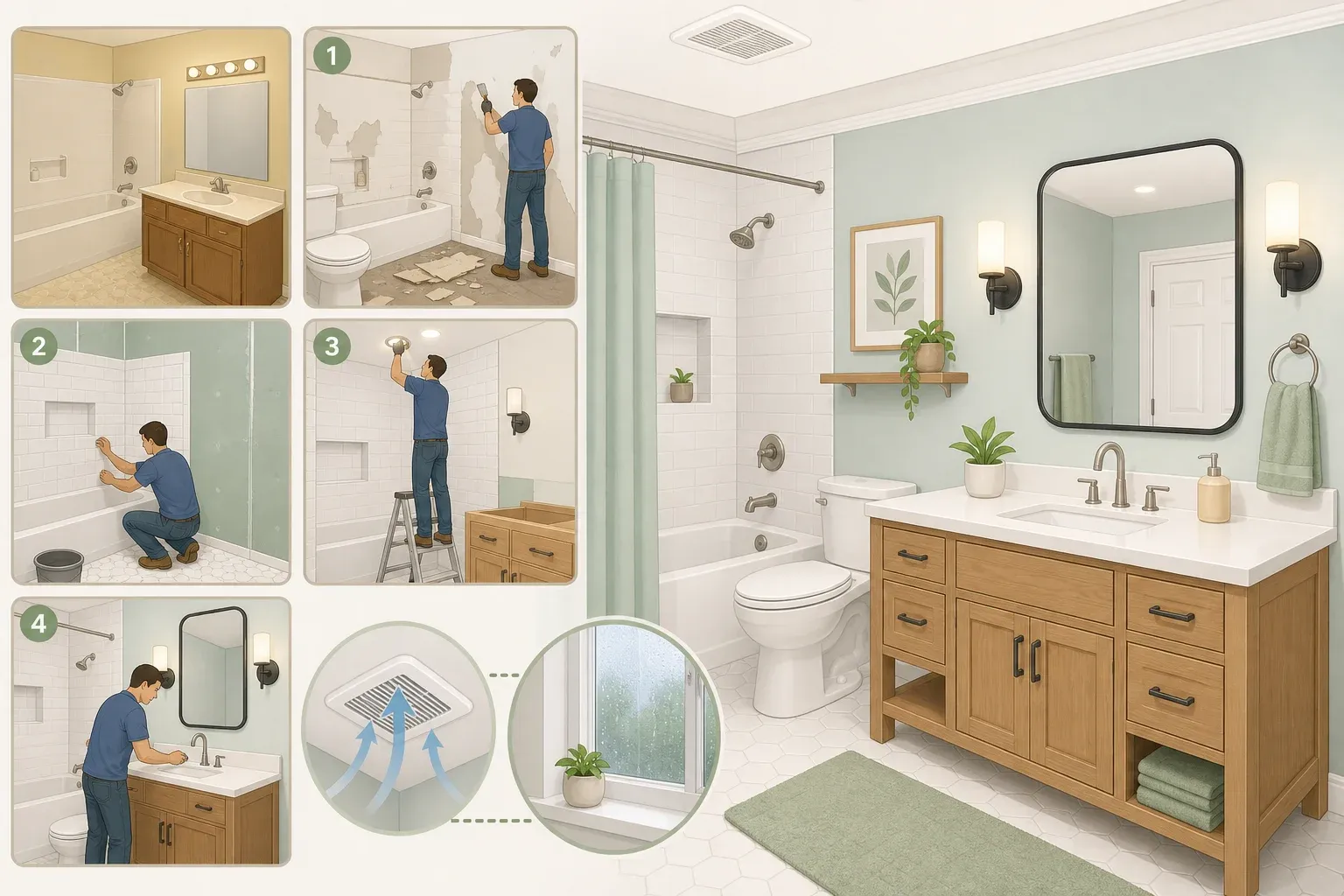
Start with what's possible this week: clear the counter, check the grout, and swap the mirror for the largest frameless version that fits the wall. When replacing fixtures, add a floating vanity and frameless glass. Save the pocket door, full-height tile, curbless shower, and natural light upgrades for when construction is already underway those are the choices that make everything else work harder.


Comments
Be the first, drop a comment!