



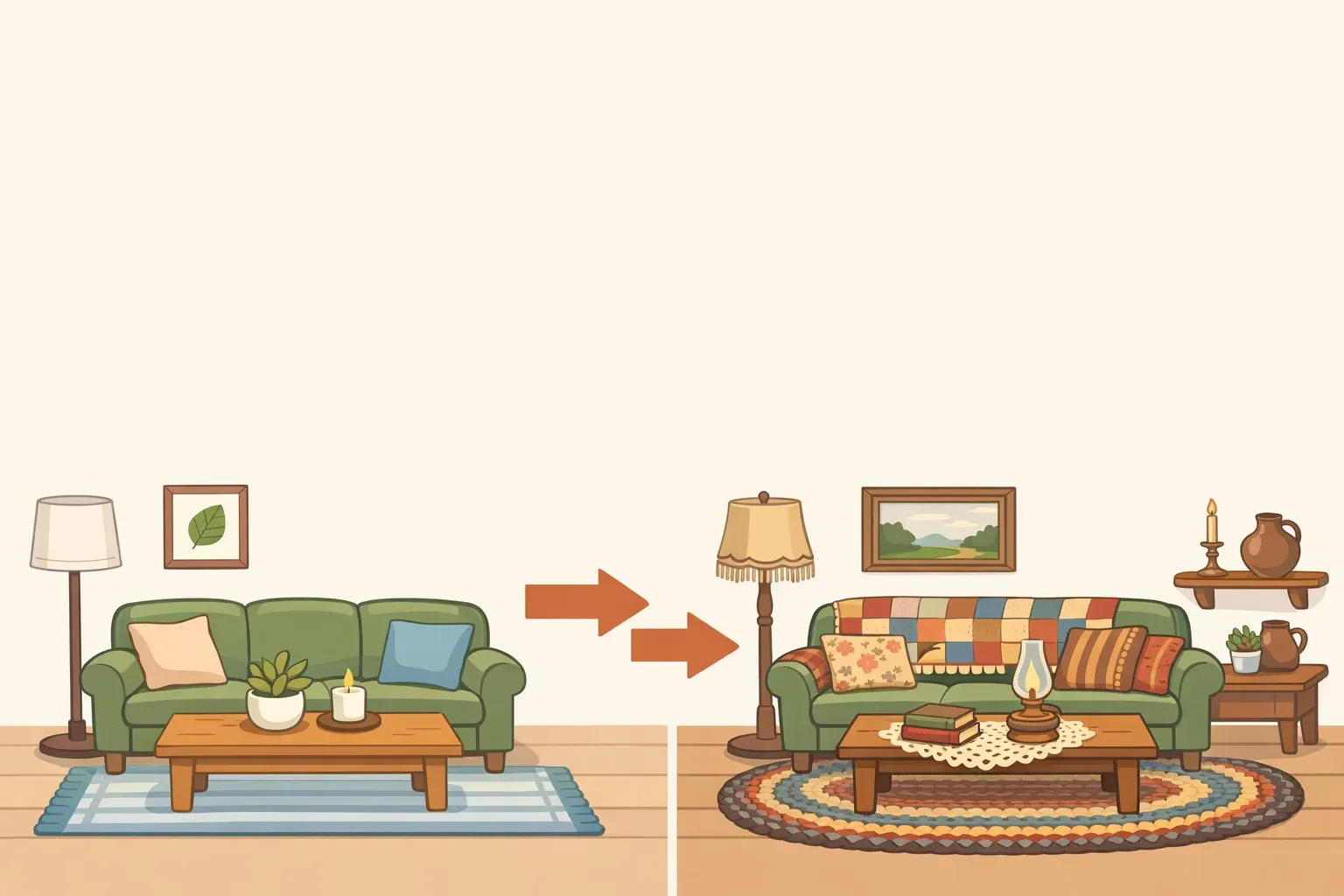
Forget bonnets. Forget covered wagons. Whatever's driving the renewed interest in pioneer-era interiors has nothing to do with reenactment, and everything to do with texture, patina, and rooms that feel lived-in rather than staged.
As Sophie Rowell, founder of Côte de Folk, puts it, the look comes down to "natural materials, muted colors, handmade pieces, and soft lighting." This roundup of Little House on the Prairie decor ideas starts with the smallest, cheapest changes and works up from there.
That combination, Rowell says, is why the style resonates: "nothing feels overly polished, and there's a warmth and honesty to it that I think people are really craving." Designer Lauren Liess takes it further, arguing the point is to ignore trends altogether and build a home around what "should feel good to you today, and still feel good in 30 years' time."
Worth naming upfront: Vogue itself flags the source material here as the "original tradwife" story. This guide borrows the materials and the craft, not the frontier mythology, and won't circle back to that point again.
What follows are seven decor moves, ordered from lowest to highest commitment. Renters and remodelers alike should find a starting point without needing a farmhouse, a barn conversion, or a full renovation budget.
What "homespun" actually means, and the one rule that keeps it from looking like a costume
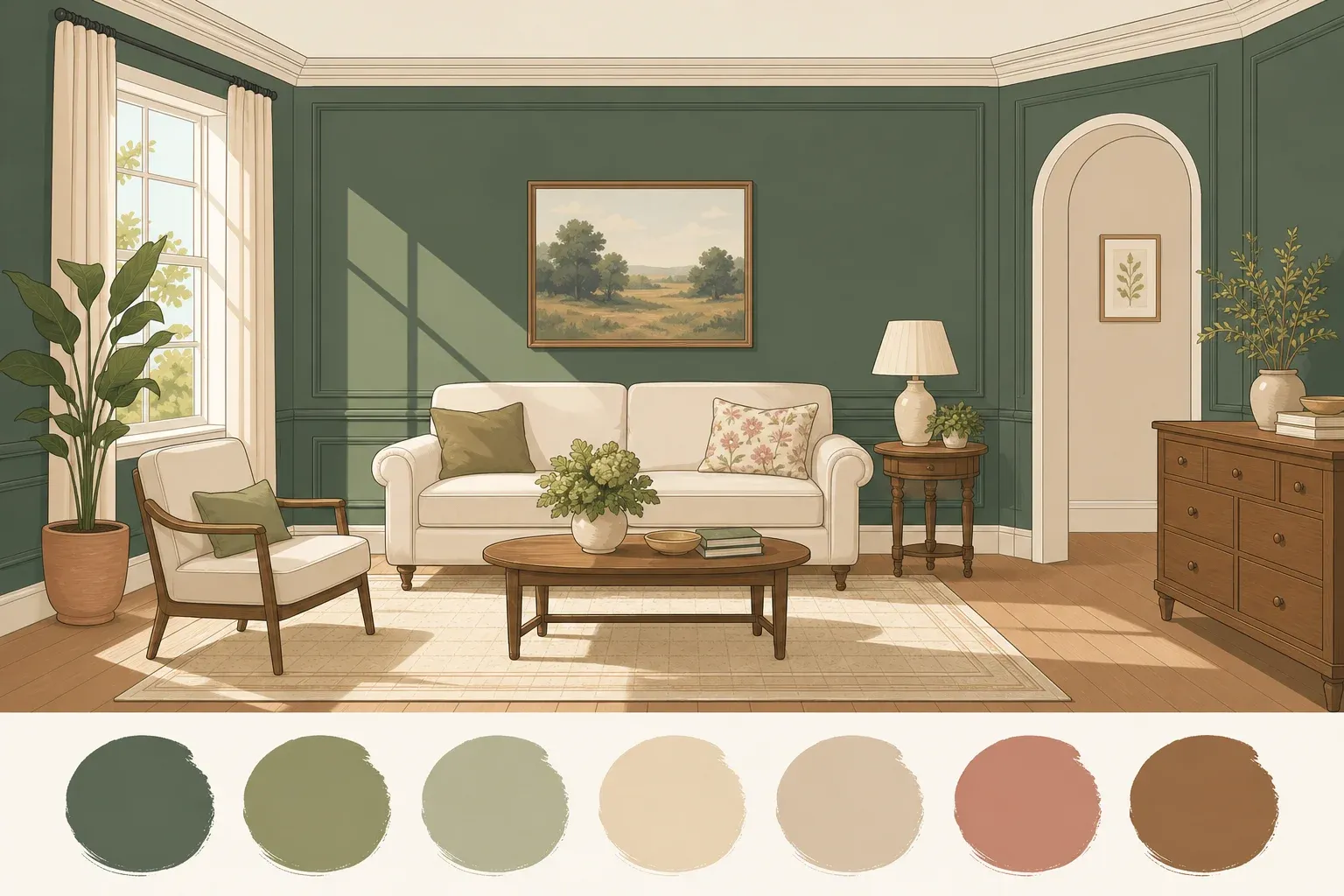
Every idea below traces back to Rowell's four pillars: natural materials, muted colors, handmade pieces, and soft lighting. That's the full definition of homespun interior design as designers currently use the term, and it's worth holding onto before diving into individual projects, because none of the seven ideas below work as a standalone checklist item.
The governing principle matters more than any single object on the list. Vogue frames the aesthetic as working with what's already in the room, letting a space feel layered over time, where objects earn their place through practicality, sentiment, or genuine use rather than matching a theme. Designer Rollo Dunford Wood puts it more bluntly: "Keep beautiful pieces of furniture that you really cherish around you," rather than styling a room around a look pulled from a screenshot.
Dunford Wood's own life backs up that philosophy. He grew up "in the middle of nowhere, with both parents working from home" and is raising his kids the same way now, cooking winter meals on a wood-fired stove and going without reliable Wi-Fi. It amounts to a British take on the Little House on the Prairie life, just running in 2026 instead of the 1800s.
That leads to the practical restraint rule, and it's the fix for a room that reads as costume rather than home. Pick one folk-inspired pattern, not several. Stick to a muted, limited palette instead of matching an entire period color scheme. Mix handmade or vintage pieces into furniture already owned rather than replacing a whole room in one pass.
Little House on the Prairie decor ideas: start with low-commitment swaps
1. Bring the outdoors in with simple greenery
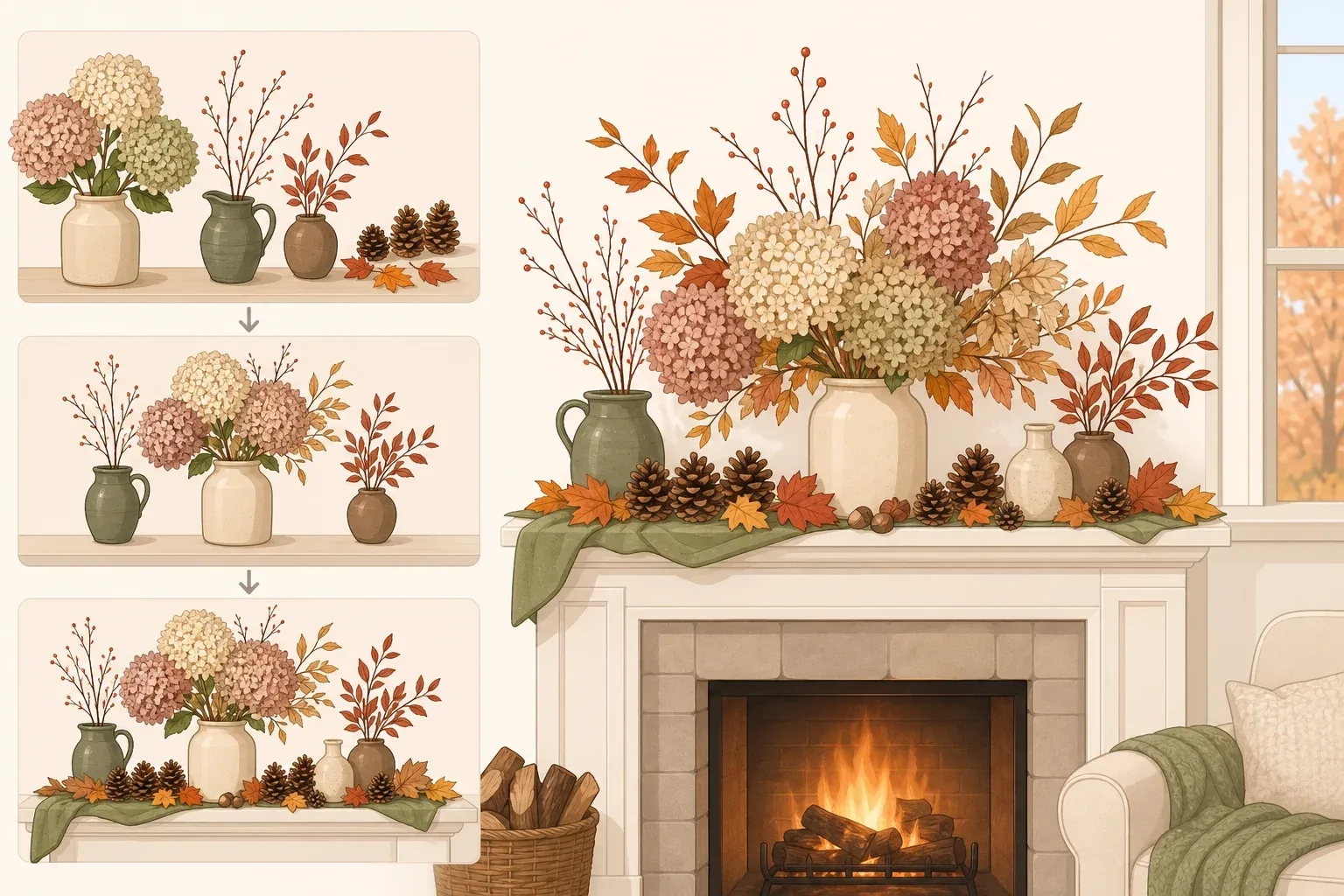
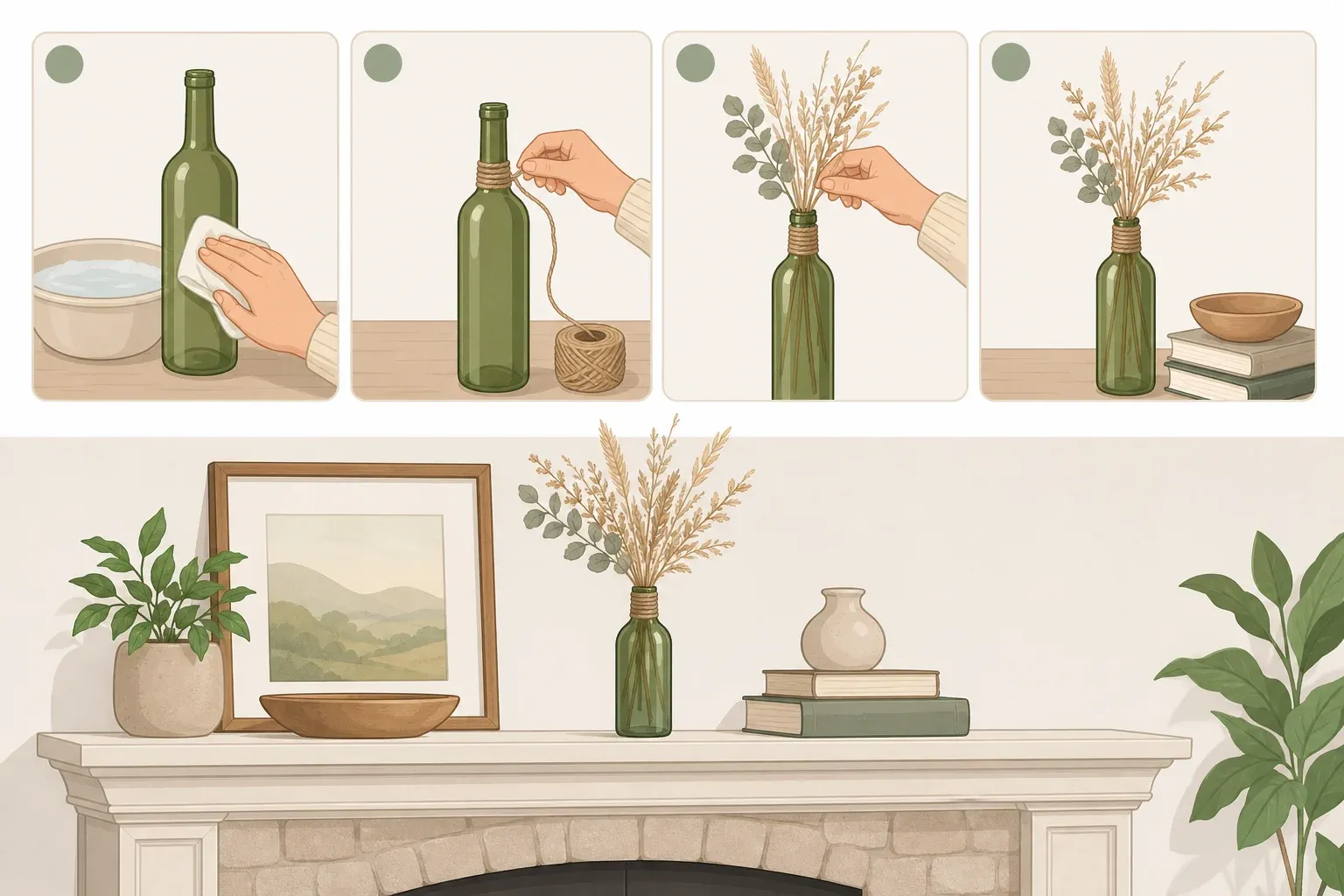
Liess keeps a range of vessel sizes on hand at all times, large vases for branches, small ones for posies, so there's always something appropriate for whatever she's cutting. The lowest-effort version costs almost nothing: a mason jar with grocery-store parsley still creates a "freshly picked" feeling.
Group two or three vessels of different heights on a kitchen windowsill or entry table rather than scattering single stems around the house. A cluster reads as gathered from the garden; one lonely vase reads as an afterthought. The stems don't need to be fancy, either, since whether they come from a garden bed or a kitchen counter, bringing any piece of the outdoors inside is what does the work. This is the closest thing on this list to free, no purchases required beyond a jar most kitchens already have.
2. Display handmade and vintage objects instead of matched sets
Retrouvius co-founder Maria Speake credits small, imperfect objects with tying a whole room together: "It's the little things, like baskets, that tie the whole thing together." Rowell's accessible entry points are handmade pottery, woven baskets, antique brass, and vintage stools.
Group these in odd numbers, three pieces on a console or open shelf, rather than pairs. Odd numbers and mismatched heights are what make a grouping look collected rather than purchased as a set, and that instinct is what separates pioneer-inspired decor from a themed display.
Where to find them takes some hunting, and results vary by week and by store. Speake has built a career around exactly that kind of sourcing, teaching a course through Create Academy on designing with salvaged and reclaimed materials, which suggests the hunt itself is part of the craft rather than a shortcut worth skipping.
3. Layer in natural-fiber textiles, new or inherited
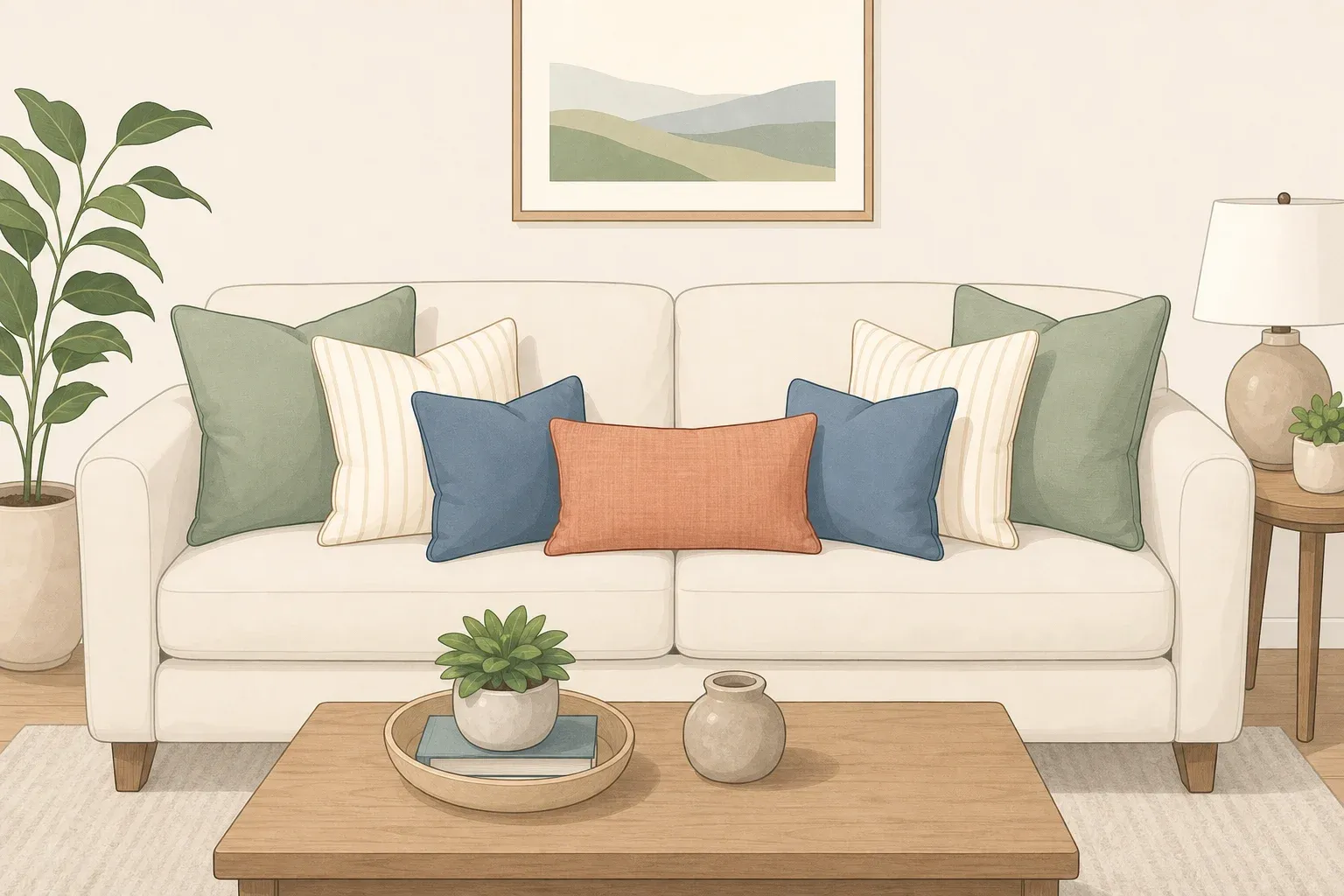
"Natural fibers are a must," Rowell says. Washed linen, brushed cotton, wool, and ticking all "become more beautiful with age," which is the opposite of how most modern fabrics get marketed. Start with one piece rather than an overhaul: a linen throw on the couch cushion that gets used most, or a set of ticking-striped pillowcases on the bed nearest the window.
For a version that costs nothing, Rowell suggests raiding "the family box or drawer" of old lace, napkins, sheets, or doilies and turning them into café curtains or a stitched-together tablecloth. Even damaged textiles have a second act: a moth-eaten blanket can go in the freezer to kill any eggs, then get repurposed to upholster a footstool. Inspect for structural holes first. A blanket that disintegrates mid-stapling is a bigger headache than starting over with something sturdier.
Next step: small purchases and weekend projects
4. Add soft, warm lighting
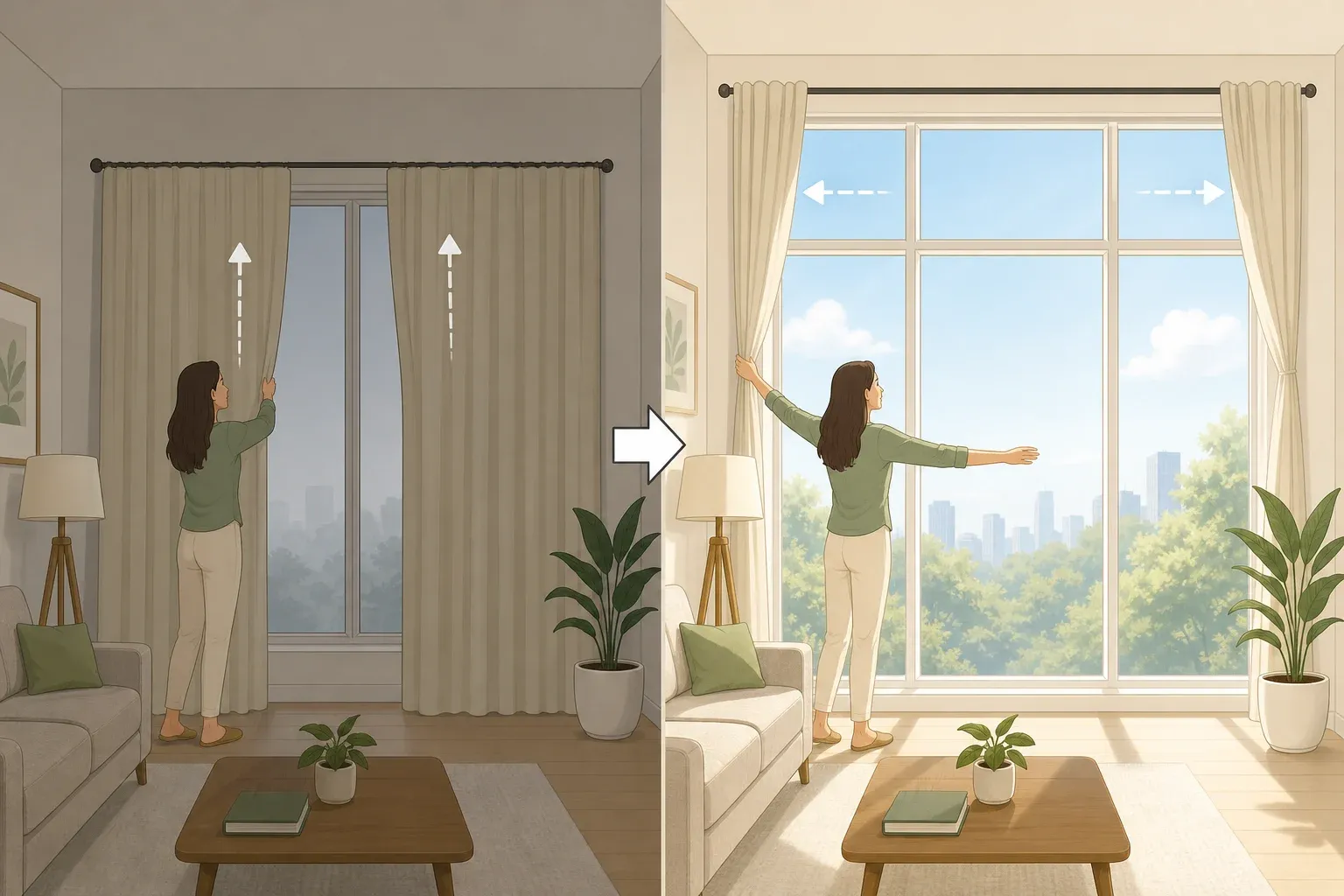
Soft lighting rounds out Rowell's four pillars alongside natural materials, muted color, and handmade pieces, and it's the easiest one to skip because it doesn't show up on a shopping list the way a rug does. The fix is warm-toned bulbs, fabric or paper lampshades, and low, ambient light sources instead of anything bright or purely overhead, the same instinct behind Rowell's preference for spaces that feel unpolished rather than clinical.
Look for bulbs labeled "soft white" or "warm white" rather than "daylight," and position lamps at seated eye level instead of relying on a single ceiling fixture. A secondhand table lamp with a fabric shade accomplishes all of this without hiring an electrician.
5. Turn hardworking spaces into charming ones
Liess's core principle is that "a homespun space is highly functional," which means task-focused areas like entries, kitchens, and mudrooms deserve decorative attention rather than pure utility. Concrete, low-cost examples include a copper boot tray, hand-hammered iron coat hooks, or an old wooden plate rack.
Start wherever the household actually drops its keys and shoes, usually the entry, since that's the spot everyone sees daily and the one most likely to be a pile of clutter rather than a design choice. Dunford Wood calls the kitchen "the heart of the house," which makes it worth the same treatment once the entry is handled, even in a small apartment where counter space is tight.
His own kitchen backs up the idea: he says catching the smell of woodsmoke the moment he walks in is part of what makes the house feel right, thanks to the wood-fired stove his family cooks winter meals on.
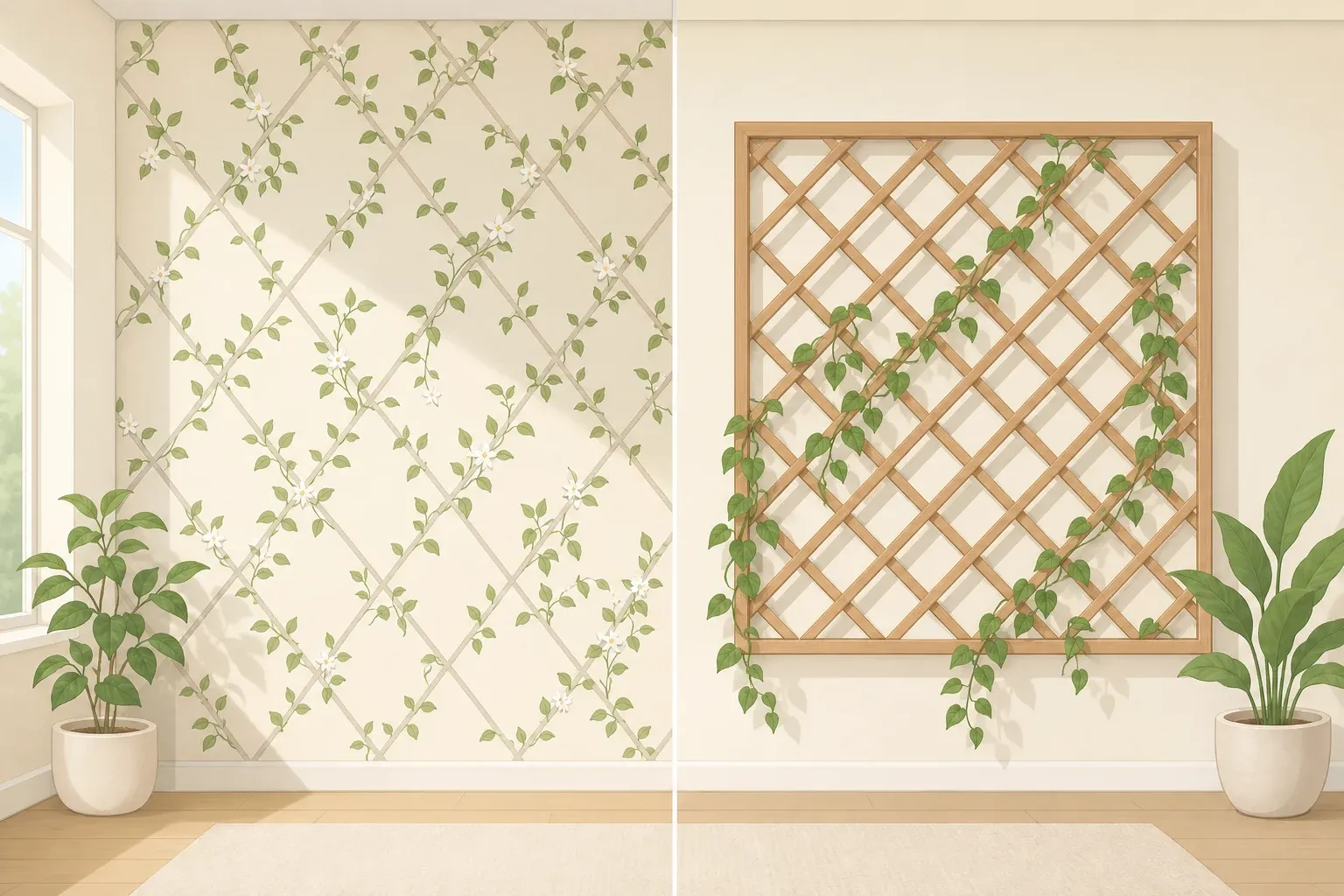
6. Introduce exactly one folk-inspired pattern
Rowell's own execution is specific: a three-tone brown gingham floor made from lino. For renters, a gingham or quilt-patterned rug, runner, or removable peel-and-stick option delivers the same visual note without ripping out a floor.
Before buying, check what's already patterned in the room. If the sofa or curtains carry a print, keep the new rug to a single muted tone of gingham rather than a busy multicolor quilt design, so the two patterns don't compete for attention. This is where the restraint rule earns its keep: one pattern, chosen to sit quietly against everything else.
If you're ready to commit: finishes that age instead of finishes that shine
7. Choose materials that improve with wear
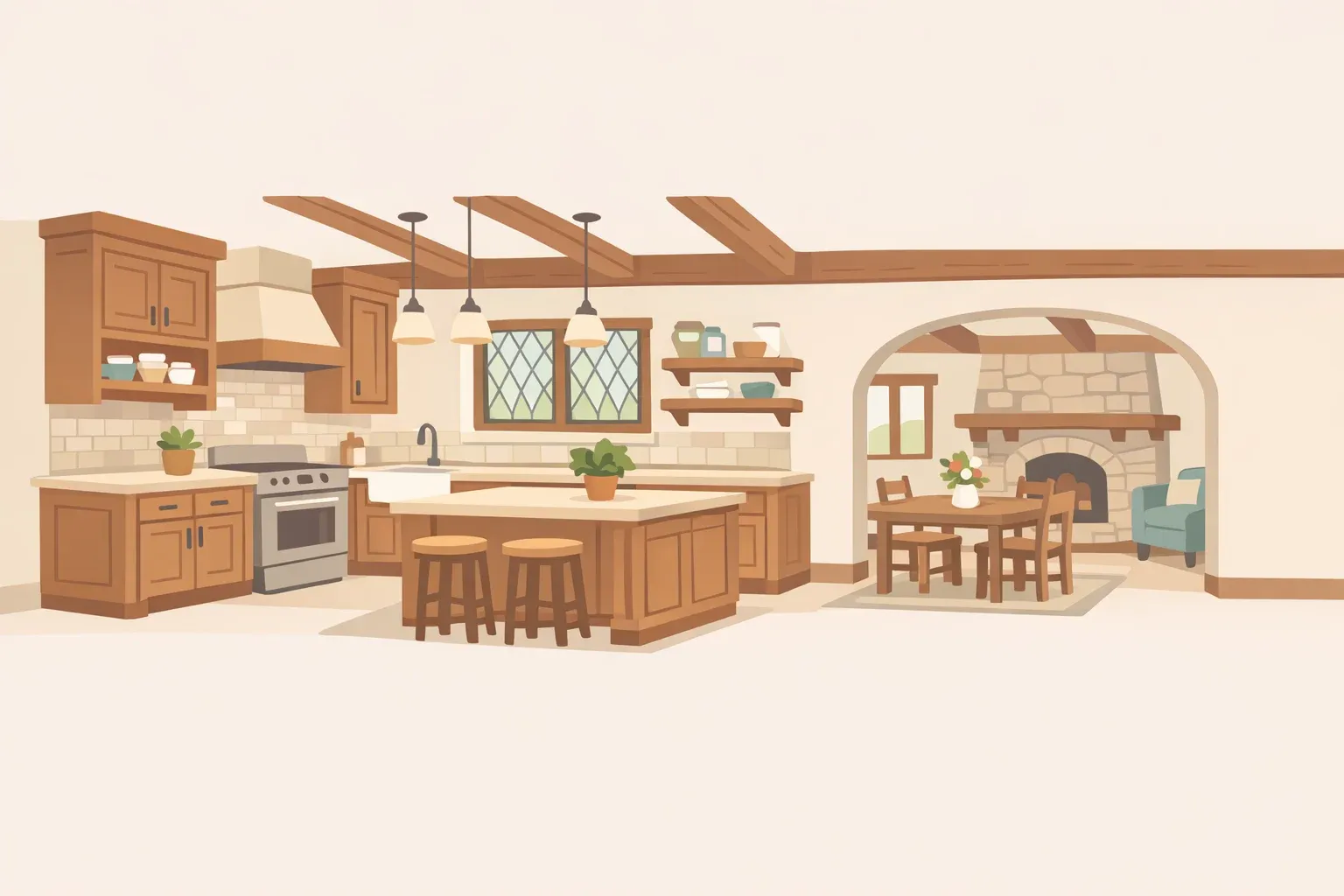
Liess's material list reads like a rejection of anything that needs babying: raw, waxed, and aged woods; "living" metals like iron, raw brass, and copper; and terracotta for countertops, floors, and tile. Her reasoning is straightforward: these surfaces "create a natural rustic feel that only gets better over time," which flips the usual instinct to protect a finish from scuffs and patina.
Pick one material family per room before touching the rest. Swap cabinet pulls to raw brass, or add a copper kettle to the stovetop, and live with it for a few weeks. Terracotta planters or an unlacquered copper tray offer the same worn-in look in miniature, and every one of these swaps is reversible for renters or anyone not ready to commit to a full countertop or floor replacement.
Bringing it together
Which idea to start with comes down to budget and patience, not taste. Zero dollars and five minutes point to the mason jar of parsley or the drawer of old linens. An afternoon and the cost of a secondhand lamp or a peel-and-stick rug covers lighting and pattern without needing a contractor. The finish-level changes — terracotta, raw brass, aged wood- are worth saving until the smaller swaps prove the look actually suits the house.
Rowell's rule holds at every stage: keep what already earns its place, and let a room look gathered rather than decorated to match a theme. That's the difference between prairiecore home decor and a costume, and it doesn't require choosing all seven ideas at once.

Comments
Be the first, drop a comment!