



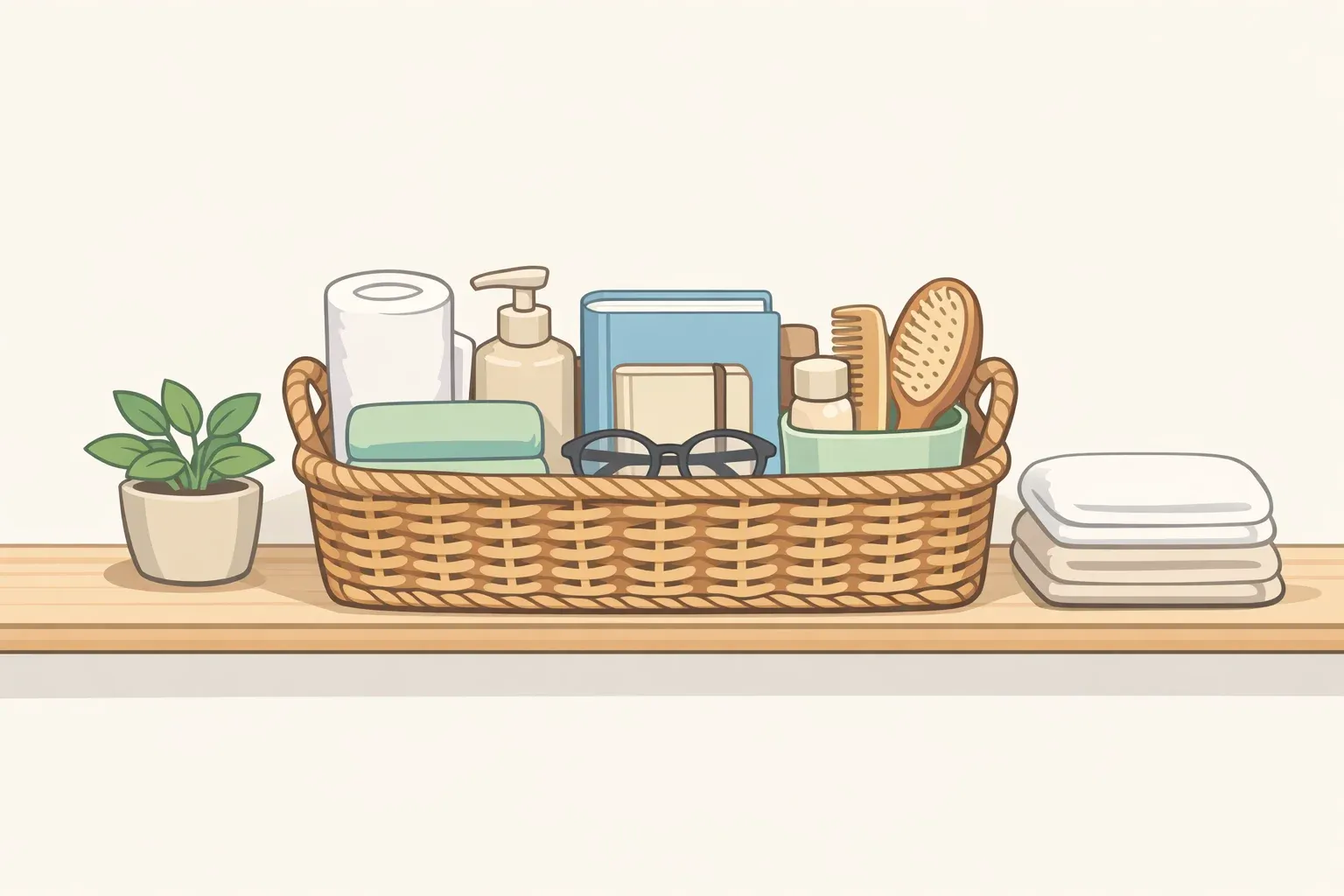
This guide covers one specific thing: how to use a vintage woven basket as open storage in a way that makes a room look considered rather than cluttered. By the end, you'll know how to choose the right basket, which items belong in it, where to place it, and when to stop.
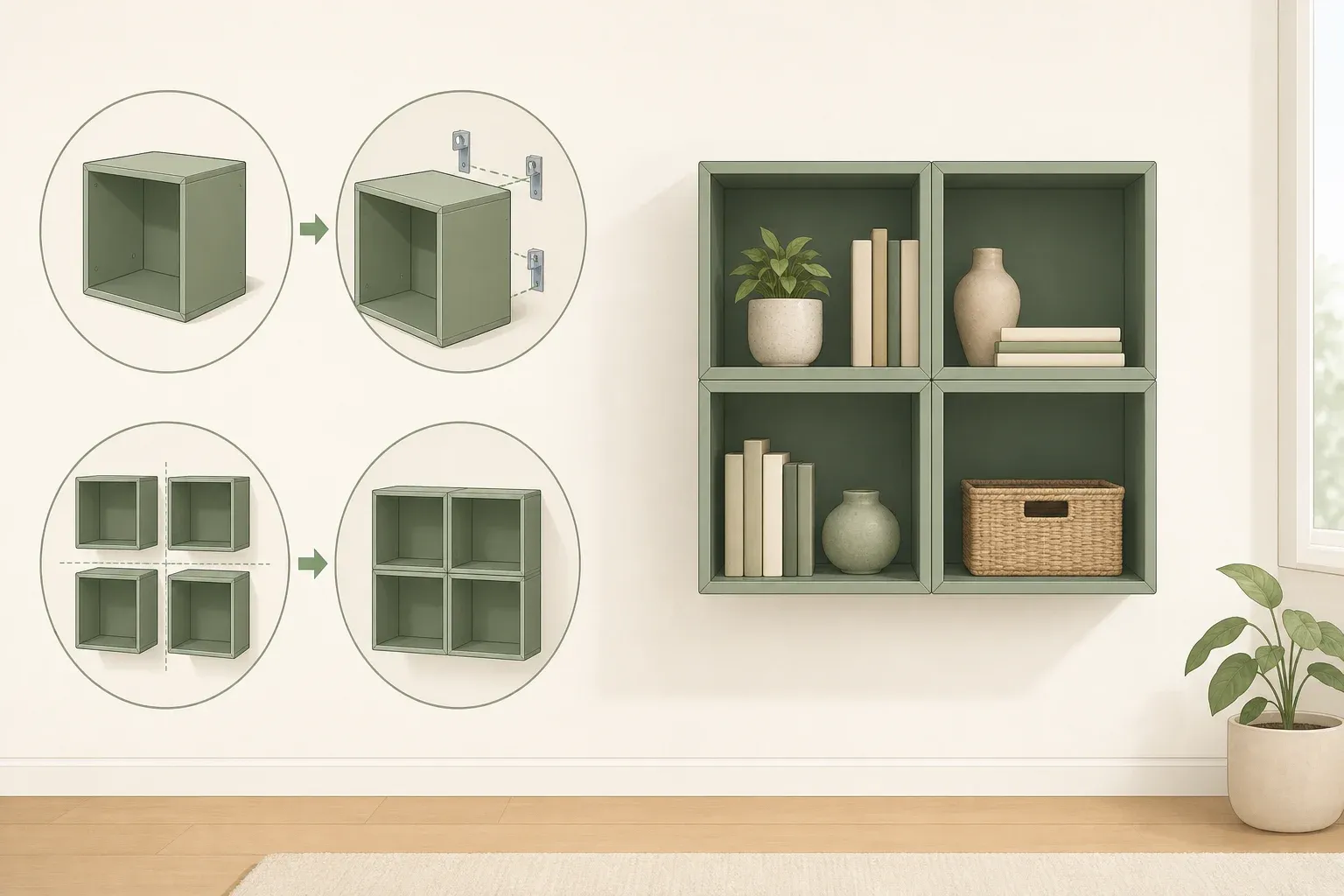
Most homes already use a mix of open and hidden storage without labelling it that way. Open baskets, shelving units, trays on sideboards, and cube storage — these are all open storage ideas working in the background. The vintage woven basket formalizes that instinct and gives it a visual anchor.
When chosen carefully, it can add warmth and texture while keeping frequently used items within reach. It does something a closed storage unit simply cannot, which is contribute to the look of the room at the same time as serving a function.
The logic is simple enough to state upfront. Items used every day that still look acceptable sitting out belong in the basket. Everything else belongs behind a lid or door. Apply that rule consistently, and the basket becomes a styling choice. Ignore it, and it becomes a landing zone.
Apply this three-part filter before any step below:
Frequency: Used daily? Open basket. Used occasionally? Closed storage.
Visual tolerance: Does it look acceptable sitting out? Throws, books, slippers, yes. Cables, laundry, paperwork, no.
Volume: Can it sit in the basket without the basket looking overfull? If not, edit the list before the basket goes anywhere.
Step 1: Choose the right basket before it enters the room
The basket itself is not a neutral object. A poor choice here undermines every placement decision that follows.
Size is the first variable. The basket needs to hold its designated contents without being filled to the brim. A useful rule: the top portion of the interior should remain visible once the contents are in place. This keeps the basket's own structure readable as a design element rather than a vessel packed to capacity. If that's not possible with the items on the list, the list needs editing, or the basket needs to be larger.
Shape determines where the basket can live. Tall, narrow baskets suit floor positions beside seating or near a hallway door. Wide, shallow baskets work on console tables or shelving. Round baskets tend to read as decorative accents; rectangular ones integrate more cleanly with furniture lines.
Weave tightness and handle style affect both function and look. A tighter weave holds shape better and photographs cleaner against a plain wall. Handles are worth having if the basket will be moved regularly, for example, a throw basket that gets carried to the sofa; skip them if the basket will stay in one fixed position, where handles can read as visual noise.
Condition matters more for open storage than for hidden storage, because the basket is always on display. Minor wear on a vintage piece adds character. Visible damage to the weave, significant discolouration, or a misshapen base will read as neglect rather than patina, especially once the basket is in a main sightline.
Step 2: Decide what goes in the basket before it goes anywhere
Start with a piece of paper, not with placement.
The most common reason an open basket reads as clutter is not the basket but that the wrong items ended up inside it. Because everything in an open basket is permanently on display, item selection matters more here than it does for any closed storage unit. There's no lid to close on a bad decision.
1. Write two lists. List one: items you reach for daily that still look acceptable out in the open: a folded throw, a current book, a pair of slippers, a dog lead, a remote control. These are the items that open storage suits best. List two: items you'd rather not see: laundry, cables, spare toiletries, and paperwork. List one goes in the basket. List two goes into closed storage before the basket is positioned anywhere.
2. Cap list one at two to three item categories. A basket holding a folded throw and two magazines reads as styled. A basket holding six categories of odds and ends reads as a landing zone. Two clearly related items in the same basket are the practical limit for the look to hold.
3. Treat the fill level as part of the design. An overfilled basket looks like a laundry pile regardless of what's inside it. Keeping the basket's own structure visible is what makes it a decorative object rather than a stuffed container.
Gotcha: If list one fills the basket to the brim, either the list needs editing, or you need a larger basket. Do not solve an overfilling problem by adding a second basket next to the first. Solve it by removing a category from list one and moving it to closed storage.
Step 3: Open storage ideas for living rooms, bedrooms, and hallways
Not every room handles visible storage equally well. The basket performs best where daily activity is high, a lived-in look is already expected, and sightlines are forgiving enough for a textured object to read as decor rather than disorder.
Living rooms are the strongest environment for this kind of decorative open storage. A basket beside the sofa for a throw and remotes, or on a console table for items in constant daily rotation, works because the objects inside are genuinely used and their visibility fits the room's purpose.
The living room benefits from a balance of both approaches: open baskets for the things you use and want within reach, closed units for everything that needs to disappear once you're done with it. A concrete example: a medium woven basket on the floor beside an armchair, holding one folded throw and nothing else. That's a single category, a single sightline, a single styling decision.
Bedrooms require stricter limits. Bedrooms tend to feel calmer when visual clutter is reduced, and hidden storage generally does the heavy lifting there. A couple of well-placed open baskets can still add warmth without creating a mess. A small basket beside the bed for a current book and reading glasses, or a floor basket for a spare throw.
Keep the category count tight. A bedroom basket with a clear contents limit is a styling choice; the same basket used as a soft landing for whatever's in hand at bedtime becomes a mess within a week.
Hallways are high-traffic and often narrow, which makes them the room most likely to go wrong with open storage.Too much open storage in a hallway makes the space feel crowded, particularly in homes where entryways tend to be tight. A single basket for items like dog leads, gloves, or a folded umbrella is a practical limit. If the hallway needs more than that, the overflow belongs on hooks or in a closed unit, not in additional open baskets.
4. Before fixing the position, check the sightline. Stand at the room's main entry point or primary seating position and note where the eye lands naturally. If the basket falls within that sightline, its contents need to earn their visual place, not just their functional one. If it sits low, peripheral, or tucked beside furniture, the visual requirements are slightly less demanding, but the fill rules still apply.
Step 4: Maintain the basket so it stays a design choice, not a catch-all
This is where most open storage arrangements fail. The basket looks right on day one and reads as clutter by week two, not because the idea is wrong, but because no maintenance habit was attached to it.
5. Set a reset rule before you place the basket. Open storage requires ongoing consistency that closed storage doesn't. The reset habit is simple: anything that migrated into the basket outside its designated categories gets moved back out during the next room tidy. Skipping this repeatedly is what converts a styled basket into a dumping ground. When every item has a visible, consistent home, resetting a room is faster because you're returning things rather than sorting them.
6. Use the basket's texture, not just its capacity. A natural-fiber vintage basket placed against a plain wall or beside solid upholstered furniture creates warmth and textural contrast that a modern storage bin cannot replicate. That visual contribution only works when the basket's form is at least partially visible. Overfilling hides the object you specifically chose for its appearance.
7. Run a distance check after a week of real use. Stand at the doorway. If the basket reads as composed from that distance, the arrangement is working. If it reads as messy, the problem is category selection or fill volume. Go back to step two. If it looks fine from the doorway but disorganized up close, the contents need repositioning or light editing, not a structural change.
Gotcha: Resist using the basket as a temporary holding zone for items waiting to go somewhere else. The moment it becomes an intermediate stop for things without a final home, its function as a visual anchor is gone. Every item in it needs a reason to be there and a plan to stay.
Start with one room
The strongest application of this method is also the smallest. Pick one room, one problem area where items currently land without a designated home, and apply the three-part filter from the opening.
Start with a single basket holding one category of daily-use items, place it where the sightline supports it, and test the reset habit for a week before adding anything else. Well-functioning homes tend to use open and hidden storage together rather than committing to either approach exclusively. The vintage basket works as a considered accent within that system, not a replacement for it.
The decision rule is concrete: daily use plus visual acceptability equals open basket; fail either test, and the item belongs behind a door or lid. When a space feels chaotic, it's usually because the wrong things are visible, not because there are too many things overall. Changing what's visible, rather than acquiring more storage, is the faster fix. Scale from there only once the reset habit holds.
Comments
Be the first, drop a comment!