



Budget kitchen makeover ideas from a real $800 DIY project
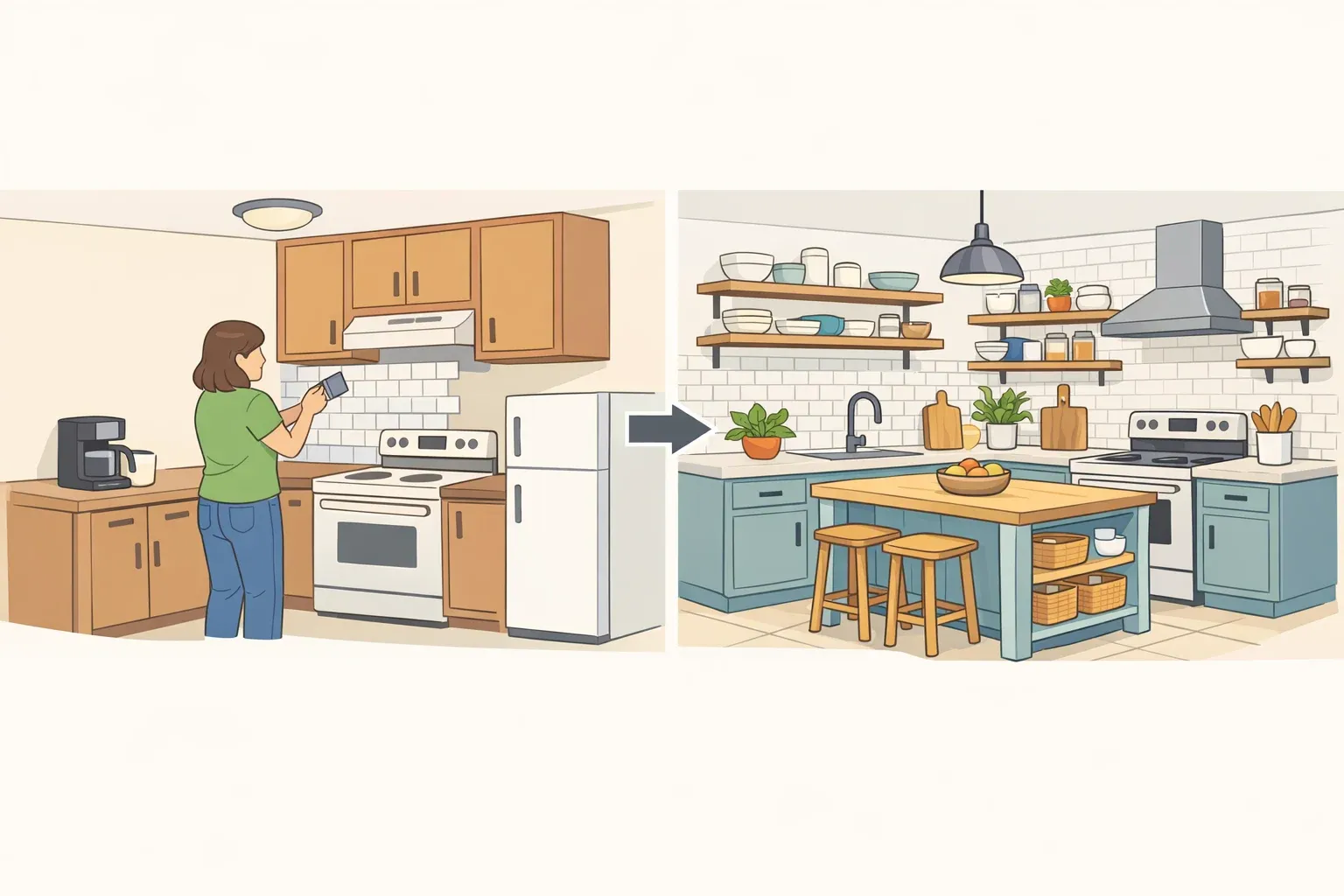
Christine's kitchen had a style problem and a more stubborn one underneath it. The space was dated, yes, but what made it genuinely frustrating to use was the near-total absence of usable counter space and builder-grade cabinetry that, as she put it, created "an illusion of storage rather than a functional space," per The Kitchn last August. The visual upgrade that followed brighter surfaces, a subway tile backsplash, thrifted stools worked precisely because the functional problems got solved first. That sequencing is the lesson.
The total cost: roughly $800 spread across four months of phased DIY work, per The Kitchn. For context, a full gut renovation of a 200-square-foot kitchen runs around $75,000 even with mid-range materials, based on Remodeling's Cost vs. Value data as cited by Consumer Reports. This guide covers the territory between those two numbers.
What this guide covers: Christine's actual $800 makeover the island, the storage moves, the lighting, the finishes used as a sequenced blueprint for readers working with a tight budget. This is a case study with a usable order of operations, not a room-by-room remodel manual. It includes a frank accounting of what the $800 covered, what it didn't, and where published cost benchmarks fill the gaps.
Who this is for: Homeowners or renters who can drill into walls and assemble furniture-level builds. Some steps pegboard, peel-and-stick backsplash, plug-in lighting require no permanent modifications. Others, like the island build, assume basic tool comfort. Each section flags which category the upgrade falls into.
Phase 1: Diagnose the kitchen before spending anything
Before any upgrade gets purchased, be precise about what the kitchen is actually failing at. Christine's had two distinct problems: insufficient workspace and inefficient storage. Those are workflow problems, not style problems. Solving the style without addressing the workflow produces a kitchen that photographs well and still fights you while you cook.
Run a simple audit before committing any budget: cook one full meal and note every moment you ran out of surface space, had to move something to reach something else, or worked in shadow. That list is your priority order. Spending on a backsplash before fixing the counter space problem is an easy mistake to make, and the one that's hardest to reverse once the money is gone.
Consumer Reports offers a useful triage principle: if cabinet boxes are structurally intact—with doors closing properly and drawers sliding smoothly—refinishing the exterior is sufficient. Full replacement is an expensive solution to a cosmetic problem. Apply the same logic everywhere: fix what's broken, refresh what still works, skip what doesn't affect the workflow.
The framework that emerges from Christine's project, and transfers to most small kitchens:
Fix the workspace deficit first (counter space)
Move storage vertical to protect that workspace
Improve lighting so the reclaimed surfaces are actually usable
Apply cosmetic finishes last, when the kitchen is already working
Everything that follows maps to that sequence.
Phase 2: The DIY kitchen island solving the workspace problem without paying island prices
Renter/owner status: Owner or renter with adequate floor space. No drilling or permanent installation required.
The island is the centerpiece of this makeover and the most transferable idea in it. Christine and her partner priced prefabricated islands and found them expensive at the scale they wanted, so they built their own using an adjustable-height workbench topped with a 30-by-72-inch butcher block slab, per The Kitchn. The adjustable-height feature is what makes this approach genuinely useful: unlike a prefab unit locked at a fixed dimension, this configuration can be set to the exact ergonomic height for whoever is doing the cooking.
The island also solved a social problem the storage upgrades couldn't. Christine told The Kitchn that it's "a really comfortable place to spend time together" one person putting on a record or pouring a drink while the other preps a meal. That's a meaningful shift in how a kitchen functions as a room, not just as a cooking space, and Christine's version achieved it without a contractor or a custom build.
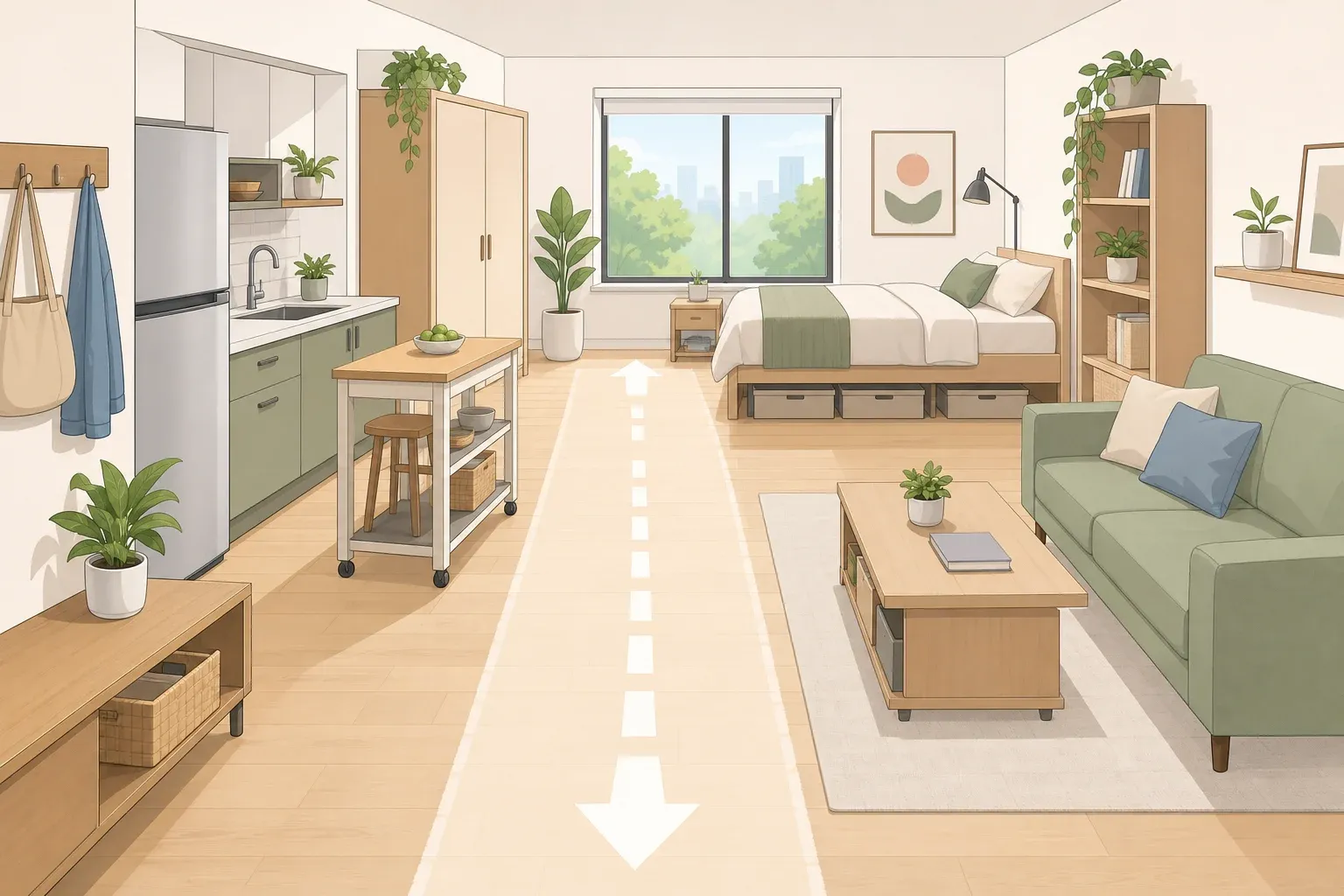
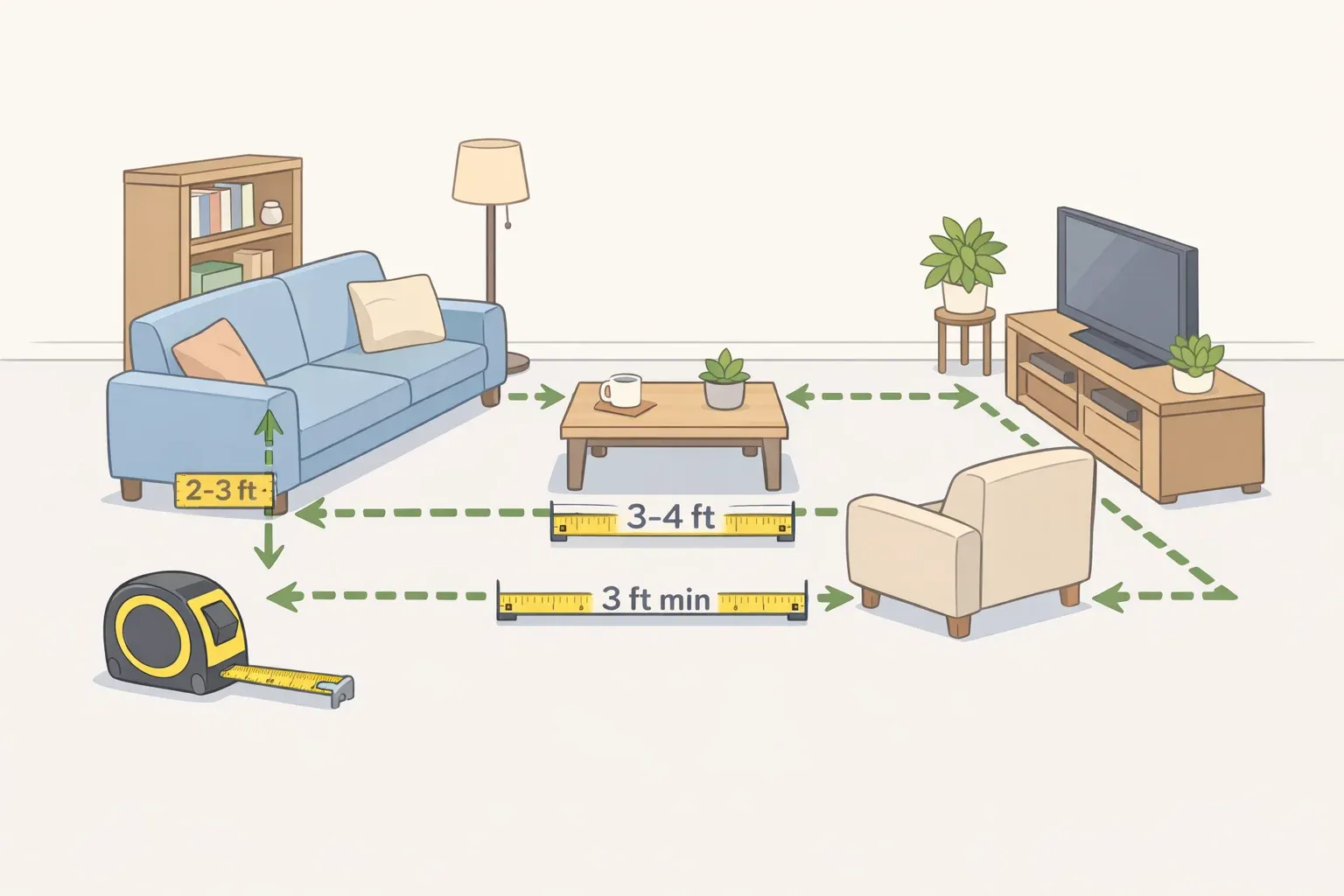
The decision logic and its limits: This approach suits kitchens with enough floor clearance for people to move around comfortably. Standard guidance calls for at least 42 inches of walkway on all sides for one cook, 48 inches for two. If the space is too tight, a smaller rolling cart accomplishes some of the same function at lower cost and with a smaller footprint.
What the $800 record doesn't tell us: No published line-item breakdown splits the island's cost from the total. Workbench prices vary by brand and load capacity; butcher block slabs range considerably by wood species and thickness. Price both components separately before committing, since the documented $800 total doesn't reveal whether the island consumed half the budget or most of it.
Practical steps:
Measure available floor space first and confirm 42-to-48-inch clearance on all sides before selecting island dimensions
Source an adjustable-height workbench from a hardware or industrial supply retailer; confirm the top surface is level before proceeding
Secure the butcher block to the workbench from underneath using wood screws to prevent shifting during use
Seal the butcher block with food-safe mineral oil before first use; plan to re-oil it periodically this is ongoing maintenance, not a one-time task
Verify island height against your intended seating before purchasing stools; standard counter-height seating runs 24 to 26 inches for a 36-inch surface
Butcher block is warm-looking and functional, but it stains and scratches more readily than laminate. If low-maintenance is the priority, laminate runs $5 to $25 per square foot, according to Consumer Reports, and requires no conditioning.
Once the workspace problem is solved, the next move is defensive: keep that surface clear.
Phase 3: Small kitchen storage ideas vertical upgrades that protect the counter space you just created
Renter/owner status: Wall-mounted storage and pegboard require drilling, so owner or landlord approval is needed. Plug-in under-cabinet lighting requires no modification.
With the island creating more workspace, Christine's next move was to keep that surface clear by pushing storage vertical. She added wall-mounted storage and a drying rack to the back wall behind the stove and sink specifically to free up the counter below, per The Kitchn. In a small kitchen, anything that can live on a wall should. Every horizontal inch recovered from storage duty is an inch available for actual cooking.
The pegboard for pots and pans extended the same logic. Combined with plywood fronts added to existing MDF shelves over the stove and refrigerator, these moves improved storage access and modernized the shelving's appearance without replacing any existing structure.
Under-cabinet lighting deserves its own mention. Christine described it as "a game-changer for both function and aesthetics," per The Kitchn and that holds up on both counts. It's one of the few upgrades that simultaneously fixes a practical problem (shadowed prep surfaces) and makes the kitchen look more intentional. Consumer Reports puts fixture costs at roughly $50 to $100. Plug-in strip versions avoid hardwiring entirely, which makes them accessible regardless of electrical comfort level.
Practical steps:
Map unused vertical surfaces above the refrigerator, between the stove and upper cabinets, behind the sink before buying anything
For pegboard, use wall spacers to create clearance behind the board so hooks can seat properly; locate studs before drilling and use appropriate anchors for the spans between them
Pick up a mix of pegboard hook sizes before committing; hooks sized for a sauté pan may not clear a cast iron skillet
Mount under-cabinet lighting with adhesive backing or small screws; plug-in versions sidestep any hardwiring considerations entirely
For plywood shelf fronts: cut to match the existing shelf face, sand edges smooth, and attach with finish nails or construction adhesive to update the look without touching the underlying structure
If the kitchen is still dim after adding under-cabinet fixtures, switching to LEDs is the lowest-effort remaining upgrade. Consumer Reports estimates LEDs save roughly $55 over an incandescent's lifetime, and bulbs run $1 to $3 each. A dimmer switch around $10 at a home center plus $100 to $200 for installation if electrical work isn't familiar territory shifts the kitchen from bright work lighting to something more livable in the evenings.
With function sorted, the cosmetic layer has something solid to build on.
Phase 4: Affordable kitchen remodel ideas for the finish layer what the $800 included and what's available if the budget stretches
Renter/owner status: Peel-and-stick backsplash is renter-friendly and fully reversible. Cabinet painting requires more commitment and suits owners better.
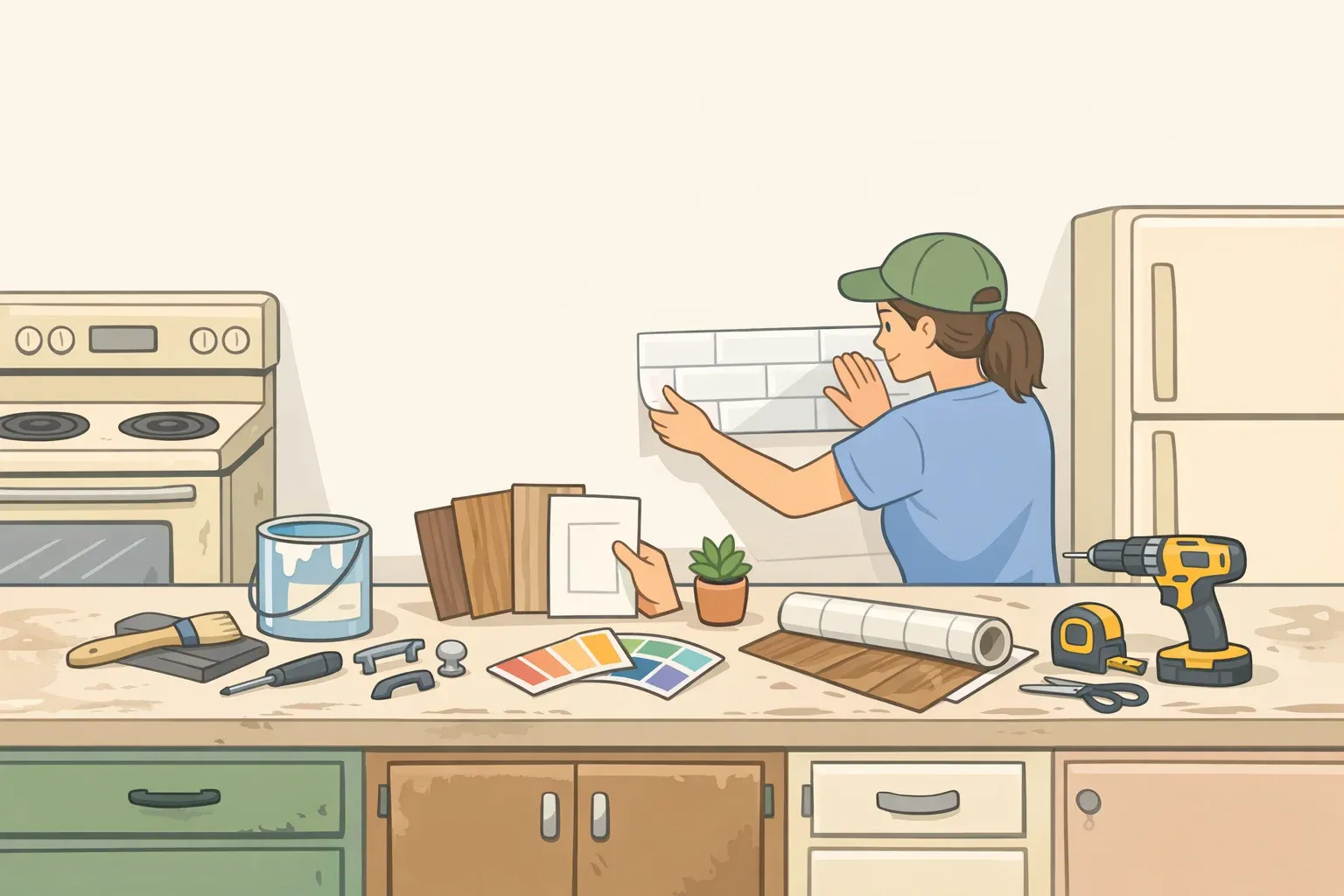
What Christine actually did: A white subway tile peel-and-stick backsplash updated the kitchen's visual layer without any tile work, grout, or permanent installation, per The Kitchn. Peel-and-stick tile runs $3 to $14 per square foot at Home Depot and Lowe's, according to Consumer Reports. For a typical 30-to-40-square-foot backsplash area, total material cost stays well under $200 even at the high end. Interior designer Cindy Aplanalp confirmed to Consumer Reports that peel-and-stick wall coverings are "really great" specifically for renters or anyone not ready to commit permanently.
Christine's thrifted bar stools sourced from AptDeco and inspired by the ones at Murray's Cheese in New York City rounded out the transformation, per The Kitchn. The secondhand find cost less than most of what preceded it and did more for the room's character than a new purchase would have. That's the kind of detail that doesn't show up in cost benchmarks.
Three things to know before installing peel-and-stick tile:
Clean the wall surface thoroughly with isopropyl alcohol before applying anything; adhesion fails on kitchen walls that have absorbed grease over time
Start tile placement from the center of the most visible section and work outward; this keeps the layout symmetrical even if edge cuts end up uneven
Test a tile in the most moisture-exposed area before completing the full installation; cheaper products lift at corners in humid kitchen environments
These reflect general installation guidance, not the specific method Christine used, which the source doesn't document.
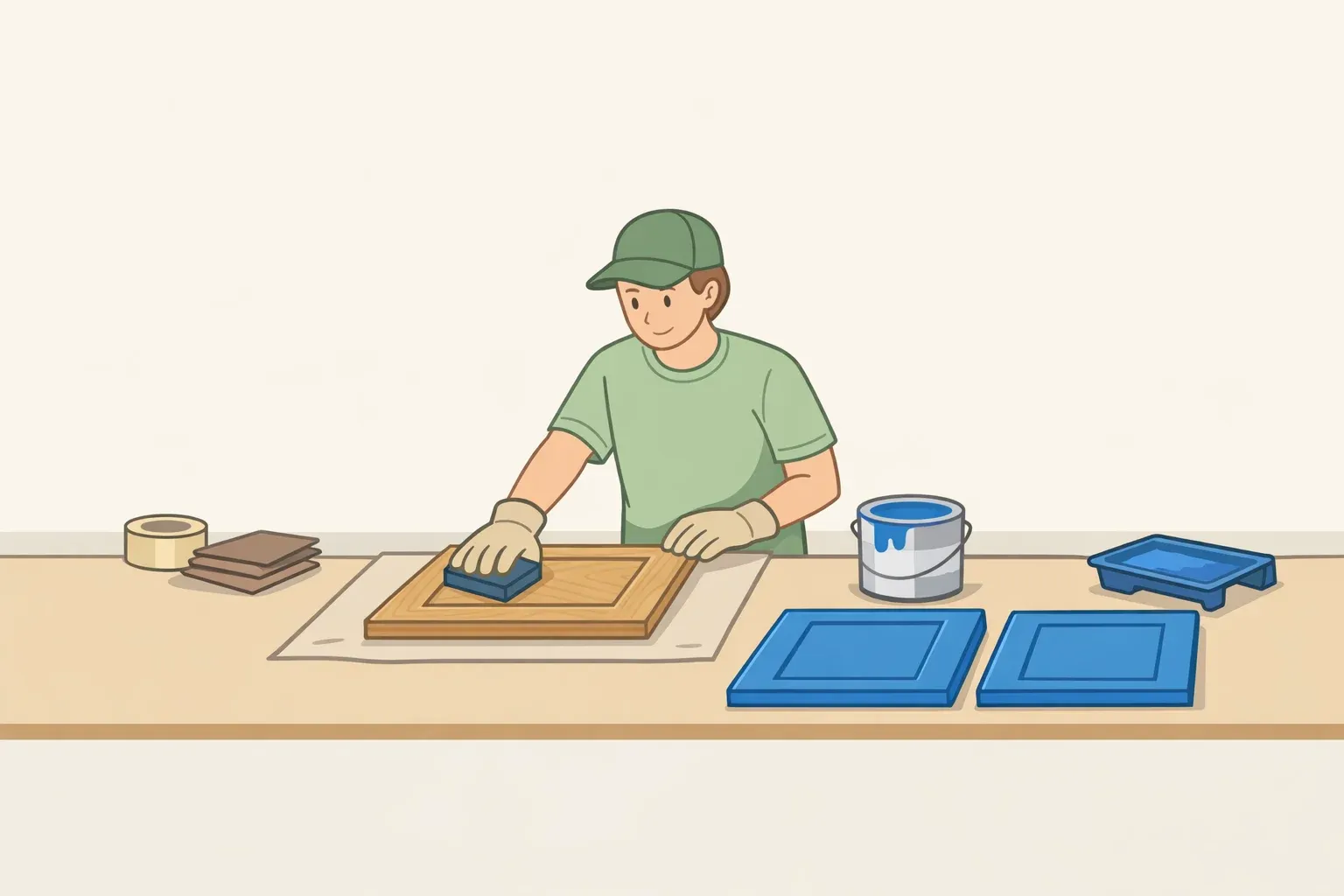
If additional budget is available and this was not part of the documented $800 project: Cabinet painting is a high-impact upgrade with a larger time commitment. Consumer Reports recommends semi-gloss finish for its stain-resistant, wipeable surface, and cites material costs of $100 to $300 for a 150-square-foot kitchen based on HomeAdvisor figures. The process removing doors, sanding, priming, two coats takes several days. Hardware swaps are simpler: Consumer Reports flags one non-obvious detail, which is to match the hole spacing on existing hardware before buying replacements so no drilling is needed. Hardware runs $2 to $50 per piece.
Treat cabinet painting and hardware swaps as a separate phase, not part of the documented $800 total.
How to use this blueprint: starting points for three different kitchens
The full documented transformation island, wall storage, pegboard, plywood shelf fronts, drying rack, under-cabinet lighting, and peel-and-stick backsplash cost about $800 over four months of phased work, per The Kitchn. No line-item breakdown exists for that total. Use the published cost ranges for lighting ($50 to $100), peel-and-stick tile ($3 to $14 per square foot), and hardware ($2 to $50 per piece) from Consumer Reports as planning anchors, and price the island components separately before committing.
The sequence proved as important as the individual upgrades. Workspace first, then vertical storage to protect it, then lighting to make the surfaces functional, then cosmetic finishes applied to a kitchen that was already working. That order is what prevented spending on visible upgrades while the underlying workflow stayed broken.
Here's how to adapt it depending on your situation:
Tiny kitchen, no room for an island: Start with vertical storage and under-cabinet lighting. Both upgrades stand alone, and a pegboard plus lighting overhaul can cost well under $200 while returning counter space and improving usability immediately.
Moderate budget, already have counter space: Skip the island build and put the money into cabinet painting and hardware. At $100 to $300 for materials, it's the highest-impact cosmetic upgrade in the kit and requires no structural changes.
Renter who needs everything reversible: Peel-and-stick backsplash, plug-in under-cabinet lighting, a freestanding workbench island, and pegboard mounted with landlord sign-off cover most of what Christine did. None of it leaves permanent marks.
If there's only budget for one phase, start with whichever problem makes the kitchen hardest to use. For most small kitchens, that's counter space. Fix the workspace deficit and the other upgrades follow naturally; fix the backsplash first and the kitchen still fights you every time you cook. Christine's project demonstrates that clearly enough and it applies even if the total budget is half of $800.



Comments
Be the first, drop a comment!