



Looking at an awkward 1960s townhouse layout, you know that feeling when furniture seems to float aimlessly in an open space? Interior designer Khadija Drebi faced exactly that challenge when she moved into her 1,100-square-foot home. The space felt cramped and disjointed, and she knew something had to change. Her townhouse "definitely felt dated," but more importantly, figuring out how to divide the living room and dining room effectively became one of her biggest design hurdles.
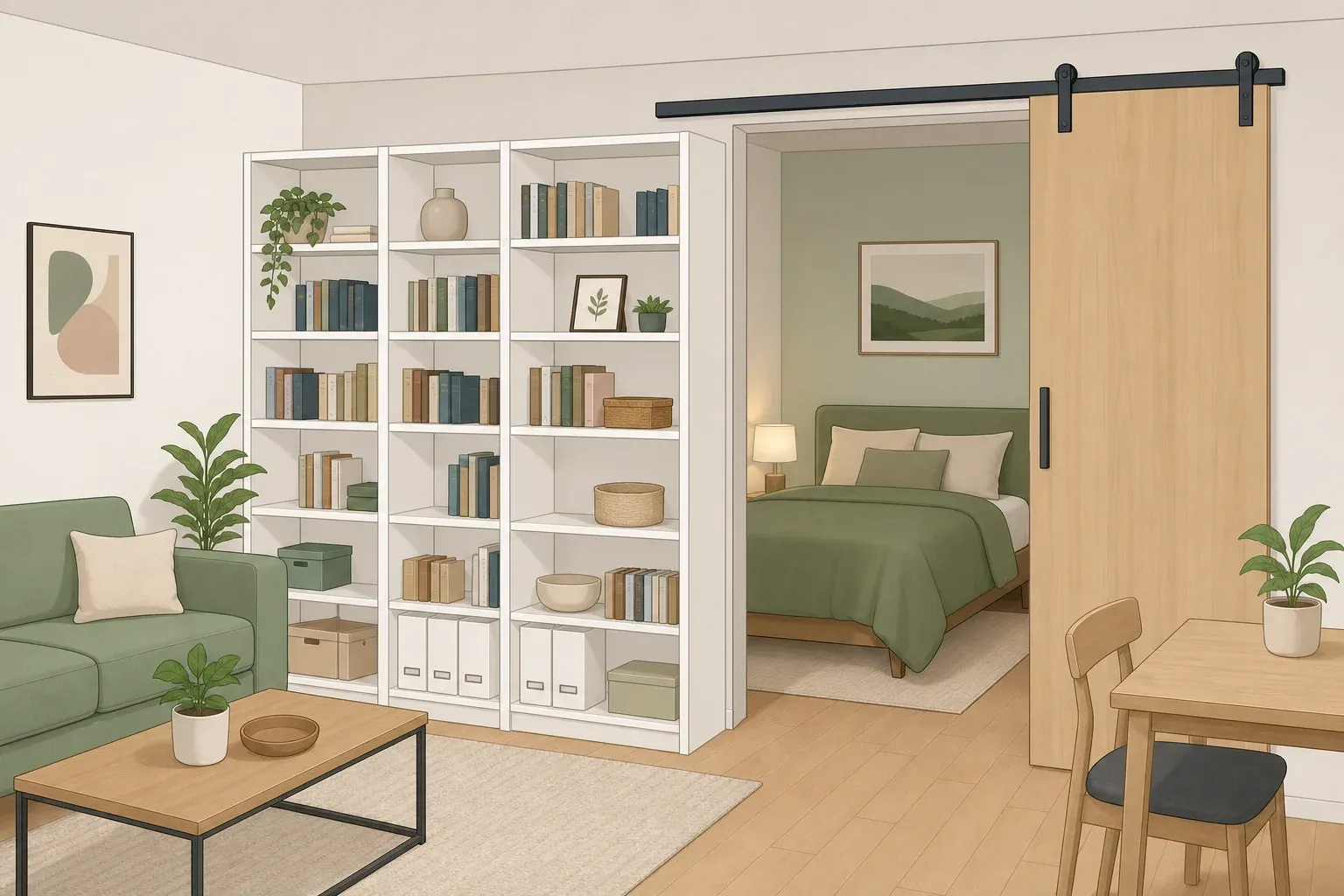
The breakthrough came when Drebi realized she needed vertical separation that wouldn't sacrifice the open flow that made her small space livable. Rather than closing off areas with permanent walls or investing in expensive custom solutions, Drebi discovered that the biggest game-changer was adding a vertical IKEA ELVARI system to divide the space while maintaining that crucial open flow. This strategic approach proves what many homeowners are learning: dividing up space in an open layout can be tricky, but arranging furniture correctly and using smart dividing methods can solve the problem without major construction.
Why the IKEA ELVARI system works so well
Difficulty: Moderate
Time: 4-6 hours
Cost: ~$540
The ELVARI vertical shelving system hits that sweet spot between function and flexibility that most room dividers miss completely. What makes this system particularly clever is how the freestanding shelves are fully customizable and installed using tension with ceiling screws to keep them securely in place. You're not committing to anything permanent here—the system can be easily removed with minimal patchwork, requiring only small ceiling touch-ups rather than drywall repair, making it perfect for renters or anyone who likes to switch things up.
But the real genius is in how it multitasks beyond simple room division. In Drebi's case, the system ended up being perfect for positioning the projector at just the right height, while also providing display space and visual separation—solving multiple functional needs with one piece. The height adjustability means you can position components exactly where they're most useful, whether that's hiding cable management, creating a charging station, or displaying collections at eye level.
IKEA's shelving options can make excellent room dividers, and the ELVARI demonstrates this principle beautifully by creating separation without blocking light or making spaces feel closed off. The visual impact is immediate too: keeping the decor minimalist helped the room feel brighter, airier, and more modern. The shelving unit cost about $540 and totally transformed the space—proving that effective design solutions don't always require massive budgets or major construction projects.
Planning your space division strategy
Before you start drilling anything into your ceiling, you need to think through your specific layout challenges and how vertical elements will interact with your existing furniture arrangement. The key is creating functional zones while maintaining visual flow throughout your space. Most floating shelves work best when spaced 12–15 inches apart, but you should adjust this based on what you plan to store and display—taller items need more clearance, while books and decorative objects work well with standard spacing.
Understanding your wall and ceiling structure becomes crucial when planning ceiling-mounted systems like the ELVARI. Standard studs sit 16 or 24 inches apart, so once you find one, measuring helps you locate others for secure installation. This spacing consideration also affects how you'll position your shelving unit—you want the ceiling attachment points to hit solid framing for maximum stability. Different wall types require specific approaches: drywall needs wall anchors or studs, while concrete walls require masonry bits and anchors.
Consider what each divided zone needs to accomplish before choosing your shelving configuration and height settings. Are you trying to hide a messy dining area from your living room? Create a dedicated workspace within a larger room? Define a reading nook without losing natural light? Floating shelves transform any workspace into an organized, professional environment, but they work best when you've planned their specific functional role from the start, ensuring every shelf serves a purpose in your new layout.
Installation essentials and safety considerations
Safety First
- Safety glasses and work gloves
- Adult supervision required when using power tools
- Ensure ceiling can support the weight load
- Never mix different mounting systems
Let's be clear about something important: proper installation isn't optional when dealing with ceiling-mounted systems. Serious or fatal crushing injuries can occur from furniture falling down, so following proper installation procedures protects everyone in your home. You'll need to assess the suitability of the wall to ensure it will withstand the forces generated, and use screws and plugs suitable for your walls and the intended load. The ELVARI's ceiling tension system distributes weight differently than wall-mounted shelves, requiring specific attention to your ceiling's structural capacity. If you're uncertain about any aspect, seek professional advice.
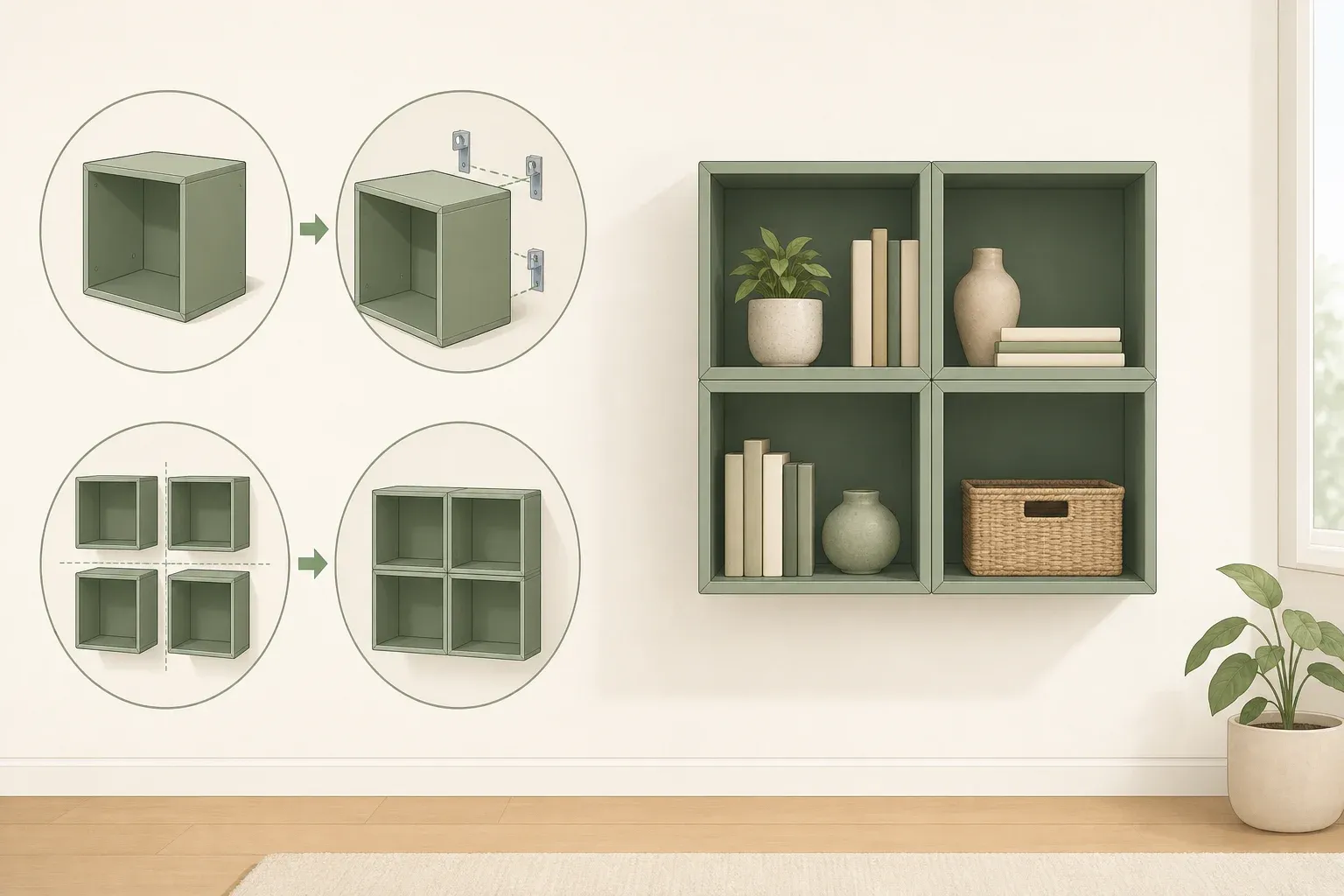
The installation process requires attention to detail and the right hardware for both ceiling and wall contact points. Attach your mounting brackets to the wall first, then work on the ceiling tension components. Drive screws through pilot holes into studs when possible, and use appropriate wall anchors rated for your shelf's expected weight when studs aren't available at your desired positioning.
Tip: Choose drill bits that match the size of your wall anchors to avoid loose fittings. For ceiling-mounted tension systems, ensure you're drilling into ceiling joists rather than just drywall—the tension mechanism creates upward and downward forces that require solid structural support. Most systems use a groove or channel that slides over the bracket, creating the "floating" appearance while maintaining structural integrity through the tension system.
Budget-friendly alternatives and customization options
Not everyone needs the full ELVARI system investment, and that's where IKEA's other shelving options really shine as room dividers. The KALLAX line offers a collection of simple modular shelves that can easily transform to suit any home style or storage need. These versatile storage units come in various shapes and sizes, from a single cube to floor-to-ceiling solutions. While the KALLAX units are admittedly basic, this simplicity makes them ideal foundations for customization—you can add doors, legs, decorative panels, or paint treatments to create design-driven statements that perfectly match your specific room division needs.
Then there's the legendary BILLY bookcase, which sells one unit every five seconds worldwide. Since its launch in 1979, it's gained cult status and a widespread reputation as one of the best, most customizable IKEA products. The simple bookshelf comes in five colors, can be worked into any design style, and costs as low as $39. This price point makes it incredibly accessible for room division projects—you could create a substantial divider wall using multiple BILLY units for less than half the cost of the ELVARI system.
What makes the BILLY particularly appealing for room division is its proven hack potential. Even simple changes can elevate a BILLY bookcase, and when it comes to room dividers, the most well-known trick is making them look like built-in cabinetry. For open layouts, you can create a dramatic room divider by arranging multiple BILLY units in an L-shape or straight line, then pushing the bookcases back into position and painting them the same color as your walls so they'll immediately look like built-ins. This approach gives you the room division benefits with a completely different aesthetic than the ELVARI's modern vertical lines.
Making it work in your space
The success of any shelving room divider depends on understanding weight limits and developing a strategic styling approach that enhances separation without creating visual clutter. An IKEA LACK shelf can hold approximately 15 to 22 pounds, so plan your display items accordingly—books, small decorative objects, and lightweight storage boxes work well, but you'll want to avoid heavy ceramics or dense collections that could overload individual shelves. For room dividers, this weight consideration affects how you distribute items across the entire unit to maintain stability and visual balance.
Consider the visual weight and flow of your divided spaces when arranging items on your shelves, keeping in mind that people will view your divider from multiple angles. The goal is creating functional separation while maintaining the open feel that makes small spaces work—this means avoiding solid blocks of items that completely obstruct sightlines. Instead, create varied heights and densities that allow light and visual connection while still defining separate zones. A well-prepared wall ensures your shelf is stable and secure, but thoughtful styling ensures your room divider enhances rather than clutters your space.
Why it works: Vertical shelving creates the illusion of height while providing storage and display space. The open design allows light to flow through, preventing that closed-off feeling that solid room dividers create. Strategic styling at different heights guides the eye upward, making ceilings appear taller while maintaining the spatial connection that keeps small homes feeling spacious.
Cleanup & Disposal
Store any leftover screws and hardware in labeled containers for future adjustments—ceiling-mounted systems may need seasonal tension adjustments. Dispose of packaging materials according to local recycling guidelines. Keep installation instructions and warranty information in your home maintenance file, as the removable nature of these systems means you may need to reference installation details for future moves or reconfigurations.
Troubleshooting
Problem: Shelves appear wobbly after installation → Fix: Check that all ceiling tension screws are properly tightened and wall brackets are level. Uneven floors can affect stability, so verify measurements from floor to ceiling at multiple points.
Problem: Items keep falling off shelves → Fix: Ensure shelves are completely level and consider adding small lips or guards for frequently used items. Check if ceiling settling has affected the tension system's levelness.
Problem: Unit doesn't reach ceiling fully → Fix: Adjust tension mechanisms gradually—forcing can damage ceiling or shelving components. Some ceiling textures require gradual adjustment over several days as the system settles.
Transform your awkward layout today
This 1960s townhouse transformation proves that smart shelving solutions can solve even the trickiest layout challenges without permanent modifications. The ELVARI system's $540 price tag delivered maximum impact by creating defined zones while preserving the open flow that makes small spaces feel larger, and its removable installation method allows for future changes, making it a practical choice for renters and homeowners who anticipate evolving needs.
Whether you choose the ELVARI system's modern vertical approach, KALLAX units for customizable modularity, or BILLY bookcases for budget-friendly built-in looks, the key is selecting pieces that match your space's specific functional requirements and aesthetic vision. With proper planning that considers both structural limitations and styling opportunities, quality installation that prioritizes safety, and thoughtful arrangement that balances separation with openness, you can transform your awkward layout into a functional, beautiful space that feels intentionally designed rather than accidentally arranged.
Start by measuring your space and identifying your functional needs—then choose the IKEA shelving system that best fits your vision, budget, and installation comfort level. Get ready to see your challenging layout become your home's best feature, proving that the right vertical solution can turn layout limitations into design opportunities.


















Comments
Be the first, drop a comment!