



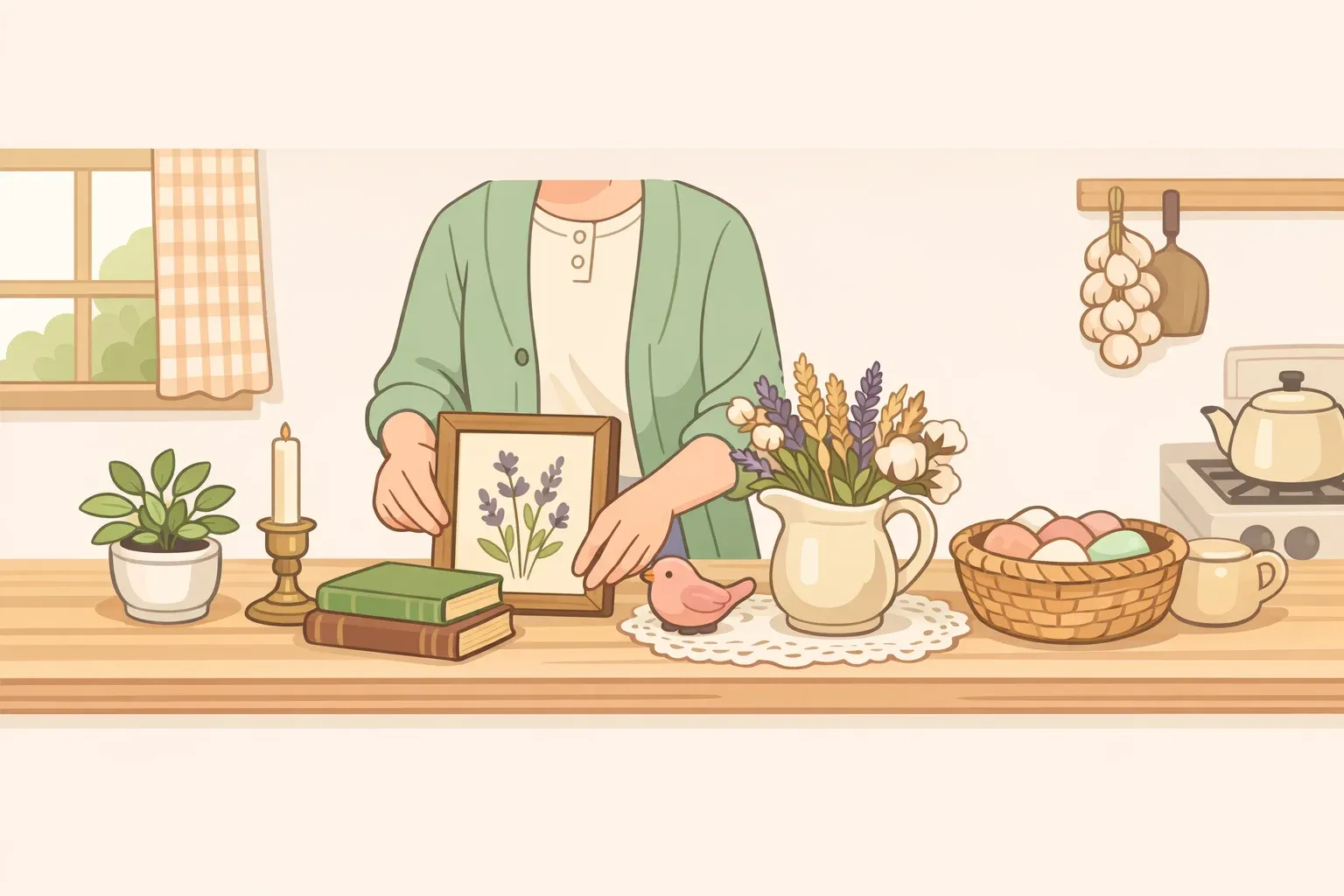
Grandmacore Kitchen Trend: What It Is and How to Get the Look
Professional kitchen designers were already moving away from cold, aspirational interiors before "grandmacore kitchen trend" became a search term. The NKBA's 2025 Kitchen Trends Report, drawn from 523 North American industry professionals surveyed in late 2024, named "Emotional & Physical Well-Being," "Connect to nature," and "Color the kitchen with light, warm, and natural tones" as three of its defining themes for kitchen design through 2027. That's the practitioner consensus, established well before consumers started searching.
Then came the consumer data. Pinterest searches for grandmacore kitchens climbed 545% in early 2026, according to the platform's Spring Trend Report. The related term "dark cottagecore kitchen" rose 915% in the same period. Two separate signals, one from industry professionals and one from consumer search behavior, point in the same direction at the same time.
The word "grandmacore" is useful shorthand, but the more durable story is what it represents: kitchens that feel collected, imperfect, and personal are replacing kitchens styled for a listing photo. This piece examines why that shift is happening, what it looks like at different budget levels, and how to get the grandmacore kitchen look without spending a dollar on renovation.
That last part matters. Because this aesthetic is built from objects and layers rather than structural changes, it's unusually accessible to renters, apartment dwellers, and anyone who wants their kitchen to feel less like a showroom without hiring a contractor.
What the grandmacore kitchen trend actually means
A grandmacore kitchen draws its character from the visual language of a multigenerational home: cabinetry worn from decades of use, textiles that were fashionable roughly 30 years ago, surfaces with a history rather than a finish. The effect is accumulated, not assembled. Country Living described the shift in April 2026 as a kitchen renaissance, with rooms once defined by bright, clean surfaces now taking on warmth, age, and personality.
The 2026 version is filtered through two established design movements. Grandmillennial style pairs traditional sensibilities with deliberate, self-aware curation. Cottagecore romanticizes domestic and rural life. Cottage-inspired design has been building mainstream momentum for roughly six years, which is why grandmacore's fussier, more personal touches no longer read as dated or ironic, Country Living notes. This is the mainstream arrival of an aesthetic that's been forming quietly for a while.
What it isn't matters as much as what it is. Sydney Stanback, Pinterest's global trends and insights lead, describes these kitchens as spaces that "evoke nostalgia and familiar memories, often reminding people of the homes they grew up in, and the warmth of spaces that feel lived-in, while still allowing for individual style," Good Housekeeping reported earlier this year. The operative phrase is individual style. Grandmacore is a mood and a set of design values, not a theme kit. It's not period recreation, and it's not maximalism for its own sake.
That distinction matters practically. Someone who stocks their kitchen with grandmacore-branded accessories from a single retailer has missed the point. The look comes from selection criteria, not shopping lists.
Why this shift is happening now
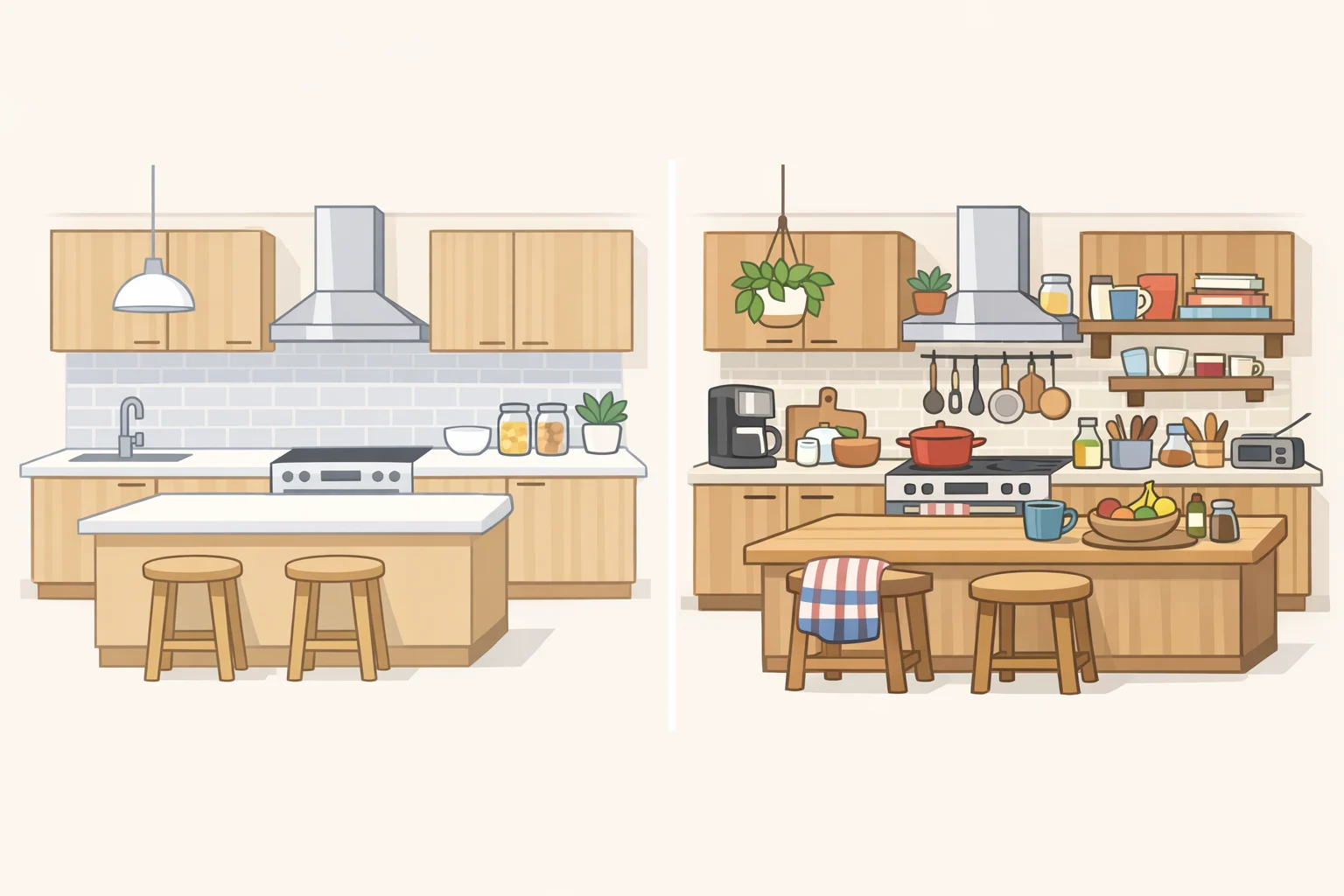
The search spike reflects something real, but it didn't come from nowhere. Pinterest's Spring 2026 report frames the moment as proof that "home isn't about perfection," with the all-white showroom kitchen giving way to a "my room, my rules" mentality that saw its own 415% search increase on the platform. Country Living puts it more bluntly: people want kitchens that feel "real and not like a sanitized showroom space that no one actually uses."
The generational engine behind this is worth understanding. Gen Z and younger Millennials drove 65% of Pinterest's tracked 2025 trends, and they're not waiting for a dream house or a renovation budget. They're personalizing existing spaces through vintage finds and low-cost modifications, because that's what their housing situation allows. The grandmacore aesthetic suits this exactly: it rewards thrift shopping over contractor scheduling, and it gets better with each addition rather than requiring a cohesive upfront plan.
This is also where grandmacore diverges meaningfully from its predecessors. Early cottagecore was primarily aspirational, associated with rural fantasy and a certain kind of Instagram-ready staging. Grandmacore is more urban, more practical, and more tolerant of imperfection. A city apartment with dark kitchen walls, a mismatched ceramic collection, and a lamp from an estate sale qualifies. No garden required.
The professional reinforcement is what separates this from a typical social media pattern. The NKBA's named themes for kitchen design through 2027 map almost directly onto what consumers are searching for: emotional well-being, connection to nature, warm and natural tones. Designers aren't using the word grandmacore. But they're describing the same pull in professional language, and they were doing so before the search spike arrived, per the NKBA report. When professional practice and consumer aspiration align like this, trends tend to settle into the mainstream rather than cycle out in a season.
One honest limit deserves naming. The search spike measures curiosity and planning intent, not installed kitchens. Pinterest's dataset is large, over half a billion monthly users, but these numbers come from Pinterest itself, a platform with an institutional interest in being seen as a cultural signal, as its Pinterest Predicts report makes clear. No independent retail or renovation data confirms that grandmacore kitchens are appearing in homes at scale. The underlying design shift is well-supported. The specific label's durability is less certain.
How to get the grandmacore kitchen look, organized by scale
The most useful framework for this aesthetic is scale of change. What's available to you depends on whether you own the space, rent it, and how much you're willing to spend. Here's how the look breaks down from the biggest moves to the smallest.
Structural and material changes: owner territory
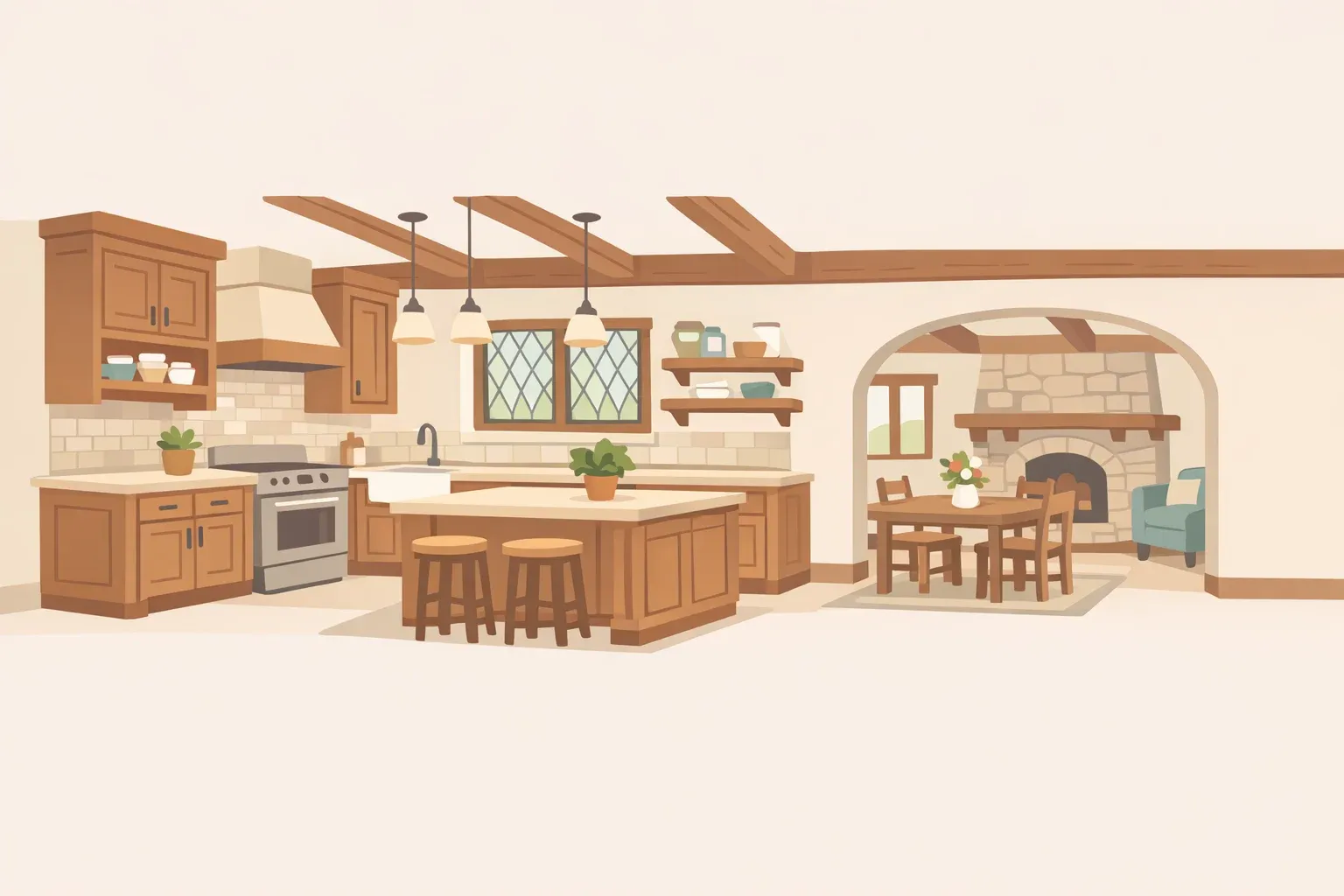
Warm wood-toned cabinetry has been making a slow comeback for two years and is now firmly mainstream in 2026, Country Living reported this spring. Paired with terra-cotta backsplash tiles or earth-tone walls, this combination does the heaviest aesthetic lifting and is the closest the look gets to requiring an actual renovation. For homeowners, it's the highest-impact single change available.
Cabinet paint is the more accessible version of the same move. Pinterest's Spring data shows searches surging for expressive colors: aubergine kitchens are up 495%, alongside "moody blue" and "vintage pink," as people move away from neutral uniformity, according to the Spring Trend Report. A cabinet color change, even partial, shifts the entire register of a kitchen without touching its structure. It's owner-level work in terms of commitment, but not necessarily in terms of cost.
Mid-level changes: what most renters can actually do
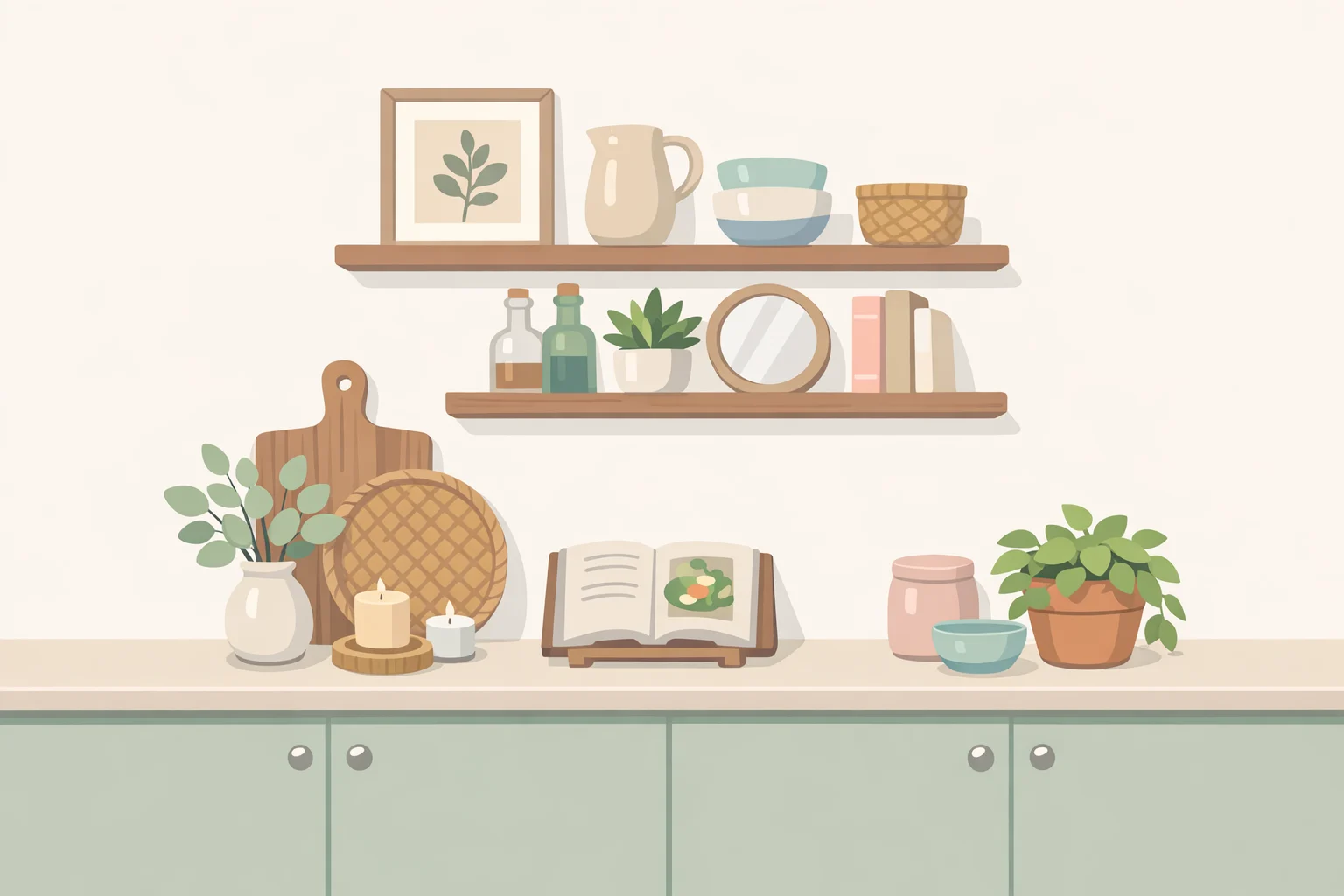
This is where the aesthetic gets genuinely democratic. Pinterest has noted that people are seeking "personal, low-lift ways to transform their spaces" rather than gut renovations, as Good Housekeeping reported earlier this year. For most renters, that means working with surfaces as they are and changing everything around them.
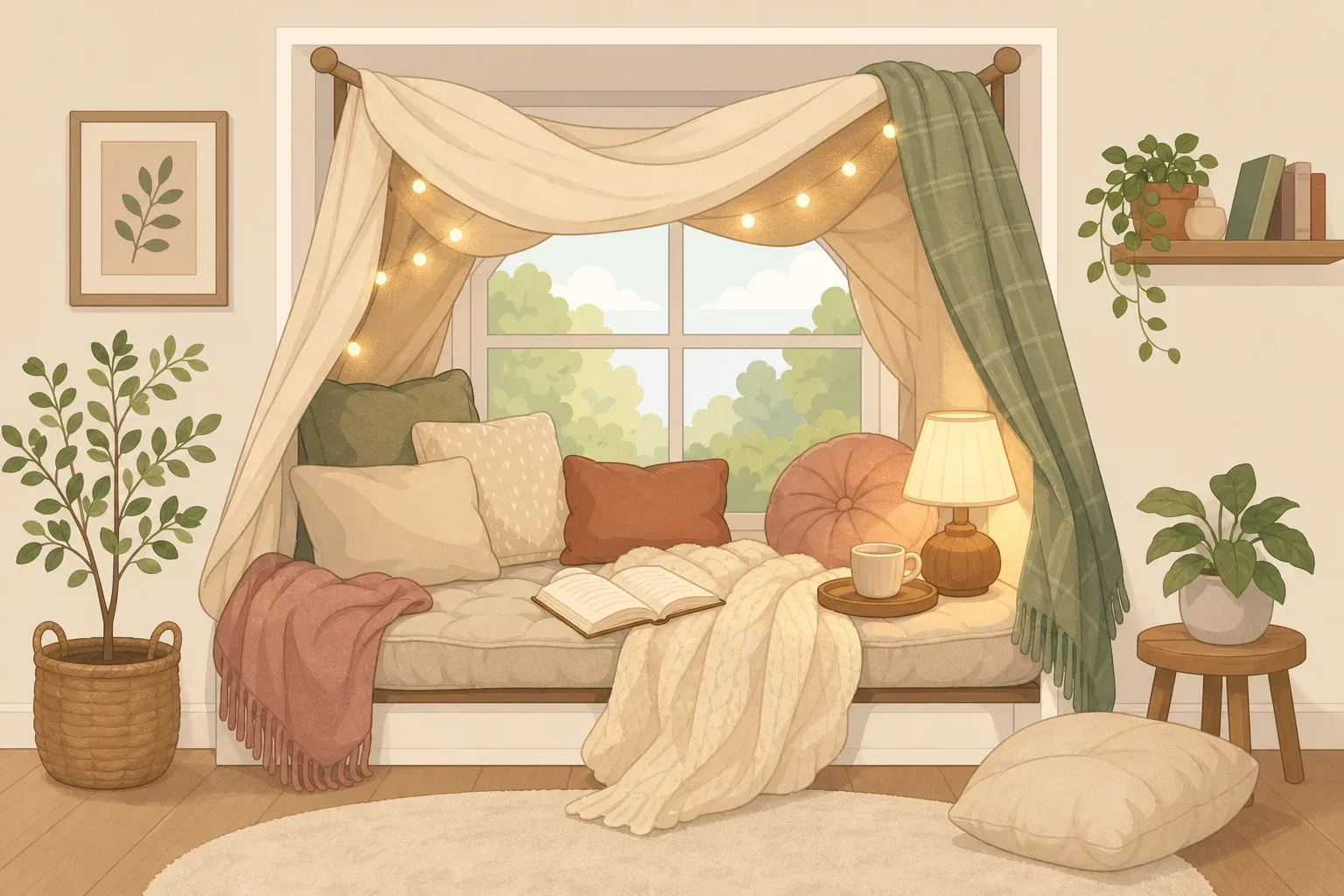
A vintage floor mat near the sink, a warm-toned lamp on the counter, a small collection of ceramics on open shelving: these changes cost almost nothing and require no permission. The key is placement. Objects clustered intentionally, rather than scattered, read as curated rather than cluttered. A corner of the counter with a lamp, a small plant, and a ceramic jar creates a distinct visual anchor. Three separate objects spread across a kitchen read as chaos.
Textiles do a lot of work here too. Linen dish towels, a worn tablecloth, curtains in a faded floral print, these are the kinds of materials that signal age and use without requiring any of either.
The smallest moves: objects and layers
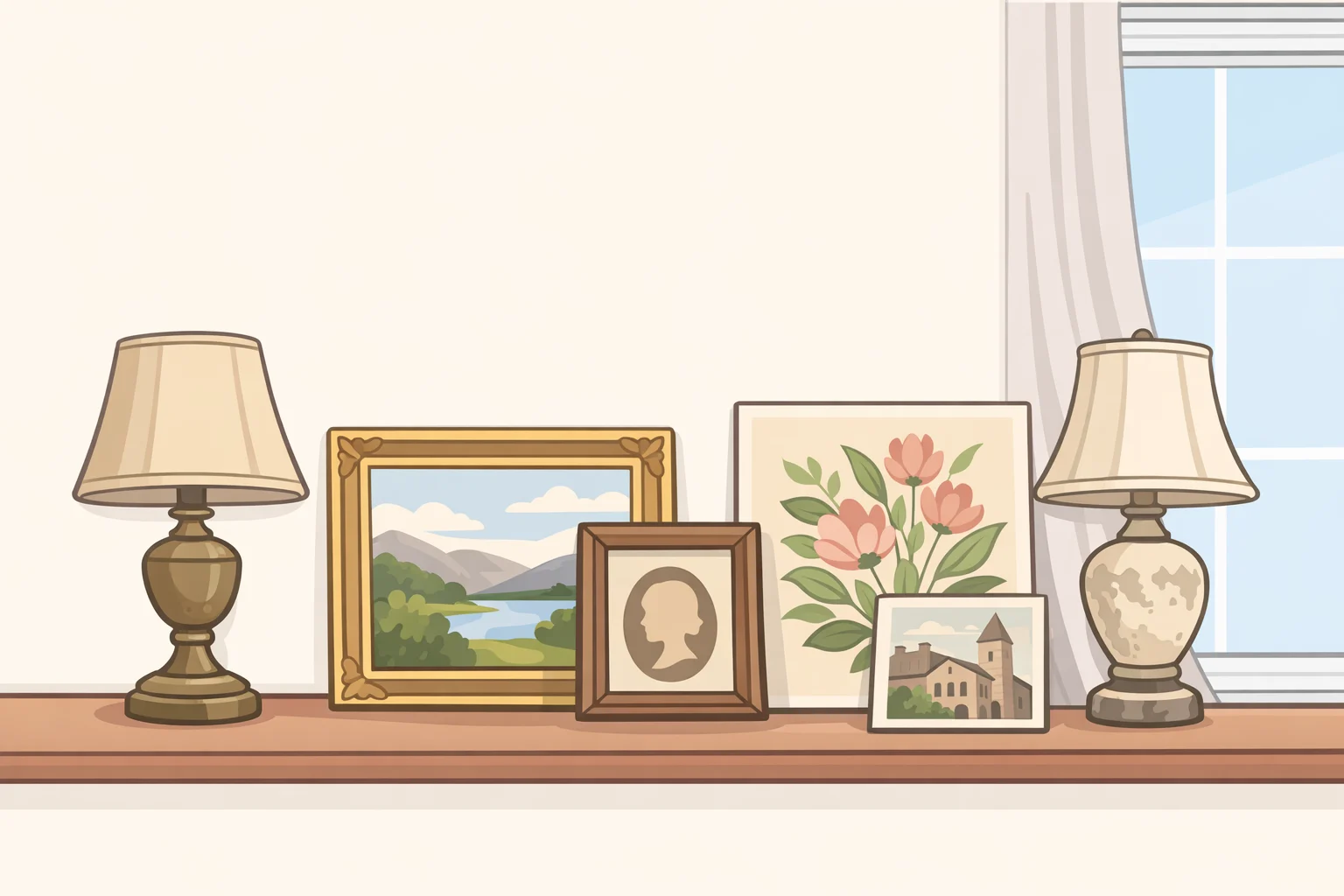
Designer advice, as reported by Good Housekeeping, emphasizes gradual layering: thrifted frames, aged table lamps, small prints leaning against a windowsill rather than hung with hardware. These are changes that take an afternoon and leave no trace for a landlord. Nothing requires drilling, permits, or permanence.
The sourcing strategy matters as much as the objects themselves. Estate sales and thrift stores reliably surface items with actual history: worn cutting boards, mismatched ceramics, frames in woods that aren't made anymore. These read differently than new objects designed to look old, and they're usually cheaper. The visual difference between a genuinely worn piece and a reproduction is hard to articulate but easy to see.
The anti-theme guardrail

The risk with any trend-labeled aesthetic is over-theming. A single worn wood cutting board and a ceramic vase from an estate sale read as personal. A kitchen assembled from a grandmacore shopping list reads as costume.
The design guidance here is direct: collect only objects that "mean something, either in your soul or truly beautiful to your eye" rather than assembling a thematic set, as Good Housekeeping noted. Things selected for personal resonance survive the next trend cycle. A stage set assembled to match a mood board usually doesn't. This is both useful design guidance and the clearest argument for the aesthetic's longevity: kitchens built this way don't need to be replaced when the label changes.
What stays after the label fades
The word "grandmacore" will cycle out, as aesthetic labels do. The design values underneath it are much older and much sturdier than the terminology. They've been building through cottagecore, grandmillennial style, and warm-minimalist movements for years. The label is new; the appetite isn't.
Pinterest's trend forecasting methodology has logged roughly 80% accuracy over five years, tracking year-over-year search growth across its user base, according to the platform's Pinterest Predicts 2025 report. If that pattern holds, the broader preference for warmth, natural materials, and self-expression over aspirational minimalism should remain a mainstream kitchen design priority well into the next design cycle, whatever it ends up being called.
The practical takeaway for anyone who never uses the word: warm wood tones, earth-toned color, and personally meaningful objects are unlikely to date badly. They're already aligned with what professional designers say clients want through 2027, per the NKBA report. A kitchen that feels like it belongs to someone will outlast a kitchen that looks like it belongs to no one.

Comments
Be the first, drop a comment!