



How to Zone a Living Room: Create 3 Distinct Spaces
Most large living rooms underperform for a simple reason: everything is arranged in one place, so the room is asked to serve every purpose at once and ends up serving none of them well. The sofa configuration that works for a movie night is wrong for a video call. The spot that's good for hosting is too far from the window to read in. One big neutral zone is the default, and it consistently disappoints.
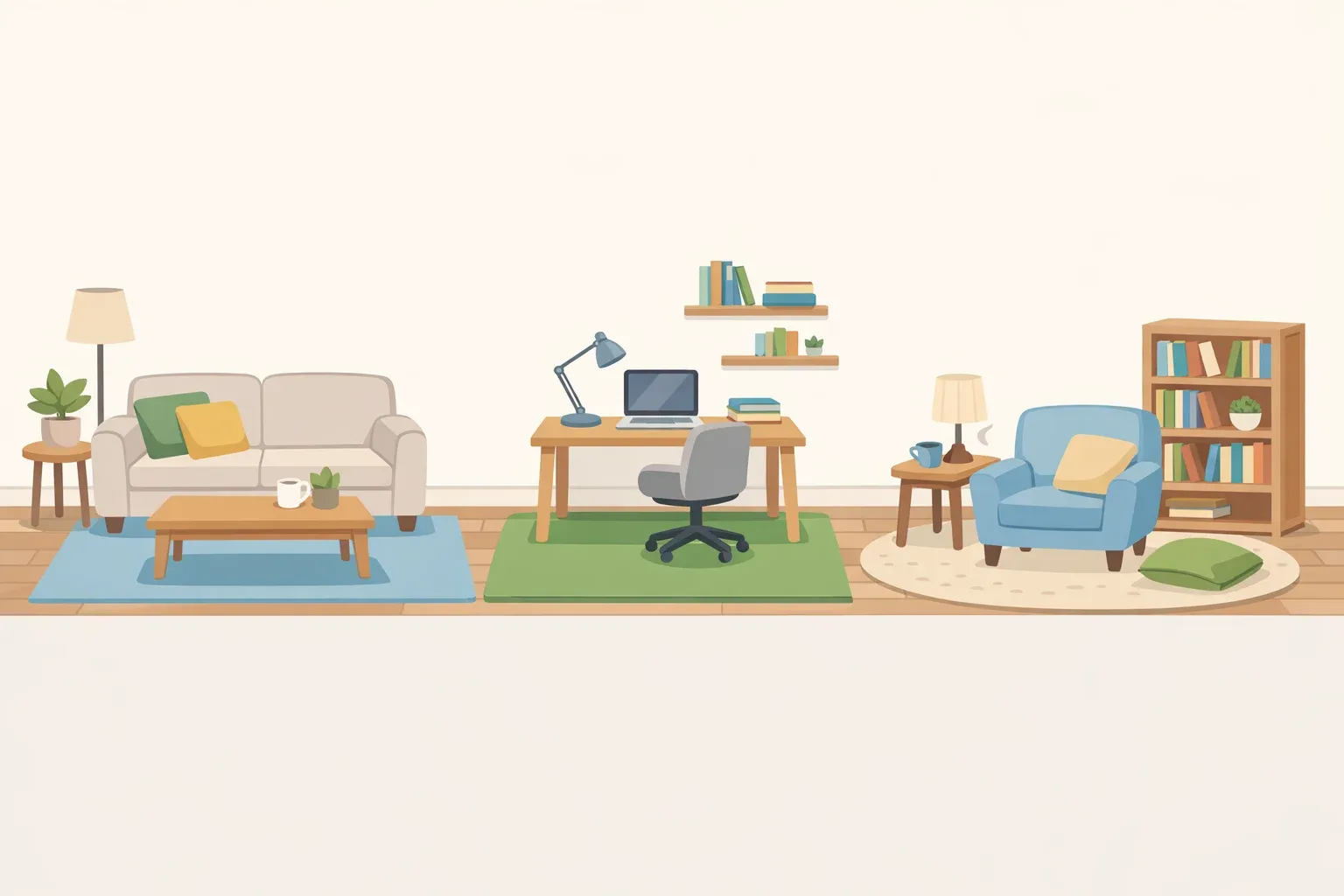
This guide walks through how to zone a living room into three distinct areas, main lounging, focused work or activity, and a quiet retreat using furniture placement as the primary tool, with rugs, lighting, and texture to finish the job. By the end, you'll know how to assess whether your room can support three zones, how to build them without construction or major purchases, and how to keep the room feeling like one coherent space rather than three disconnected ones.
The central principle: multiple smaller arrangements nearly always outperform a single large catch-all setup. Asking one oversized seating group to do everything is, as several designers told Yahoo Home Decor in November 2025, the single most common reason living rooms feel either cavernous or socially awkward. Interior designer Marie Flanigan describes zoning as a matter of intention: each area should carry a specific function rather than remain undifferentiated open space. Designer Lauren Gilberthorpe puts it plainly: the zone creates the sense of scale, not the square footage.
One caveat before starting: this approach works best in rooms large enough to hold multiple furniture groupings without crowding. The first section helps determine whether yours qualifies.
Before you move anything: decide whether your room can support three zones
The three-zone concept is sound. It doesn't work in every room.
A practical rule of thumb from design practice: rooms under 200 to 250 square feet will struggle to hold three independent furniture groupings without feeling cluttered. In that range, two zones, a primary seating area and one secondary nook are a more realistic target. Rooms above 300 square feet can generally support three. Between those numbers, it depends on the room's shape and what furniture is already in it. These thresholds aren't hard rules; they're a starting point for thinking about whether the floor plan can breathe.
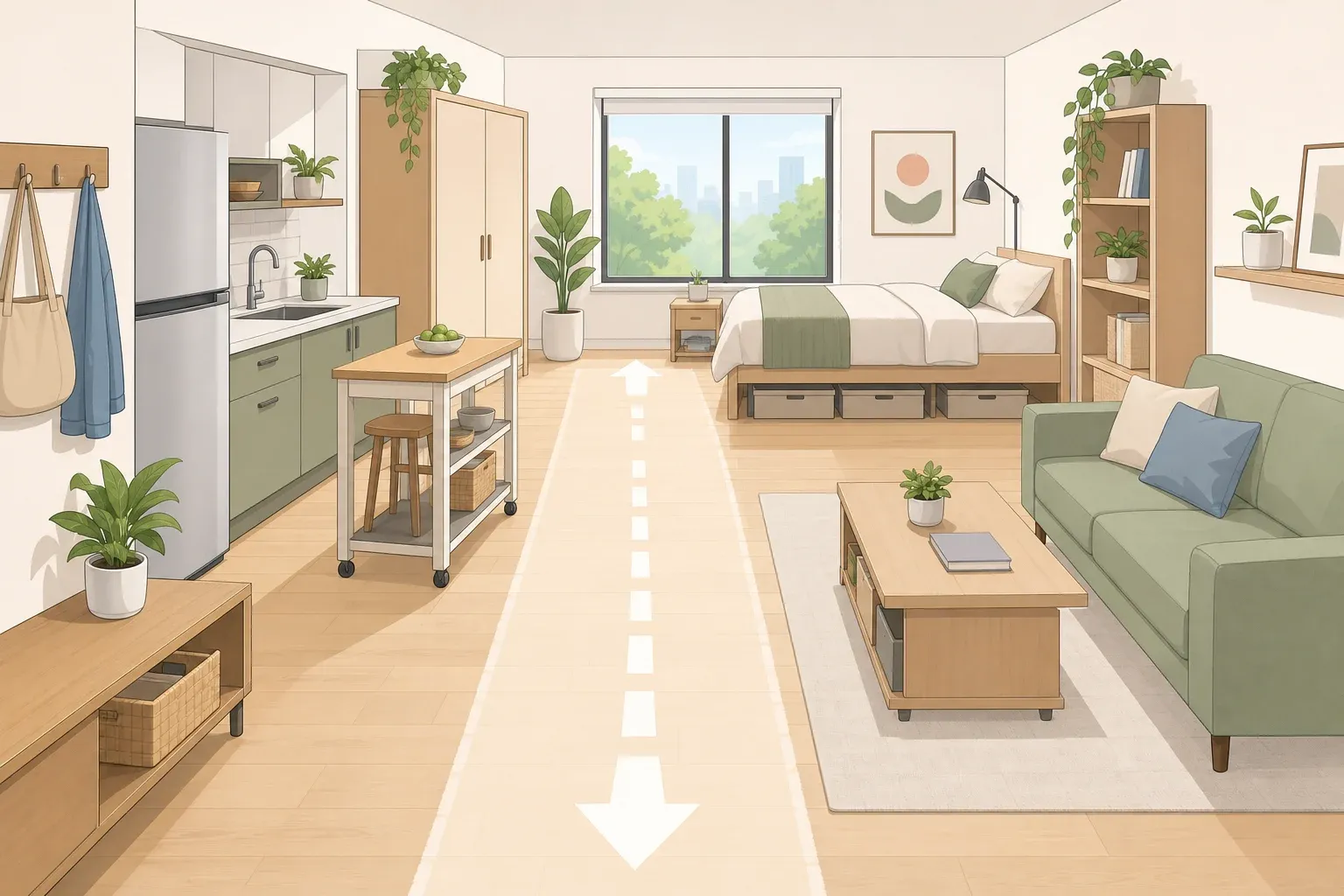
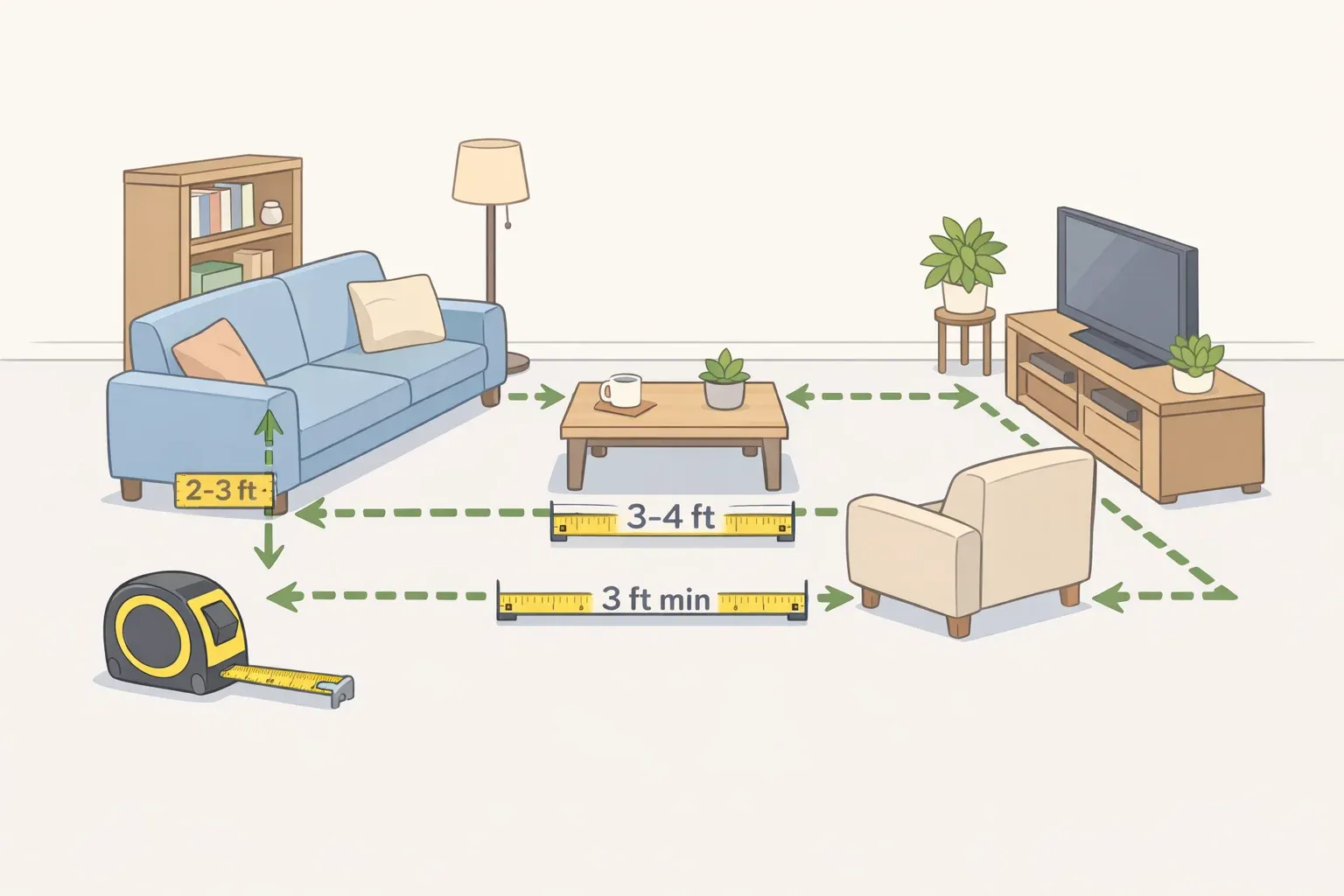
Before sketching anything, walk the room's natural circulation paths: from the entrance to the kitchen, from the sofa to the hallway. Zones cannot block those routes. A zone that cuts across traffic flow will feel like an obstacle rather than an invitation. Mark those paths first.
Next, identify what's anchored and what's movable. The TV wall, a fireplace, a bay window with a radiator underneath none of those will move, and they don't need to. Each one can anchor a zone. Find the three locations in the room that naturally draw people or light, and start there.
Then name three functions before naming three spaces. Decide what the room needs to do, not where to put things. A workable combination: main lounging and TV area, focused work or activity nook, quiet reading or secondary guest seating. The functions should be genuinely different from each other. "Main TV watching" and "secondary TV watching" isn't zoning; it's duplication.
Before assuming new furniture is needed, inventory what's already in the room. In most cases, the primary conversation area already exists in rough form. The second and third zones can often be built from pieces currently pushed against walls or scattered without purpose.
One common misconception: three zones of equal size is not the goal. As a practical rule of thumb, the primary zone typically takes up 50 to 60 percent of the footprint. The second and third can be considerably smaller a nook or a corner is enough.
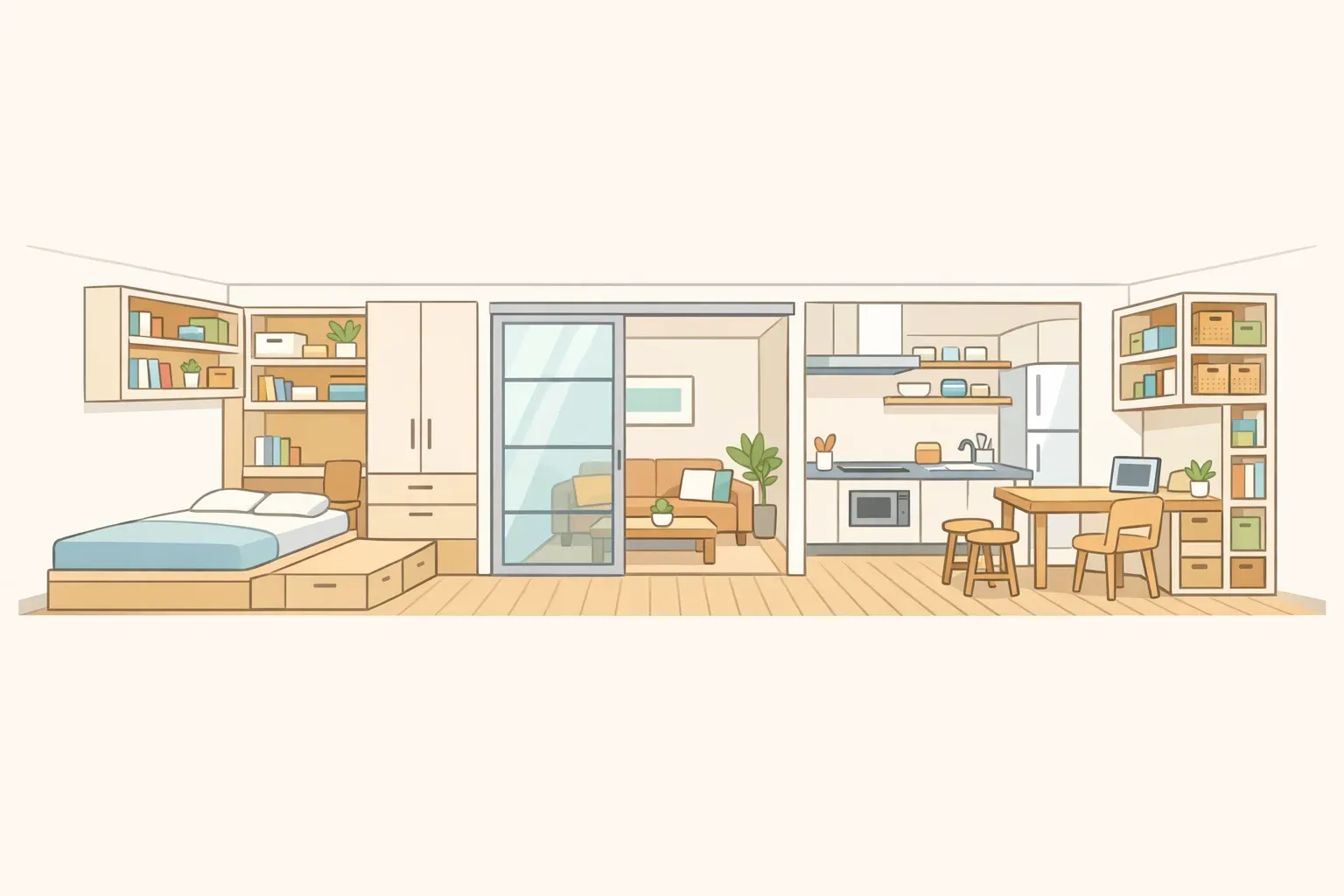
How to divide a large living room into zones without walls
This is where the actual work happens. The layout moves below create zone structure without room dividers, construction, or major purchases.
Float furniture off the walls
Both Sarah Ellison of Frank & Faber and Marie Flanigan identify wall-hugging furniture as the most common layout mistake in large living rooms. Pulling pieces away from the walls and grouping them around a central anchor a coffee table or ottoman is what turns a corner into a place people actually want to sit, as Yahoo Home Decor reported in November 2025. Designer Sean Symington adds a useful refinement: vary the scale of furniture across zones, pairing a substantial anchor piece with lighter, smaller elements, so each area reads as its own without requiring a full style overhaul.
Zone 1: main lounging or conversation area (largest)
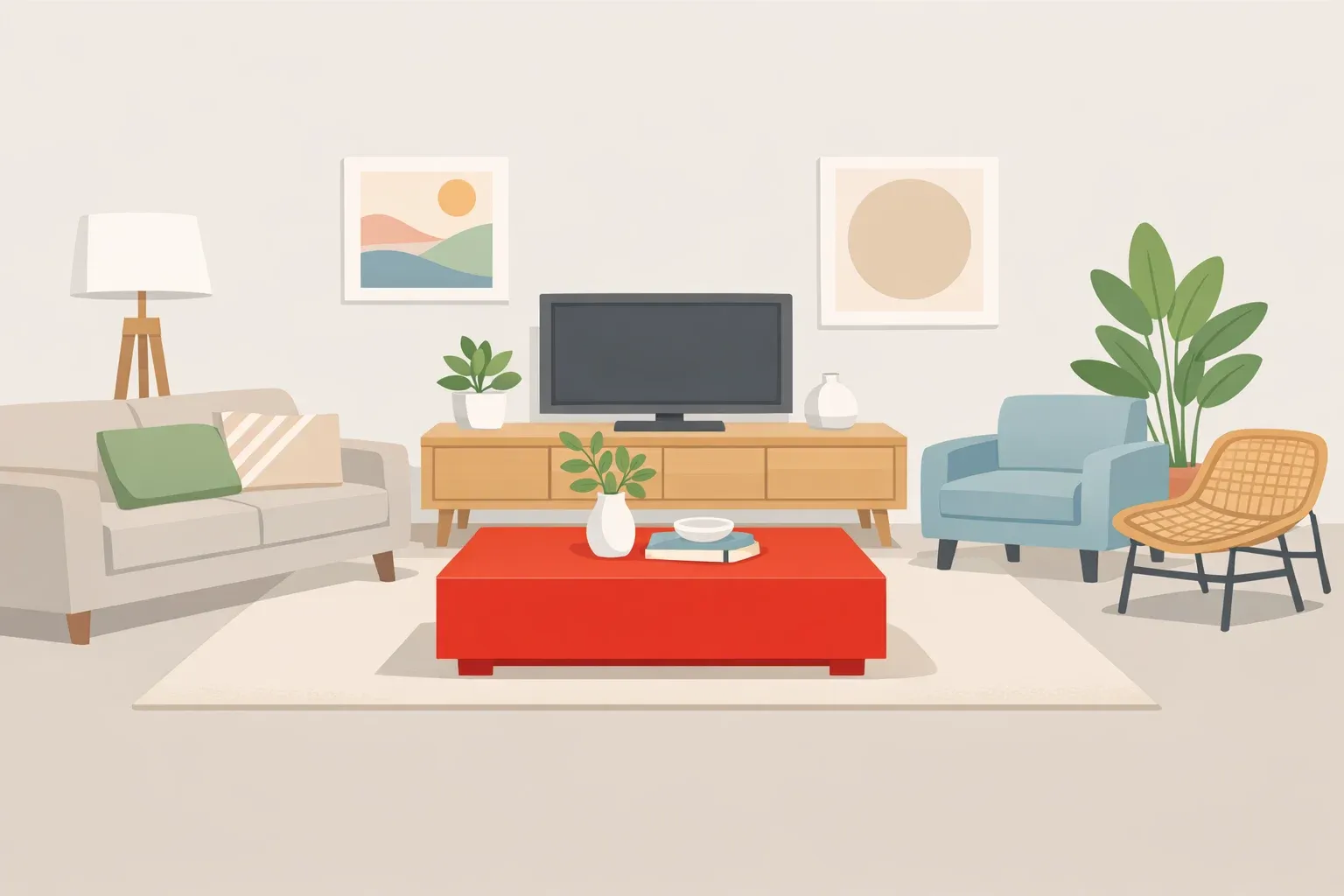
The standard arrangement is a sofa with one or two accent chairs angled toward it, floating around a central coffee table. Designer Kathy Kuo favors four accent chairs arranged around a round ottoman effective when there's no dominant TV wall pulling focus, according to Yahoo Home Decor (November 2025).
Use the sofa-plus-chairs arrangement when the TV must stay in view. Use the four-chairs-around-ottoman version when the goal is screen-free conversation.
Splitting Zone 1 from Zone 2: the back-to-back technique
Symington's preferred method for open-plan rooms: place two sofas or chairs back-to-back to divide one large area into two distinct seating zones without any physical barrier. This works well when both zones are seating-oriented. If Zone 2 is a work nook, a desk with its back to the main seating area achieves the same directional signal more functionally, the desk's orientation does the dividing work.
Zone 2: work or activity nook (mid-size)
The right configuration depends on primary use. For laptop work or reading, a slim writing desk with one chair angled slightly away from the main seating area signals focused use and requires minimal floor space. For games, puzzles, or casual group activity, Kuo suggests a small bistro or game table with two or three chairs compact enough for a corner, distinct enough in furniture type to register as its own area, per Yahoo Home Decor (November 2025).
Choose the desk when one person regularly works there. Choose the table when the zone needs to shift between users throughout the day.
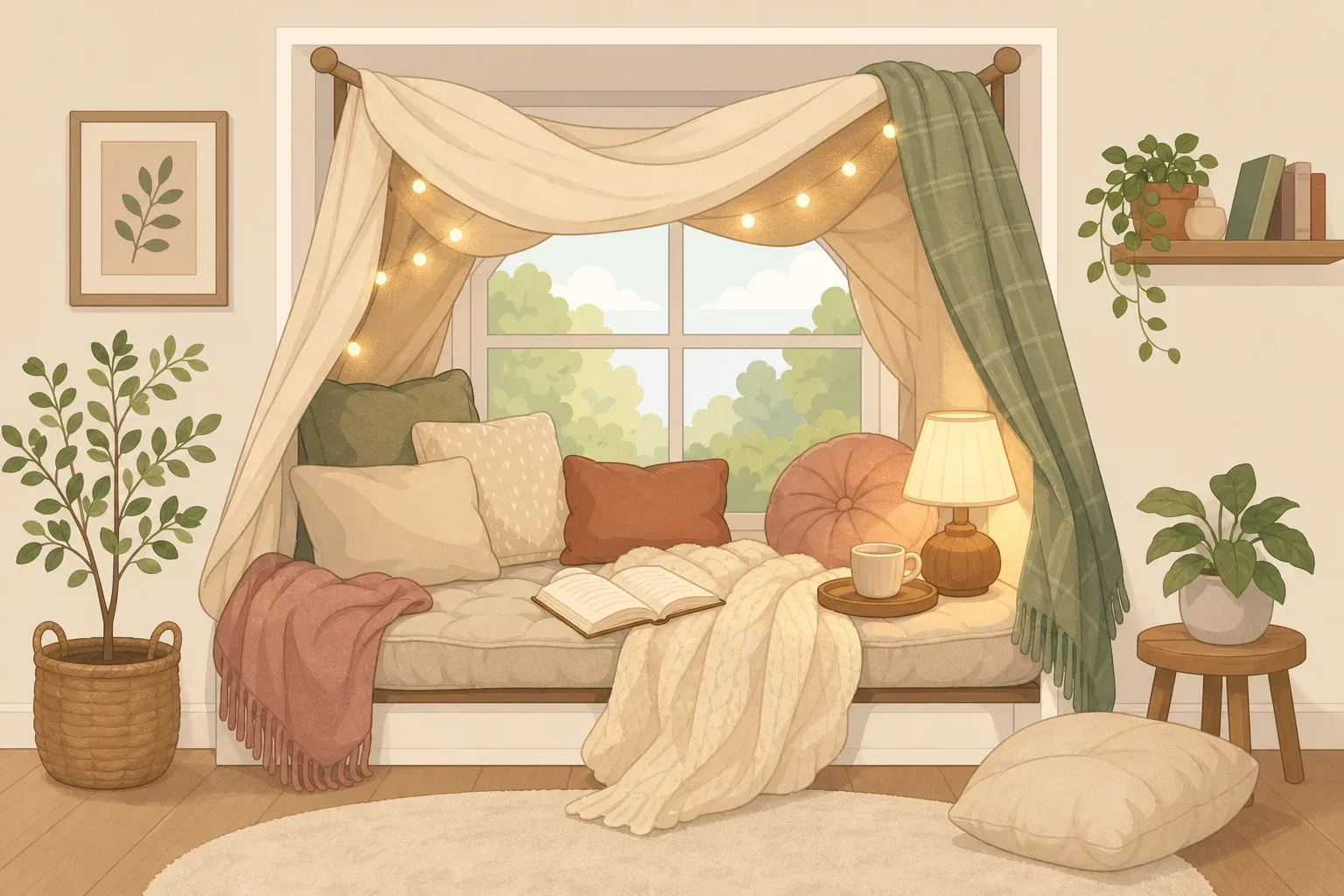
Zone 3: quiet retreat or secondary guest seating (smallest)
An upholstered bench near a window is the minimum viable third zone. One piece of furniture is enough to create a distinct purpose, particularly when paired with a floor lamp. A single armchair with a side table works just as well with slightly more comfort. The essential requirement: Zone 3 should face a different direction than Zone 1. That physical reorientation not the furniture itself is what makes it feel genuinely separate.
One consistent pitfall: side tables and accent pieces between zones should provide actual function (a surface for a lamp or a drink) rather than visual clutter. If a piece isn't anchoring anything, it's probably fragmenting sightlines rather than reinforcing them.
Example: a 16 x 20 foot room with a TV wall, fireplace, and one window
A 320-square-foot room sits comfortably in the three-zone range. Here's how the layout logic plays out in practice.
The anchors: TV wall on the north end, fireplace centered on the east wall, a window with natural light on the south end. These three fixed points each become the anchor for one zone.
Zone 1 centers on the TV wall. A sofa floats roughly six feet from the wall, facing the screen, with two accent chairs angled in from either side and a coffee table in the middle. The sofa's back faces the center of the room that back edge is the zone's southern boundary.
Zone 2 takes the fireplace wall. A small writing desk sits perpendicular to the fireplace, chair facing it, back toward the main seating area. The desk's orientation signals "work here" without needing a divider. In the evening, a game table with folding chairs can replace the desk entirely, since neither requires much footprint.
Zone 3 occupies the window corner. An upholstered bench runs along the sill with a floor lamp beside it. Two square feet of rug underneath is enough to define it. The bench faces east toward the room, but at an angle rather than north toward the TV.
Traffic flow: The path from the room entrance to the kitchen runs along the west wall, which stays clear of all three zones. No furniture blocks it.
This layout leaves the center of the room relatively open, which is correct. Zones live at the edges and corners; the middle is circulation space.
Step 2: use rugs, lighting, and texture to make a large living room feel cozy
Furniture placement defines the structure. This step makes each zone feel deliberate and keeps the room reading as one space rather than three disconnected ones.
Rugs as zone anchors
Each zone gets its own rug, sized so that at least the front legs of every seating piece sit on it. This is the primary visual signal that a zone is a zone. Rugs don't need to match, but they should share tonal or material continuity both warm-toned, or both natural fiber so the room doesn't fracture into unrelated color stories.
A rug that's too small for its zone looks like a bath mat dropped in the middle of the floor. Size up before buying.
Lighting as atmosphere control
Paulina Hospod of Aha Interiors makes a strong case for using lighting in place of walls: a rug, a pendant, or a shift in material can separate a conversation area from a reading nook more cleanly than a physical divider, and it feels natural rather than imposed, per Yahoo Home Decor (November 2025).
Sarah Ellison recommends a low-hanging pendant or a combination of table and floor lamps to shift a zone's atmosphere without touching the ceiling fixtures. A practical distribution: pendant or overhead for the main zone, an adjustable task lamp or floor lamp for the work nook, a single warm lamp for the quiet retreat. Overhead lighting alone flattens the room and erases any zone differentiation you've built with furniture.
Texture as a subtle divider
Layering different materials across zones linen in one, wool in another, rattan or wood in the third signals a shift in use without requiring a color change. The constraint is palette: mixing textures works; introducing three unrelated color families does not. One repeating tone across all three zones is what holds the room together.
Ellison's rule on cohesion: continuity doesn't require matching. A warm wood finish appearing in all three areas, or the same accent color carried through cushions and lamp shades, is sufficient, as Yahoo Home Decor reported in November 2025.
One overcorrection to avoid: loading each zone with accessories to make it feel "different enough." One rug, one dedicated light source, and one or two textural elements per zone is typically sufficient. Past that point, the zones start competing rather than defining.
Common failure modes: a final walkthrough before you finish
Check these before calling the room done.
Blocked walkways. After rearranging, walk every natural path through the room. If getting from the door to the kitchen requires angling around a chair, the zone is in the wrong place.
Three equal zones. If all three areas are the same size, the primary zone loses its weight. The main area should be clearly dominant.
Undersized rugs. A rug too small for its zone looks accidental. Seating pieces should anchor to the rug, not sit alongside it.
Too many small tables. Two or three slim side tables placed purposefully serve a function; four or more scattered between zones create visual noise and make the room look unresolved. Cut back to what's actually needed.
Treating all three zones as permanent. A bistro table with movable chairs can be pushed against the wall when the room needs open space for a larger gathering. Build that flexibility in from the start.
What the room actually becomes
The goal isn't a prettier living room. It's a room that does more with the same square footage.
The main zone handles family time and movie nights. The work nook is an office from 9 to 5 and a game table after dinner. The window bench is available for whoever needs ten minutes out of the group without leaving the room. Three zones, each with a job that's the difference between a space you pass through and one you use.
The sequence holds across almost any room: define the functions first, place the furniture second, layer rugs and lighting third. Styling before planning is how zones end up feeling arbitrary, a pattern the designer consensus reported by Yahoo Home Decor (November 2025) reflects consistently. Separate seating arrangements produce more intimate conversation and better hosting outcomes than one room-spanning layout, as Kuo argues directly, the room-spanning sofa arrangement is optimized for no one.
Once zones are in place, step back and look at the room as a whole. If the three areas share tonal and textural continuity, the room works. If they don't, that's the one remaining thing to fix.
Expect one round of adjustment after a few weeks of real use. A work nook with afternoon glare, a reading spot too far from an outlet these are normal corrections. The room is in use; move things again.
Related guides: how to choose the right rug size for a seating area; open-plan living and dining room zoning; how to set up a home office in a shared living space.



Comments
Be the first, drop a comment!