



Polished Nickel Kitchen Hardware Explained: When and How to Use It
Shiny brass no longer suits the kitchens most people actually have. That's the practical problem driving a shift in what designers are specifying, and it's worth understanding before you spend anything on new hardware.
Bright polished brass was always a contrast tool. It introduced warmth and gleam against the cool gray-and-white minimalism that dominated residential design for most of the 2010s. As kitchens moved toward earthy palettes, warm wood cabinetry, natural stone, and saturated color, that logic collapsed. The warmth of polished brass stopped reading as counterpoint and started stacking on top of warmth that was already there. Mary Gordon of InSite Builders & Remodeling puts it plainly: brass and gold finishes were once the go-to for adding warmth to cool minimalist interiors, but they've reached a saturation point in residential design and are no longer performing that function, Good Housekeeping reported this month.
The finishes gaining ground in its place sit in a cooler, lower-reflectivity range. Brushed nickel, antique nickel, pewter, matte black. Polished nickel kitchen hardware belongs to the same family, and the case for it is practical rather than trend-driven: in kitchens that already have warm organic materials, a cooler metallic finish introduces contrast the eye reads as resolved rather than competitive.
That's the argument. Not that nickel is fashionable. The rooms have changed enough to make it the more sensible default with the important caveat that the sources support this case most clearly for brushed and antique nickel, and somewhat less directly for polished nickel specifically.
Why shiny brass stopped working in today's kitchens
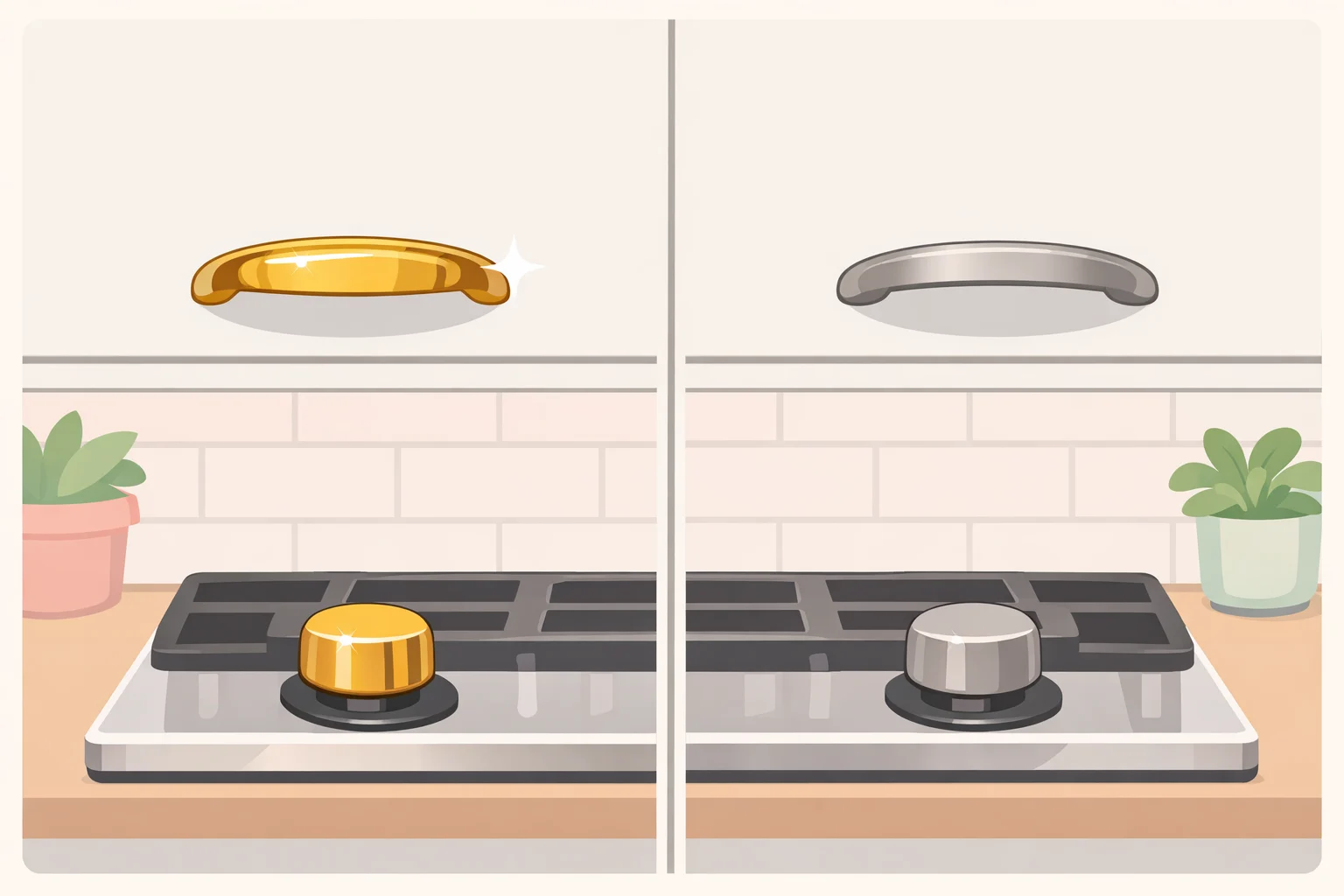
The problem is specific. It's not brass. It's the shiniest, most reflective version of it.
Shannon Kadwell of Anthony Wilder Design-Build draws the line precisely: bright polished brass can make kitchens look dated compared to current finishes like satin brass, matte black, and brushed nickel, Good Housekeeping reported this month. Tracy Morris confirms that brass won't disappear entirely what's receding is the high-gloss surface, with client preferences shifting toward aged brass, antique pewter, and muted black metals that work across a wider range of materials. Kelly Hoppen frames the broader direction as a move toward "softer, more layered metallics like brushed nickel, antique bronze and even matte black, which bring a subtler, more individual feel to a space."
Gordon's description of the underlying preference is the most useful summary: "texture and tone taking precedence over shine," with finishes chosen for depth and integration rather than declaration. That framing applies across every finish gaining ground right now, nickel included.
The kitchen context matters here. Weathered hardware finishes including pewter and antique nickel are gaining in popularity partly because they can "subtly influence the tone of a room," Gordon noted, functioning as architectural elements rather than focal points. A finish that settles into the room rather than announcing itself is what the current kitchen palette calls for. Polished brass was built for a different room.
Brass vs polished nickel: how the main kitchen hardware finishes compare
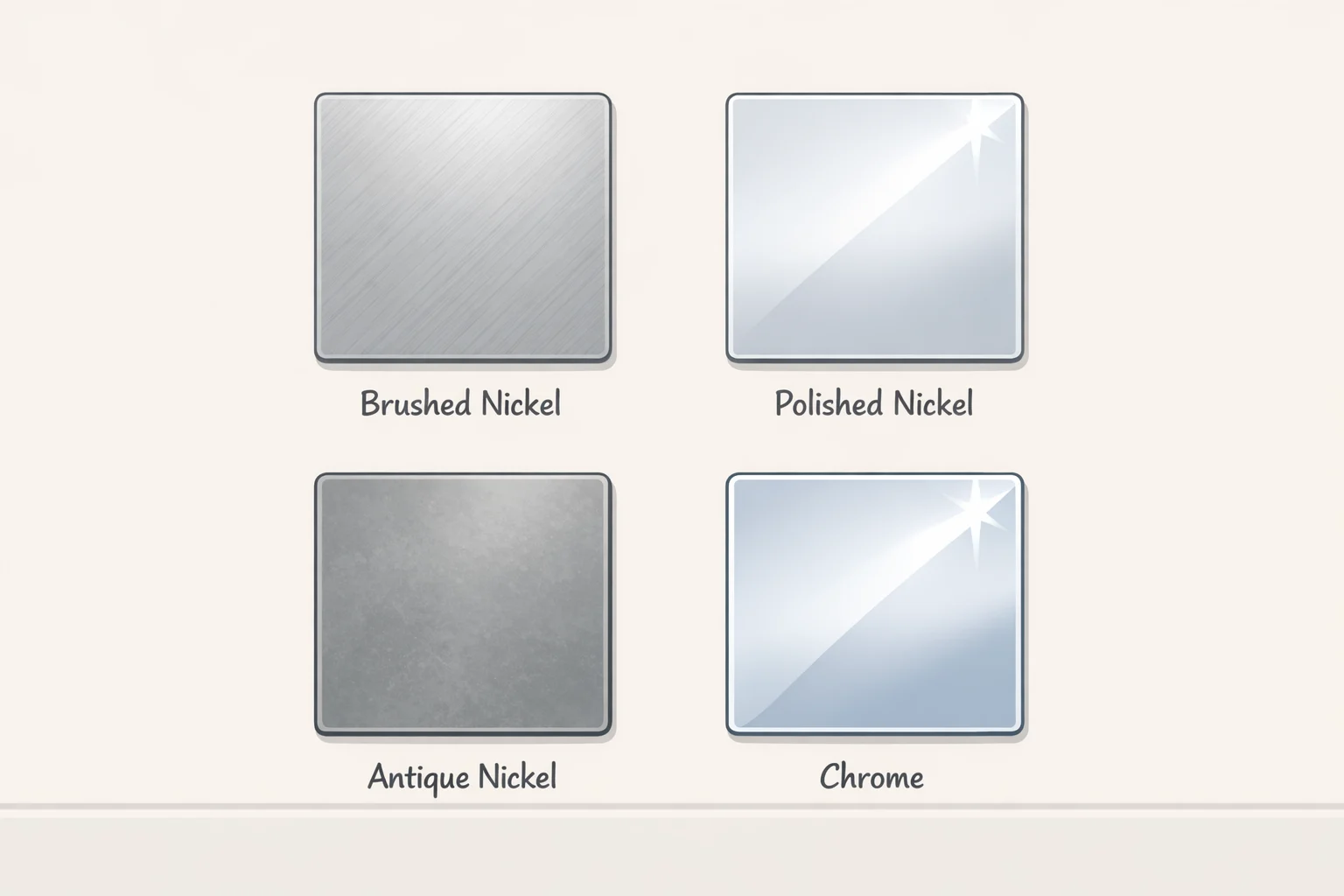
Understanding what each finish does physically is the fastest way to make a good decision. The research is more detailed on some finishes than others, and what follows reflects what's actually documented.
Brushed nickel has the strongest evidence base for consistent, low-maintenance use. It reduces reflectivity while keeping a clean finished look, holds its appearance across hardware, faucets, and lighting without visible change over time, and is typically sealed and designed to remain stable, according to Grand Junction Sentinel coverage from two months ago. Brass introduces warmth; nickel is chosen for consistency. That's the cleanest practical distinction in the research.
Nickel finishes broadly antique nickel, pewter, brushed nickel are gaining ground as alternatives to shiny brass, Good Housekeeping reported. The cooler, silver-toned character of these finishes pairs with warm organic materials by providing contrast rather than competition. Polished nickel sits at the more reflective end of this range, cooler than brass and more silvery in tone, lower-glare than chrome. The sources speak to nickel finishes as a category; polished nickel's specific case follows the same logic, applied to kitchens where warm wood and stone give a cooler metallic note something to work against.
Unlacquered brass is a different decision. It oxidizes with exposure, shifting toward brown or gray-green tones over time. Kohler's product guidance describes this as oxidation rather than wear, as Grand Junction Sentinel noted. That evolution is a feature if you want a kitchen that develops character. It's a liability if you want it to look the same in ten years.
Chrome plates to a sharp, mirror-like finish that can feel stark in kitchens dominated by hard surfaces, per the same Grand Junction Sentinel report. Designer Hilary Walker uses it most often in spaces with "lots of decorative warmth and depth" and cautions that "a little goes a long way," House Beautiful reported last August. A 40 percent monthly increase in Pinterest searches for "chrome aesthetic" shows the cooler silver-toned direction has traction with homeowners, not just the design community, House Beautiful noted. Chrome works best as a controlled accent in an already warm room, a pendant light, a range hood detail, rather than as the room's primary finish.
The practical decision rule, plainly stated:
- Brushed nickel: best-documented choice for consistency; holds across hardware, faucets, and lighting without visible aging; the lower-maintenance version of the cooler metallic logic
- Polished nickel finish: cooler and more silvery than brass, lower glare than chrome; most useful in kitchens with warm organic materials that give it something to contrast against; the evidence is less direct here than for brushed nickel, but the design logic is sound
- Antique nickel or pewter: more depth and weathered character than polished nickel; gaining ground alongside brushed nickel as alternatives to shiny brass
- Unlacquered or satin brass: right if you want a finish that develops character and you're comfortable with visible aging
- Chrome: reserve for one or two accent points in a warm room; used across multiple elements, it pushes a space toward an overly reflective look, per Grand Junction Sentinel
That last caveat applies to polished nickel too. It integrates by reflecting what surrounds it wood tones, stone, warm paint. In an all-white, hard-surface kitchen with no organic materials, the result isn't clean. It's cold.
How to choose polished nickel kitchen fixtures: the right sequence
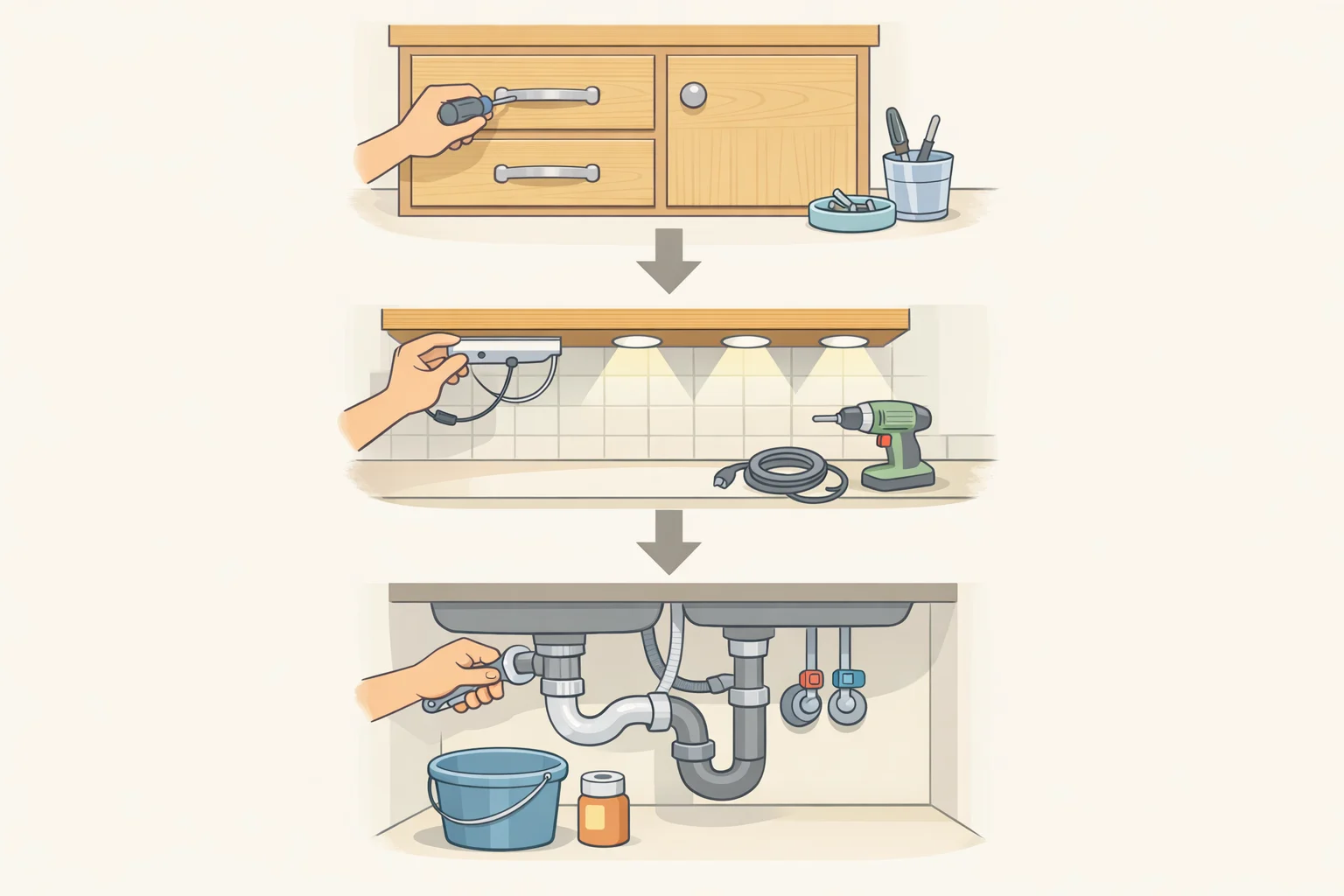
The sequence matters as much as the finish decision itself.
Cabinet hardware first. Pulls and knobs repeat across the room, which is exactly why even a modest finish change registers as a significant visual shift. No plumbing, no electrical, no professional installation. Cabinet hardware is the highest-return, lowest-effort entry point for any finish refresh, Grand Junction Sentinel noted. Lighting fixtures follow: they function as focal points that set the room's metallic tone at eye level. Plumbing comes last, given installation demands and proximity to every other finish in the kitchen.
The mixed-metals formula is straightforward. Limit the room to two primary finishes and let each appear at least twice. Repetition is what makes a pairing read as deliberate rather than accidental. One finish carries the dominant surfaces; a second introduces contrast through hardware or lighting. Designers at Pamela Lynn Interiors describe this as structured, not random, per Grand Junction Sentinel. In practice: brushed or polished nickel as the dominant pull-and-faucet finish, warm brass or matte black in lighting. Or the reverse, depending on what the room already contains.
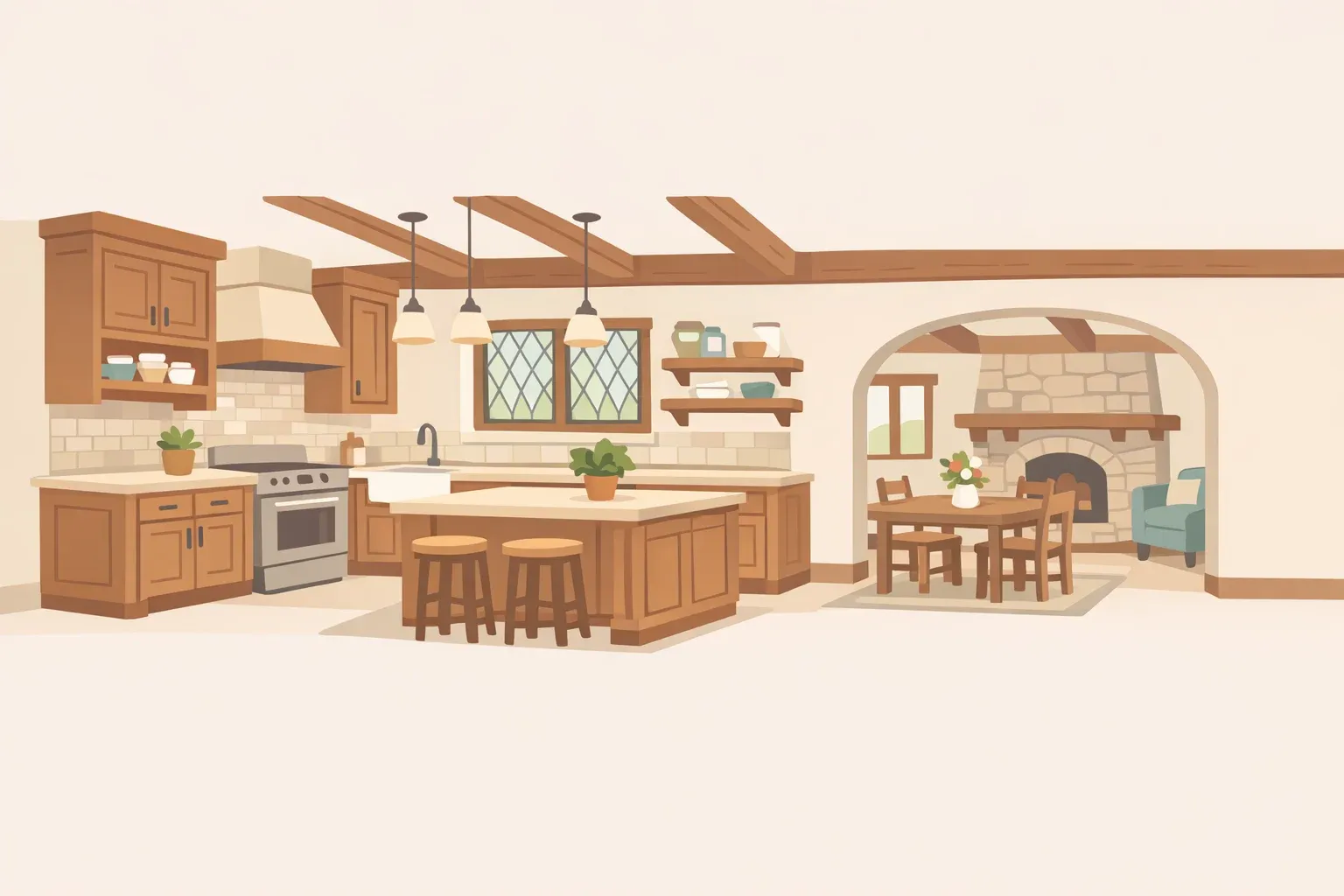
One mistake worth naming explicitly: using any highly reflective finish as the all-over choice in a hard, white kitchen with no warm materials to offset it. Designer Allison Handler's approach is instructive pair chrome or polished nickel hardware with marble, terracotta, and wood to "tone down the starkness" of the material so the finish doesn't take over, House Beautiful reported. Matte textures and wood tones absorb light in a way that lets metal finishes integrate rather than compete, per Grand Junction Sentinel. If the kitchen is an all-white, surface-heavy room with no organic materials, address that first. A wood shelf, a stone backsplash, a textured rug. Then introduce the finish.
Before you order: three practical checks
Multiple designers across multiple sources converge on the same underlying preference: finishes that feel grounded and architectural rather than declarative. That consensus is durable enough to inform a hardware purchase that needs to hold up for a decade, and it's consistent enough to treat as direction rather than trend.
Three checks before committing to any nickel finish:
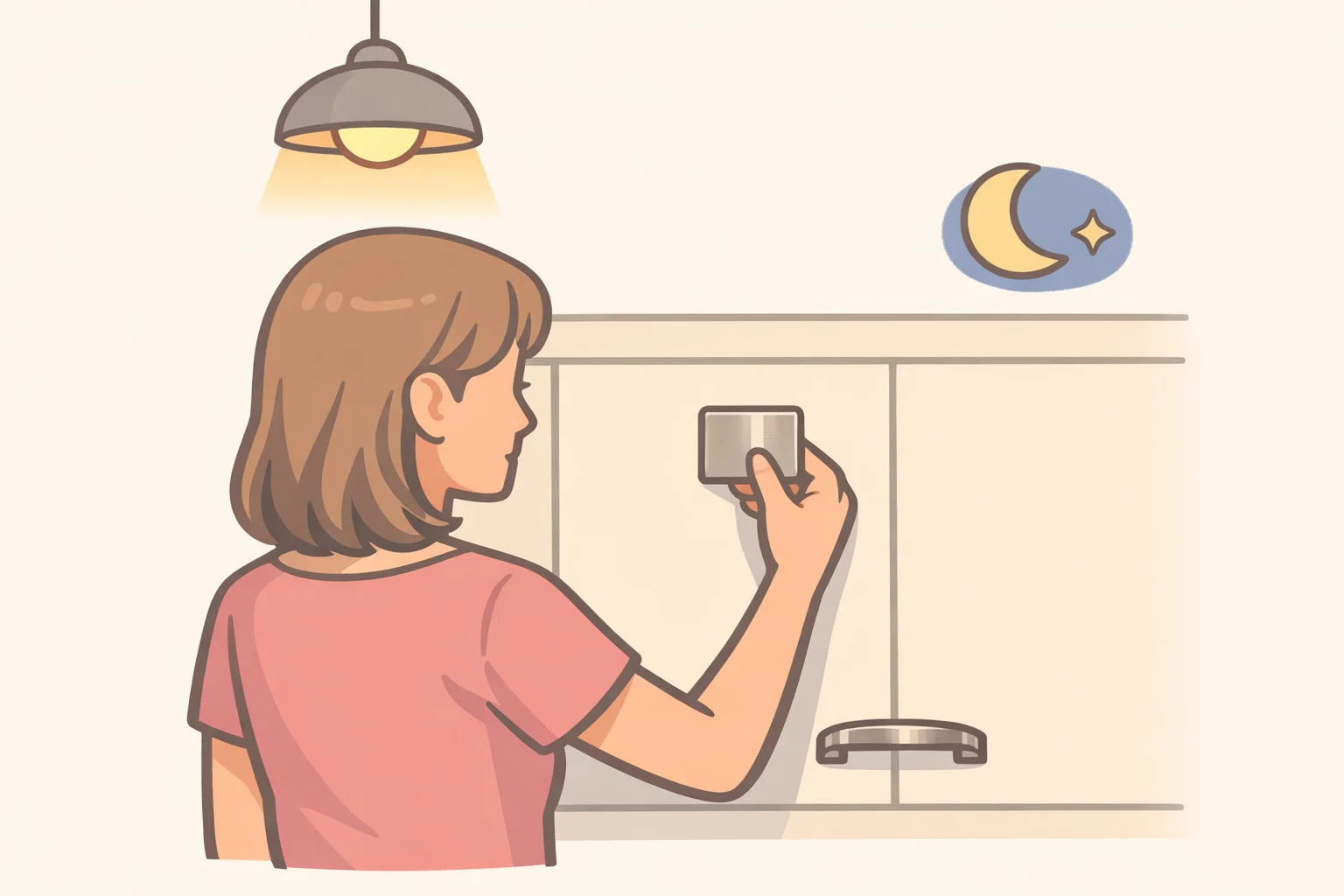
- Test a sample against your cabinet color in evening light. Nickel finishes read differently depending on the light source. What looks crisp at noon can feel stark at 7 p.m. Order a pull before buying a full set.
- Verify finish consistency across all three contact points. Pulls, faucet, and pendant light from three different manufacturers can drift in tone even within the same "brushed nickel" category. Physical samples matter more than screen swatches.
- Confirm the room has warm materials before introducing a polished or highly reflective finish. Wood, stone, warm paint, or textured tile all give a cooler metallic finish something to work against. Without them, brushed nickel is the safer starting point same tonal range, less reflectivity to manage.
Start with cabinet hardware regardless of which finish you land on. See what the room tells you, then let lighting and plumbing follow from what you learn. The warm, material-rich kitchen that most homeowners have right now is precisely the context where cooler nickel finishes do their best work not by announcing themselves, but by sitting quietly alongside everything that's already there.



Comments
Be the first, drop a comment!