




Crown Molding Alternatives: When to Switch and When to Keep It
The debate over crown molding isn't really about crown molding. It's a more specific argument about proportion, and what happens when a detail designed for tall, formal rooms gets installed in spaces that can't support it. For anyone weighing crown molding alternatives, the problem usually starts the same way: a room that feels smaller than it should, with a hard horizontal line at the ceiling doing more harm than good.
A 4-inch crown profile creates exactly that kind of visual break, and in a room with 7- to 9-foot ceilings, that loss of perceived height is immediately noticeable, according to House Digest. Add white trim against a colored wall and the compression gets worse. Meanwhile, most of what's available at the home improvement store, MDF, PVC, polyurethane, foam, tends to warp, chip, and discolor over time, and designers have been blunt about the quality gap: Loren Kreiss, CEO and creative director of Kreiss, told House Digest last fall that "almost everything on the market is trash that lacks authenticity and value."
That's the pressure driving the current shift. Not a principled rebellion against traditional detail, but a practical response to a mismatch between the detail and the spaces where it ends up. The alternatives gaining ground aren't trendier. They're better calibrated.
This piece works through a concrete decision sequence:
- Paint first if crown already exists and the problem is contrast
- Layered wall trim for anyone renovating and working with standard ceiling heights
- Statement ceiling treatments when the budget and space support a bigger move
- Crown molding, under specific conditions, when the room and materials can actually carry it
Paint first: fix the contrast before you replace anything
The most common complaint about existing crown isn't the profile itself. It's the visual break it creates between wall and ceiling, usually because the trim is painted a different color than everything around it.
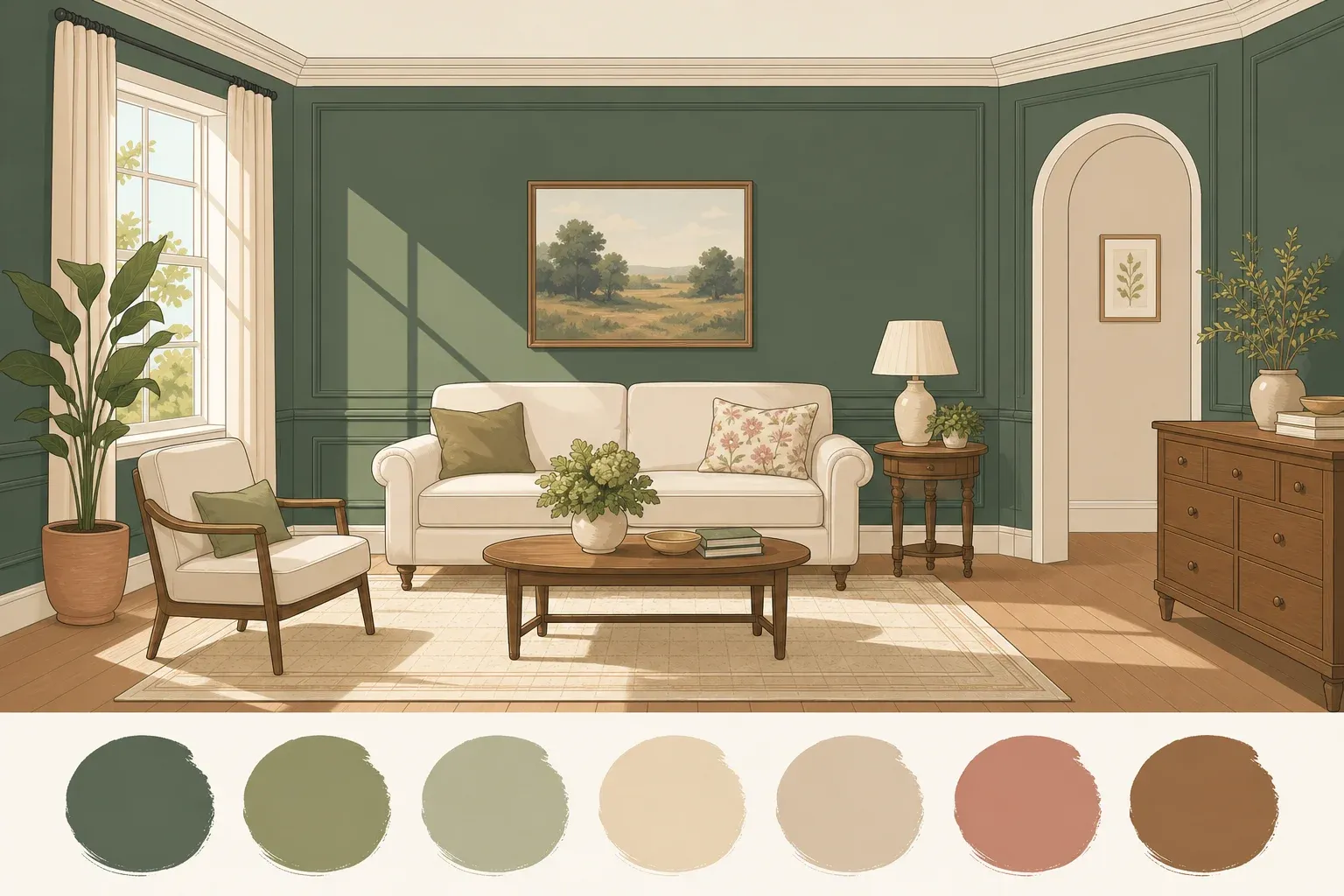
The fix is simpler than most homeowners expect. Painting crown, walls, and ceiling the same tone eliminates the hard line at the ceiling, letting the eye travel upward without interruption. House Digest calls this the color drench approach, and it effectively makes the crown disappear into the overall envelope of the room. No removal, no contractor, no disruption.
The inverse works too. Painting crown to match the wall color rather than defaulting to white trim against a colored wall softens the contrast immediately. Sharp tonal difference is the primary reason crown reads as intrusive in low-ceilinged rooms, and House Digest identifies avoiding that contrast as one of the most immediate improvements a homeowner can make.
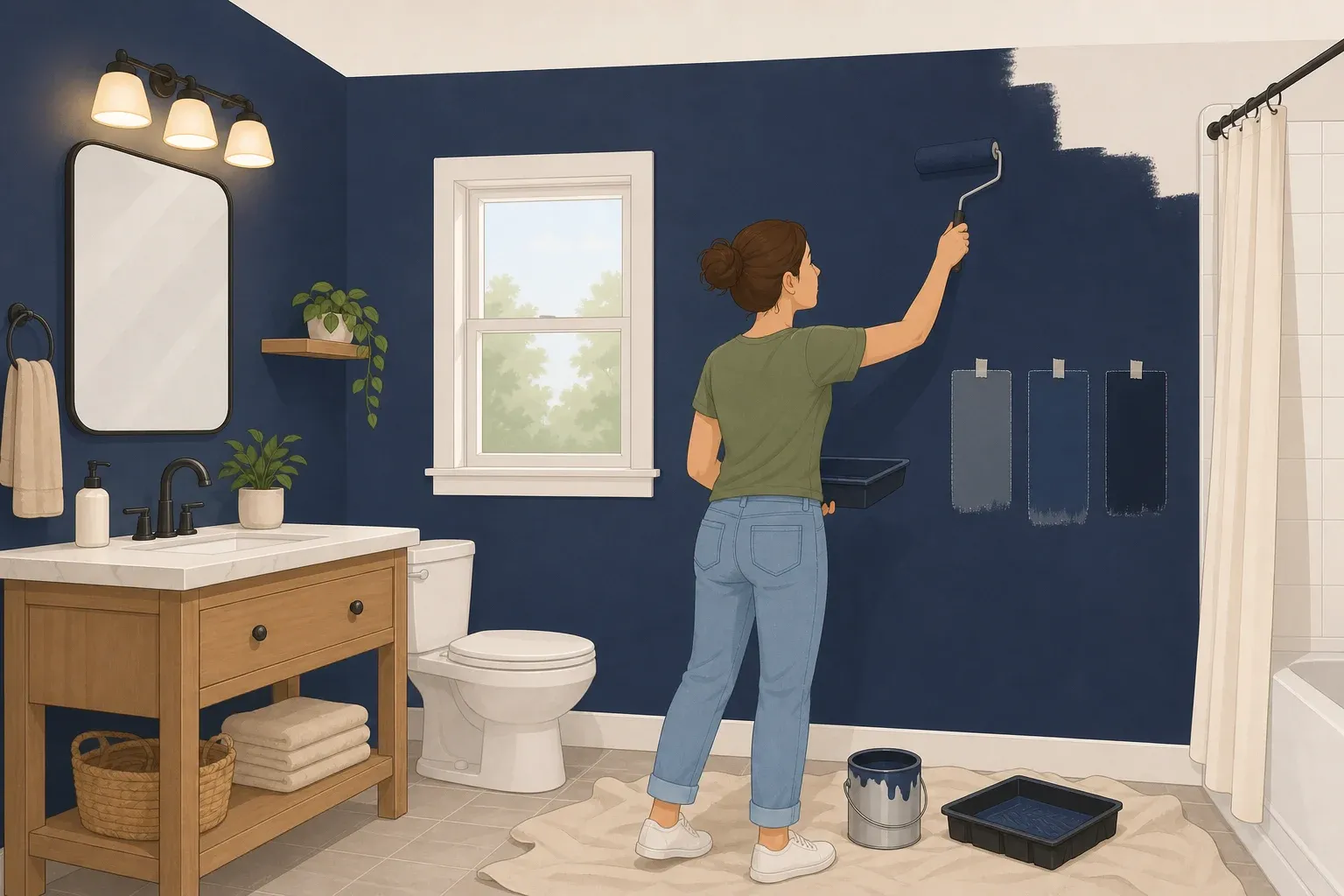
When architectural detail is limited to begin with, the ceiling itself can carry more weight than most people give it credit for. Ruth Mottershead, creative director of Little Greene, notes that ceilings are routinely painted white out of habit, but that default has a real effect on how a room feels. In spaces without dado rails or cornicing, she recommends painting the ceiling a distinct shade to draw the eye upward and create the illusion of height, per Architectural Digest. That's a paint-only intervention with genuine impact.
This logic applies to anyone who can't or won't renovate. The paint-first approach requires no tools and no structural commitment.
Best crown molding alternatives for 8-foot ceilings: layered wall trim
For anyone with renovation scope, the most widely discussed alternative in designer-led work right now isn't a single new detail. It's a hierarchy of details across the full height of the wall.
Instead of one profile at the ceiling line, rooms are being built with baseboard at the floor, chair rail at mid-wall, picture molding above, and sometimes wainscoting in the lower third. Each element uses a cleaner, simpler profile than traditional crown. The combination reads as deliberate and finished in a way that a single strip of ceiling trim rarely achieves on its own, according to Elle Decor.
Chair rails are a central part of this. Long dismissed as artifacts of 1990s builder homes, they're being reimagined with more linear profiles and paired with applied moldings for a layered textural effect that avoids the dated associations of the original, Elle Decor reports. Lauren Farrell, principal interior designer at Pacaso, describes the moment as a generation of homeowners rediscovering architectural detail: "Chair rails, picture-frame molding, decorative toe kicks, and layered crown molding are redefining traditional interiors. Rooms feel dressed."
That appetite for architectural weight is partly a corrective to the minimalism era. Homeowners are actively seeking to add structure to homes with flat, featureless walls that were never designed to carry detail, Elle Decor notes. Layered trim addresses that deficit at multiple levels simultaneously, rather than trying to solve it with a single ceiling-line profile.
Worth noting: the same Elle Decor piece shows designers also using scaled crown molding as part of this layered approach, not abandoning it entirely. The distinction is between crown installed in isolation on a standard budget versus crown integrated into a broader, proportioned trim system. The former is what most homeowners are warned against. The latter is what designers are actually specifying.
Skill and cost vary considerably within this category:
- Most accessible: Applied molding panels and picture rail. Forgiving to install, reasonable material cost, good candidate for a confident DIYer.
- More involved: Chair rail with wainscoting below. Requires careful planning, particularly around room transitions. Designer Carla Aston's standing advice is to "start your moldings so the design looks well thought out and purposeful," per House Digest, treating the whole house as a system rather than decorating one room in isolation.
- Hire it out: Crown on vaulted or angled ceilings. House Digest notes this is "usually very challenging" and prone to looking awkward where the molding won't sit flush against an irregular plane.
Statement ceiling treatments: high impact, higher commitment
For rooms where the priority is maximum architectural character rather than just finishing the space, the ceiling itself becomes the canvas. Two approaches stand out, both involving real commitment.
Coffered ceilings are the most structurally substantial move. By introducing recessed or raised sections into the ceiling plane, they create depth, shadow, and definition that operates entirely independent of the perimeter. One designer described the effect to Architectural Digest as adding "definition and architectural interest," with the coffered sections creating distinct lighting opportunities: a statement pendant at the center, smaller fixtures at the outer zones. In open-plan spaces, the same approach can define separate areas without requiring partition walls. This is a contractor-level project.
Wallpapered ceilings offer the most dramatic shift for the investment. The ceiling becomes the feature rather than the frame around it. Designer Reese describes the effect as giving the ceiling a "prominent, uninterrupted moment," per Architectural Digest, creating an atmosphere that paint alone can't produce. Skill level is moderate, more demanding than a standard wall application but achievable for a careful DIYer with proper preparation.
Neither option is well-suited to rooms with standard or low ceilings. Both work best when the space can absorb a stronger architectural statement without feeling compressed. If the ceiling height is already a constraint, the paint and layered trim approaches described above will deliver better results with fewer complications.
When crown molding still works
Crown molding isn't disappearing from designer-specified work. The conditions under which it belongs, though, are narrower than the builder-grade defaults suggest.
Designers are scaling profiles precisely to ceiling height, 2.5 to 6 inches for standard 8-foot rooms, and integrating crown within a broader trim system that includes picture molding or deeper baseboard profiles, rather than running it in isolation, Elle Decor reports. That level of fit is what separates current designer use from the installations driving the backlash.
The material question is decisive for anyone working from a standard budget. The MDF, polyurethane, and foam profiles that line the shelves at big-box stores can warp, chip, and discolor, and finding molding that combines durability with genuine architectural character is both difficult and expensive, House Digest notes. That's not an argument against crown molding in principle. It's an argument that the accessible price point is exactly the category designers are pushing back against.
Crown earns its place under these conditions:
- Ceiling height above 9 feet: proportional room for a profile with actual visual weight
- Period homes with existing architectural character: crown as part of a coherent style system, not a standalone addition
- Budget for quality materials and professional installation: the conditions under which execution can actually match the intent
- Color matched to the wall rather than contrasted: this reduces the compression effect that makes crown problematic in lower-ceilinged rooms
Skip it in new builds and gut renovations with 8-foot ceilings and standard-budget materials. Skip it on vaulted or angled ceilings, where the installation is technically demanding and the result often looks forced. And skip it in any space where room-to-room transitions haven't been planned for, because poorly resolved transitions are where budget crown installations fail most visibly, per House Digest.
What this actually means for your room
The broader appetite for architectural texture is real. Searches for patterned sofas are up 79% and interest in wall murals has risen 70%, based on Google data analyzed by Tapi Carpet & Floors, reported by Elle Decor. Crown molding is one point in a wider conversation about how rooms get their character, not the whole conversation.
The material quality problem means that for most homeowners working with a realistic budget, the accessible product is precisely the one designers have the least confidence in. Layered wall trim and deliberate ceiling treatments sidestep that problem entirely by not depending on perimeter millwork to do the work.
The useful question isn't "should this room have crown molding?" It's what the room actually needs to feel finished, given its ceiling height, existing detail, and available budget. For most contemporary homes, that question leads somewhere other than the crown molding aisle. Painted trim, a layered wall system, or a statement ceiling treatment gets you to the same destination with fewer conditions attached.















Comments
Be the first, drop a comment!