



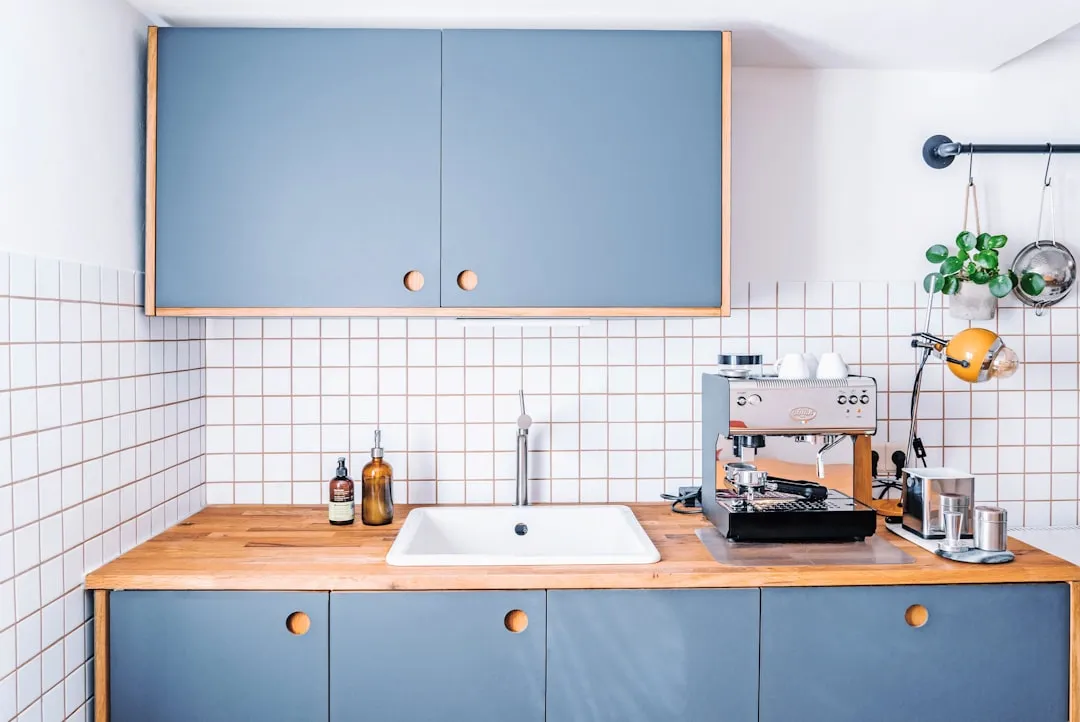
Built-In Coffee Station Kitchen Ideas: A Complete Planning Guide
More than three-quarters of homeowners undertaking a kitchen renovation now add some form of specialty built-in feature. Nearly one in four of those include a dedicated beverage station: a coffee or espresso bar built into the cabinetry rather than staged on the counter. That's according to Houzz's 2026 U.S. Kitchen Trends Study via Retrofit Home, published in January 2026 and drawn from a survey of 1,780 U.S. homeowners fielded in July 2025. The statistic points to something larger than a countertop trend: kitchens are moving toward specialized zones, and the built-in coffee station kitchen is one of the clearest expressions of that shift.
The aesthetic driving this is "café core," a design movement toward interiors that borrow warmth, intimacy, and a sense of ease from the neighborhood coffee shop. Elle Decor (April 2025) named it one of 2025's most significant design directions, defined by soft lighting, warm woods, artisanal objects, and an atmosphere built for lingering. The built-in coffee station is where that aesthetic gets useful: it brings the mood into a feature that actually solves a real kitchen problem.
This is not a French café transformation guide. It's a grounded look at a specific design feature: what it is, why it works, and what it takes to do it well across budgets ranging from a single retrofitted cabinet to a fully plumbed custom fit-out.
Why dedicated coffee stations are catching on: trend proof and the practical case
The 76% specialty built-in adoption rate from the Houzz study isn't just about coffee. It reflects a wider movement toward kitchens organized around specific tasks baking stations, pantry towers, butler's prep areas rather than a single undifferentiated workspace. Beverage stations appear in 24% of renovating households, outpacing baking stations (9%) by a significant margin. The coffee station is one node in a larger system, but it tends to be the most visible and the most daily-use of the bunch.
The clutter argument is the strongest one. Among homeowners who add hidden adjacent storage like butler's pantries the closest structural analog to a concealed coffee station 30% cite keeping clutter out of sight as their primary motivation, and 22% point to gaining additional storage, per the same Houzz data. A dedicated station addresses both simultaneously: it consolidates the machine, grinder, mugs, beans, and accessories into one footprint, then hides them behind a closed door between uses. Le Guide Déco (March 2026) describes the concept as concentrating all coffee activity in one dedicated cabinet rather than dispersing it across the countertop.
The emotional case deserves equal attention. Interior designer Anne Sage, quoted in Good Housekeeping (December 2025), connects café core directly to the disappearance of "third spaces" the public cafés, bookshops, and community rooms where people used to gather informally and frames home coffee stations as a response to that loss. A space designed for the ritual of making a drink becomes a small act of reclaiming that feeling. That's the emotional engine beneath what is, at its core, a storage solution.
The trend has real traction among renovators, but it's not limited to them. A renter working with one spare cabinet and a homeowner planning a gut renovation are both viable candidates. The scale of intervention differs enormously; the underlying logic is the same. That distinction runs through the rest of this article.
What qualifies as a true built-in station and how to plan one
The door system is what makes it a built-in coffee station
What separates a built-in coffee station from a coffee corner is the ability to close it off completely. The most capable door systems are folding-sliding or pocket-style: the panels fold and slide into recesses on either side of the cabinet opening, leaving the full working area unobstructed and the exterior face smooth and uninterrupted when closed. Le Guide Déco (March 2026) describes this as creating a clean, simplifyd surface that makes the station effectively invisible between uses. Lift-up hinged doors are a lower-cost alternative suited to taller upper cabinets, though less architecturally clean when open.
How to build a hidden coffee station in a kitchen cabinet: interior planning
The sequence of interior components matters for daily use. At a minimum, a functional station needs:
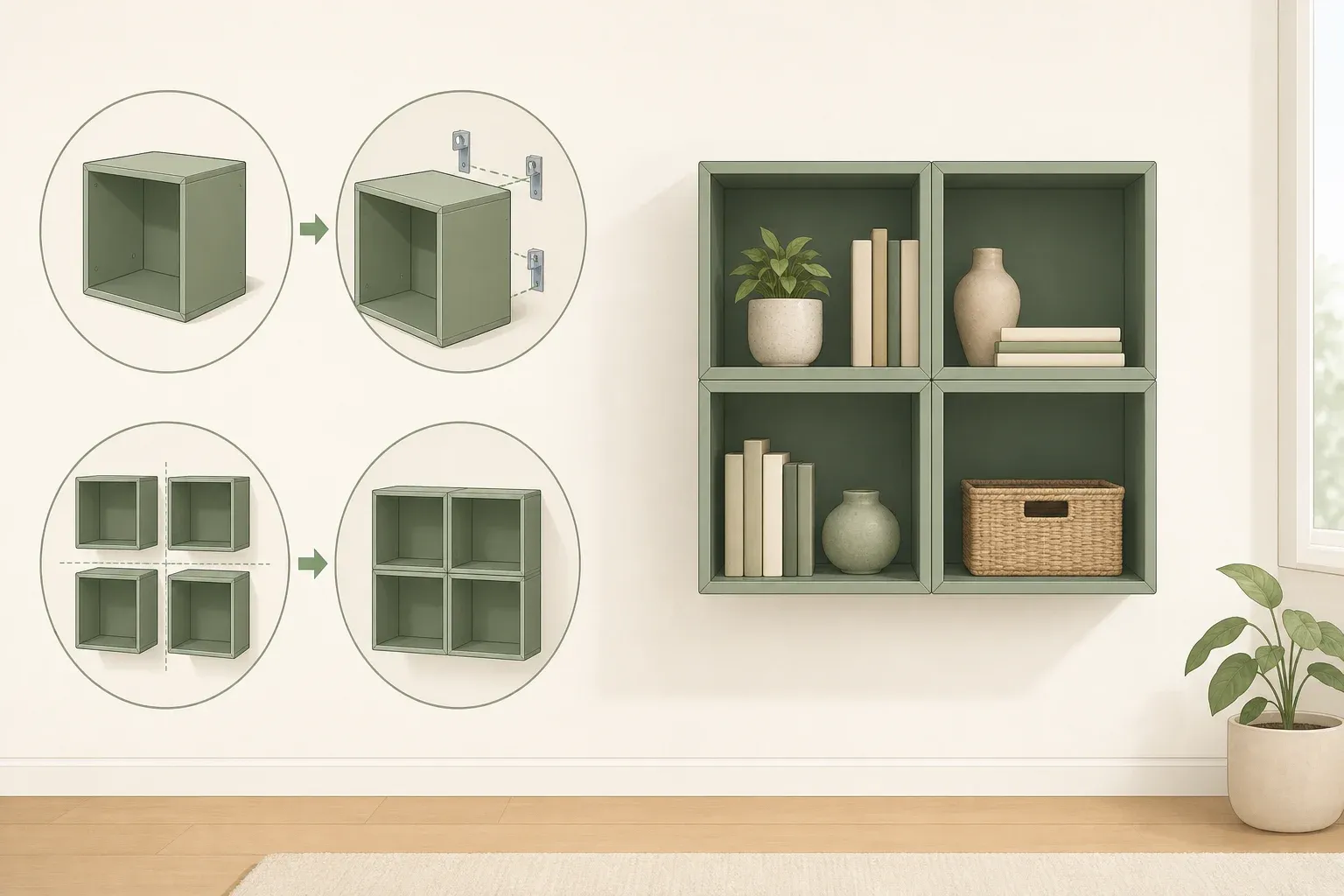
- Shelves at varied heights fitted to the specific machine and grinder
- A pull-out or fold-down work surface for prep tasks like measuring, pouring, and frothing
- Shallow drawers for small accessories: filters, spoons, scales
- A finished backsplash on the rear panel Le Guide Déco (March 2026) suggests marble, mirror, wood panel, or adhesive tile to make the interior feel considered rather than raw
LED strip lighting under the shelves is the single upgrade with the highest visual return.
Before you commit: five measurements and checks
Get these resolved before designing the interior. Skipping any one of them tends to create problems that are expensive to fix after the cabinet is built.
- Cabinet dimensions: Measure the interior width, depth, and height precisely then check those numbers against your machine with its lid fully open. Many espresso machines need 15 to 20 centimeters of clearance above to fill the water reservoir, and that headroom disappears fast inside a standard upper cabinet.
- Outlet location: An outlet inside or immediately adjacent to the station is non-negotiable. Note where the nearest one sits now, and whether adding a new location requires an electrician (it almost always does).
- Machine weight: Professional-grade espresso machines can exceed 15 kilograms, per Le Guide Déco (March 2026). Shelf brackets and cabinet bases need to be rated for that load before anything goes in.
- Steam and ventilation clearance: Espresso machines generate heat and steam. An enclosed cabinet with no airflow will shorten appliance life and may create a moisture problem for wood interiors. Factor in whether the location allows for passive ventilation or whether the doors can stay cracked during use.
- Carry path to the water source: Until the station has its own plumbing, someone is carrying water to it and coffee to the sink. Walk the path. If it cuts across the main prep zone, a different cabinet location is worth considering.
A note on adding water
The most advanced installations integrate a dedicated water point a tap and drain inside the station, eliminating the need to carry water back and forth and simplifying cleanup. Le Guide Déco (March 2026) frames this as the premium tier of the feature. It requires plumbing access and a professional, but it's worth flagging for anyone doing a full renovation where walls are already open.
Placement by kitchen type
The end of a countertop run works best for most kitchens: typically near an existing outlet, close to the sink, and easy to access without disrupting the main prep workflow. A section of a pantry tower offers more vertical storage. Corner cabinets are generally the worst choice difficult to access, awkward for folding doors, and the geometry actively fights the pocket-door systems that make the hidden effect work.
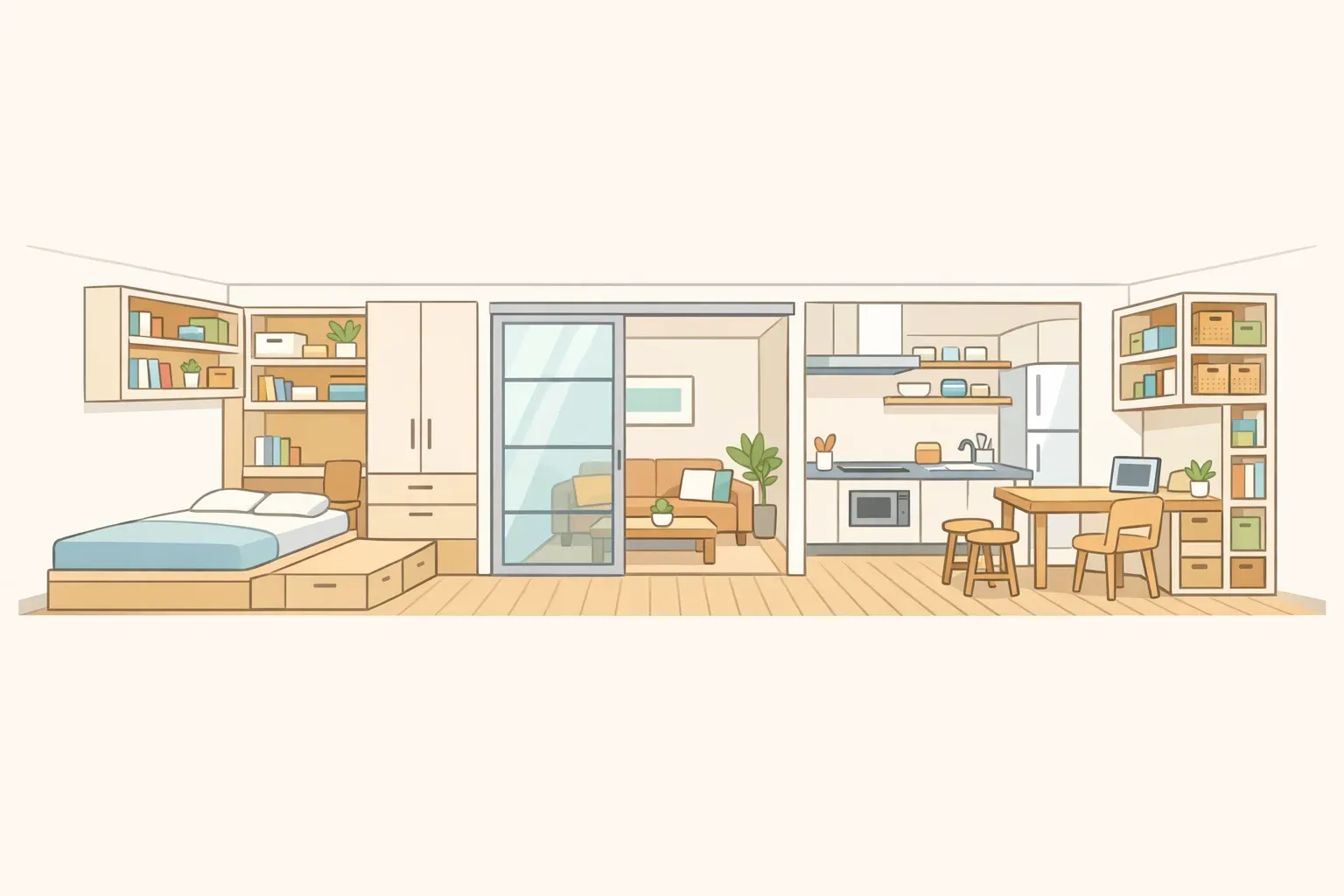
For tight kitchens, centralizing coffee activity in one defined zone tends to create a sense of order that makes the space feel larger than it is. That's the same spatial logic behind Lagoa Architecture's reorganization of a 484-square-foot Paris apartment covered by Architectural Digest in November 2025: concentrate the most-used functions in a single, well-designed area rather than distributing them across a fragmented floor plan.
The styling layer: built-in coffee station kitchen ideas that hold up over time
Warm materials over cold ones
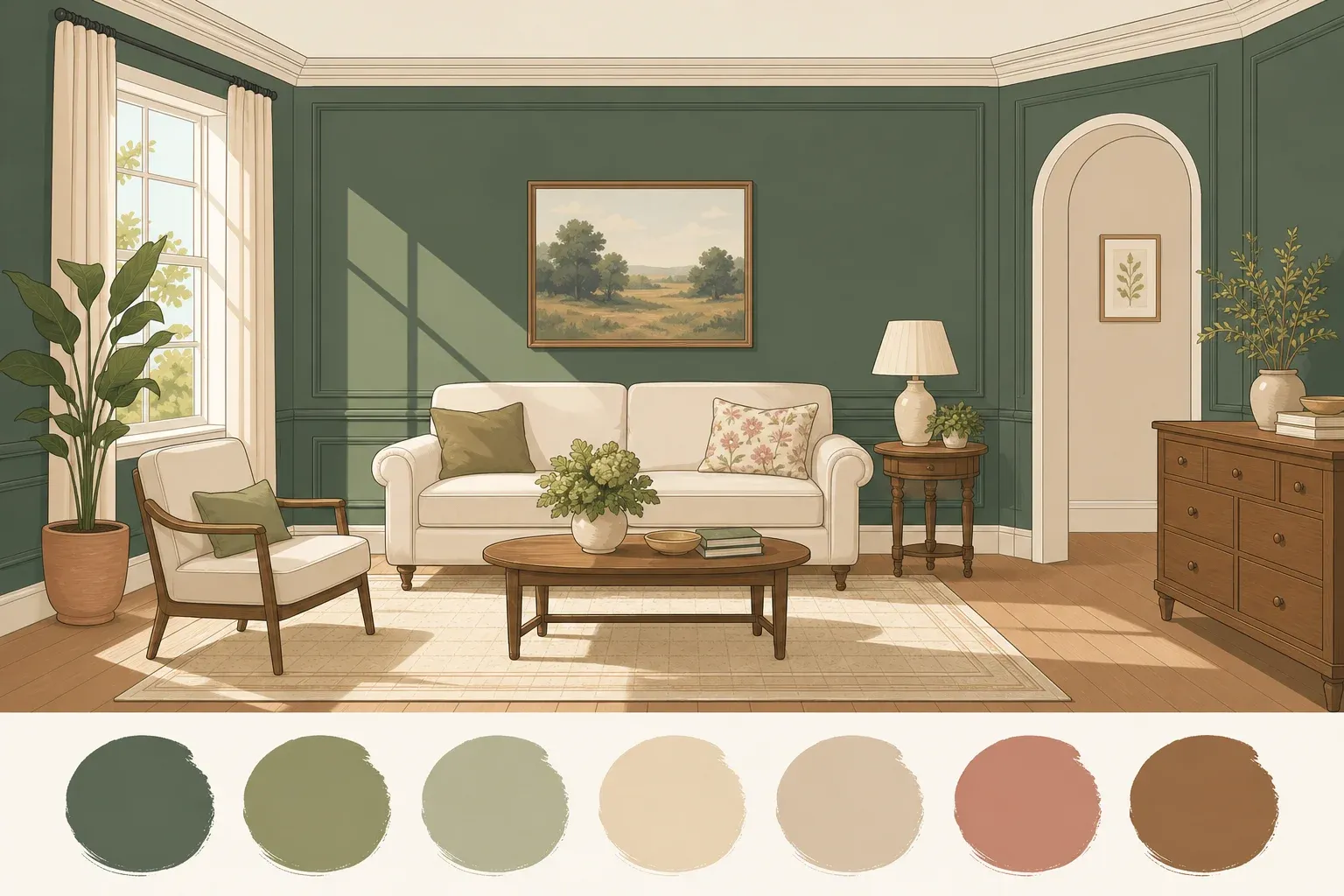
The café-adjacent mood comes from material warmth, not a specific color palette. Le Guide Déco (March 2026) recommends wood, marble, and brushed steel for the station itself. Stainless steel and high-gloss white finishes default to "commercial kitchen" they work against the effect. The Paris apartment documented by Architectural Digest (November 2025) used beechwood cabinet fronts with green-stained panels alongside porcelain stoneware countertops: durable, specific, and warm without being fussy. The material logic worth borrowing is warmth plus specificity finishes that look chosen, not defaulted to.
One practical note: brushed or matte finishes on hardware and cabinet fronts hide fingerprints far better than polished ones. A station that looks good after a week of daily use is more valuable than one that photographs well on day one.
Soft lighting is structural, not decorative
Elle Decor (April 2025) identifies soft lighting as a defining characteristic of café-core interiors not overhead task lighting, but warm ambient light that makes a space feel like a destination. Inside the station, LED strips at 2700 to 3000K serve dual purposes: functional illumination when the doors are open and a glow that reads as intentional from across the room. The difference between a well-designed alcove and a utility shelf with a light strip attached is almost entirely about color temperature and placement. Strips tucked under shelves cast light downward onto the work surface; strips mounted at eye level wash out the effect entirely.
The visible display layer: curated, not cluttered
A coffee bar cabinet works best when it manages a specific tension: the appliances are hidden, but some things are meant to be seen. Mugs on an open rack, beans in a ceramic canister, a small chalkboard listing go-to drinks these are the details Good Housekeeping (December 2025) and Elle Decor (April 2025) both identify as carrying the aesthetic. Three to five deliberately chosen objects is the practical ceiling. Beyond that, the display starts reading as clutter, which defeats the purpose of building a hidden station in the first place.
The station hides what creates visual noise the machine, cords, grinder while leaving deliberate room for a small number of objects worth looking at. A laminated instruction sheet, a tangle of accessories, or twelve mugs when four would do: these turn a considered space back into a shelf.
Connecting the station to the room around it
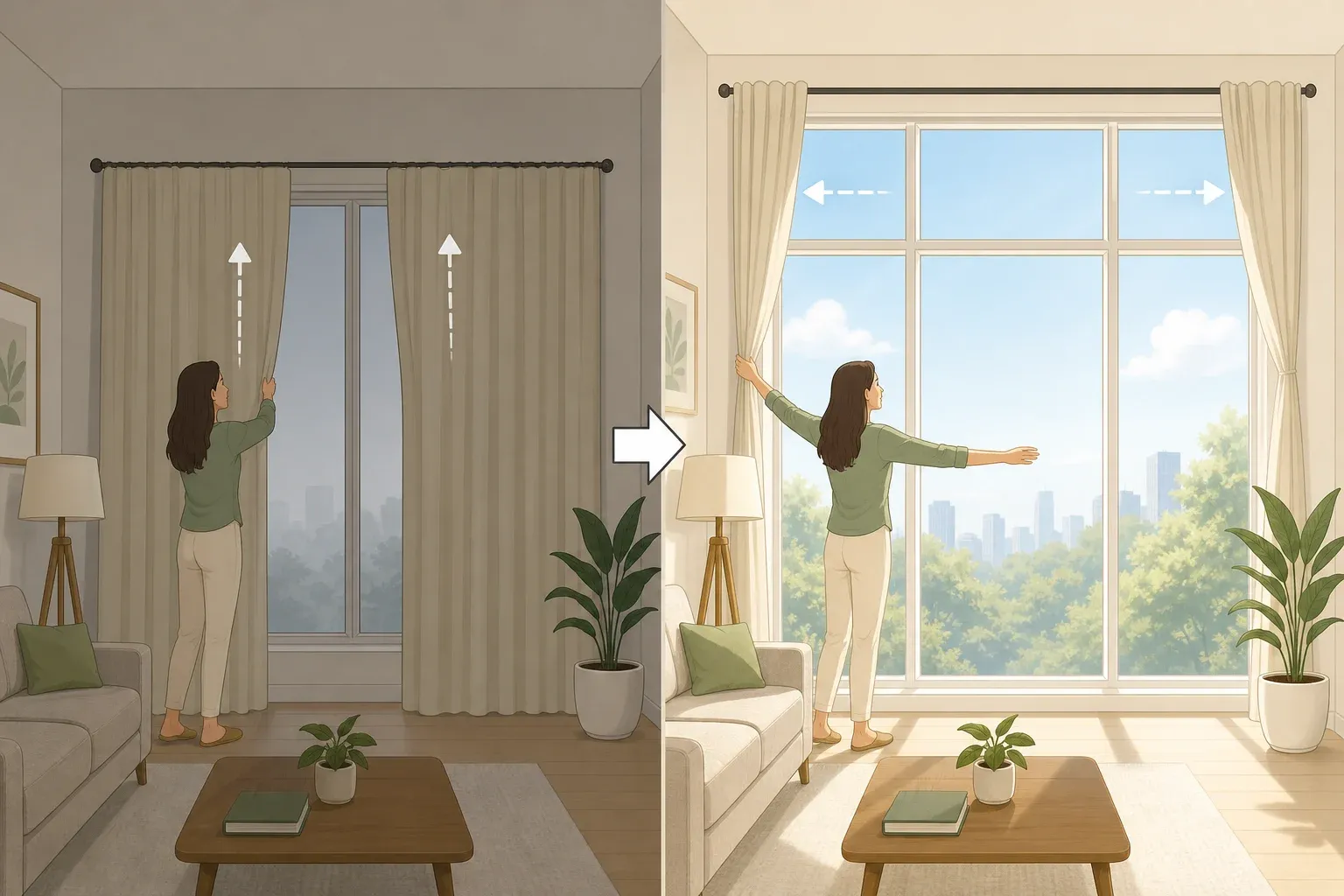
The built-in feature doesn't have to do all the work alone. A few additions extend the café feeling without requiring a separate design project: partial-height café curtains on a nearby window (they preserve light while adding intimacy, per Good Housekeeping (December 2025)); a small round table nearby; or a single chair positioned to face the station. None of these require a renovation, and none of them are requirements they function as supporting details, not the main event.
Choosing your level of intervention: a decision framework for the appliance garage coffee station and beyond
The options below are organized by scale, so readers in different situations renters, small-space owners, full renovators can identify where they fall and what's realistic.
Tier 1: Retrofit an existing cabinet (low cost, no structural work)
Pullout shelves installed into an existing cabinet, peel-and-stick LED strips, and a stylized interior backsplash adhesive tile works can create a functional kitchen coffee station idea without touching the cabinet box itself. Le Guide Déco (March 2026) estimates this level at roughly €300 to €600 in materials. It won't have the architectural finish of a pocket-door system, but it consolidates the workflow and creates an intentional zone. Best for renters, small kitchens, or anyone testing the concept before committing further.
Tier 2: Purpose-built station with specialty doors (mid-range, may require professional help)
A dedicated cabinet section with folding-sliding or pocket doors, custom interior shelving sized to specific appliances, and a proper backsplash treatment. This is where the hidden effect becomes real where the station disappears completely when not in use. Electrical work for outlet placement and structural reinforcement for heavy machines moves this into professional territory. Le Guide Déco (March 2026) puts cabinetry and hardware at approximately €1,500 to €4,000 before appliances. Budget separately for electrical it's rarely included in cabinet quotes and rarely cheap.
Tier 3: Full custom integration with water point (renovation-level commitment)
A plumbed station with a dedicated tap and drain, integrated into a broader kitchen redesign. The 87% of homeowners who hire professionals for kitchen renovations, per Houzz via Retrofit Home (January 2026), are largely doing projects at this scale. It's the most capable version of the feature and the most expensive. Worth considering only when walls are already open and plumbing is being moved anyway.
Most readers are best served by Tier 1 or Tier 2. The feature doesn't require a renovation to work. It requires a plan: the right cabinet location, the right door system for the budget, and a clear picture of the electrical situation before anything is built.
One cabinet, measurable difference
The built-in coffee station has traction because it solves a real problem kitchen clutter and fragmented workflow while delivering something harder to quantify: a space that feels designed for the morning rather than assembled around whatever counter happened to be available. Nearly one in four homeowners undergoing kitchen renovations now includes some form of beverage station, per the 2026 Houzz study. That's mainstream adoption, not a niche aesthetic.
The feature scales down. A retrofitted cabinet with pullout shelves and LED lighting achievable for a few hundred euros in materials, per Le Guide Déco (March 2026) captures most of the functional benefit and a good portion of the aesthetic one. A full custom build with pocket doors and plumbing captures the rest. The gap between those two outcomes is large in cost and small in daily experience.
Anne Sage, speaking to Good Housekeeping (December 2025), describes the café look as "perennial and enduring" not because it's fashionable, but because it's rooted in something that doesn't change: the desire to sit somewhere pleasant and actually enjoy what's in the cup. A well-designed coffee station serves that desire every morning. The trend will cycle. The cabinet stays.
The broader direction in kitchen design specialized zones, hidden appliances, spaces organized around how people actually live rather than how kitchens were traditionally laid out is accelerating, not reversing. The coffee station is a small, achievable entry point into that approach, and one of the more honest investments a kitchen renovation can make.
Comments
Be the first, drop a comment!