



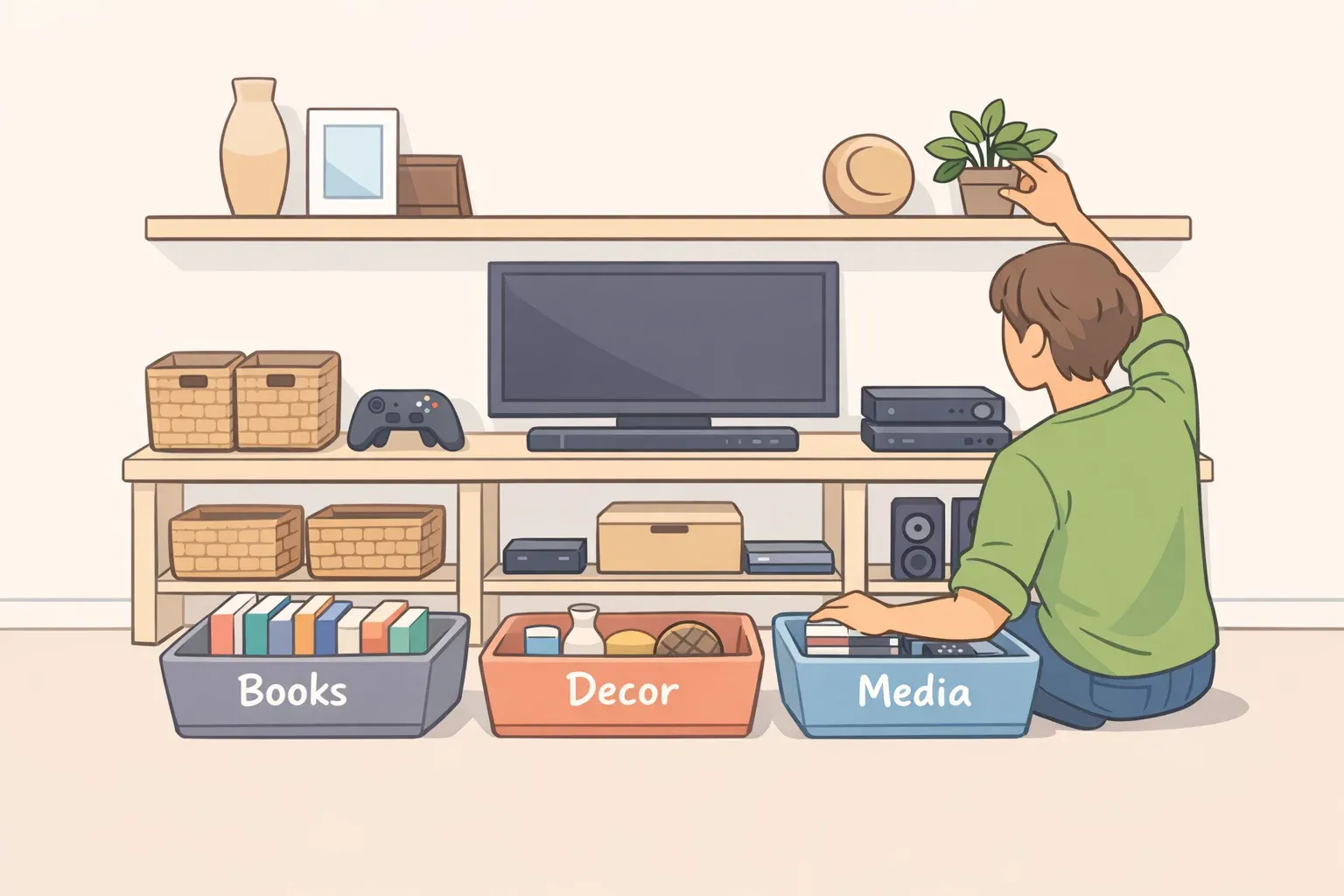
Most living rooms don't get cluttered all at once. Open shelving fills up gradually — a few books, a travel find, the remote, the charger, the decorative bowl that doesn't have anywhere else to live. At some point, the room stops feeling like somewhere to decompress and starts feeling like a task waiting to happen. The shelving didn't announce the change. The accumulation did.
This guide covers why living rooms are unusually sensitive to open shelving, how to sort what's currently on those shelves into categories with clear destinations, and where to put the personal items the living room can't comfortably hold. By the end, you'll have a working system for deciding what stays visible, what gets concealed, and what belongs somewhere else entirely.
Why the living room handles open shelving worse than other rooms
According to Inkl, people spend an average of four and a half hours a day in the living room. It's the room built around recovery — shoes off, couch, done — which makes it more sensitive than other rooms to anything that keeps the brain ticking over. Coffee cups, cables, decorative objects, clothes waiting to be put away: all of it registers even when you're not looking directly at it. That low-level processing can leave people feeling restless, stressed, and unable to concentrate without quite knowing why.
Open shelving isn't the problem by itself. The problem is that the living room is where it most commonly ends up by default, and also the room least equipped to absorb the noise.
DC-based interior designer Caroline Winkler says, "the biggest way to help yourself out in the living room is to minimize your open shelving and open storage." Her position isn't that open shelving should disappear entirely; she's clear that "some open shelving is great" and can break up too much solid cabinetry effectively. The issue is quantity. Too much, she says, "will immediately exhaust your eye and make the space feel visually busy." Both large and small living rooms will end up feeling claustrophobic without the right balance of open and concealed storage, Inkl notes.
Zara Stacey, content editor at Homes & Gardens, describes the same tension from a different angle. She values bookshelves for displaying paperbacks, houseplants, and artwork, and sees open display as a way to make a room feel personal and lived-in. But she also agrees that too much on display makes genuine relaxation harder, and her own preference runs toward clean lines and restrained palettes.
A useful diagnostic is visual weight. Ask where the weight is concentrated in the room and whether breaking it up would make the space feel lighter. Designers frame this in terms of positive and negative space: the gaps and contours around objects on a shelf are what allow each item to register on its own terms. Pack shelves too densely, and that breathing room disappears, and so does the distinction between things worth looking at and things just taking up space.
One caveat: tolerance for visual clutter varies. Committed maximalists may well prefer more on display, and that's a legitimate position. This guide is for readers whose living rooms feel busier than they want them to.
Too much open shelving? Start with a sort
Before anything moves, you need to know what's actually on the shelves and what it's doing there. Most open shelving accumulates three types of things: objects that genuinely look good, objects there for quick access, and objects there because nowhere else was obvious. Only the first category earns visible space in a living room.
Sort everything currently on display into four groups:
Decorative and high-impact (travel finds, a curated collection, meaningful artwork): eligible for living-room display, but edit down and space out
Daily-use but visually noisy (remotes, cables, chargers, everyday items): move into closed storage
Personal and intimate (books you're currently reading, photographs, small sentimental objects): candidates for bedroom relocation
No clear role (overflow, duplicates, things waiting to be sorted): remove from display entirely
For the daily-use category, Winkler recommends bookcases and credenzas with doors as the primary tool. Closed storage doesn't require extra floor space, but it immediately removes those items from your visual field. If full concealment feels too stark, cabinetry with fluted glass is a workable middle ground: the contents are faintly visible but softened, which is particularly useful near a TV, where competing visual elements are already fighting for attention.
The Airbnb test is the fastest way to see the room clearly. Look at the space the way a first-time guest would, detached from the familiarity that makes clutter invisible to the people who live with it. Items that read as out of place are the first to sort.
After the sort, stand at the main entry point and check where your eye goes. If it bounces between multiple competing surfaces, the remaining open display still needs thinning. If it settles on one or two focal points, the balance is working.
Don't overcorrect. A living room with nothing on display feels stripped and cold. The goal is a calmer room, not a blank one. Winkler's framing is always about balance: open shelving stays, it just stops being the dominant mode.
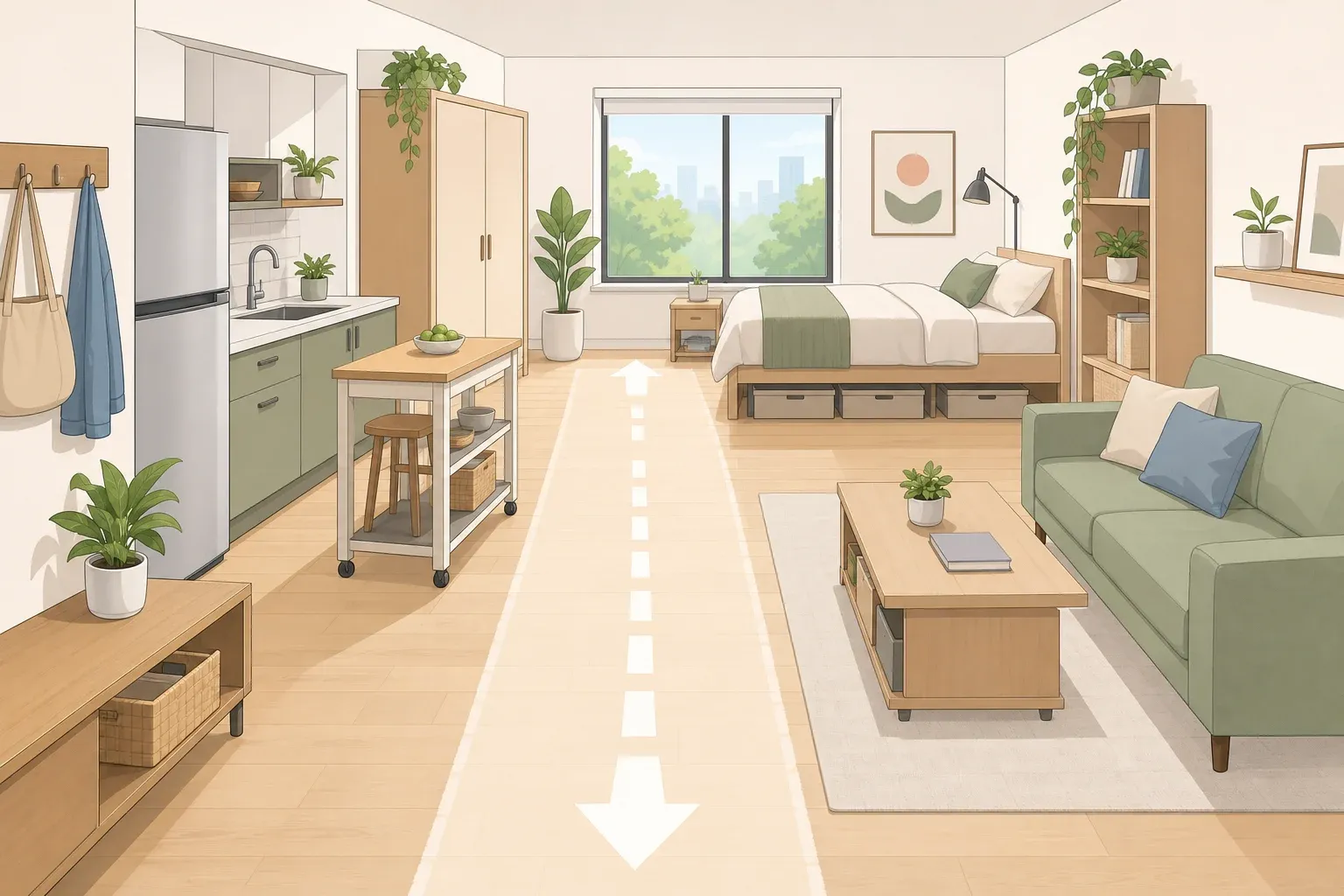
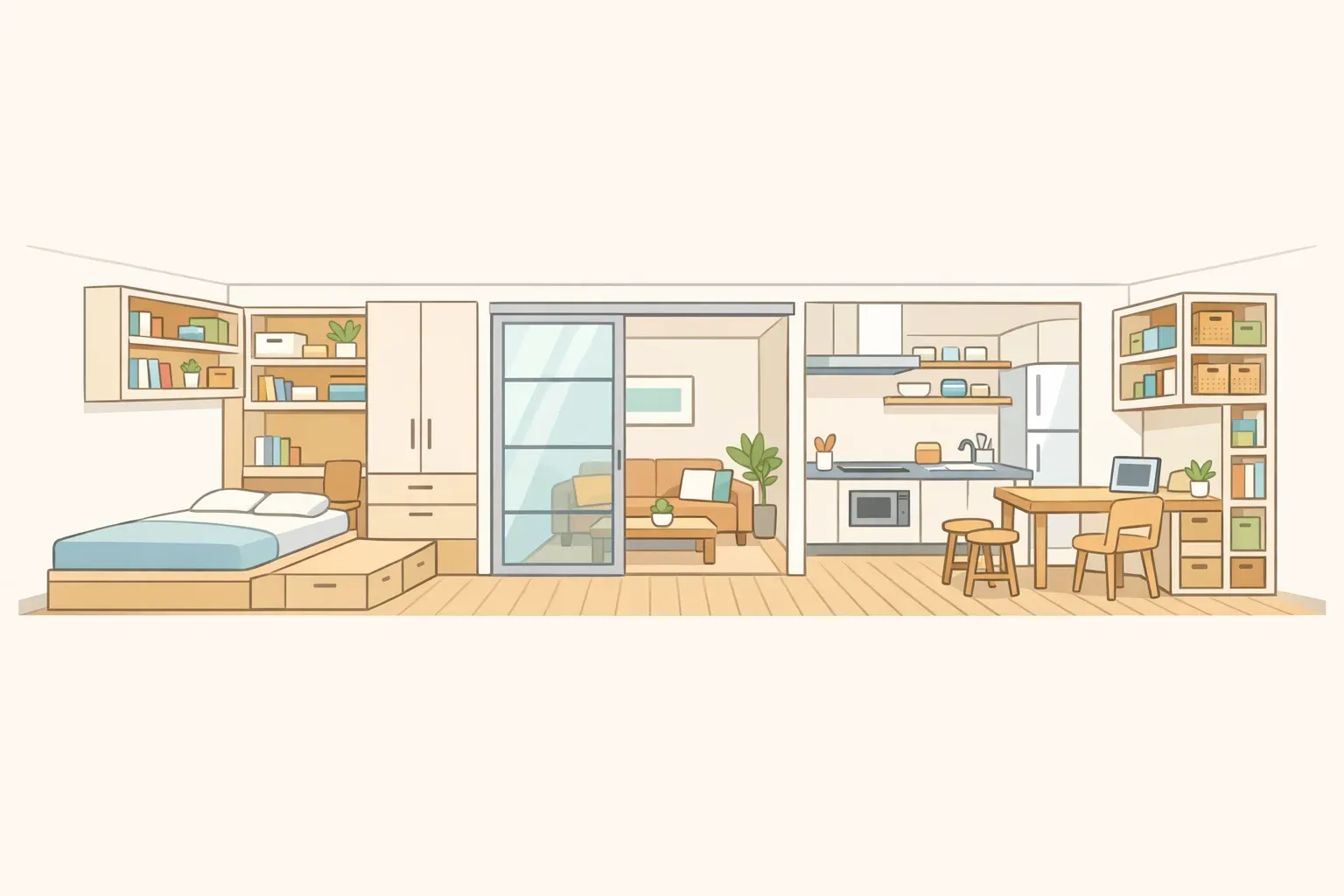
For readers in small apartments or studios where a separate bedroom isn't available, the priority is the same but simpler: fewer items on display, more space around each one. Relocation isn't required for the logic to work.
Where to put the items you still want visible
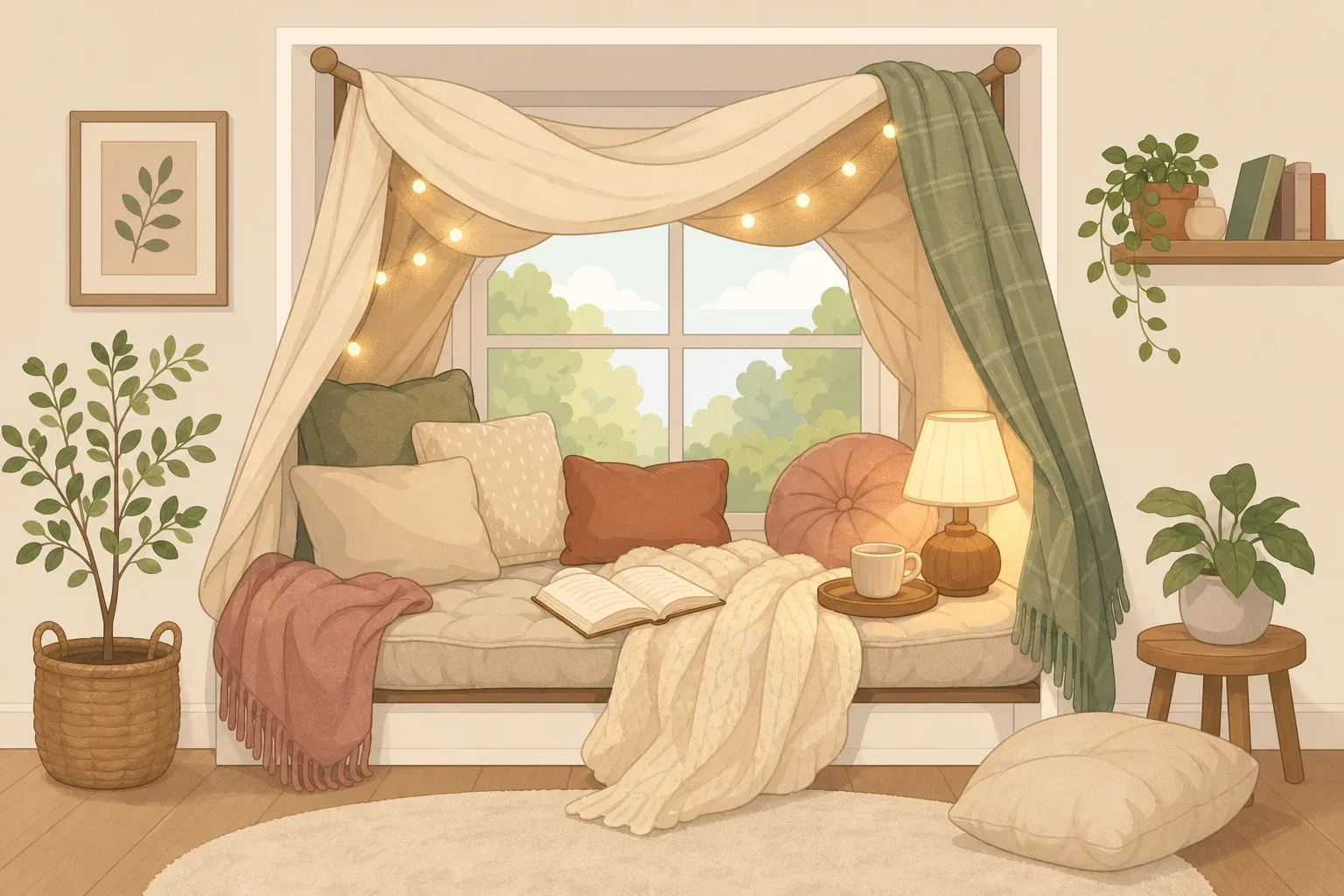
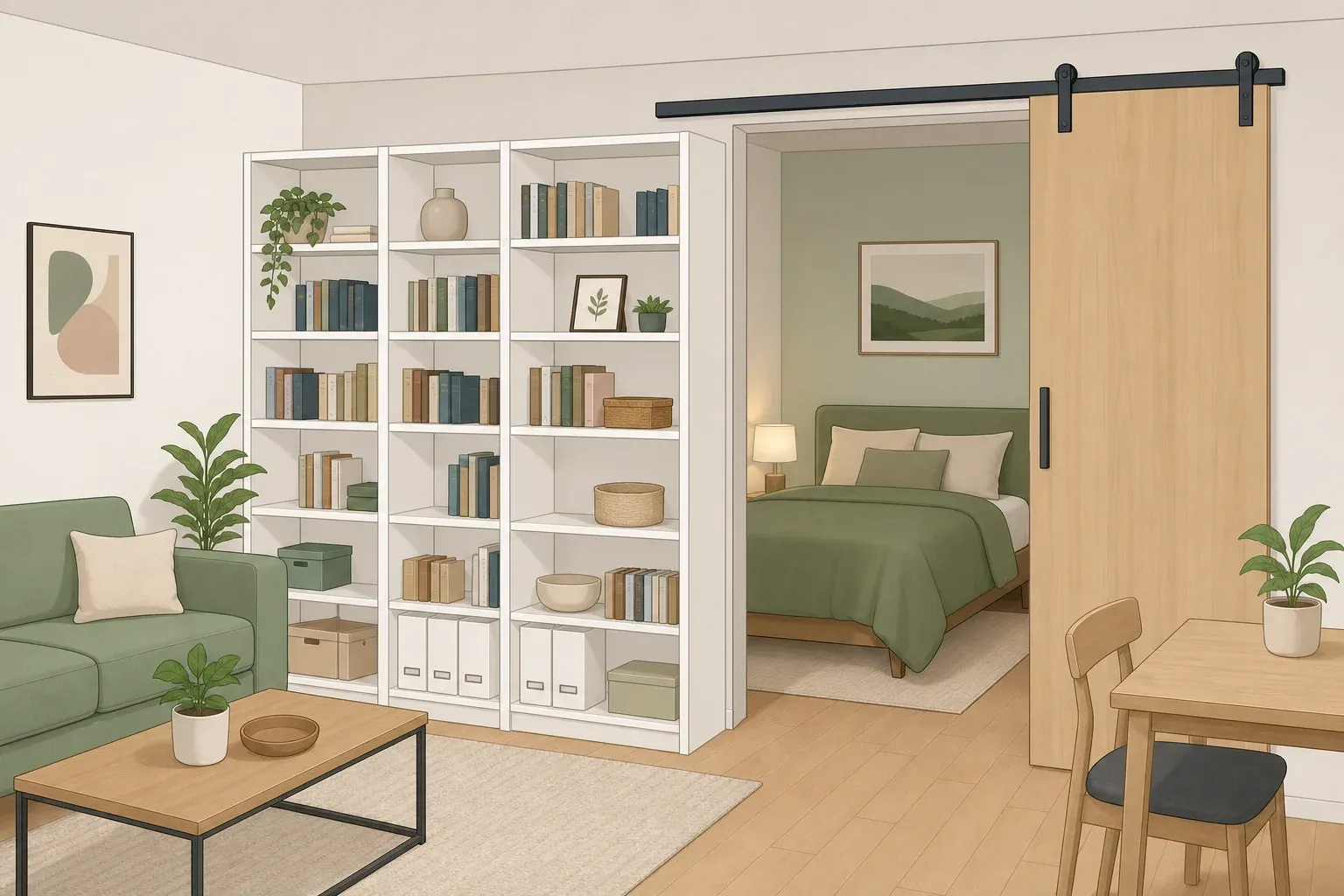
Once the sort is done, the personal and intimate category still needs somewhere to go. The bedroom makes practical sense for this because the room's function is different enough that personal display sits more comfortably. It's where people read at night, wind down, and keep things that matter to them.
Stacey's observation that bookshelves are "perfect for showing off your favorite paperbacks, houseplants and artwork" and help a room "tell your story," fits a private room more naturally than a shared living space. Intimate objects tend to feel purposeful in a bedroom rather than distracting. That logic follows from what each room is actually for.
The same visual-weight discipline applies here as everywhere else. Gaps between objects are what allow each one to register; display shelving only works when it has room to breathe. Edit rather than fill. Group things by height or material if it helps, but the main rule is a shelf with fewer, well-spaced objects reads better than one packed to capacity.
Two formats work particularly well for personal display in the bedroom:
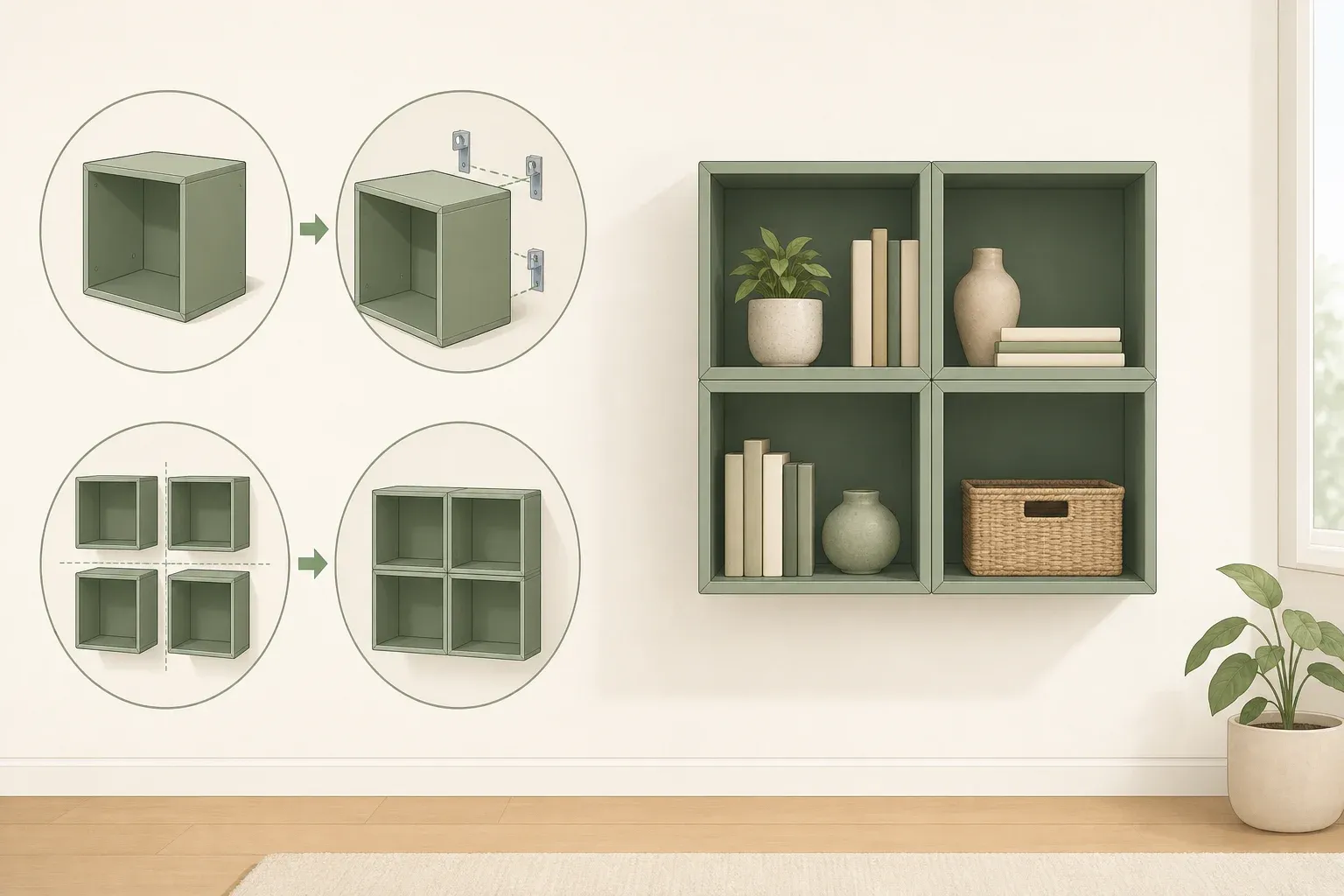
Wall-mounted shelves above or behind the bed. A simple shelf unit at headboard height keeps current reads, a lamp, and a few objects within reach without requiring extra furniture. Items that would register as noise on a living-room shelf — a small stack of books, a framed photo, a trailing plant — tend to earn their place here because they're part of a nightly routine rather than competing for attention in shared space.
Picture ledges along one wall. Narrow ledges suit leaning artwork, small plants, and objects that benefit from occasional rotation. Visual density stays lower than bracket shelving, which makes them a natural fit for things that matter to the person living there but don't need permanent, prominent display.
If the bedroom is already tight, shared, or storage-dense, adding more open shelving there may simply move the problem rather than solve it. The sorting logic from the previous section applies in whatever room an item ends up in, it needs to earn its visible space.
The next surfaces to audit
Rethinking open shelving in the living room is a start. What the sorting framework mostly reveals is that a lot of what ends up on display got there through accumulation rather than decision.
Once the shelving is in order, look at the horizontal surfaces: coffee tables, mantels, windowsills. They fill up on the same logic as open shelves gradually, passively, item by item, and they respond to the same treatment. Stand at the entry point, check where your eye lands, and apply the same four-category test. What's decorative and high-impact stays. Everything else gets moved, concealed, or removed. The principle doesn't change. Only what qualifies as genuinely high-impact display does.



Comments
Be the first, drop a comment!