



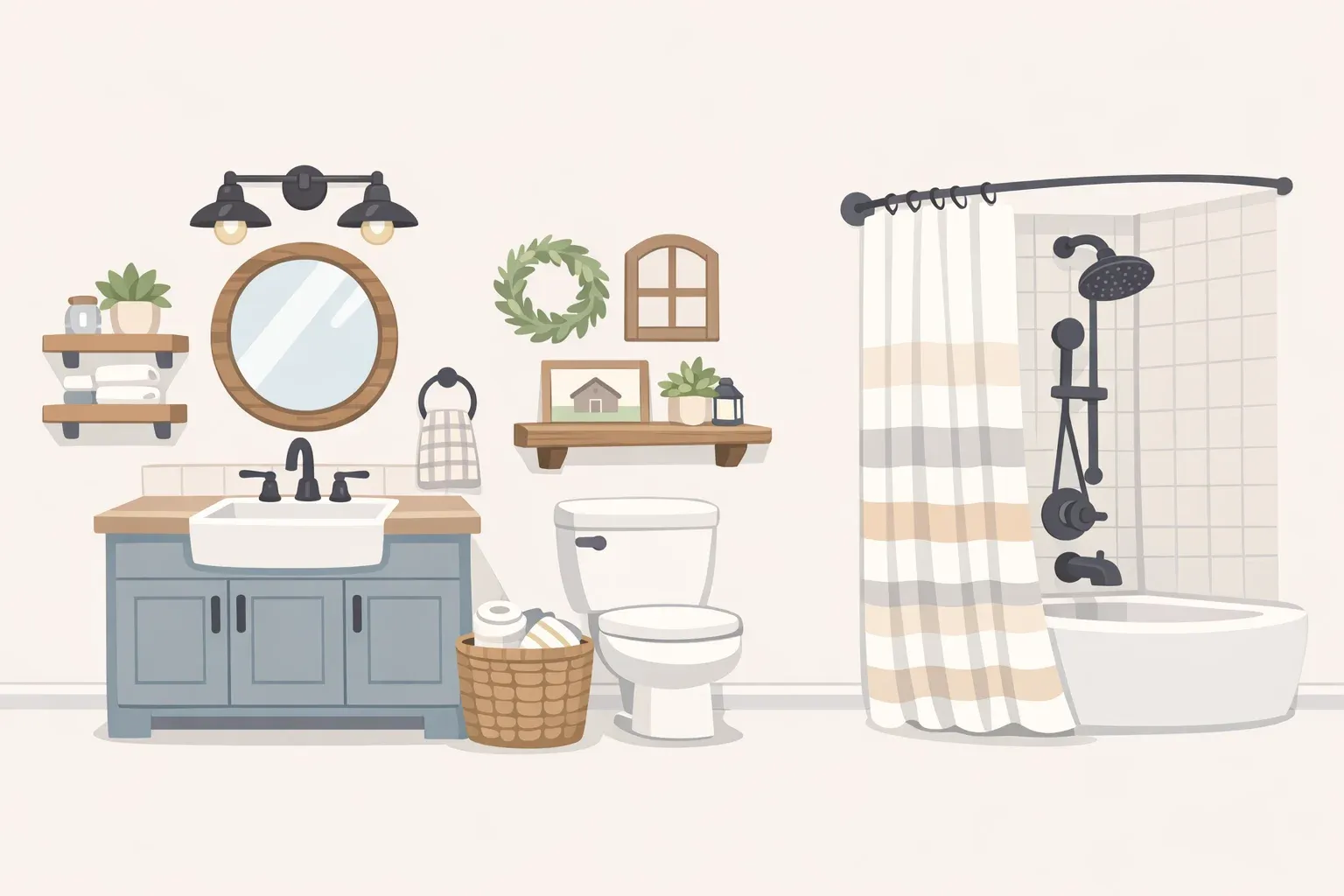
Budget farmhouse bathroom makeover: 3 moves under $1,000
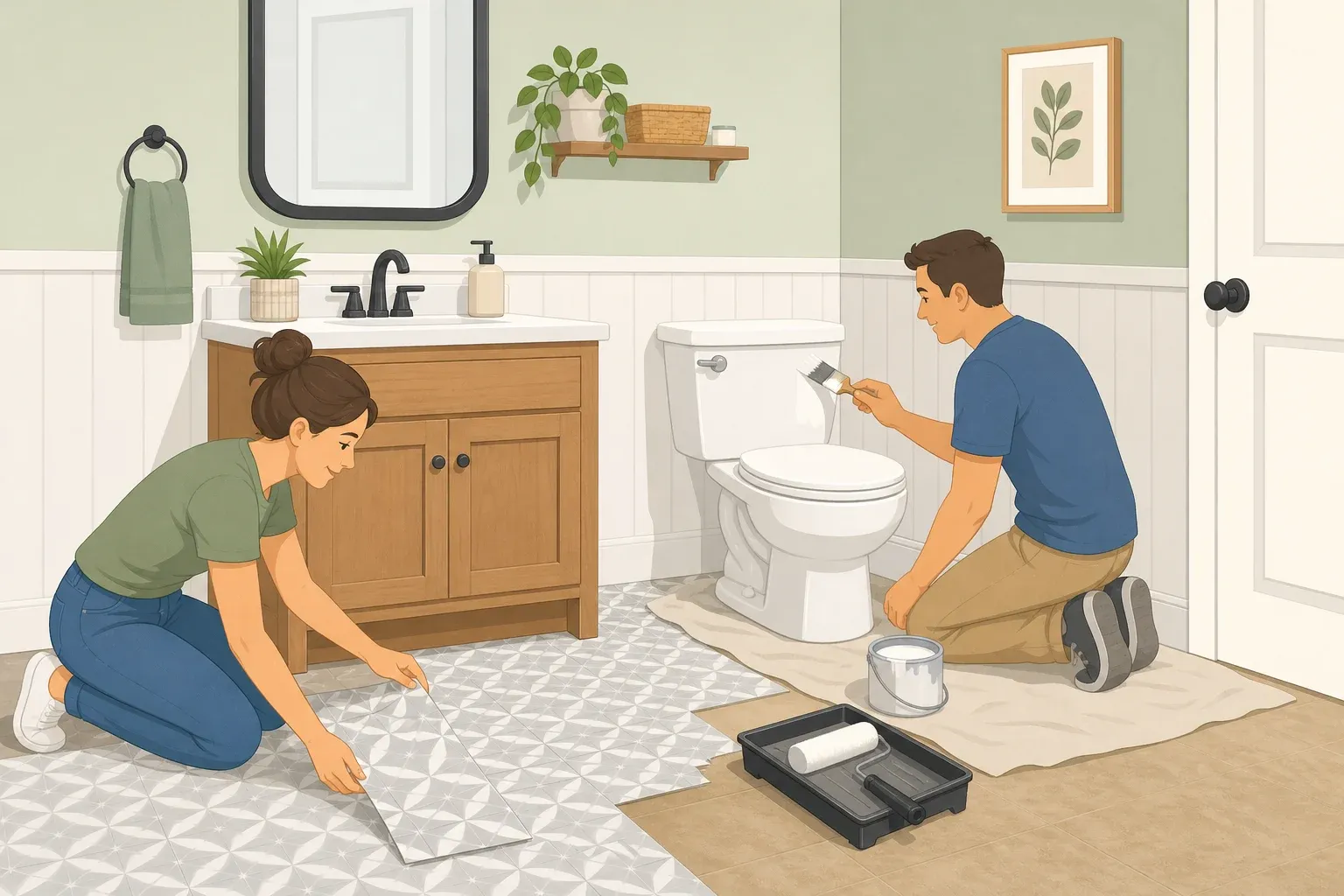
The most effective bathroom upgrade decision isn't which tiles to choose or which vanity to order. It's deciding not to touch any of that at all. A small bathroom can look dramatically different, fresh and intentional, for roughly $300 in core materials, or closer to $800 once accessories and hardware fill in the gaps. This guide walks through the three moves that produce that result and the categories that will burn your budget if you let them in.
The numbers put the opportunity in sharp relief. The national average for a professionally executed cosmetic bathroom remodel, one that skips demolition but still employs contractors, runs around $11,582, according to This Old House's 2026 cost guide. Even a basic refresh with professional labor typically costs $8,478–$10,883 for a 50-square-foot bathroom. DIY changes the math entirely. A budget farmhouse bathroom makeover documented by Little Farmstead lists about $300 in primary materials; a more complete farmhouse project documented by The Yellow Rose Farmhouse, which included new flooring and additional finishes, came in at $993. The $300–$1,000 range is real, depending on how far you take it.
This guide extracts a replicable cosmetic framework from those two projects: prep work, three core transformation moves, and a realistic budget breakdown. The farmhouse aesthetic serves as the worked example throughout. The underlying approach transfers to any style, so don't skip it because you don't want shiplap.
Motivation isn't the barrier. Nearly half of homeowners say they remodeled because their bathroom felt dated, per This Old House's 2026 survey of 1,000 homeowners. The assumption that fixing a dated bathroom requires a full renovation is what stops most people. It usually doesn't.
Who this approach works for (and who should stop here)
This framework works when the existing bathroom is ugly but structurally sound. Three categories determine whether that's true.
Safe to address cosmetically:
- Surfaces that look worn but are intact, including dated tile, dingy grout, and peeling paint
- Fixtures that function but look terrible
- Hardware that's ugly, tarnished, or simply wrong for the room
Fix first, then proceed:
- Failing grout in the shower, which is a water-intrusion pathway; recaulking or regrouting fits within this scope
- A non-functioning exhaust fan; poor ventilation shortens the life of paint and trim work, and a basic replacement unit costs $30–$60
Stop and call a contractor:
- Active leaks or water staining under the vanity
- Soft spots in the subfloor near the toilet base or tub edge
- Tile cracked through to the wall behind it
- Accessibility modifications needed, or a layout that genuinely doesn't work for the household
If any of those last items apply, cosmetic work won't fix them. It will conceal them temporarily and cost more to unravel later.
Before spending a dollar, run through these checks:
- Run water in the sink and shower. Look under the vanity for slow drips or staining.
- Press on the floor near the toilet base and tub edge. It should feel solid, not springy.
- Inspect grout lines in the shower. Recaulking or regrouting is within scope; full tile replacement is not.
- Confirm the exhaust fan works. Replace it before starting anything else if it doesn't.
One practical note on disruption: This Old House's 2026 survey found that about 31% of homeowners said losing bathroom access was among the most frustrating parts of any remodel, particularly in single-bathroom homes. This cosmetic approach, which Painting by the Penny completed in four days and Little Farmstead in five, sidesteps that problem almost entirely.
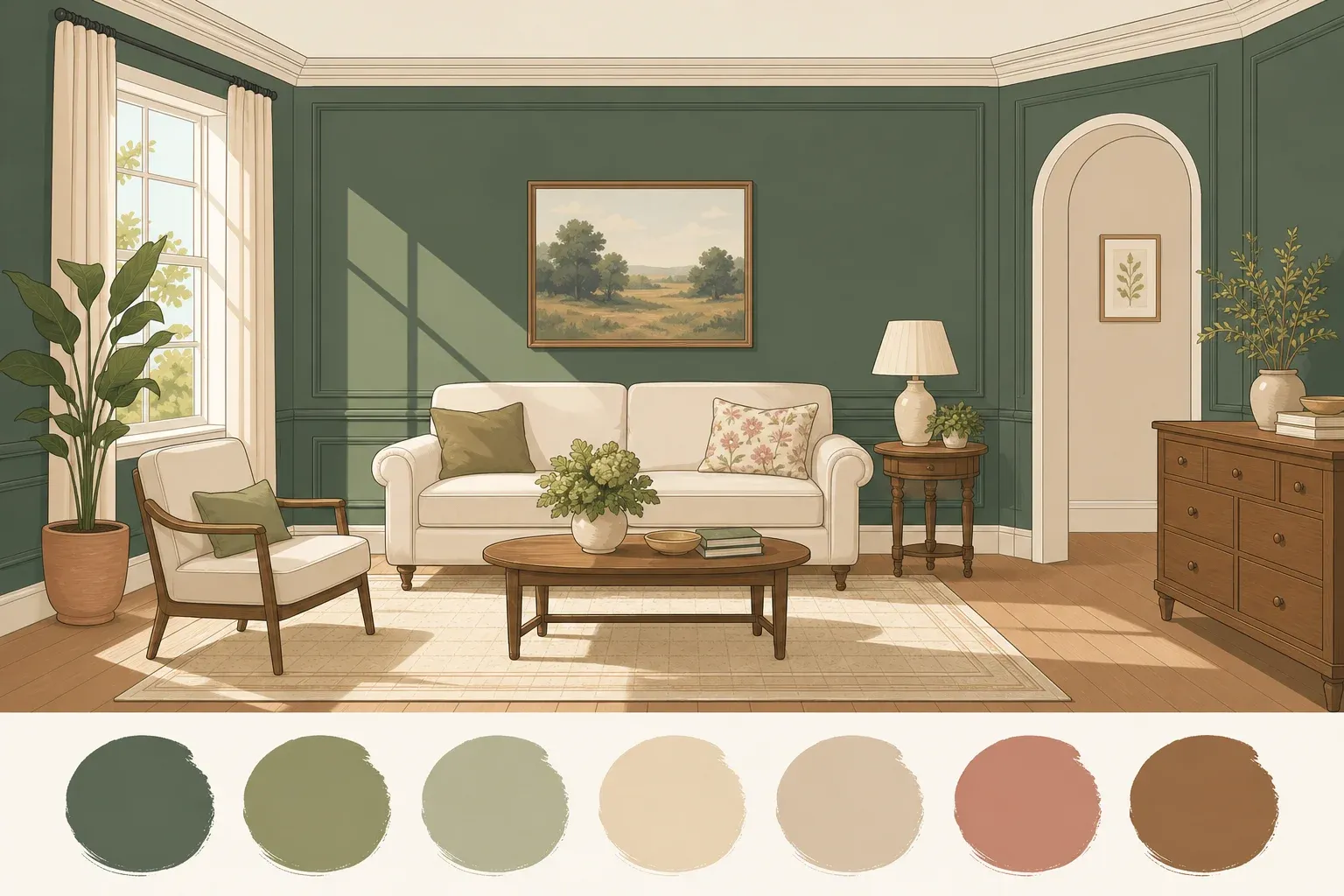
On style: the worked example throughout uses a farmhouse palette, white paint, natural wood texture, clean-line fixtures. Paint everything a deep green, use the same underlayment technique for board-and-batten spacing, swap in unlacquered brass hardware, and the identical steps produce a completely different room.
What this budget covers before you buy anything
The minimum to execute the three-move transformation below, including wallpaper removal if needed, full paint across all surfaces, a faux-shiplap accent wall, and one new light fixture, runs approximately $300. That figure comes directly from documented spending at Little Farmstead: roughly $35 for a steamer rental, $79 for paint covering walls, ceiling, trim, vanity, and mirror frame, $36 for underlayment material for the accent wall, and $150 for a replacement light fixture.
Accessories push the total toward $800–$1,000. Towel bars, toilet paper holders, cabinet hardware, and a new mirror aren't in that $300 figure. A comparable farmhouse project documented by The Yellow Rose Farmhouse, which also replaced flooring, came in at $993. The headline range is honest: $300 in core materials, $800–$1,000 for a more complete refresh.
What this budget explicitly excludes is contractor labor, which is what drives professional cosmetic remodel estimates into five figures, along with structural repairs, flooring replacement, plumbing, vanity replacement, and shower work. Plumbing alone averages $5,545 per project; shower installation runs about $8,044, per This Old House's 2026 component breakdown. This framework works precisely because it leaves all of that alone.
Where to spend more if budget allows: the light fixture. A cheap fixture looks cheap. Budget $100–$200 for something with weight to it, brushed nickel, matte black, or aged bronze. Paint quality also matters in a humid room; a high-adhesion, low-VOC formula holds up better than budget latex.
Where the savings are real: the underlayment accent wall. At $36 based on the Little Farmstead project, it consistently punches above its cost.
Materials, tools, and project order
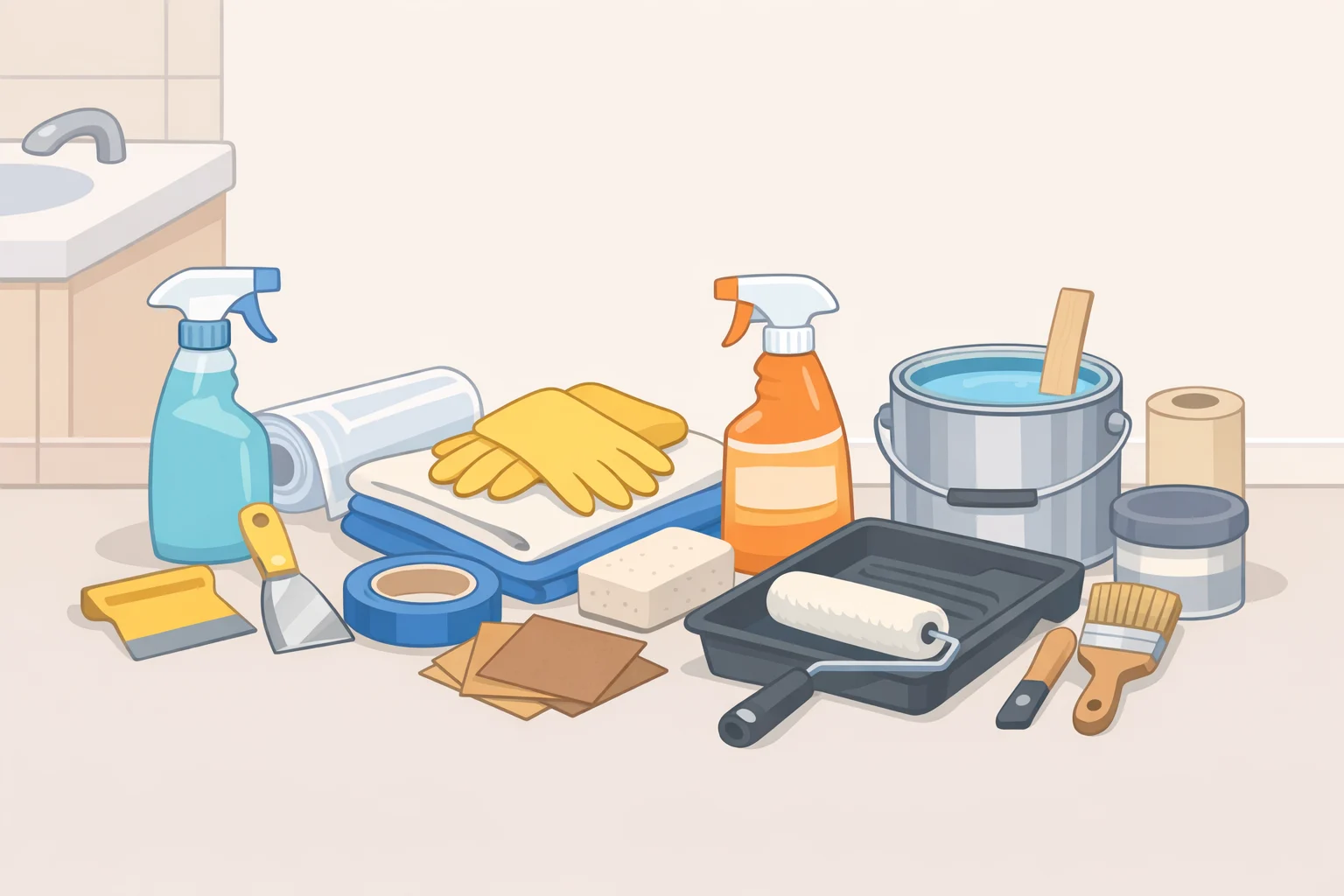
Before starting, pull together everything needed for the wallpaper removal and paint steps. The shiplap and fixture work can wait until those are done.
What to buy before day one:
- Wallpaper steamer rental (if applicable), roughly $35/day from Home Depot
- Primer, joint compound, and sandpaper for wall prep
- Paint: wall color and trim color; semi-gloss or satin finish for walls, semi-gloss for trim and vanity
- Painter's tape and drop cloths
- Brushes, rollers, and a small foam roller for the vanity
What can wait until after painting:
- Moisture-resistant floor underlayment (4x8 sheets) for the accent wall
- New light fixture
- Hardware, accessories, mirror, and any open shelving
Estimated time by step:
- Wallpaper removal and wall prep: 1–2 days, depending on how much wallpaper and how it comes off
- Paint across all surfaces: 1–2 days including drying time between coats
- Accent wall installation and touch-up paint: half a day
- Light fixture swap: 1–2 hours
Painting sequence matters. Paint ceiling first, then walls, then trim and door, then vanity and mirror frame. Working top to bottom means drips land on unpainted surfaces and get covered on the next pass. If the vanity drawers or doors need painting, remove them and paint them flat before reinstalling.
The three-move cosmetic transformation
Prep step (if applicable): remove wallpaper
If the bathroom has wallpaper, this comes first. Painting over it leads to bubbling and peeling, and there's no workaround.
Rent a wallpaper steamer rather than trying to remove it dry. Little Farmstead rented one from Home Depot for about $35 a day and called it well worth the cost. The critical mistake to avoid: moving the steamer plate too quickly before the adhesive has fully loosened. Little Farmstead learned this firsthand and had to go back over the entire room, scraping the paper backing that had been left stuck to the wall. Hold each section for at least 30 seconds before scraping.
After removal: sand rough spots, let the walls dry fully (bathrooms hold humidity longer than other rooms), and skim-coat any significant gouges with joint compound. Let that cure before painting. If aggressive scraping tore the drywall paper in spots, seal those areas with a stain-blocking primer before painting or they'll bleed through.
After this step: clean, smooth drywall with no visible paper residue or adhesive bumps. The room will look worse than when you started. That's normal.
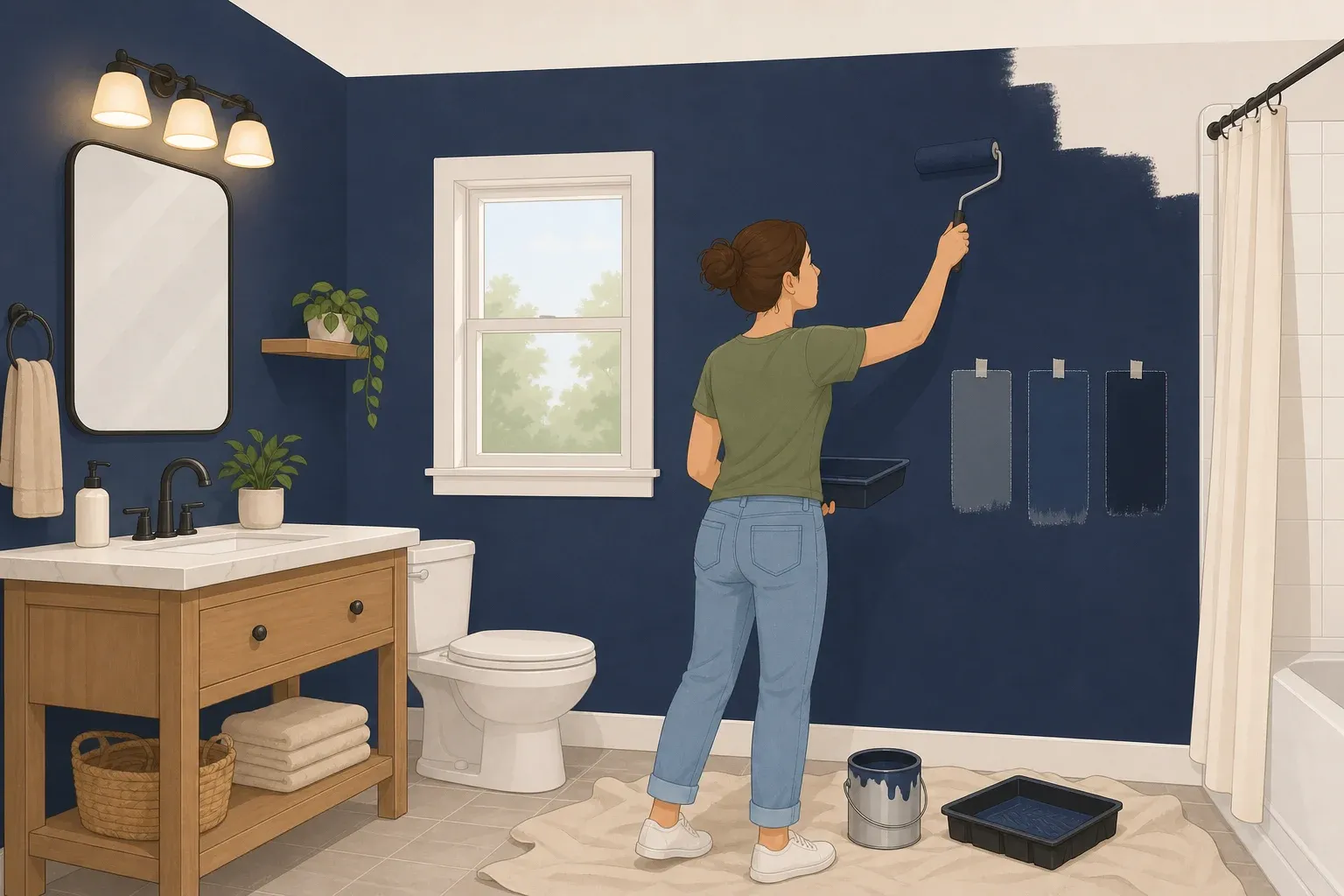
Move 1: paint everything, walls, ceiling, trim, vanity, and mirror frame
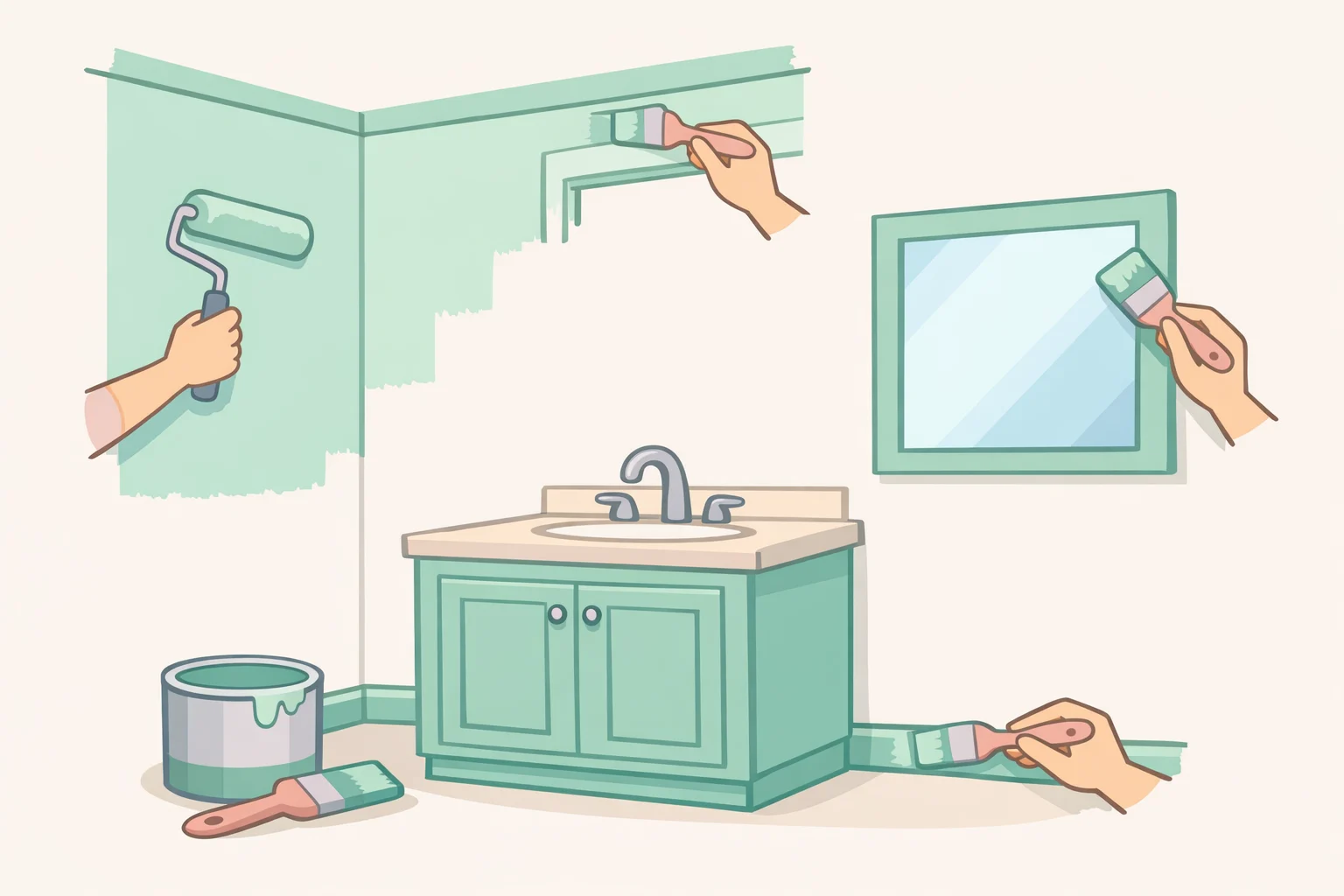
This is the highest-impact move in any small bathroom makeover on a budget. Not just paint the walls, paint everything. A unified palette removes visual noise and makes a small bathroom feel larger and more considered.
For a farmhouse look, Little Farmstead used Benjamin Moore Decorator's White on walls and Brilliant White on trim. The Yellow Rose Farmhouse used Sherwin-Williams Alabaster throughout in semi-gloss, choosing oil-based paint specifically because it hardens as it cures and resists chipping and scratching better than latex in high-humidity environments. For other color directions, the same logic applies: pick two tones, wall and trim, and apply them to every painted surface in the room.
Total paint spend in the Little Farmstead project: approximately $79 to cover walls, ceiling, trim, vanity, and mirror frame. Replacing the vanity and mirror outright would cost several hundred dollars; repainting them costs a few hours of brush work.
Finish matters here too. Yellow Rose chose semi-gloss oil-based throughout for durability. For humid rooms generally, a harder-curing paint on high-contact surfaces like the vanity holds up better over time. Use semi-gloss or satin on walls, semi-gloss on trim and vanity. Flat paint on the ceiling only, if you want to hide imperfections there.
After this step: a cohesive, noticeably brighter room, before any other work is done. This step alone tends to surprise people with how much it shifts the feel of the space.
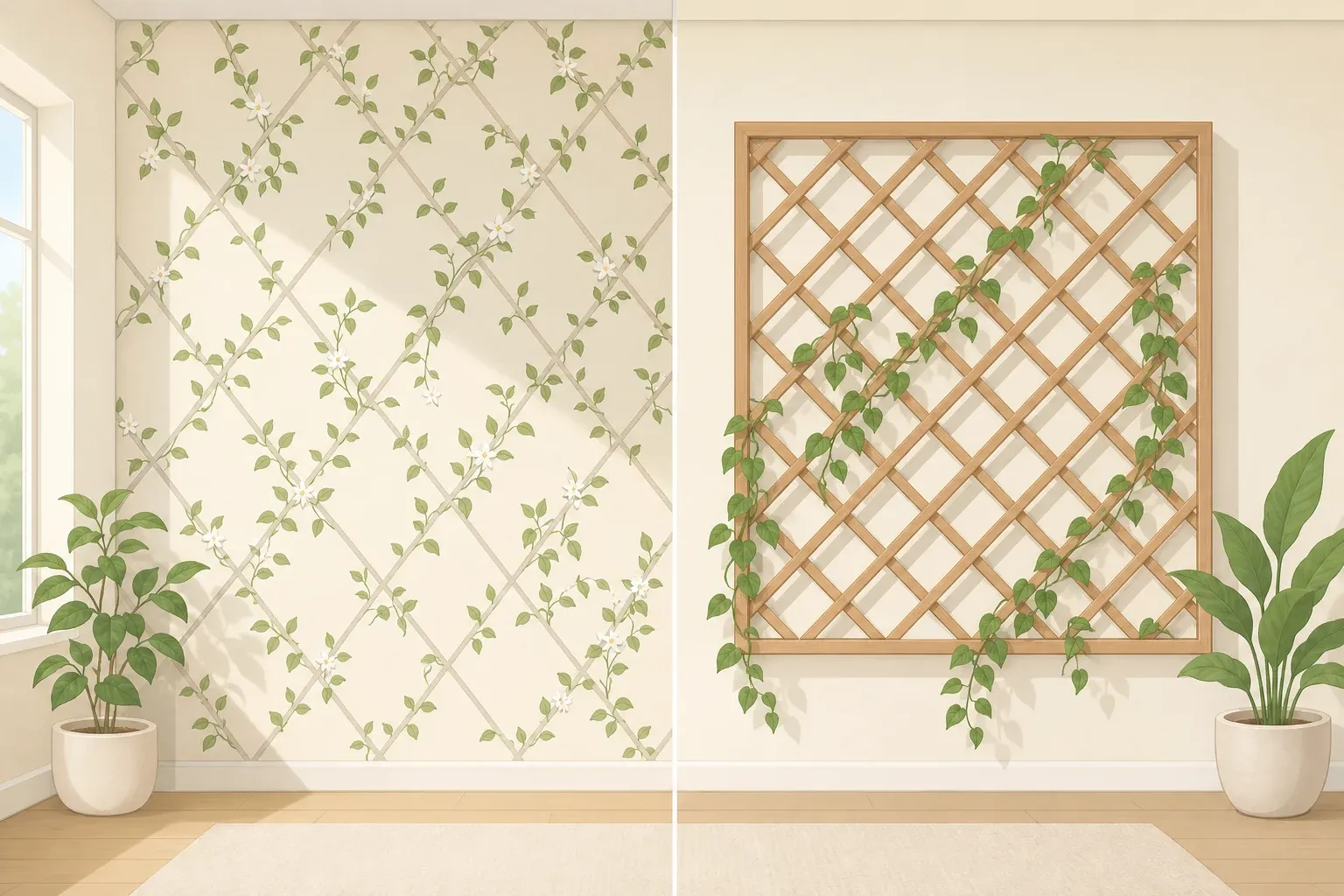
Move 2: install a faux-shiplap accent wall using moisture-resistant underlayment
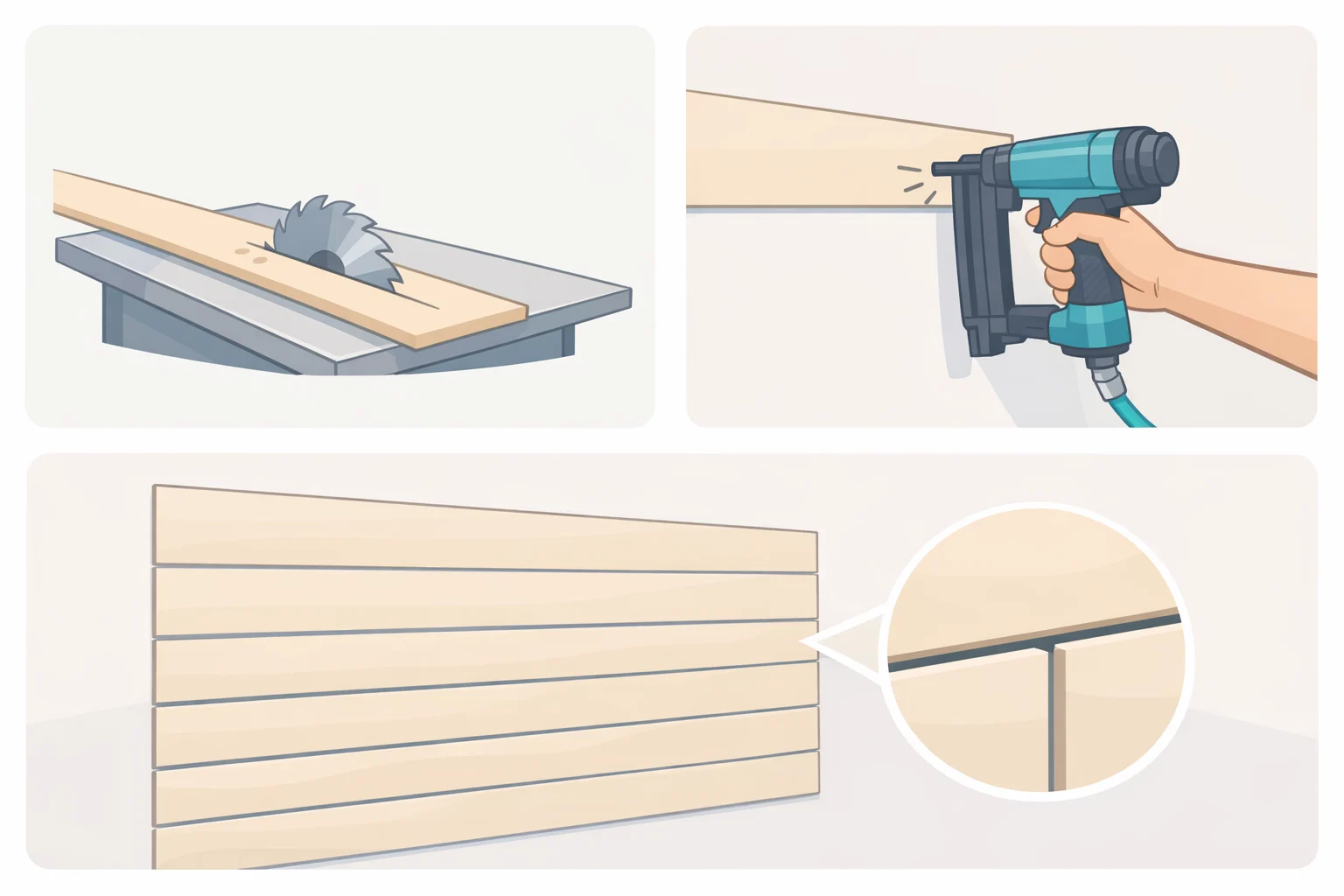
Real shiplap is expensive and unnecessary. Both Little Farmstead and The Yellow Rose Farmhouse achieved the shiplap look using moisture-resistant floor underlayment, 4x8 sheets cut into horizontal strips and nailed to the wall. Little Farmstead had Home Depot cut their sheets into 8-inch strips; Yellow Rose used 6-inch strips. Either reads as shiplap once painted.
Material cost in the Little Farmstead project: approximately $36 for the accent wall.
Leave a small gap between strips to create the characteristic shiplap reveal, using a coin or scrap of cardboard as a consistent spacer. Nail into studs where possible; use construction adhesive on hollow sections.
Scope warning: underlayment is moisture-resistant, not waterproof. This material works on a dry vanity wall or any wall away from direct water contact. Keep it off walls directly behind or adjacent to the shower or tub, where a properly waterproofed wall system is required. Paint all cut edges before installation and caulk the bottom seam where the boards meet the floor.
This step transfers to non-farmhouse aesthetics too: paint the boards the same color as the walls for subtle texture, or use board-and-batten spacing for a more formal result.
After this step: a textured focal wall that gives the room a finished quality. This is what separates "we repainted" from "we redid the bathroom."
Move 3: replace the vanity light fixture
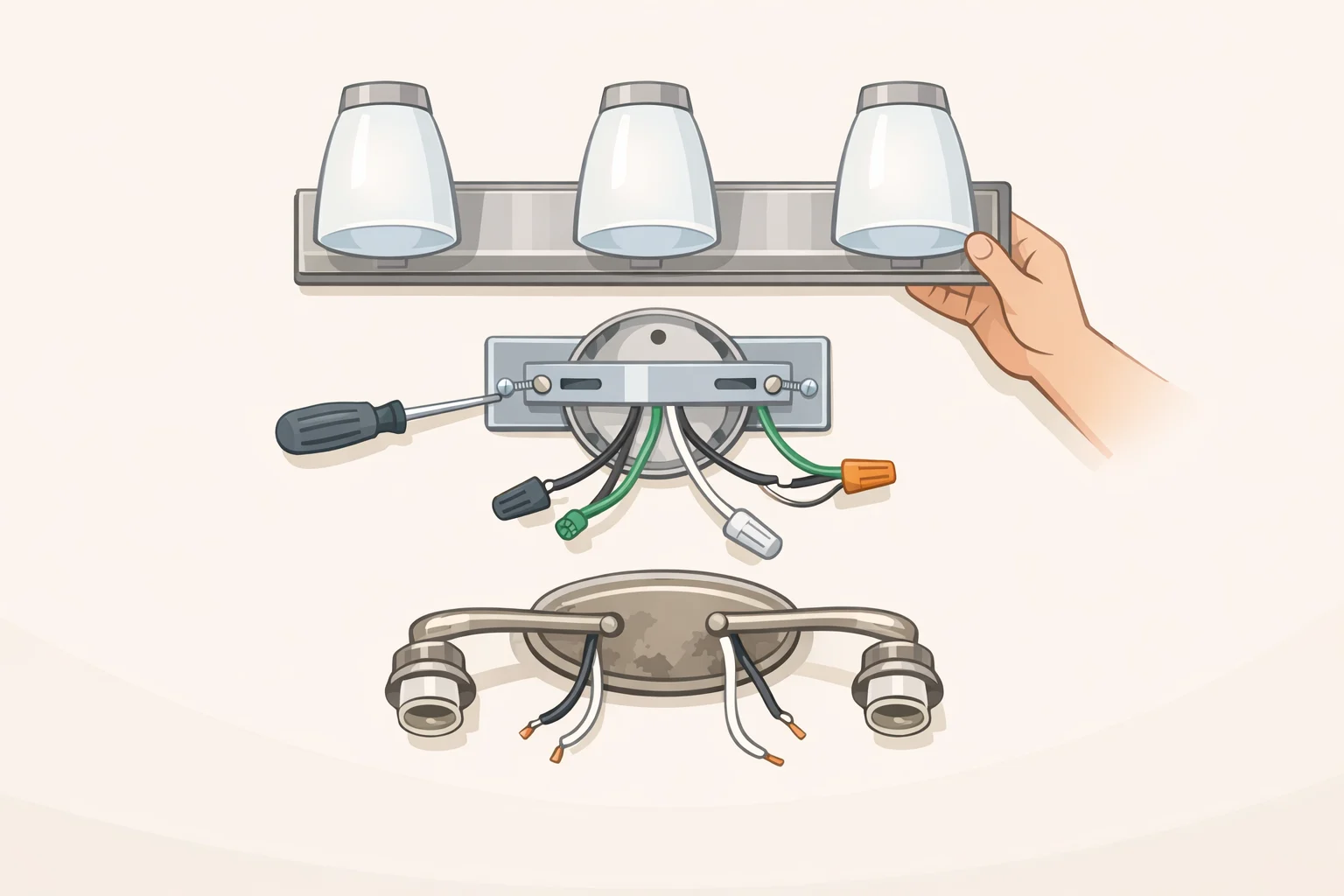
A builder-grade vanity bar is one of the clearest indicators a bathroom hasn't been touched since it was built. Replacing it is a manageable job for anyone comfortable turning off a circuit breaker and working with wire connectors when swapping a fixture with the same wiring configuration. If household electrical work is unfamiliar territory, this is the one step worth hiring an electrician for.
Little Farmstead replaced their fixture with a Lowe's unit for approximately $150. For a farmhouse look, brushed nickel, matte black, or aged bronze all work. For other directions, unlacquered brass or chrome fit equally well with the same swap.
Gotcha: check that the new fixture's canopy covers the existing wall cutout before finalizing the purchase. If the old fixture was significantly wider, there may be unpainted wall or exposed drywall behind it that needs touching up before the new fixture goes on.
After this step: the vanity area looks finished. Updated light changes how every other surface reads, including the repainted mirror frame and vanity cabinet, which now read as deliberate choices rather than whatever came with the house.
Farmhouse bathroom remodel ideas: optional upgrades if budget allows another $100–$200
A short list for readers who want to extend the project without scope creep.
- Swap cabinet hardware. Matte black or oil-rubbed bronze pulls are a screwdriver job and take an hour. The change registers as a real finish detail without any cutting or painting.
- Add open wood shelving. The Yellow Rose Farmhouse built shelving from 1x2 pine boards finished with two coats of clear glossy polyurethane, durable, inexpensive, and functional. Open shelves styled with folded towels and a few plants extend the look without significant cost.
- Refresh grout lines. If existing shower or floor tile is structurally sound but looks dingy, a grout pen or grout-refreshing cleaner takes a few hours and keeps the shower entirely out of the replacement budget. That's the logic of this whole approach in miniature: visible change without opening walls or pulling fixtures.
What this method gets right
Three moves, unified paint across all surfaces, a faux-shiplap accent wall, a new light fixture, consistently deliver a DIY farmhouse bathroom makeover for roughly $300 in core materials. Add hardware, accessories, and small finishing touches and the total lands around $800. That holds up against far more expensive alternatives. Even a professional cosmetic-only remodel averages around $11,582, per This Old House's 2026 data; skipping contractor labor is where the real savings come from.
Live in the refreshed space for a few months before deciding whether more is needed. Many homeowners find the urgency to replace the vanity or flooring disappears once the room looks and feels different. That's not procrastination; it's useful information. Vanity cabinetry replacement averages $2,929, per This Old House. Save that for when it's genuinely necessary. The cosmetic work buys time and perspective, and sometimes turns out to be enough.





Comments
Be the first, drop a comment!