



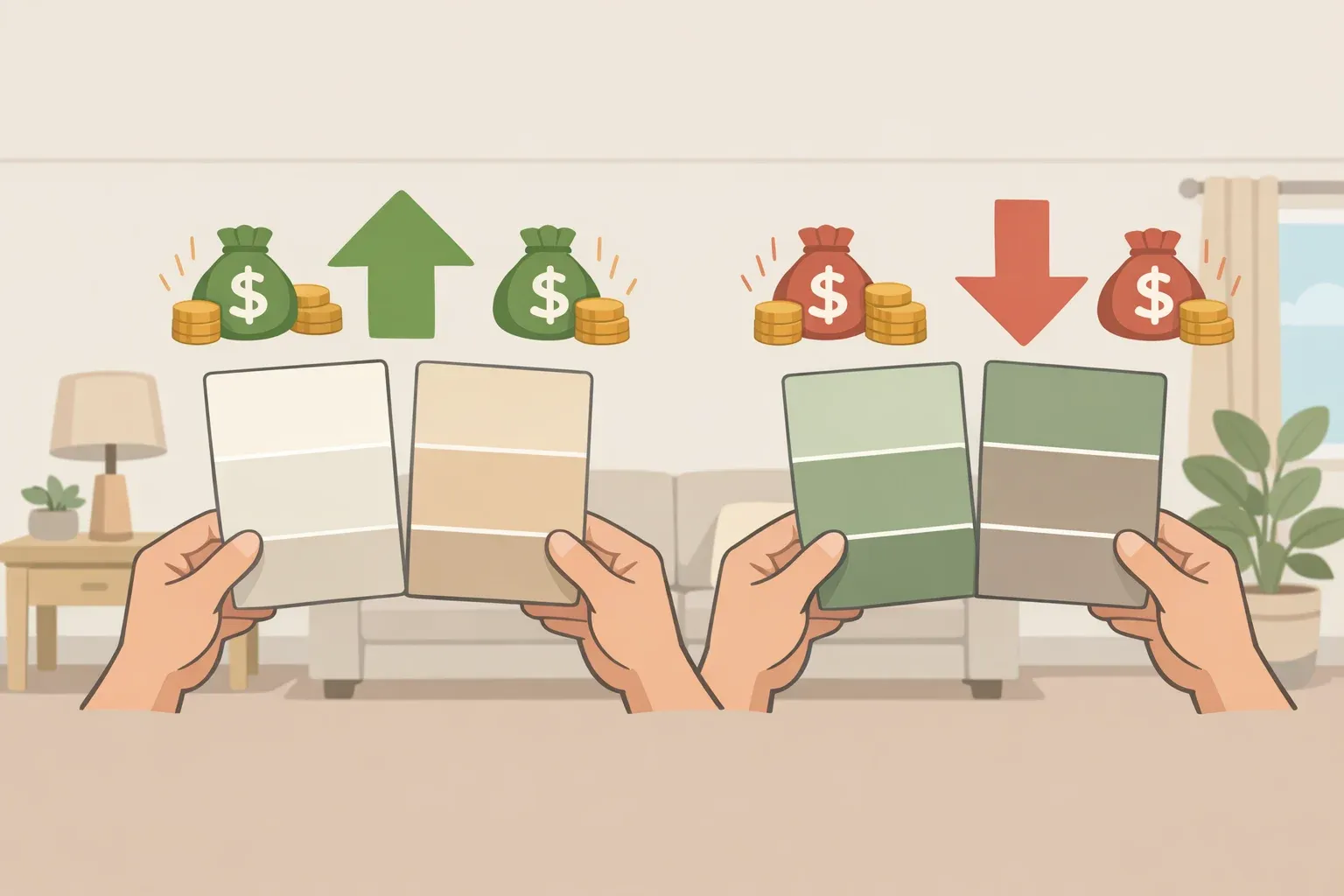
Zillow's 2026 Paint Color Analysis found that a chocolate brown bedroom can lift a buyer's offer by roughly $2,277. That number has made the rounds in home-improvement coverage, and it's worth knowing. It's not, however, the most useful thing the data contains.
The more durable finding, visible across two consecutive years of Zillow's research, is this: buyers consistently reward colors in a specific register, muted and nature-adjacent, while penalizing bright, saturated colors far more severely than any winning shade can compensate. If you're trying to identify paint colors that boost home value before a sale, the strategic implication runs opposite to most paint-color listicles. Sellers gain more by eliminating the wrong colors than by hunting for the perfect one.
A few methodological notes worth keeping in hand: Zillow's 2026 analysis surveyed 4,400 recent and prospective homebuyers. The 2025 edition used a more directly documented design: buyers were randomly shown listing images painted in one of 10 colors, then asked about tour likelihood, purchase interest, and price willingness.
That randomized image-testing approach gives the 2025 findings a firmer analytical foundation, so this article treats them as the baseline and the 2026 data as corroboration. Offer-price figures from buyer-preference surveys are directional signals, not appraisal guarantees. Use them to understand the relative effect of color choices, not to calculate an expected return.
Interior painting is already the most common pre-sale project sellers complete. Zillow's own consumer data found that 32% of sellers painted before listing in 2024, the single most popular pre-listing improvement.
Best paint colors to sell a house, by room
The 2025 Zillow findings serve as the more methodologically transparent baseline here, with 2026 treated as a corroborating update. Together, they point to a consistent pattern rather than a changing roster of trendy shades.
2025 top performers by room:
Bedroom: navy blue (+$1,815)
Kitchen: dark olive green (+$1,597)
Living room: dark gray/charcoal (+$2,593)
Bathroom: mid-tone brown, aligned with the 2025 Pantone Color of the Year, led all bathroom colors
2026 updates:
Bedroom: chocolate brown now leads at +$2,277; sage green adds over $1,000
Kitchen: charcoal gray (+$1,373) and plum (+$867) top the room
Living room: sage green contributes nearly $500
What shifts year to year is which specific shade leads a given room. What holds steady is the type: low saturation, natural reference points, a general sense of calm. Zillow's home trends expert Amanda Pendleton described the 2025 olive-and-navy preference through the lens of "organic modernism," an aesthetic tied to wood, stone, and natural materials, noting these tones evoke serenity and tranquility rather than stimulation. That framing fits the 2026 winners just as well. Chocolate brown and charcoal gray aren't trend-cycle accidents; they belong to the same earthy, grounded palette.
One important counterpoint: Opendoor's broader buyer-preference analysis in 2025 finds warm whites, soft greiges, mushroom taupes, and pale sage greens consistently performing well across the general market. That isn't a contradiction. Zillow's survey compares specific colors against each other within controlled conditions; the broader market still skews toward softer neutrals for good reason. Sellers in conventional or conservative markets shouldn't read the Zillow data as a mandate to paint every room charcoal.
The practical synthesis: richer, earthier shades in the olive-navy-brown-charcoal family appear to carry a buyer-preference premium over stark white and lighter shades of sage green and pale sky blue, a distinction Zillow's 2025 release made explicitly. That premium is real and measurable in survey data. It isn't a guarantee, and it doesn't mean every dark color performs equally.
How to choose a resale-safe paint color
The data tells you which colors performed well in controlled survey conditions. It doesn't tell you what to buy at the paint store. That requires a few additional steps.
Start with the fixed finishes: flooring, countertops, tile, and cabinetry. These don't move. A wall color that clashes with existing undertones will read as off, no matter how well it tested in a Zillow survey.
Design expert Maria Killam advises choosing the palest neutral in the correct undertone to complement what's already in the room rather than working against it. Stark whites that don't harmonize with warm-toned finishes make those finishes look dingy.
From there, the general framework holds across both Zillow's data and agent surveys:
Stay in the low-to-mid saturation range. Colors should feel deliberate, not loud.
In conventional markets, warm whites, greiges, and soft neutrals remain the safest broad choice. The BHGRE poll found 84% of agents named whites, grays, and beiges as their top recommendations.
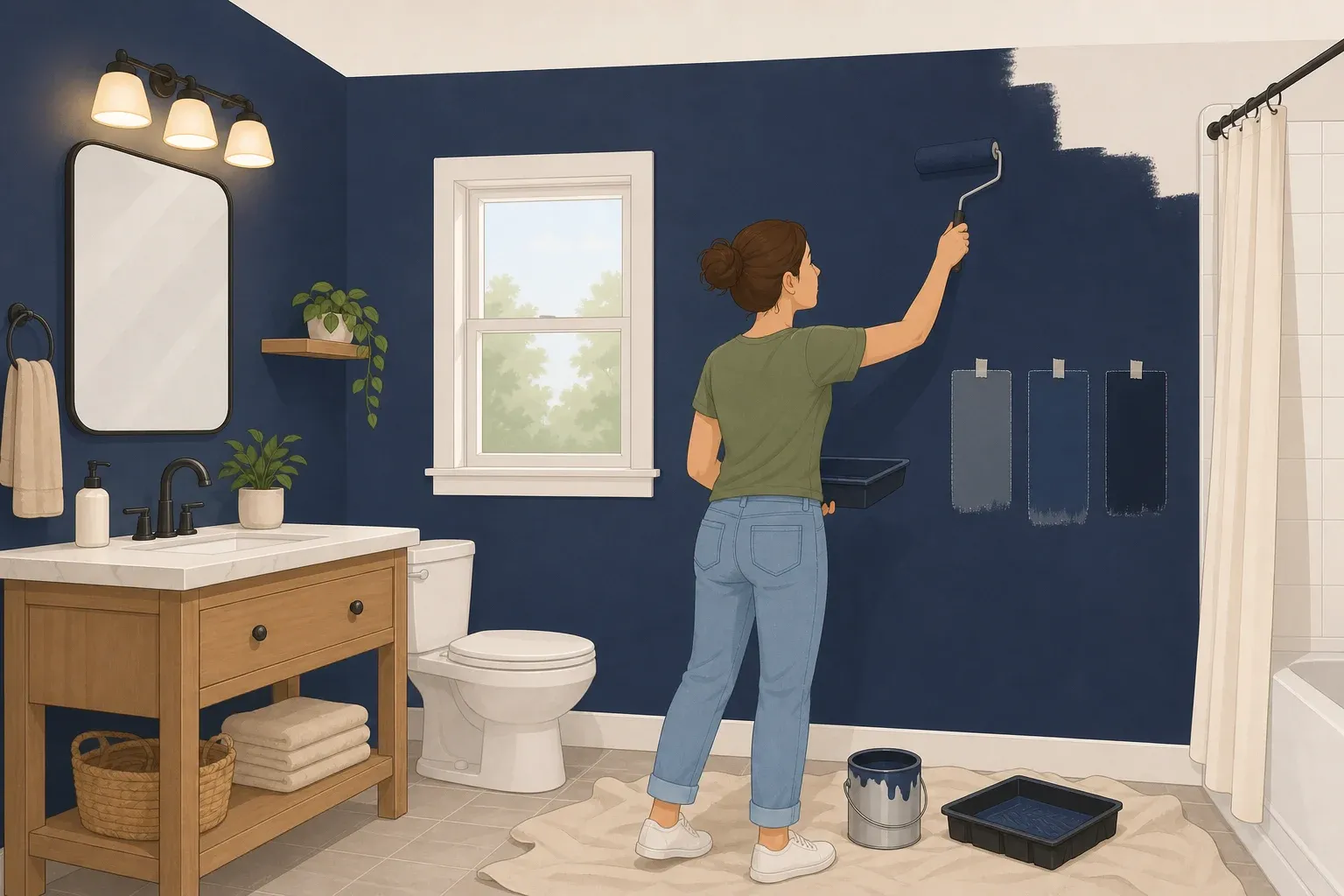
Deeper tones, chocolate brown, navy, charcoal, olive green, work best where the room's finishes and natural light support them. A dark color in a north-facing room with no natural light will land differently than the same shade in a sun-filled primary bedroom.
Avoid bright yellows, reds, neons, and highly personal hues in any room intended for a broad buyer audience.
This framework won't hand you a specific paint chip, but it will eliminate the choices that tend to cost sellers money.
Worst paint colors for home resale
The asymmetry in Zillow's data deserves its own analysis. The downside risk from penalty colors dwarfs the upside from any individual winner.
Ochre yellow carries the largest documented penalty in the 2026 data: up to $18,164 off a home's offer price. The specific room context for this figure isn't fully spelled out in available reporting, and the magnitude is unusually large. Treat it as a directional signal, not a line-item forecast.
The 2025 figures are more granular. Daisy yellow cost sellers nearly $4,000 in kitchens (-$3,915) and living rooms (-$3,891). Fire hydrant red suppressed offers in living rooms (-$1,820) and bedrooms (-$1,987). Agent surveys corroborate the pattern: more than half of respondents in a BHGRE poll named red the single biggest paint dealbreaker when viewing homes.
The underlying mechanism isn't hard to see. Bold, saturated colors narrow the perceived audience for a home. The pool of buyers genuinely indifferent to a fire-engine red living room is small; the pool put off by it is large. Muted greens and navies work differently. They signal contemporary taste without triggering avoidance. The category distinction, saturated versus earthy, matters more than any individual color choice within either group.
A seller with ochre yellow walls and a constrained renovation budget should neutralize that color before spending a dollar on anything else. The upside of choosing chocolate brown over charcoal gray is measured in hundreds. The downside of leaving a penalty color in place can run to thousands.
Paint ROI and when repainting is worth it
Fresh paint earns its reputation as a high-ROI pre-sale move, but it's worth being precise about what that means and where the limits are.
The financial case:
Interior repainting delivers an average ROI of approximately 107%, with potential to add $2,000 to $16,000 or more in resale value depending on home size and condition. For a 1,500-square-foot home, a $3,000 paint job could realistically shift the sale price by $4,000 to $6,000.
Interior painting was the most commonly recommended pre-listing project in NAR's 2025 Remodeling Impact Report, cited by agents ahead of kitchen updates, flooring, and landscaping.
One caveat the research doesn't resolve: how much of that ROI comes from color selection specifically, versus simply making a home look maintained and move-in ready. Part of the premium almost certainly reflects freshness itself, the removal of scuffs, dings, and dated palettes, regardless of which specific color was chosen. Sellers shouldn't assume the full return hinges on matching Zillow's top performers exactly.
Prioritization when the budget is constrained:
Interior first: focus on the living room, kitchen, primary bedroom, and primary bath
If the budget remains after interior work: the front door is the highest-return exterior accent. Buyers prefer black or charcoal front doors to gray alternatives and would offer $6,450 more for them, a project that runs under $100 in materials
Full exterior paint typically delivers lower ROI, roughly 51-55% on average, than interior; skip it unless the exterior condition or color is actively hurting curb appeal
When not to repaint:
If existing paint is less than two years old, in good condition, and a current-decade neutral, a professional cleaning may accomplish as much as a full repaint
If the local market is competitive enough that homes receive multiple strong offers before showings, pre-listing paint improvements may add minimal lift
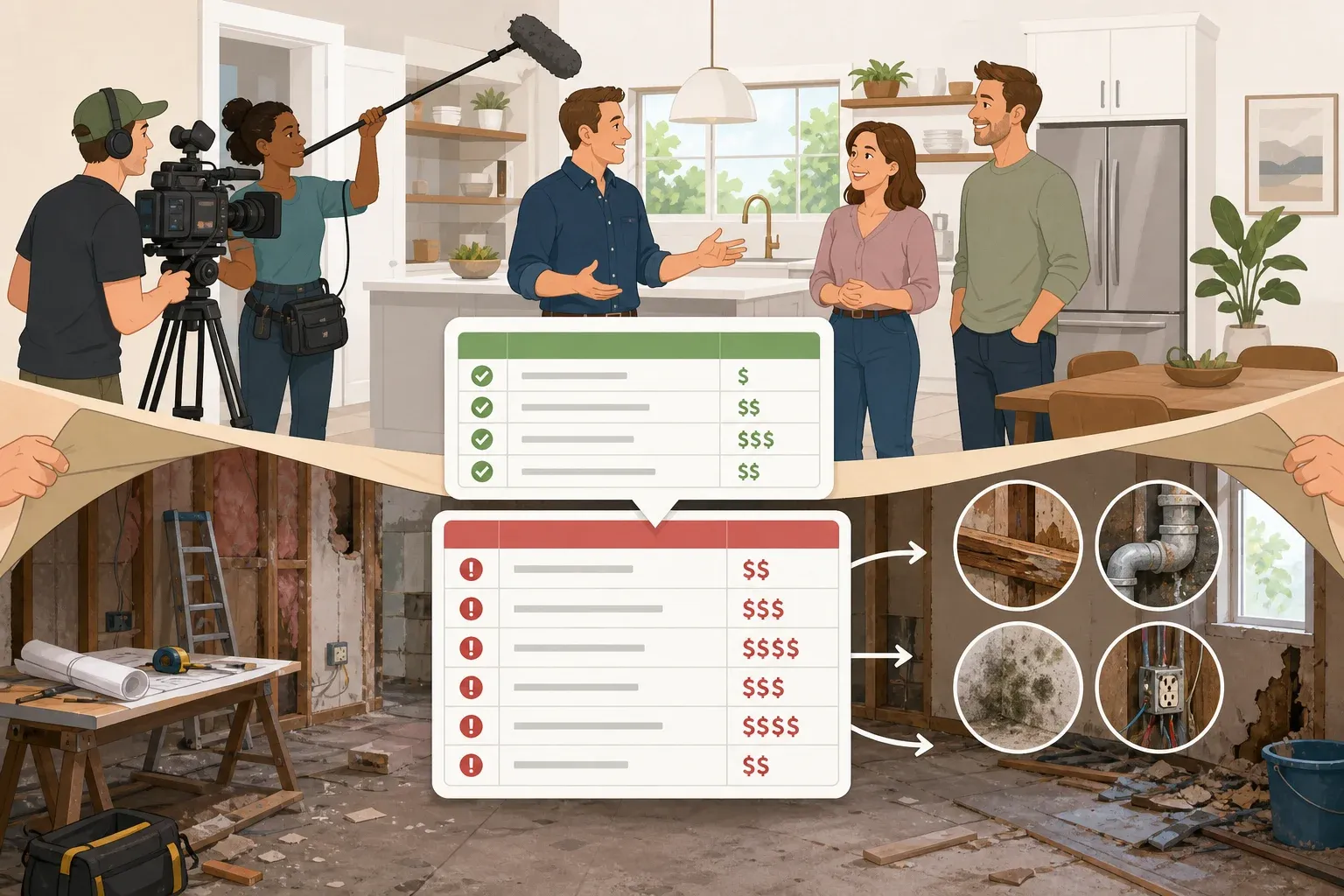
Never paint over genuine maintenance problems. Water damage, rot, and deferred repairs get surfaced by inspectors regardless, and fresh paint over a structural issue tends to erode buyer trust at the negotiating table
Three things the data actually tells sellers to do
Zillow's two-year pattern is the more useful finding. Here's what to do with it.
1. Eliminate before you optimize. The worst paint colors for resale suppress offers by amounts that dwarf what any single winning color can recover. If a wall is painted in a documented penalty color, that is the first problem to solve, full stop.
2. Work by room, not by trend. Zillow's data shows meaningful offer-price swings across bedrooms, kitchens, and living rooms, with each space responding differently to color. Match tone to function: calm, retreat-like shades in bedrooms; earthy or sophisticated shades in kitchens; colors that read as composed rather than stimulating in shared spaces. One palette applied everywhere rarely serves all three.
3. Let the home's finishes make the final call. The data sets a direction; the specific room sets the destination. As Maria Killam advises, the right neutral is the one whose undertones work with the fixed elements already in place: tile, countertops, and flooring. An on-trend color with the wrong undertone can make solid finishes read as dingy, which is its own kind of penalty.
The broader shift Zillow's research reflects is real. Buyer preference has moved away from blank-slate white and toward colors that signal intention and care. Sellers who repaint with that in mind, using muted, grounded tones calibrated by room, after clearing out whatever penalty colors are already on the walls, are working with the evidence rather than against it.


Comments
Be the first, drop a comment!