



Difficulty: Moderate
Time: 2-3 days (with drying time)
Cost: ~$50-75
Got outdated tile floors dragging down your space? Painting ceramic tiles offers a budget-friendly transformation that can completely refresh your room without the mess and expense of full replacement. Specialized tile coatings have evolved significantly since the mid-20th century DIY boom, according to Lili Tile, giving homeowners powerful tools for dramatic makeovers. This approach creates the appearance of a complete room transformation with just one strategic step, Harris Brushes notes, while delivering serious savings compared to retiling projects.
When done properly, painted tile floors can look surprisingly fresh and last one to two years with normal use, The Spruce confirms. This makes it perfect for renters, budget-conscious homeowners, or anyone buying time before a major renovation—especially when you're dealing with low to medium-traffic areas.
Choosing the right paint makes all the difference
Your paint selection determines whether this project succeeds or fails within months. The key difference lies in the molecular structure: epoxy-based formulations create waterproof, extremely durable surfaces perfect for high-traffic areas, Lili Tile explains. These paints actually form chemical bonds with your prepared surface rather than just coating it.
For maximum versatility, latex or oil-based tile paints work well across different applications, though they're less resilient than epoxy options. Look for specialty formulations that resist mold and mildew in humid bathrooms, while heat-resistant versions handle fireplace surrounds and kitchen backsplashes safely, the same source confirms.
Safety First
Ensure excellent ventilation; open windows and run exhaust fans throughout the entire project
Wear N95 mask, safety glasses, and nitrile gloves when working with primers and paints
Use closed-toe shoes and long sleeves when sanding to protect from fine particles
Adult Supervision Required if kids are helping with any prep work—sanding creates airborne dust
What you'll need for success
Materials
1 quart specialized floor paint (epoxy or tile-specific formula)
1 quart bonding primer designed for glossy surfaces
TSP cleaner or commercial degreasing agent
220-grit sandpaper (fine enough to avoid tile damage)
Paintable caulk for grout line repairs
Clear polyurethane topcoat (optional but highly recommended)
Tools
3/8-inch nap paint roller and tray
High-quality angled brush (2-inch works well)
Orbital sander or sanding block
Putty knife for repairs
Microfiber cloths for cleaning
Vacuum cleaner
Painter's tape (delicate surfaces type)
Prep work: the foundation of lasting results
Start with degreasing kitchen tiles using commercial cleaners specifically designed to break down cooking oil films—this invisible residue will absolutely prevent proper adhesion if left untreated. Most tiles accumulate layers of soap scum, hard water deposits, and organic matter in grout lines, Home Depot reports. Apply fungicidal spray to eliminate mold spores completely before they're trapped under paint, Harris Brushes recommends.
Most ceramic tiles feature protective glazing that prevents paint adhesion, Home Depot explains. This glossy surface needs careful attention: use 220-grit sandpaper to create microscopic scratches that provide mechanical adhesion without damaging the tile structure. You'll know you've achieved proper surface preparation when the tiles look uniformly matte with no glossy spots remaining.
Steps to paint your tile floors
Remove furniture and protect surfaces. Clear the room completely and lay protective sheeting with polythene backing to prevent paint seepage, Harris Brushes advises. Secure everything with delicate-surface masking tape around walls and fixtures—regular tape can pull off uncured paint later.
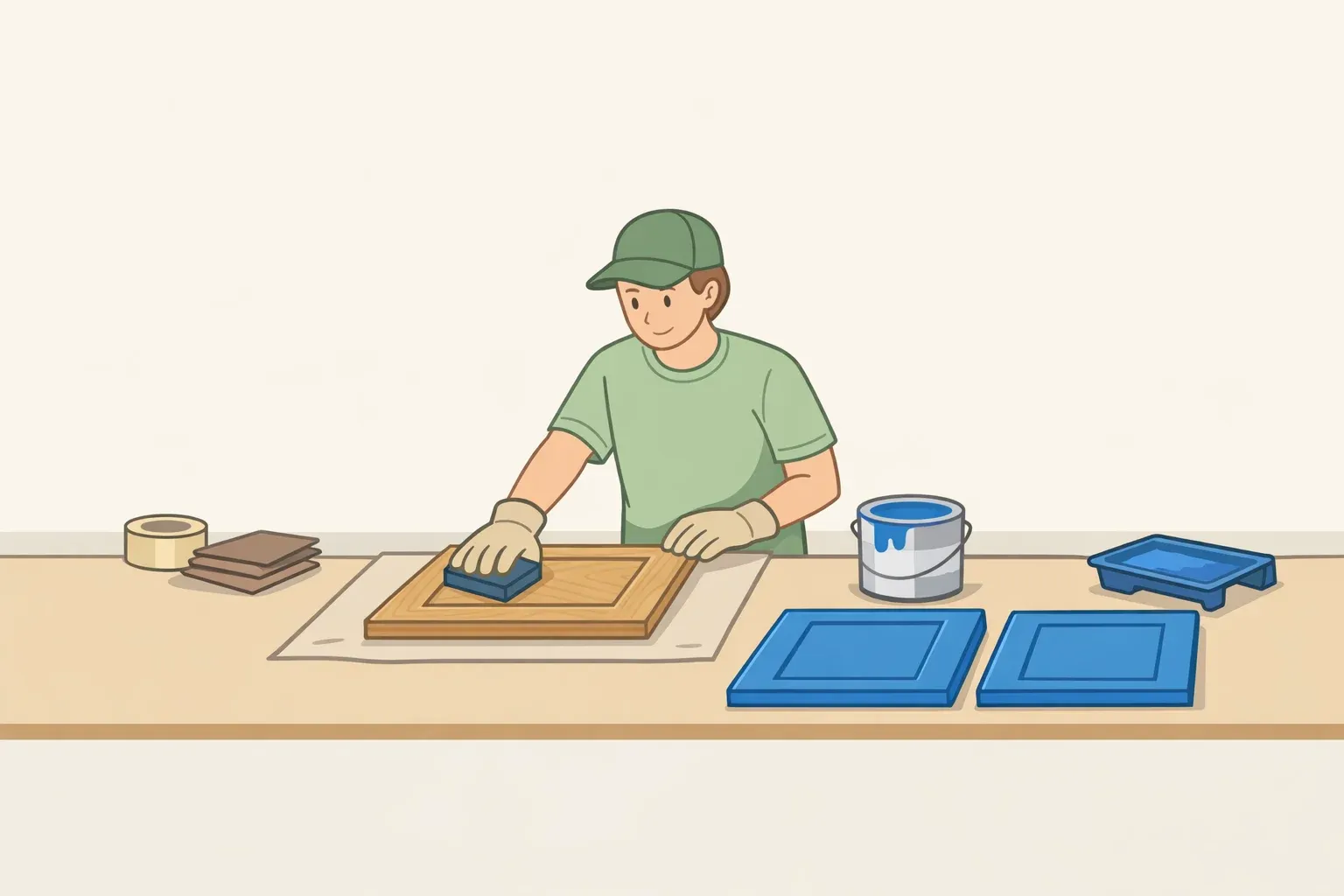
Sand the glossy surface. Use 100-grit minimum sandpaper to hand-sand or machine-sand the entire surface systematically, Home Depot notes. Work in overlapping patterns to ensure no glossy areas remain—these will show up as paint failures later. Visual cue: The surface should appear uniformly dull when viewed at an angle.
Fill cracks and repair grout. Inspect tiles carefully for chips or damaged areas that could trap moisture and cause future paint failure. Fill imperfections with paintable caulk using a putty knife, the same source confirms. Tip: Scrape away excess immediately and wait for complete curing—wet caulk will prevent primer adhesion.
Apply bonding primer. This step creates the critical link between your tile and topcoat. Bonding primers contain special resins that chemically grip both surfaces, Home Depot explains. Use a high-quality brush for edges and corners, then roll main areas with smooth, overlapping strokes. Visual cue: Properly applied primer should show no streaking or thin spots when dry.
Paint the base coat. Cut in perimeter edges with your angled brush, working carefully around obstacles like toilet bases. Then use a 3/8-inch roller for the main floor area, A Little Delightful suggests. Technique tip: Work in 4-foot sections and maintain wet edges—dried edges create visible lap marks that won't disappear.
Apply protective topcoat. Switch to a 1/4-inch roller for optimal clear coat coverage, the same source recommends. This polyurethane layer acts as a sacrificial surface, taking daily wear instead of your color coat. Application note: Work quickly as topcoats set up faster than paint.
Why it works: Bonding primers use specialized resins to improve adhesion to glossy tile surfaces (see Home Depot primer guidance). Combined with mechanical sanding texture, this creates a durable three-layer system designed to flex with thermal expansion.
Cleanup & curing time
Store leftover paint in cool, dry conditions for future touch-ups—temperature extremes can separate paint components. Clean brushes and rollers immediately with appropriate solvents before they become unusable.
The surface becomes walkable after approximately 24 hours, initially with socks only, MissPompadour notes. Important curing timeline: Complete molecular curing takes about 14 days, after which the finish becomes fully scratch-resistant and ready for normal furniture placement. During this period, avoid dragging furniture or using harsh cleaners.
Troubleshooting common issues
Problem: Paint peeling at edges → Fix: Insufficient surface preparation or contamination; strip affected areas back to bare tile, re-clean, sand, and reprime before repainting
Problem: Visible brush marks in finished surface → Fix: Topcoat applied too thick or brush quality inadequate; sand lightly with 320-grit paper and apply thinner final coat
Problem: Poor coverage revealing dark tile underneath → Fix: Primer coat too thin or skipped; apply additional primer coat focusing on problem areas before final paint
Variations & design ideas
Budget-conscious approach: Use high-quality latex paint with bonding primer instead of specialized tile paint—expect 6-12 month durability versus 1-2 years
Pattern upgrade: Create checkerboard or diamond patterns using painter's tape between base and accent colors—remove tape while paint is still slightly tacky for clean lines
Rental-friendly modification: Focus on removable elements and confirm lease allows "improvements" before starting permanent changes
Textured stone effect: Layer 2-3 coordinating colors using dry brush and sponging techniques to mimic natural stone depth and variation
How long will it last?
Properly prepared, primed, and sealed tile paint typically lasts one to two years with normal use, The Spruce confirms. Durability factors: High-traffic areas show wear patterns first, particularly at room transitions and in front of sinks. Keep touch-up kits available for quick repairs when small chips appear.
Maintenance for longevity: Regular soap and water or steam mopping works perfectly, Love and Renovations reports. Avoid ammonia-based cleaners, abrasive scrubbers, or bleach solutions that can chemically attack the paint film. Place felt pads under furniture legs to prevent micro-scratches during daily use.
Transform your space without demolition mess or contractor costs. With proper surface preparation and quality materials, painted tile floors deliver dramatic visual results while you save for that eventual full renovation.

Comments
Be the first, drop a comment!