



How a Planter Kitchen Countertop Storage Solution Fixes Drawer-Free Kitchens
Drawer-free kitchens are more common in small apartments than most people expect. A writer at Apartment Therapy described storing silverware in a hallway console not a kitchen drawer, not a cabinet, but a piece of furniture in another room entirely because the kitchen offered nowhere else to put it. Stepping away from the stove to grab a spoon is the kind of friction that seems minor until it happens every single day, mid-recipe, with both hands occupied.
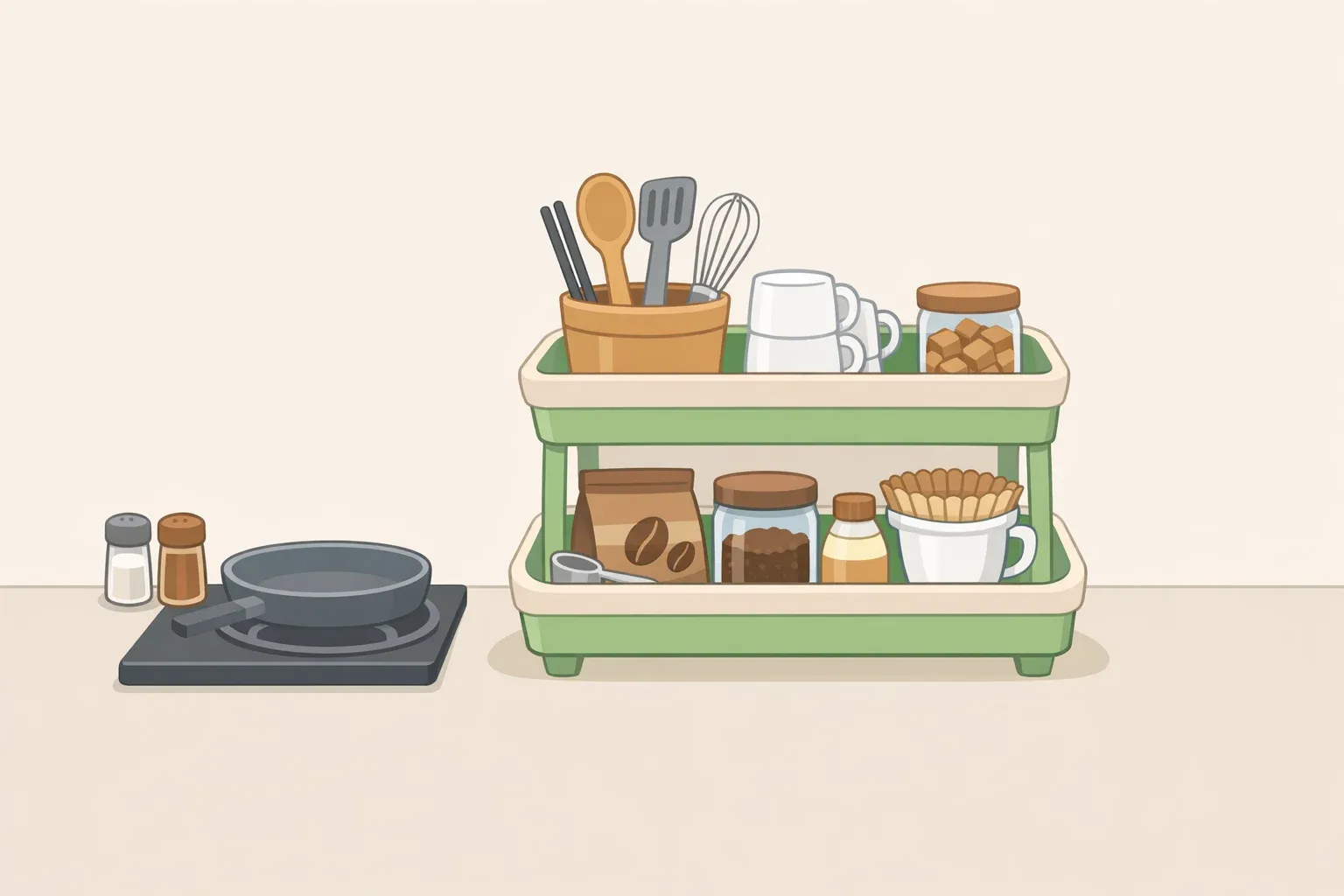
Joseph Abbott, renting a 275-square-foot studio, faced the same problem. His fix: a two-tiered planter used as a countertop silverware storage solution, positioned beside the coffee machine, holding knives, forks, spoons, and coffee pods across six individual compartments. All visible, all reachable at a glance, per Apartment Therapy (published March 27, 2026).
What made it work wasn't the planter specifically. Joseph had spare counter space and needed visible, grab-and-go storage. Those two conditions together are what this guide is actually about.
One transparency note up front: the item Joseph used "appears to be" a two-tiered planter, but the closest functional equivalent the March 2026 Apartment Therapy piece identified is a desktop organizer, not a garden product. That distinction matters for food safety and cleanability, and the sections below treat it seriously.
This guide covers how to assess whether your kitchen is a candidate for this approach, how to choose the right organizer, and how to set it up so it actually functions rather than just adding one more object to the counter.
When a planter kitchen countertop storage solution works and when it doesn't
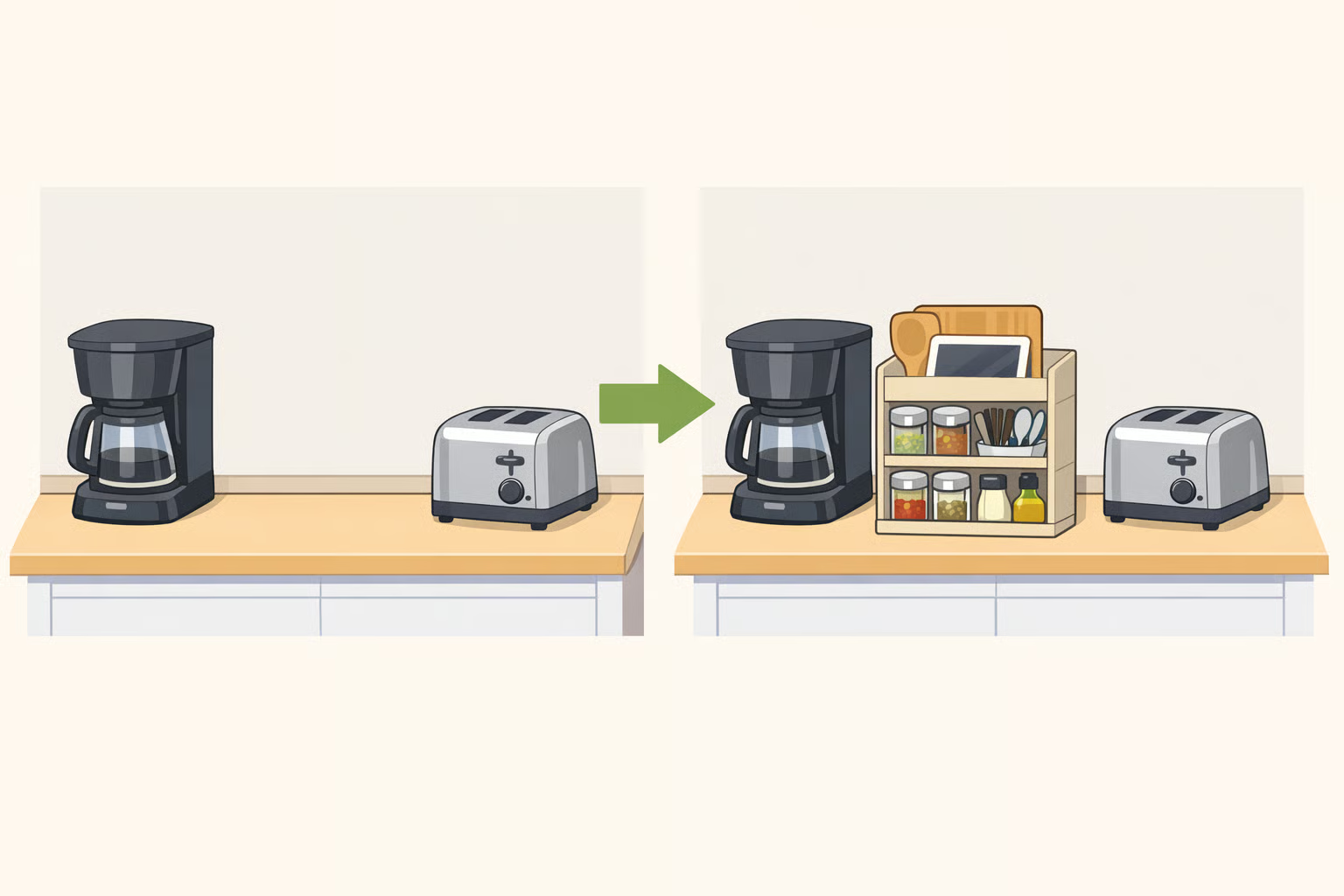
The tiered-organizer approach is a direct trade: give up a slice of counter real estate, gain the storage function a drawer would otherwise provide. Joseph's kitchen made this work because, despite having no drawers, it had usable countertop. He kept the surface deliberately clear only a decorative canister, coffee maker, and the organizer on it, as the March 2026 Apartment Therapy piece noted. If your counter is already your primary prep surface and overflow zone, this trade doesn't help. You'd be solving a storage problem by creating a clutter problem.
The vertical format is the key functional advantage. A tiered design stacks upward rather than spreading outward, so it claims a smaller horizontal footprint than a flat tray of the same utensils would. That's the logic worth holding onto: not the planter aesthetic, not any specific product, but the principle that vertical compartmentalization lets a small counter zone do real storage work.
Quick decision checklist run through this before proceeding:
- Do you have a consistent 8–10 inch section of counter that isn't your main chopping or prep zone?
- Are the items you'd store things you reach for daily, not occasionally?
- Is your primary problem visibility and access, not total storage volume?
Yes to all three: this approach is worth trying. If not, better fits exist wall-mounted rails or magnetic strips when counter is tight but wall space is available; a slim rolling cart when neither counter nor wall works; an over-cabinet-door organizer for lightweight overflow.
Don't use this approach if:
- You prep on every inch of available counter. There's no slack to trade, and adding an organizer just shrinks your working surface further.
- You cook greasy food regularly and won't commit to a weekly wipe-down. Open storage in a kitchen absorbs steam and grease faster than most people expect. An organizer that can't stay clean defeats the point.
- You need enclosed storage because of dust, pets, or habitual splatter near the counter zone you're considering. Visible storage is only an advantage when what's visible stays presentable.
The checklist and the three failure cases together answer the question the article title promises. If none of the disqualifiers apply and you passed the checklist, the rest of this guide is for you.
Choosing the right organizer: what actually matters
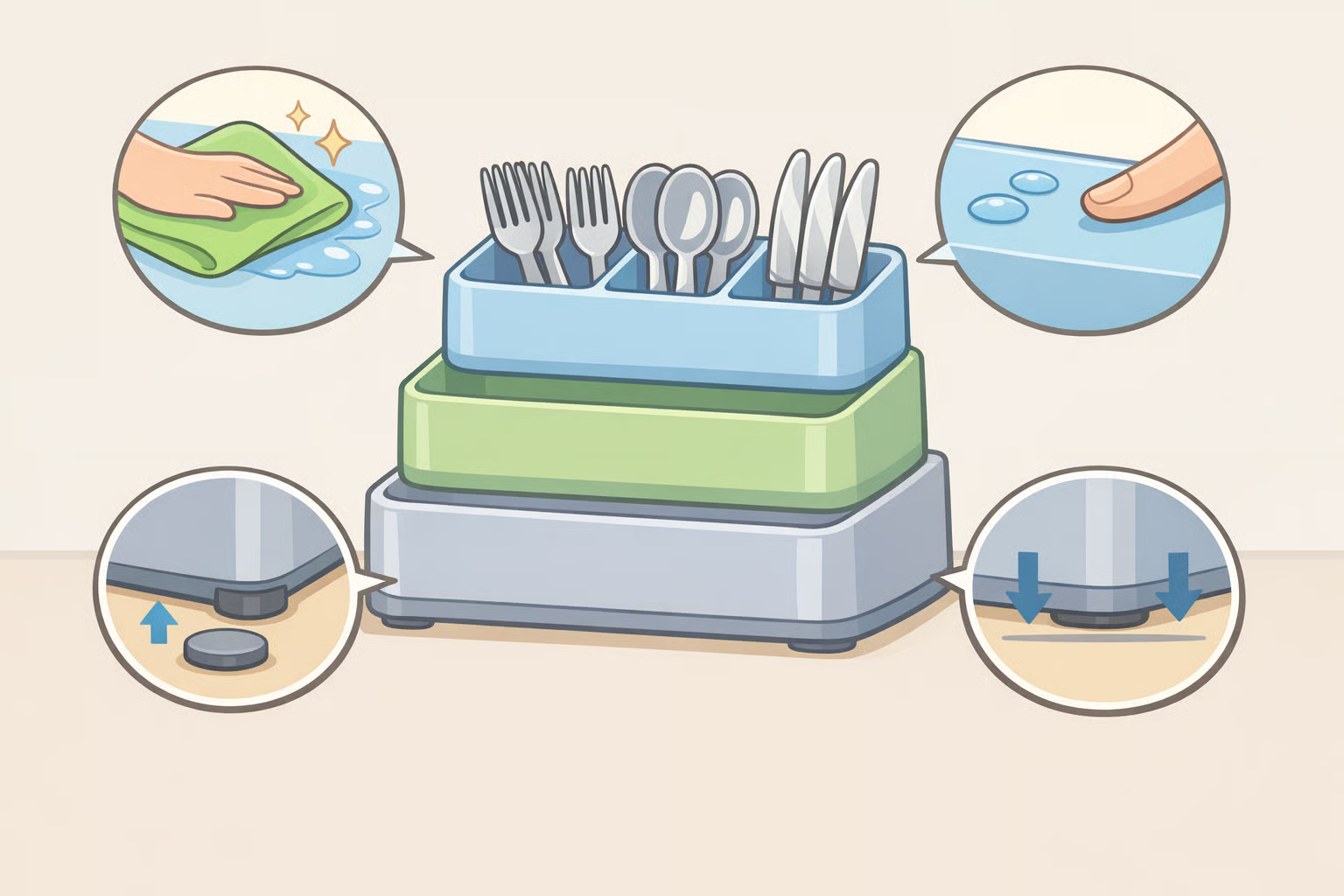
The item Joseph used is unconfirmed. It "appears to be" a two-tiered planter, but the closest comparable product identified in the March 2026 Apartment Therapy piece is a desktop organizer on Amazon, not a garden item. That distinction is worth holding: desktop organizers are designed to hold upright objects in compartments, clean easily, and sit stably on flat surfaces. Actual planters often have drainage holes and porous or unfinished materials. Neither feature belongs near eating utensils.
What you're actually shopping for is a tiered desktop or countertop organizer with individual compartments. The "planter" framing gives you the visual idea; the desktop-organizer category is the right place to search. A comparable option runs under $13 and comes with four slide-out compartments in white plastic, per the same Apartment Therapy article.
The food-safety question whether a given material is appropriate for contact with utensils used for eating isn't fully addressed in the available source material. Treat it as a practical checkpoint before buying. Wipeable, non-porous surfaces are the right default.
What to look for in any tiered organizer:
- Compartment openings large enough to hold a small handful of forks upright. Roughly 2 inches across is a workable minimum.
- Smooth, wipeable interior surfaces: plastic, coated metal, or glazed ceramic. Avoid unfinished wood or porous materials near food prep.
- No drainage holes. Fine for plants; a problem for silverware.
- A stable base. Metal utensils standing upright raise the center of gravity, so a wide or weighted base prevents tipping when the organizer is fully loaded.
- Enough compartments to separate item types without overfilling any single one. Joseph's six-compartment setup held three cutlery types plus coffee pods with room to spare.
One broader principle worth noting: products labeled for one room often work perfectly in another when the form fits the function. A kitchen drawer organizer mounted on a closet wall works as a wall-mounted jewelry station for exactly this reason the compartment size and cleanability are what matter, not the packaging, as Apartment Therapy showed in November 2025. Keep that in mind while shopping. You're looking for the right shape and material, not the right aisle.
Setting up your countertop organizer: step by step
Prerequisites: A tiered organizer with at least four compartments. A cleared counter zone away from your primary prep area. The utensils and frequently-used items you plan to store.
1. Wash the organizer before loading it. Even new products carry dust or manufacturing residue. Warm soapy water, rinse, dry completely. You're storing eating utensils in it don't skip this step.
2. Position it away from your main prep zone. Joseph placed his at the far end of the counter beside the coffee machine, not in the middle of his working surface, per the March 2026 Apartment Therapy piece. Easy reach without blocking where you actually cook. Near an appliance cluster or at one end of the counter tends to work better than center placement.
3. Decide what belongs in it before loading anything. This organizer is for daily-use items: everyday forks, spoons, frequently used cooking tools. Rarely used items don't belong here they'll accumulate grease and make the accessible things harder to grab. Unsure about something? Leave it out for a week and see whether you actually reach for it.
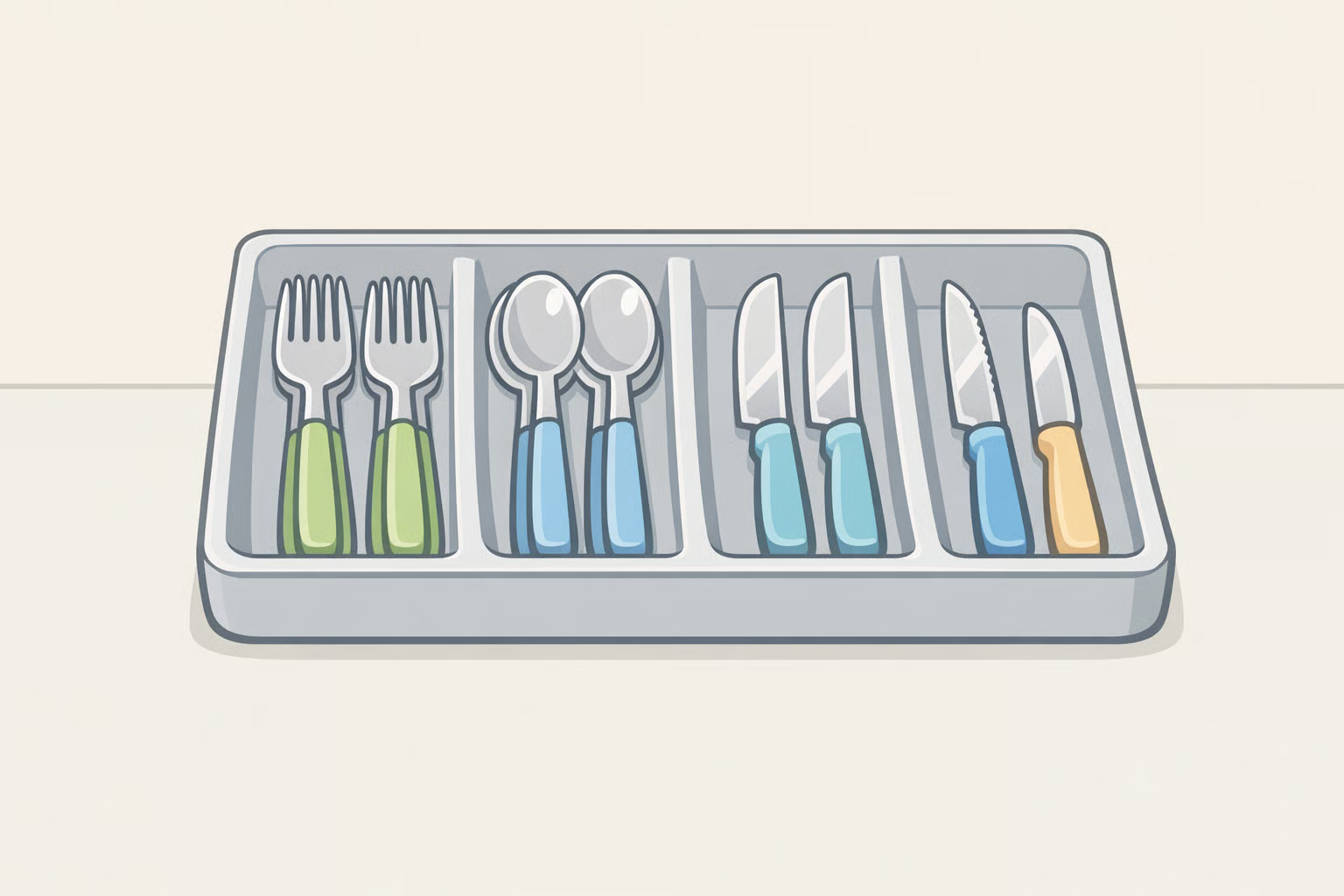
4. Sort by type, one compartment per category. Knives, forks, and spoons each get their own slot. If additional compartments are available, assign each one to a single high-frequency item type: coffee pods, a spatula, a can opener. Don't mix categories within a compartment. The point is finding something in one motion, not hunting through a jumble.
5. Stand utensils handles-down for stability. Handles-down lowers the center of gravity and keeps the organizer from going top-heavy. One exception: sharp knives should face handles-up so you grip the handle rather than the blade when reaching in. If a knife won't fit safely handle-up without destabilizing the compartment, store it elsewhere a magnetic strip or knife block rather than forcing it into this system.
6. Check the loaded footprint. A fully loaded organizer is noticeably heavier than an empty one. Confirm it isn't tipping and doesn't crowd whatever sits beside it. If it feels unstable, move it toward a wall or corner for lateral support.
What to expect: Everything visible at eye level, reachable without opening anything or leaving the kitchen. Guests can find silverware without asking which sounds trivial until you've been the one constantly answering that question, as the March 2026 Apartment Therapy piece pointed out.
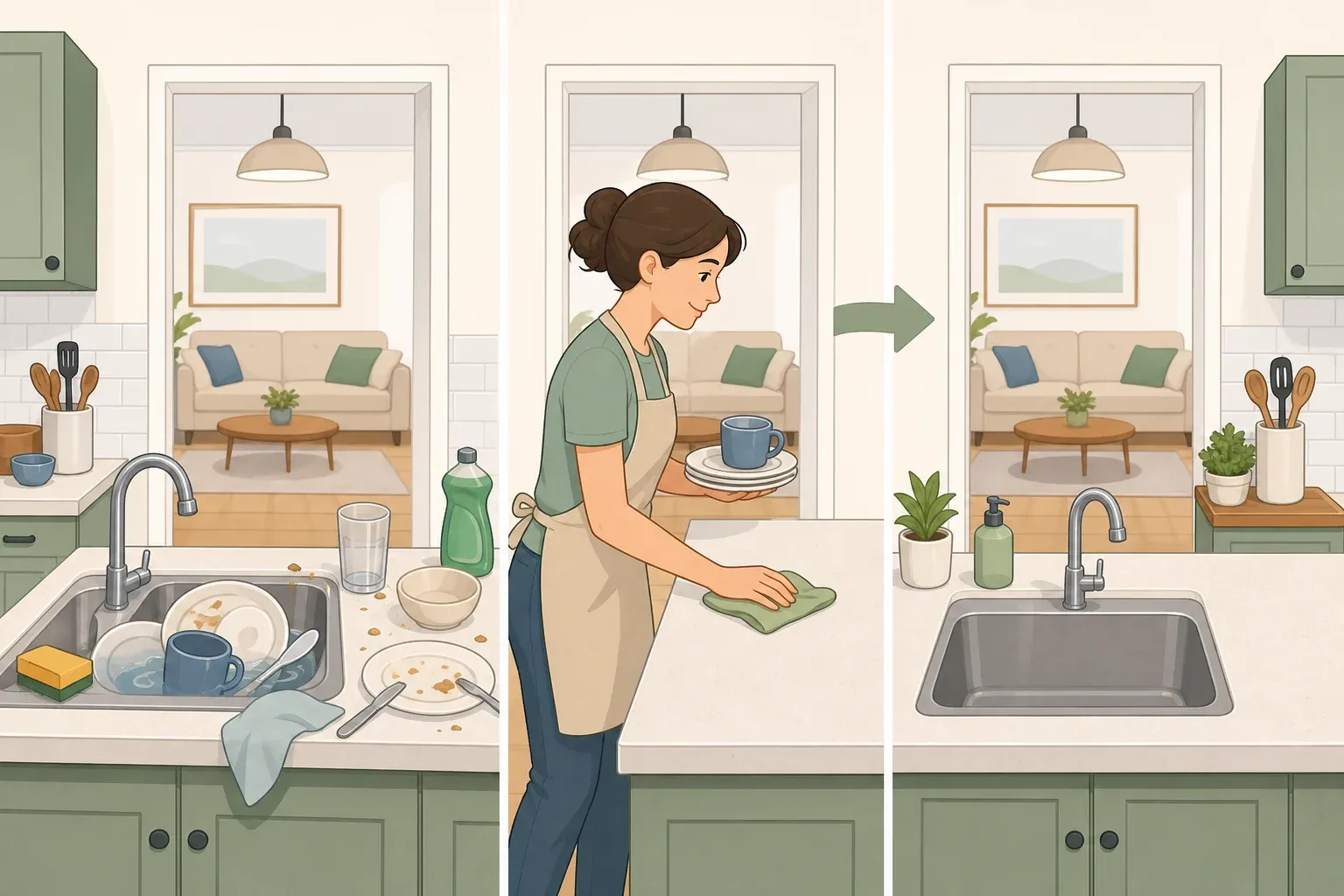
Ongoing maintenance: Open kitchen storage needs a weekly wipe-down. Pull the organizer out, clean the counter beneath it, wipe the compartments. Build it into whatever cleaning routine already exists. A system that's annoying to maintain won't stay maintained and an organizer coated in kitchen grease defeats the purpose entirely.
What this solves and where to go next
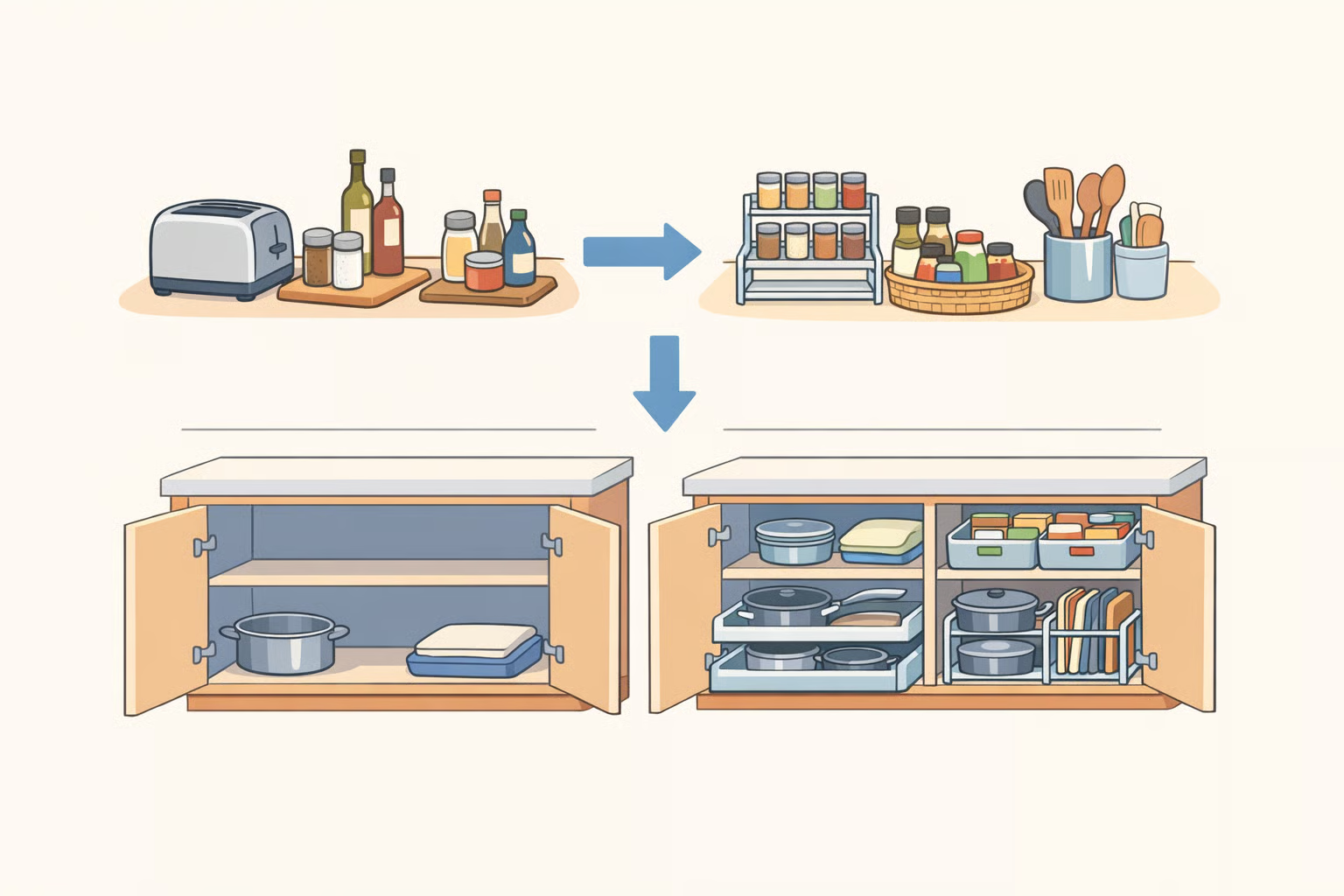
Joseph's 275-square-foot studio shows that a drawer-free kitchen isn't an unsolvable problem. It's a storage-type mismatch that requires trading one resource (drawer space) for another (a small slice of counter), as documented in the March 2026 Apartment Therapy piece. The planter framing is the hook. The actual fix is vertical, compartmentalized, visible storage placed where usable space already exists.
The cost of entry is low. A functional tiered desktop organizer comparable to the one Joseph used runs under $13 low enough that testing the concept costs less than a bad dinner out. If it doesn't work for your kitchen layout, you've lost almost nothing.
The takeaway that carries past this specific setup: in small spaces, the room label on a product is rarely a hard constraint. Compartment size, material, and form factor determine whether something works. Once that logic clicks, the range of practical options expands considerably and most of them are already available, inexpensive, and sitting in product categories you wouldn't think to search first.
Once countertop storage is working, the follow-on problem in most small kitchens is cabinet organization, particularly when cabinets are doing triple duty for dishes, dry goods, and everything that has no other home. That's the next problem worth solving.




Comments
Be the first, drop a comment!