



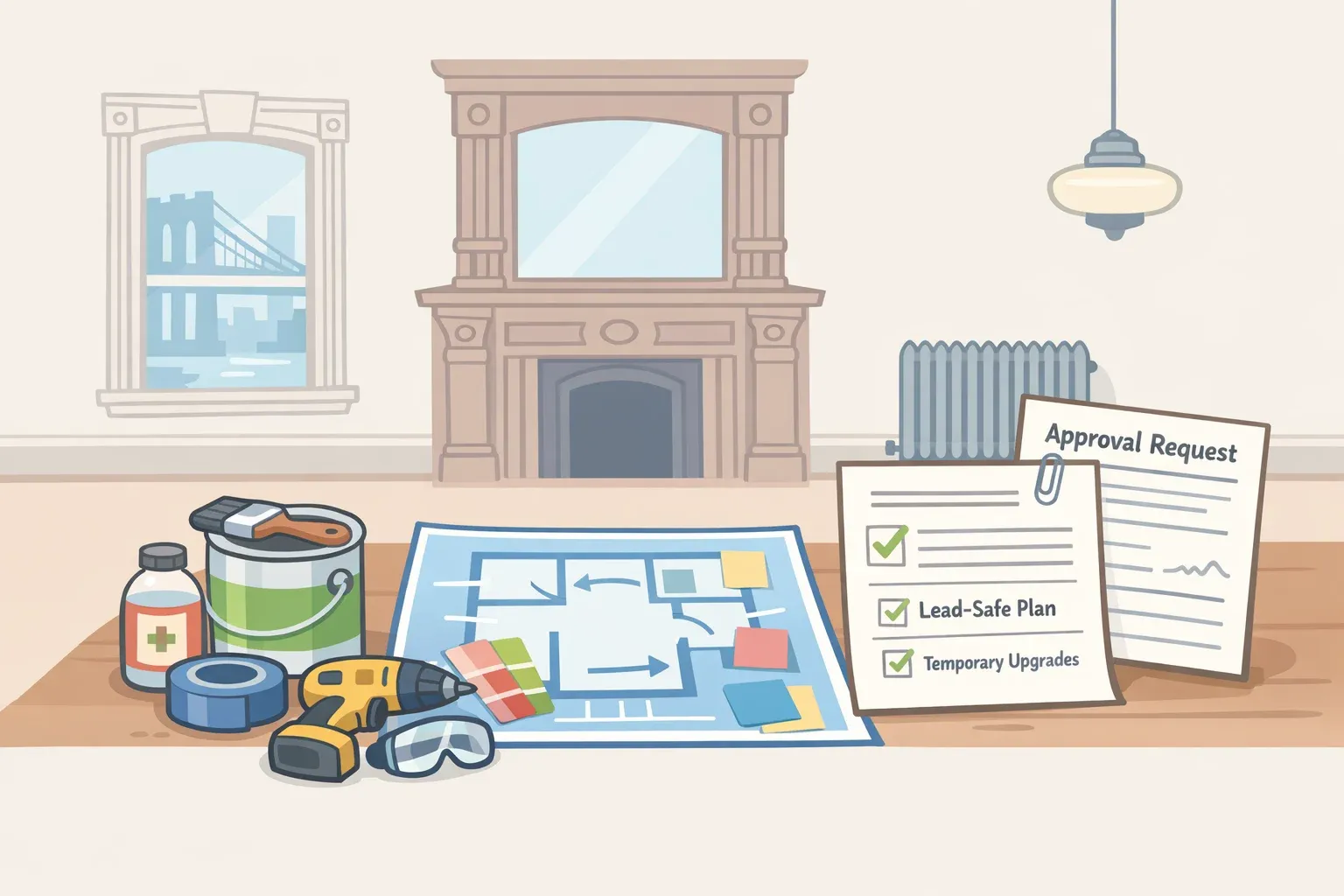
Good historic apartment renovation ideas for a pre-1978 rental have to survive three separate tests before a single tool comes out: can the change be undone at move-out, does the landlord need to sign off, and does it disturb a painted surface old enough to contain lead. These are three different questions, not one blended judgment call.
A project can be perfectly reversible and still require written approval. It can be approved and still need lead-safe handling. Sorting this out before buying materials is the difference between a smooth update and a fight with the landlord later.
Buildings built before 1978 may have lead-based paint, and the older the building, the more likely it is. That single fact changes the order of operations for almost every project in an old apartment: swaps that don't touch a painted wall can usually move fast, while anything touching trim, plaster, or molding needs the slower three-part check above before a single material gets purchased.
This guide walks through that check step by step, using two higher-budget Brooklyn preservation projects further down as design reference points for finishes and layout, not templates to copy directly at rental scale.
The sequence to run before spending a dollar
Before buying anything, work through these steps in order:
Photograph the existing condition of every surface the project will touch.
Reread the lease clause on alterations, fixtures, and move-out restoration.
Identify every surface that will actually get drilled, cut, scraped, or peeled, not just the obvious one.
Send a written approval request to the landlord.
Confirm the building's construction date. Homes built before 1978 may have lead-based paint, and the older the home, the more likely it is.
Buy materials only once the first five checks are settled.
A written approval request works best when it spells out specifics instead of asking a vague favor. Something like: "I'd like to replace the kitchen faucet with [model], keep the original fixture, and have [person/contractor] perform the work. Please confirm whether you approve the change and what restoration you expect at move-out." That level of detail gives a landlord something concrete to say yes to, instead of a text they have to guess about.
How to preserve original features in an old apartment: lease terms and three separate tests
Start by identifying which features in the unit are original to the building, since that shapes how carefully any project needs to be planned around it. Older apartments can hold onto a surprising amount of original fabric: arches, wood floorboards, plaster walls, trim that's never been replaced, but the mix in any given unit depends entirely on what past renovations already stripped out. Walk each room and note what's original versus what's already been swapped, before deciding what to touch.
The legal side splits into three separate pieces, and it's worth keeping them apart instead of blending them. Whether a renter is allowed to alter the unit at all comes down to the lease and local law, not federal lead rules, so that's a landlord conversation first. Under the EPA's RRP Rule, a contractor hired to do covered renovation, repair, or painting work in a pre-1978 rental must be lead-safe certified.
Contractors working on any pre-1978 building are required to assume the paint is lead-based unless testing shows otherwise, which is the same fallback assumption an individual renter should make when the building's paint history is unconfirmed. The rule generally doesn't apply to homeowners doing work in their own home, but it does apply once someone rents out all or part of a home.
\Beyond that, the EPA's DIY guidance says a renter or homeowner doing the work personally should follow lead-safe work practices; the certification requirement itself targets hired contractors, not tenants doing their own small jobs.
Apply three separate tests to every project under consideration:
Reversible? Can it be removed at move-out with no patching, no paint touch-up, no visible trace?
Approved? Does the lease or landlord require written sign-off, regardless of how reversible the project is?
Lead-relevant? Does it involve drilling, sanding, scraping, or prying at a painted surface?
Freestanding furniture, plug-in lighting, and adhesive hooks
Reversibility: Typically removable without patching, but check the surface first.
Approval: Confirm with the lease; policies vary.
Lead-safety consideration: Low if no painted surface is drilled, cut, scraped, or peeled.
Faucet, showerhead, or fixture swap
Reversibility: Depends on whether the original part is kept for reinstallation.
Approval: Ask the landlord; plumbing terms vary by lease.
Lead-safety consideration: Depends on whether installation requires cutting or drilling into a painted wall.
Curtains, tension rods, and removable shelf liners
Reversibility: Typically removable.
Approval: Confirm with the landlord if the lease doesn't address it.
Lead-safety consideration: Low if the hardware doesn't require drilling into painted trim.
Molding, trim additions, or painted-surface repairs
Reversibility: Depends on the installation method.
Approval: Get written permission.
Lead-safety consideration: Yes; test the surface or assume it contains lead.
Wall removal, plaster repair, or large-scale demolition
Reversibility: Not reversible.
Approval: Get written permission and check local permit requirements.
Lead-safety consideration: Yes; hire a professional.
This list is a screening tool, not a substitute for the lease or an actual paint test. The lead-safety column follows EPA guidance on what disturbs a painted surface, not an assumption that every surface in a pre-1978 building is automatically hazardous.
Function-first upgrades: likely low-risk, but confirm with your lease each time
These solve a daily annoyance without touching trim or painted surfaces, and plumbing or lighting swaps are usually the easiest place to start. Treat them as generally low-risk, not automatically approval-free. Breaking the category down clarifies where the real variables sit, and it's a useful shortlist of renter-friendly historic apartment updates to work through first:
Fixtures (faucets, showerheads): Reversible if the original part gets stored somewhere safe, but some leases restrict plumbing changes specifically. Ask before buying.
Lighting: Plug-in and lamp-based fixtures typically need no sign-off. Swapping a hardwired fixture is an electrical task that may require the landlord's approval and, depending on scope, a licensed electrician.
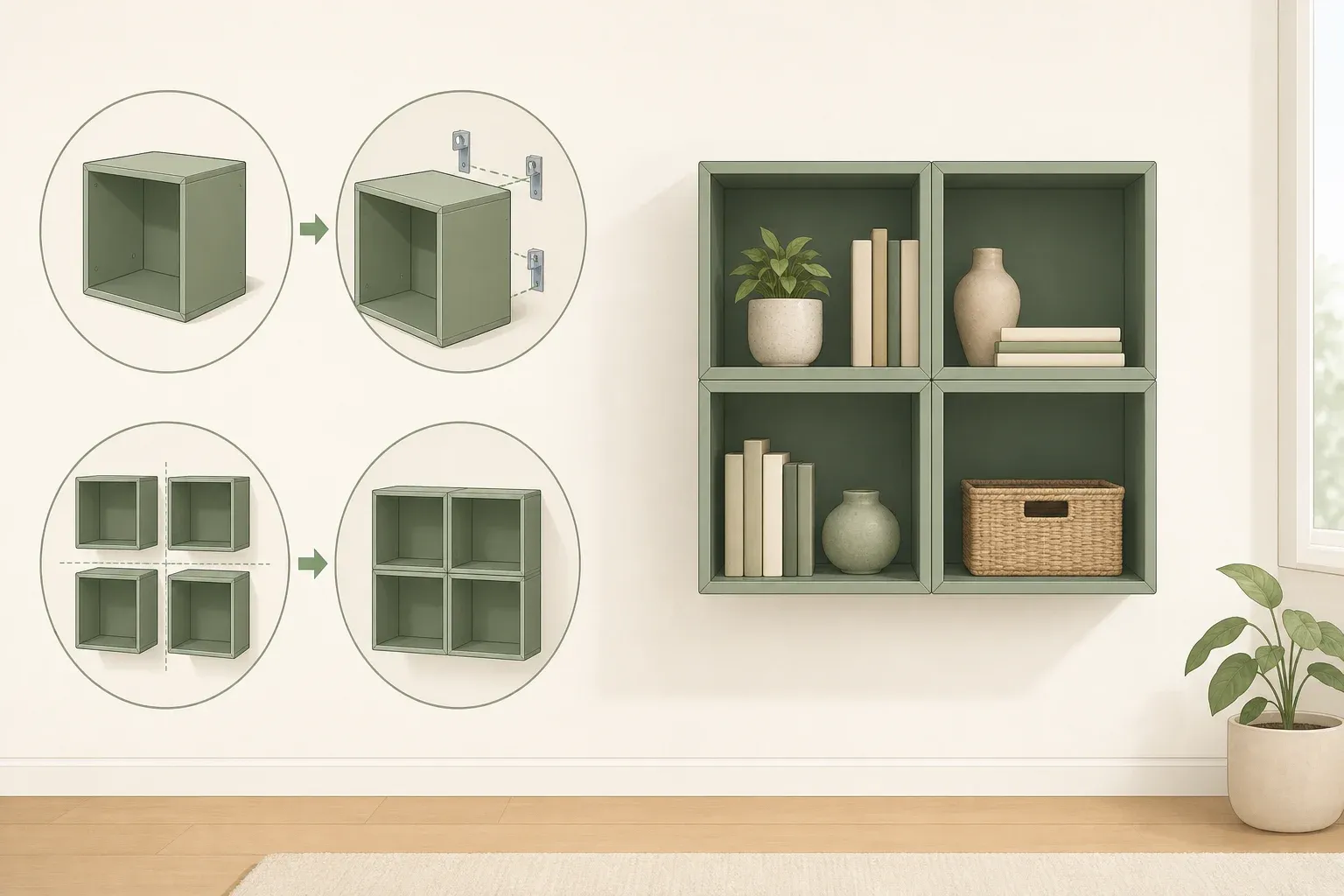
Adhesive-mounted items (hooks, small shelves, removable hardware): Generally low-risk on painted drywall, but test a small area first and confirm the surface isn't original plaster or delicate trim.
Window treatments: Tension rods and clip-on curtains are usually fine, but confirm with the landlord if the lease is silent. Drilling for permanent brackets moves the project into the next category entirely.
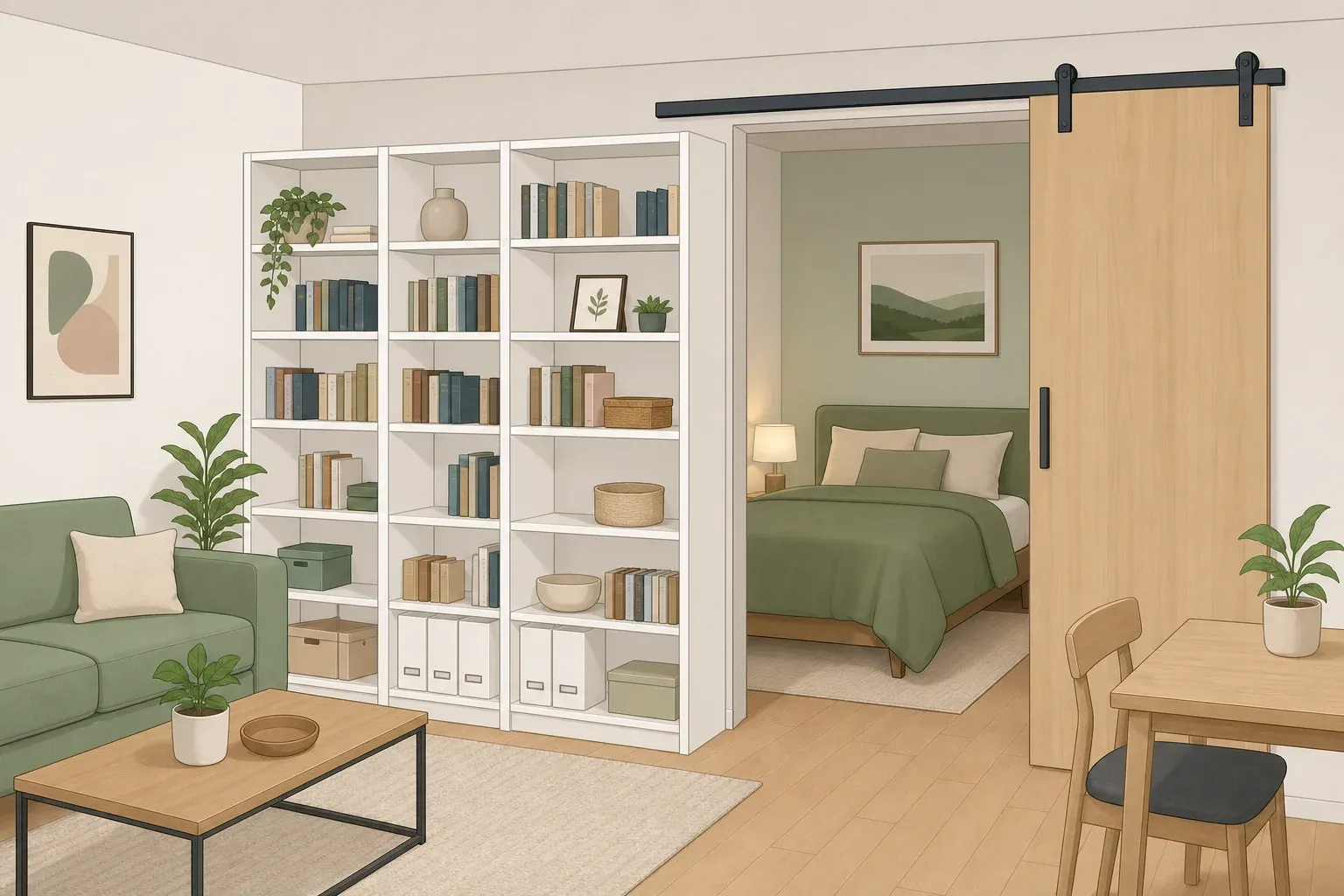
When original architecture is intact, favor freestanding storage over anything mounted to the wall. That's the design principle behind a Park Slope renovation where the architect built new kitchen cabinetry with no upper cabinets and nothing reaching the ceiling, specifically to leave the home's original coffered ceiling untouched. That was an owner-led, professionally designed project at a different budget entirely, but the transferable idea holds up at rental scale: choose a console or freestanding shelf over anything built in.
Getting approval and choosing DIY vs. a certified professional
Once a project moves past the function-first category into trim, molding, plaster, or any painted surface, get written approval before buying materials, and confirm up front who's responsible for testing and executing the work.
The EPA recommends hiring a lead-safe certified contractor for any renovation, repair, or painting project in a pre-1978 home. Contractors performing that covered work in pre-1978 homes, child care facilities, and preschools are legally required to be certified under the RRP Rule, so renters hiring anyone for approved trim or molding work should ask about certification directly or use EPA's certified-contractor search tool before booking the job.
If a renter proceeds with an approved project themselves, the EPA does provide DIY lead-safe practices for that situation, covered below. The agency's own recommendation is still to hire a certified contractor for RRP work in a pre-1978 home, though, and wall removal, plaster patching, and large sections of trim sit outside ordinary DIY scope regardless of who's doing the work.
If painted surfaces will be disturbed: a narrow safety checklist
Renovation, repair, or painting in a pre-1978 home can generate dangerous lead dust if lead-based paint is present, which is why the EPA recommends testing by a certified lead inspector or risk assessor before starting any project that disturbs those surfaces. If testing isn't done, the agency's default guidance is to assume the surface contains lead and follow lead-safe DIY practices. That's a fallback assumption, not a substitute for actual testing.
For an approved project a renter decides to do personally, the EPA's DIY practices include: contain the work area so dust doesn't spread to the rest of the apartment, keep pets and household members out of it, wear protective gear, and minimize dust generation. A low-temperature heat gun, under 1,100 degrees Fahrenheit, is one narrow tool the EPA cites for removing paint or surface coatings, not a general substitute for sanding.
Wash hands and face every time work stops, wash work clothes separately from the rest of the household's laundry, and don't eat, drink, or smoke in the work area, since dust can contaminate anything nearby. Once the project is done, clean the area thoroughly following those same practices before returning it to regular use. Hiring a certified technician for post-renovation dust testing is optional, but it's the only way to actually confirm the space is clean. This checklist supports small, approved projects only. Any plaster repair or demolition belongs with a certified professional.
Modernizing an old apartment without losing character: measuring, matching, and choosing finishes
As a general planning practice, measure the existing trim's height and profile before buying molding, hardware, or paint, so any addition sits flush instead of looking tacked on. Identify attachment points that avoid cracking plaster, and confirm the new piece can come off or be painted over at move-out without damaging the surface underneath, the same removability test from the earlier table.
Whether a molding project is DIY-appropriate comes down to how much painted plaster it touches, not how the finished look reads. Anything requiring plaster patching, matching an ornate original profile, spanning multiple rooms, or touching an untested surface falls under the EPA's recommendation to use a certified contractor for RRP work in pre-1978 homes. That threshold is what separates a weekend project from one that belongs with a professional, no matter how simple the finished result looks.
For color and finish direction relevant to Brooklyn brownstone apartment decor, a separate Brooklyn preservation project offers a useful reference point. That design team researched materials meant to complement the home's 18th-century origins, mixing Arts and Crafts-era prints with earth tones, and landed on a William Morris-designed wallpaper pattern alongside Farrow & Ball's Oval Room Blue, a shade with roots in the 18th century, painted on every door in the house.
The same project paired traditional crystal doorknobs with a modern George Nelson bubble pendant light, described as "a touch of modernism" against an otherwise historic palette. It's one way to avoid a fully period-matched look without abandoning the building's age entirely.
When to hold off
The Brooklyn examples throughout this guide point to one workable principle: choose freestanding, furniture-like additions, consoles instead of built-ins, plug-in fixtures instead of hardwired ones, that leave original ceilings, floors, trim, and plaster visible and untouched.
Don't start any project until three things are sitting in the same file: written approval, a clear read on which surfaces the work actually touches, and a lead-safety decision, either test results or the assume-and-follow-practices fallback. If any one of those is missing, wait. That's not overcaution. It reduces the chance of a molding upgrade turning into a security-deposit dispute or an uncontrolled lead-dust problem, though no checklist can promise either outcome won't happen anyway.







Comments
Be the first, drop a comment!