



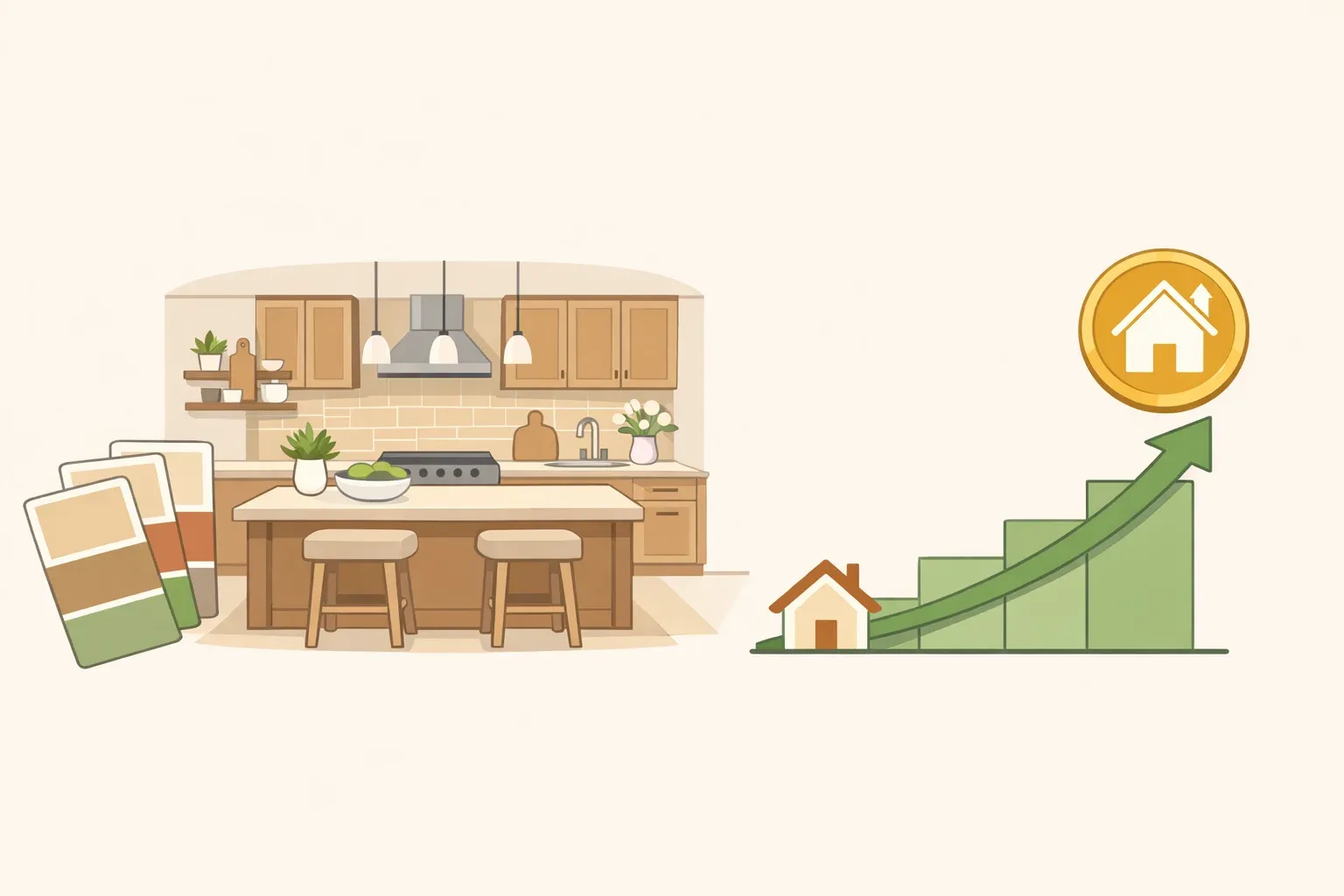
For decades, the standard advice given to home sellers has been to neutralize. Paint it white, pack away the personality, give buyers a blank canvas. Zillow's 2026 Paint Color Analysis suggests that guidance is costing sellers real money.
The study, which surveyed more than 4,400 recent and prospective buyers, found that all-white interiors underperformed warmer, more characterful alternatives across tested rooms, and nowhere was that gap more consequential than in the kitchen, where choosing the best kitchen paint color for resale value could swing buyer offers by nearly $8,000 in either direction.
That spread, from charcoal gray at the top to ochre yellow at the bottom, is the largest of any room in the study, according to Zillow. The kitchen is where buyers are most sensitive to color. It's also where sellers are most likely to make the wrong call.
The NKBA's 2026 Kitchen Trends Report adds independent weight: 96% of designers surveyed expected earthy neutrals to dominate kitchen palettes, with greens from sage to emerald to olive predicted as a leading accent family by 60% of respondents, Better Homes & Gardens reported. The Zillow buyer data and the design industry's professional consensus are pointing in the same direction.
What follows is an examination of what the Zillow 2026 kitchen paint color study actually shows: which shade came out on top, which one is the safer all-around bet, and which colors could actively damage a sale, along with an honest look at what the data can and cannot tell us.
What Zillow's 2026 paint color study actually measured and what it didn't
Zillow's behavioral science team randomly assigned more than 4,400 study participants images of home interiors painted in one of 11 colors. Each participant rated the home on four dimensions: how much they liked it, how interested they were in purchasing it, how likely they were to schedule a tour, and how much they'd be willing to pay. Those responses were compiled into a composite score for each color across four rooms: kitchen, living room, bedroom, and bathroom, as Zillow outlines.
The dollar figures reflect stated willingness to pay, not verified outcomes from closed transactions. When Zillow reports that charcoal gray kitchens were associated with $1,373 more in buyer offers than white kitchens, that figure comes from the difference between what participants said they'd pay for homes in each color group. It's a meaningful signal about buyer sentiment, not a guarantee that repainting will add exactly that amount to a closing price.
There's a second limitation worth acknowledging. The study doesn't isolate wall paint from everything else visible in the room. Cabinetry, countertops, and lighting are all present in the images, which means the measured "color effect" may reflect the full palette of a kitchen rather than wall color alone. A charcoal gray wall paired with white Shaker cabinets reads differently than the same shade next to dark wood. None of this undermines the directional value of Zillow's findings; sellers should just treat these numbers as a well-researched guide to buyer preference, not a renovation ROI calculator.
Best kitchen paint color for resale value: why charcoal gray leads
Among all colors tested in the kitchen, charcoal gray was associated with the highest buyer offers — approximately $1,373 above white — with dark plum placing second at around $867 more, according to Zillow. Both are grounded, moody shades that align with a broader buyer preference for spaces that feel current rather than stark.
Zillow home trends expert Amanda Pendleton frames the kitchen's outsized psychological weight plainly. "Kitchens carry more psychological and emotional weight than any other room in a home," she told Real Simple this month, "Buyers use them as a proxy for the overall condition and taste level of the property. When the color feels contemporary, it creates a halo effect that elevates a buyer's impression of everything else they see. When it feels dated, that doubt follows them through the rest of the tour and eventually into their offer."
Charcoal gray's kitchen advantage connects to the same taste shift driving results across the broader study. Zillow's own research finds that buyers are drawn to warm, grounded interiors over all-white walls and spaces that feel deliberate rather than generic. The shade is dark enough to signal intention, neutral enough not to polarize. The NKBA's designer survey independently corroborates the direction: earthy neutrals and deep greens are the predicted foundation of kitchen palettes this year.
If a seller can only repaint one room before listing, Zillow's analysis points to the kitchen as the highest-return choice. The data make a strong case for it.
Sage green vs. charcoal gray: the case for the safer bet
Charcoal gray wins the kitchen-specific competition. Sage green wins everywhere.
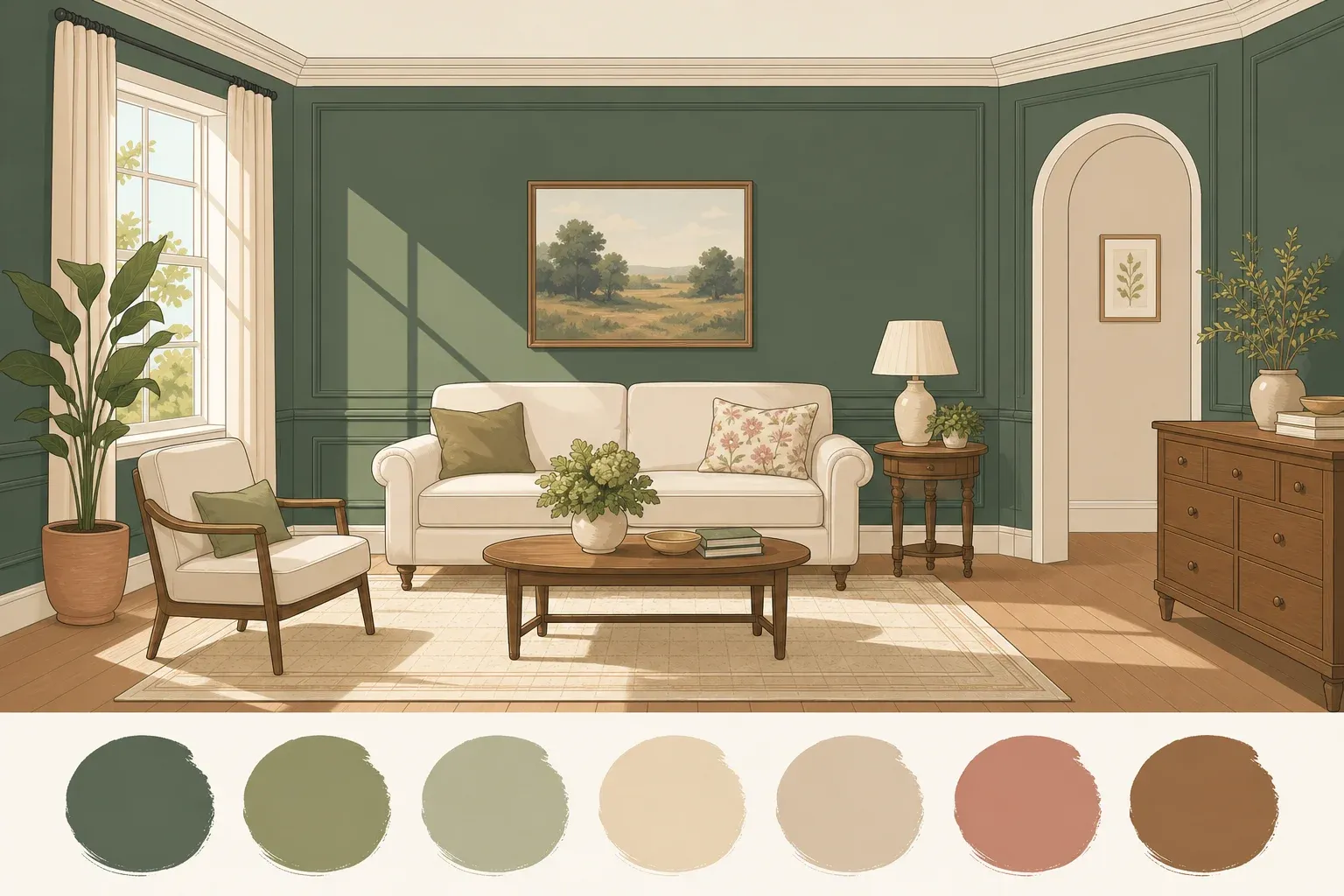
Sage green was the only color in Zillow's study to rank in the top tier across all four rooms: bedroom, bathroom, living room, and kitchen, making it the only color with no weak-room penalty for sellers repainting multiple spaces, Zillow confirms. In the bedroom, it was associated with offers roughly $1,035 higher than white; in the living room, nearly $500 more.
There's also a practical argument for sage in kitchens specifically. Interior designer Gabrielle Santiago, quoted by Martha Stewart earlier this week, notes that when using green, "it's important to be mindful of natural lighting. If you're lacking natural light, it's best not to choose a shade that is too dark, as it can appear muddy." She describes sage green as "the perfect timeless color with a splash of personality," one that pairs naturally with butcher block countertops and brass hardware. Charcoal gray, by contrast, rewards kitchens that have the light to carry it.
The NKBA's designer survey adds weight from an independent direction: 60% of professional designers predicted green families from sage to olive to emerald would be among the dominant kitchen color choices this year. Two separate data sets, one tracking buyer sentiment and one tracking designer consensus, arrive at the same answer.
The choice between the two isn't a tiebreaker; it's situational. Charcoal gray produced a marginally stronger buyer response in kitchen-specific testing. Sage green is the lower-risk recommendation for sellers repainting multiple rooms, for kitchens without abundant natural light, or for anyone uncertain about how a darker shade will land. Both beat white by a meaningful margin.
Which color should you choose for your kitchen?
The data points to three scenarios worth considering before opening a paint can:
Choose charcoal gray if the kitchen gets strong natural light and you're repainting only that room. It's the top-performing kitchen color in Zillow's study, with a potential upside of around $1,373 in buyer offers over white.
Choose sage green if you're repainting multiple rooms or the kitchen runs dim. It performs well in every room Zillow tested, carries no room-specific penalty, and won't read as heavy in low-light conditions.
Avoid ochre yellow and pale pink if resale is the priority, full stop. The downside risk from these colors dwarfs any upside from the top performers, and the data is unambiguous.
That last point is worth sitting with. For most sellers, the math on avoiding bad colors is more compelling than the math on choosing optimal ones.
Worst kitchen paint colors when selling your home: where the real risk lives
The downside numbers in this study are larger than the upside, and that asymmetry matters more than most sellers realize.
Ochre yellow, a deep, saturated golden shade, was associated with kitchen offers approximately $6,630 lower than top-performing alternatives, making it the single worst color in the entire study, according to Zillow. Used throughout the home kitchen, living room, bedroom, and bathroom, the same shade was linked to offers roughly $18,164 lower than homes painted in winning colors. That figure alone is large enough to reframe how sellers think about color choices.
Pale pink in the kitchen carried the second-largest penalty, associated with offers approximately $4,201 lower. The same shade ranked in the bottom three for every room, potentially costing sellers $6,013 in the bathroom, Zillow found. Ochre yellow holds the single worst overall ranking in the study; pale pink is a consistent drag across rooms.
The nearly $8,000 spread between charcoal gray at the top and ochre yellow at the bottom is the largest of any room in the study, wider than the equivalent range in the living room, bedroom, or bathroom, Real Simple reports. The potential upside from choosing charcoal gray over white is roughly $1,373. The potential downside of choosing ochre yellow is more than four times that amount.
Both colors appear to fail on the same grounds: they read as dated, and buyers treat dated as a signal that something else might be off.
What this means before you open a paint can
The Zillow study's central practical message is clear enough. The kitchen delivers the largest range of buyer impact of any room in the house, and charcoal gray is the best-supported choice among kitchen paint colors that increase home value, potentially adding around $1,373 to offers relative to white, based on Zillow's analysis.
Sage green is the right call for sellers repainting multiple rooms or working with a kitchen that lacks strong natural light. Pendleton estimates that repainting each room in its top-performing color could add more than $5,000 to a seller's bottom line, but since these figures come from stated willingness to pay rather than closed transaction data, they're better treated as directional signals than guaranteed returns.
Color preference shifts. What reads as current in 2026 may not carry the same weight in three years. But the underlying principle that buyers respond to kitchens that feel intentional rather than default to is durable. Charcoal gray and sage green fit that bill right now.
Ochre yellow and pale pink do not. In the kitchen, especially, the cost of getting that wrong isn't abstract.




Comments
Be the first, drop a comment!