



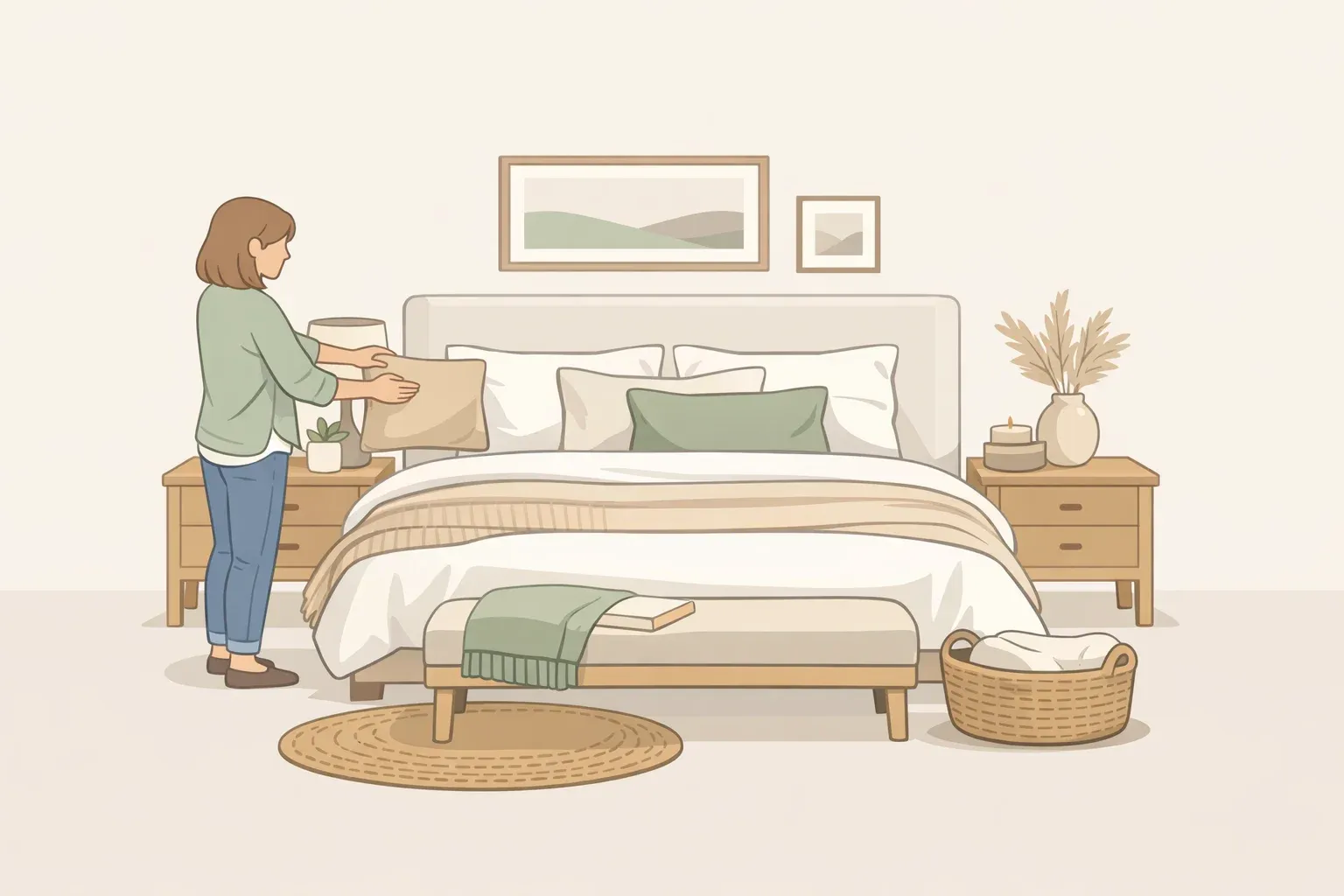
Interior designers who spoke with Architectural Digest and The Spruce keep flagging the same handful of errors in client bedrooms, and one habit sits behind several of them: treating "calm" as a synonym for "empty."
Designer Rushda Hakim says equating minimalism with starkness turns a bedroom into "an IKEA showroom" instead of a thoughtfully designed retreat. That's the short version of the bedroom decorating mistakes to avoid if the goal is a room that feels finished rather than staged.
Part of the problem is sequencing. Bedrooms often get decorated last, once the living room and kitchen are already done. A separate audit of bedroom clutter took a similar approach, asking a designer to name the specific styling choices that make a room look messy rather than simply untidy. The culprits turned out to be furniture and storage decisions made, or skipped, early on, not a general lack of tidiness.
The through-line in nearly every designer's advice is the same: a good bedroom is edited, not stripped bare. "Less is more, but too little can feel sparse," as one designer puts it, and the fix is almost always layering rather than removal.
What follows is a set of designer-approved bedroom decorating tips, grouped into four correction stages: scale and layout first, then storage and surfaces, then styling layers, then lighting and daily function. Walk a room in that order and fix whatever turns up.
Get the scale and layout right first
Correct this before anything else. Every later fix depends on it, and getting the layout right heads off most of the common bedroom design mistakes before they have a chance to compound.
1. Overcrowding the room until the bed stops being the focal point. Bulky, excessive furniture is one of the most common bedroom layout mistakes designer Liz Goldberg sees, and it makes a room "feel dark, cramped, and smaller than the room is," the opposite of what most clients want. The fix is hierarchy: designer Brianna Untener recommends centering the bed on the primary wall and treating every other piece as secondary.
2. Choosing a rug that's too small for the bed. Designer Taylor Fusco's rule of thumb runs at least 9-by-12 feet under a king bed, 8-by-10 for a queen, and 7-by-9 for a twin, and she notes that going bigger is always an option. Treat that as a floor, not a fixed rule. Available floor space and walkway clearance still get the final vote.
3. Picking nightstands too small, or too shallow, to function. Designer Denise Taylor, founder of Aspen Design House in Basalt, Colorado, says a nightstand "needs to look good" but "also needs to function well," which in practice means built-in storage with at least one drawer. She's blunt about clutter on top, too: if ten books are gathering dust there, keep one and box up the rest.
Designer Gina Sims ran into the same problem in her own bedroom and solved it by picking a nightstand that could hold her current reading while hiding everything else in a drawer, so the surface stayed clean and everything she needed was still within reach. For king beds specifically, Sims recommends nightstands no narrower than 30 inches, a useful benchmark that room dimensions may still force you to adjust.
Self-audit:
Stand in the doorway. Is the bed the first thing the eye lands on, not the dresser or an armchair?
Walk a full loop around the bed without turning sideways or bumping a nightstand.
If either check fails, the room has a layout problem to solve before it has a style problem.
Fix storage before styling
Once scale is right, clutter tends to concentrate in a few pieces that don't have a clear job.
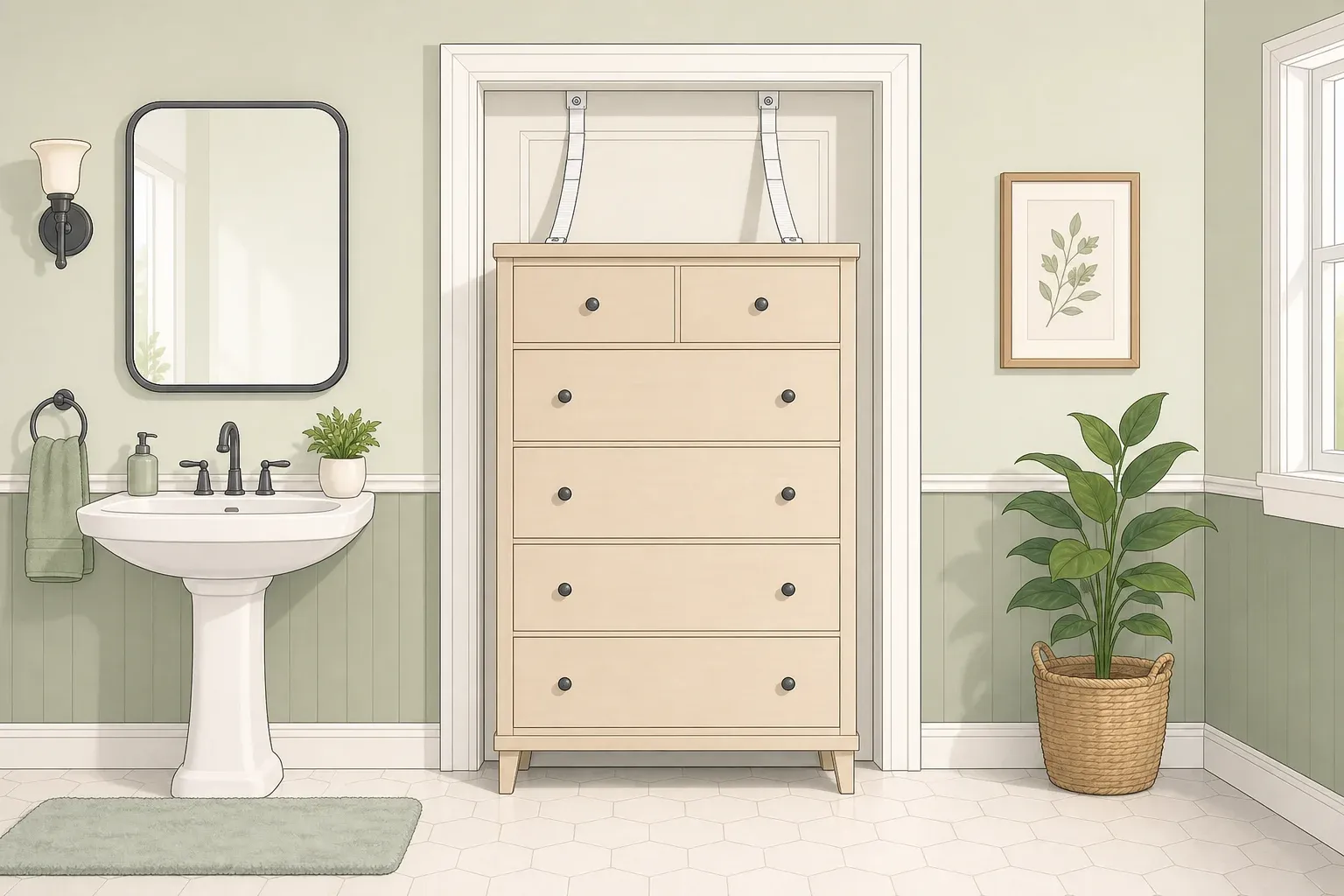
4. Letting extra furniture become a dumping ground. Dresser tops, foot-of-bed benches, and armchairs are three spots Denise Taylor watches closely, since they're easy landing zones for stray items that never get assigned a purpose. Her fix for a dresser top is to style it with a tray, a mirror, and a few photos, and skip "items you have not put away yet."
A bench at the foot of the bed can become a similar hot spot for people without room for a chair. Taylor's swap is a multi-functional storage bench: "a bench ottoman almost the width of your bed is a great place to sit, and to store decorative pillows while you are sleeping," she says. She also favors a slipper-style chair over a bulky armchair, since a smaller-scale piece is less likely to turn into a dumping spot for clothes.
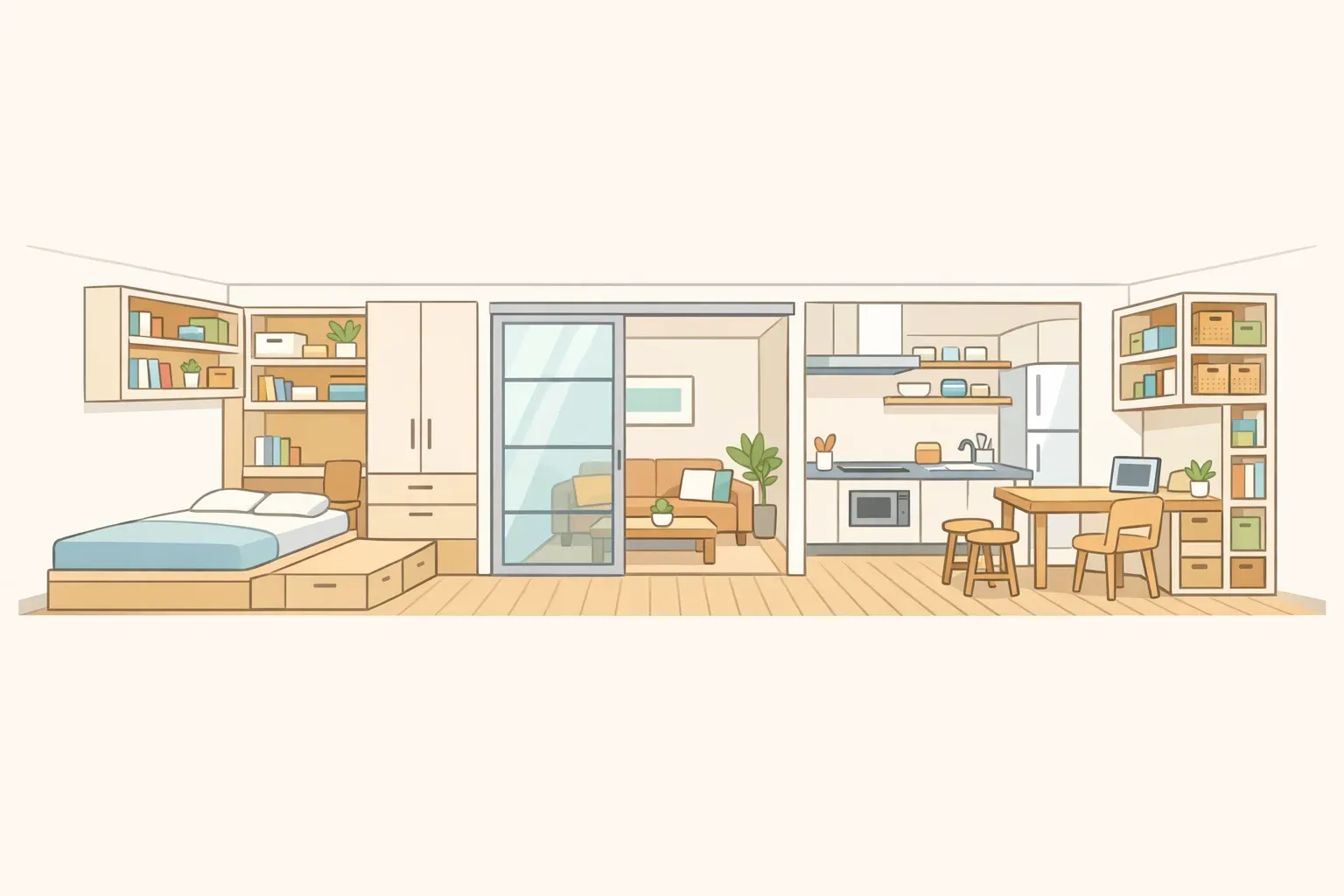
In a small bedroom or studio, a multi-functional storage bed can hold off-season clothes or bedding, easing the load on a dresser or closet elsewhere in the room. Her general instinct is to minimize furniture wherever possible, since reducing unnecessary furniture helps keep the room functional and streamlined.
5. Covering the wall above the bed with busy open shelving. Taylor points to this as a styling choice that can give a bedroom a busy look, even when the shelves themselves are organized. The fix is to let the wall breathe: leave it empty, or commit to one large art piece or textile wall hanging instead.
Self-audit:
Look at the dresser top, the bench, and any chair. Does each have one specific, concealed job, or is it just flat surface area?
Check the wall above the bed. Is it doing one thing —empty or one large piece — instead of several small things at once?
Add the layers that make a room feel finished
This is where "edited, not empty" actually gets applied, and it's where style, not just tidiness, comes into play.
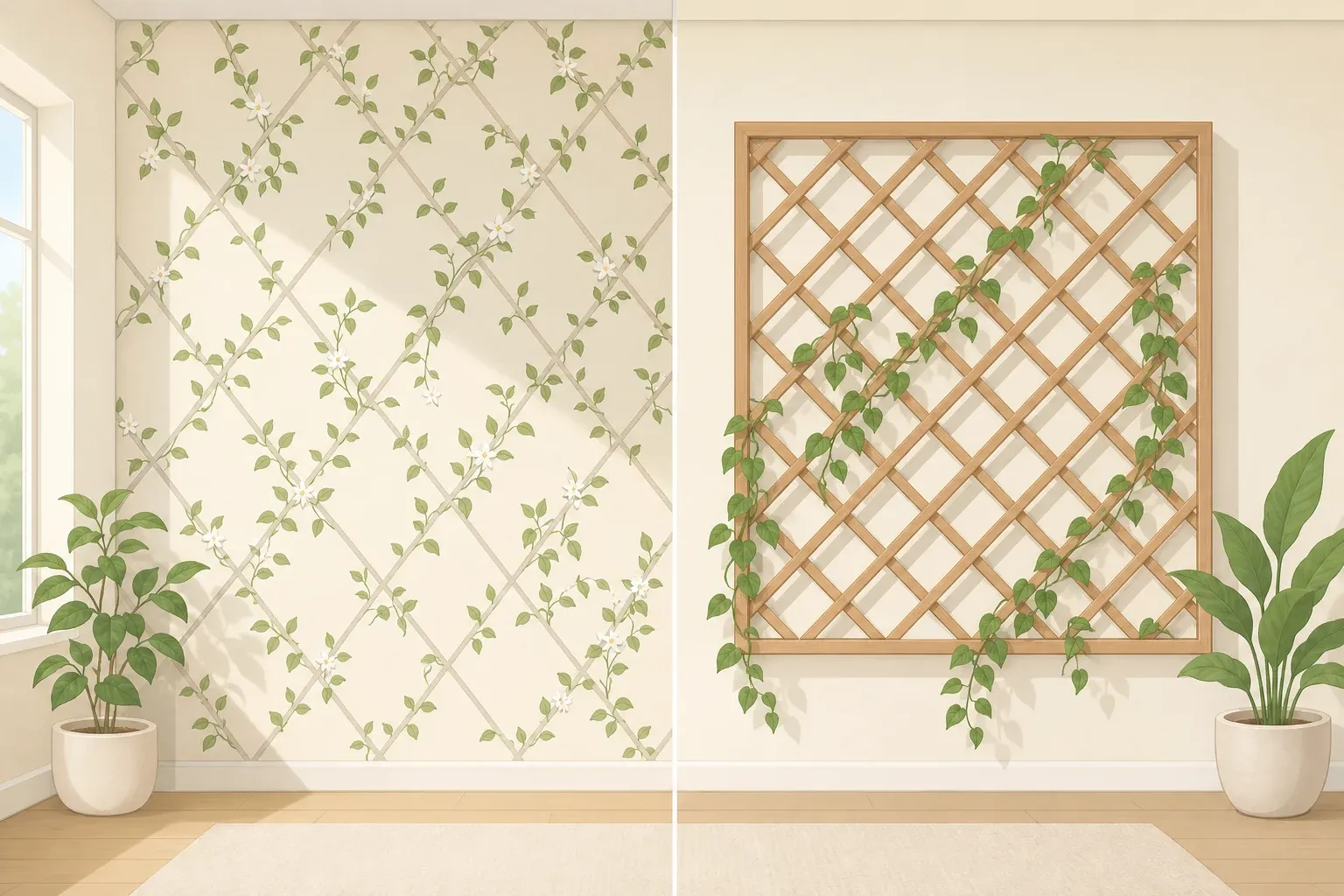
6. Treating minimalism as bare instead of intentional. "Minimalism isn't about emptiness, it's about intentionality," Hakim says, warning against mistaking a stark room for a designed one. The fix is texture: a textured wallpaper or silk wallcovering adds warmth and dimension without adding clutter. The same principle shows up outside minimalist rooms, too. Designer Sarah West says an industrial bedroom should read as "a darker cocoon, layered and moody, but comfortable and inviting" rather than a warehouse, and insists that "industrial needs softness, always." Eclectic rooms fail for the opposite reason, according to designer Ross, who warns that forcing furniture into a matched, symmetrical arrangement kills the look, since "symmetry is the kryptonite of eclectic designs." Whatever the style, the fix tends to be a counterweight rather than a duplicate: soft materials against hard edges, or asymmetry to keep a room feeling collected instead of matched.
7. Under- or over-dressing the bed itself. Untener's baseline formula is simple: a plain comforter, plus a contrasting coverlet, throw blanket, and pillows, mixed in different sizes rather than matched exactly. "It's so easy to make a bed look nice, and most people don't take advantage of it," she says.
The opposite failure is over-pillowing. Denise Taylor's ceiling is two sleeping pillows per person, three decorative Euro pillows, and an optional lumbar pillow, enough to look intentional without making the bed a chore to use every night.
Self-audit:
Remove every decorative object from the bed and surfaces. Does the room still feel warm, or does it suddenly feel bare?
Count the pillows. More than six or seven, including decorative ones, usually means it's time to edit down.
How to avoid bedroom decorating mistakes: fix the room in order
8. Relying on overhead lighting alone. Designer Laura Umansky says overhead lighting is fine for cleaning day but not for daily living, and favors bedside lamps with dimmers, sometimes remote-operated. Untener makes the same point from a different angle: even a room with a chandelier or recessed lighting needs table lamps or sconces, or, in her words, it won't feel cozy so much as bare.
9. Letting a TV take over the room's sightlines. Designer Georgia Zikas recommends keeping TVs out of the bedroom where possible, to preserve it as a private space rather than an extension of the living room. She pairs that advice with a push for blackout drapery and better-quality window treatments, framing improved window coverings as a design upgrade worth making on their own terms.
10. Leaving work clutter in visual range. If the bedroom doubles as an office, Denise Taylor recommends drawers for paperwork and a spot to tuck away the laptop. Her reasoning is straightforward: seeing unfinished work first thing in the morning works against the relaxing, rejuvenating point of the room.
Self-audit:
Stand at the foot of the bed at night and note where the room goes dark without a lamp turning on.
Scan the room for anything work-related still visible. If it's there, find it a drawer.
None of this calls for a weekend teardown. Spend the first half hour doing three things: remove one piece of furniture that isn't earning its space, clear one surface completely (dresser top or nightstand, whichever is worse), and note where the lighting check above turns up a gap. Shopping for a bigger rug, a real nightstand, or a second lamp only makes sense after that walk-through, not before it.
The sequence matters because each stage depends on the one before it: a bigger rug looks wrong under an off-center bed, and a pair of table lamps can't fix a nightstand too shallow to hold one. Fix layout, then storage, then layering, then function, and stop shopping the moment a stage turns out fine on its own.
Once the basics are handled, Untener's advice is to have some fun with the rest, whether that's a chair with real personality or a few accessories that don't show up on anyone else's mood board. That's the part no designer can hand you a rule for.









Comments
Be the first, drop a comment!