



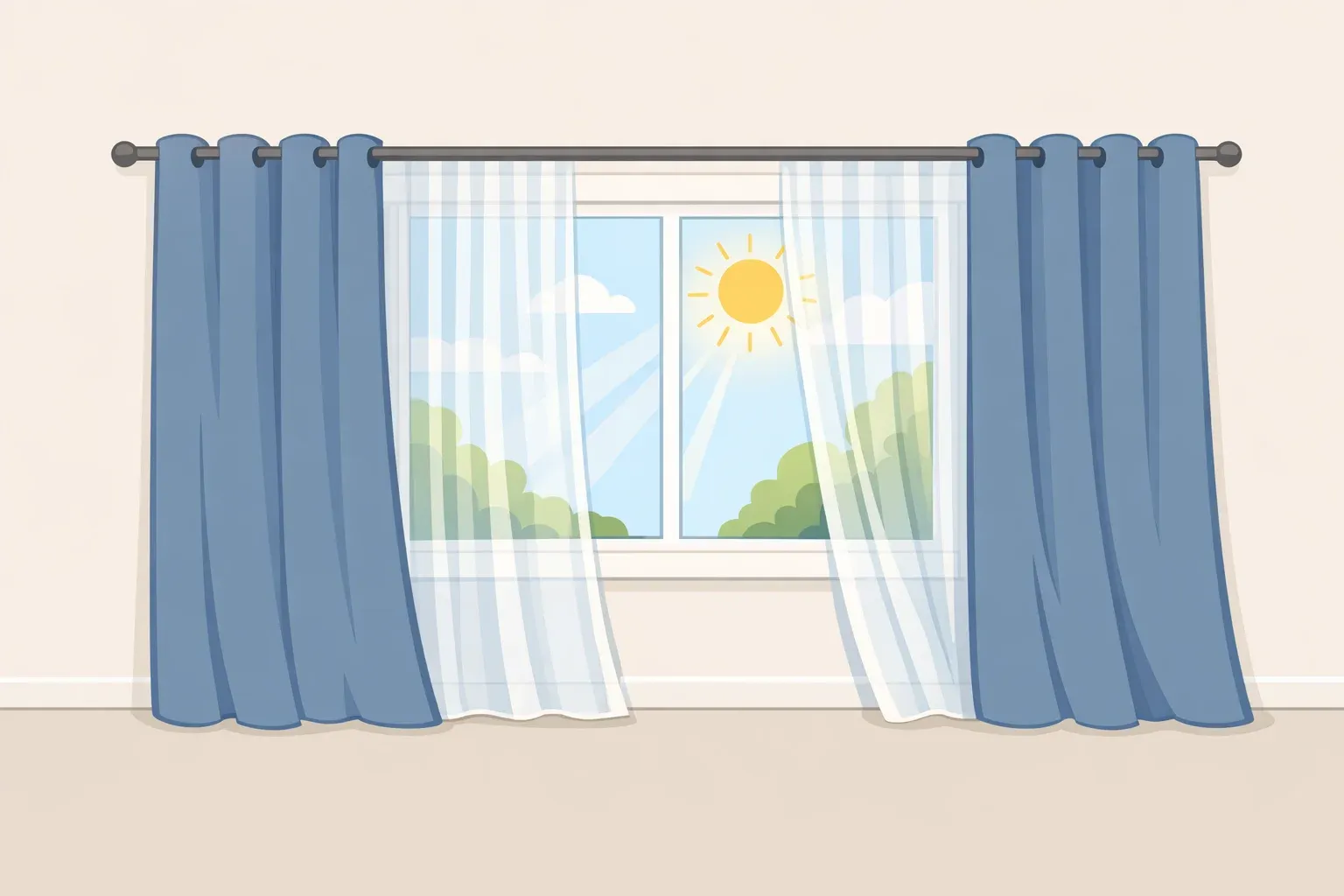
Ask several interior designers what's shaping window treatment trends in 2026, and there's no single answer. Six distinct styles keep coming up, and the real decision for homeowners isn't which one is trending hardest.
It's which one actually solves a specific window problem: something blocking the floor, a need for partial versus full privacy, or hardware that isn't installed yet.
Interior designer Pamela Lastiri points out that treatments can add visual height, soften echo, control glare, and protect furniture from sun damage, on top of privacy, according to Good Housekeeping.
No single style does all of that at once. Designers are also increasingly layering sheers, shades, and drapery rather than expecting one fabric to handle light and privacy at the same time.
The six looks to consider are wall-matched drapery, ripple fold, pinch pleats, café curtains, short drapes, and valances. What matters is what's happening at your specific window: what's below it, how much coverage the room needs, and whether the treatment has to open and close at all.
Custom versus off-the-shelf availability matters too, since that can change cost and timeline before any fabric gets bought.
Before you choose: four questions about your window
Start with what's physically in the way, not with a photo you liked. The obstruction below the window rules out entire categories before style even enters the conversation.
Is anything below the window blocking floor-length fabric? Designer Carrie Moore notes that short drapes, once considered a styling mistake, are now accepted specifically when a window seat or built-in makes a full-length panel impossible.
That's a fit fix, not a general style refresh.
Does the window need partial privacy or full coverage? Designer Marie Flanigan hangs café curtains at or just below the window's midpoint depending on how much privacy the room calls for, a different job than a full drape that closes edge to edge.
Does the treatment need to open and close, or is it purely decorative? Stationary valances are fixed in place and cover only the top portion of the window.
They can add visual height and interest, but they don't provide full-window privacy or light control.
What hardware does the look actually require? Ripple fold drapery needs a compatible track system to form its S-shaped waves; a standard curtain rod won't create the same construction.
Ordering fabric before confirming the track is how you end up with a treatment that doesn't work with what's already on the wall.
Window treatment trends 2026: choosing by privacy, light, and layout
Wall-matched drapery is a color and integration choice: how closely the fabric blends into the wall.
Ripple fold and pinch pleats describe header construction, or how the fabric gathers at the top of the panel. Café curtains, short drapes, and valances describe coverage, or how much of the window the fabric physically hides.
Layering is a combination strategy, not a single product.
None of these categories alone determines opacity, lining, or how much nighttime privacy a panel provides. That comes down to the specific fabric, lining, and coverage chosen, not simply the header style or trend name.
Wall-matched drapery adds cohesion rather than specific privacy or light control. It fits rooms where the goal is a seamless architectural look.
Flanigan recommends a subtle tonal or textural variation rather than an exact match, hung ceiling-to-floor and extending beyond the window frame for an enveloping effect.
Ripple fold drapery is a distinctly modern option, built from continuous S-shaped waves rather than a traditional pleat. Once installed, it functions like a standard full drape.
It fits windows where a compatible track can be mounted, since Moore describes the fabric gliding along minimal tracks that stay nearly invisible. Confirm track compatibility before ordering fabric.
Pinch pleats deliver a structured, traditional header with full working drapery function. They suit rooms wanting a tailored feel rather than minimalism.
Diane Luna warns that panels ordered in a single fabric width can look "skimpy" once pleated and recommends double-width panels to get the fullness shown in photos.
Café curtains handle partial privacy without covering the whole window. They fit kitchens or any window where full coverage isn't the goal.
Flanigan says they're having a resurgence for exactly this reason and likes a simple brass rod for added warmth. The fabric and hanging height still determine how much privacy the curtain actually gives.
Short drapes are mainly a fit solution when floor-length panels aren't physically practical. They fit windows above built-ins or window seats, including Moore's example of a room where a built-in seat made a full drop impossible.
Whether a standard size works or the drop needs a custom order depends on the exact clearance above the obstruction, so measure that gap before assuming an off-the-shelf panel will fit.
Valances add visual height and upper-window interest rather than full-window privacy. They fit rooms where the goal is drawing the eye upward.
Luna recommends a finished height of at least 18 inches and sometimes as much as 24 inches, noting that many retail valances are shorter. She says achieving that scale typically requires a custom treatment.
For a quick decision:
Choose wall-matched drapery when you want the fabric to blend into the wall for cohesion. Privacy and light control still depend on fabric and lining.
Choose ripple fold when you can mount a compatible track and want a clean, modern header. Confirm the track before ordering.
Choose pinch pleats when you want a tailored, traditional header. Make sure there's enough fabric to create the intended fullness.
Choose café curtains when partial privacy is enough, and you still want much of the window exposed.
Choose short drapes when a window seat, built-in, or other obstruction prevents a full drop.
Choose a valance when visual height and upper-window interest matter more than privacy or light control.
Layering for changing light and privacy
Layering applies mainly when one treatment can't provide the flexibility a room needs throughout the day.
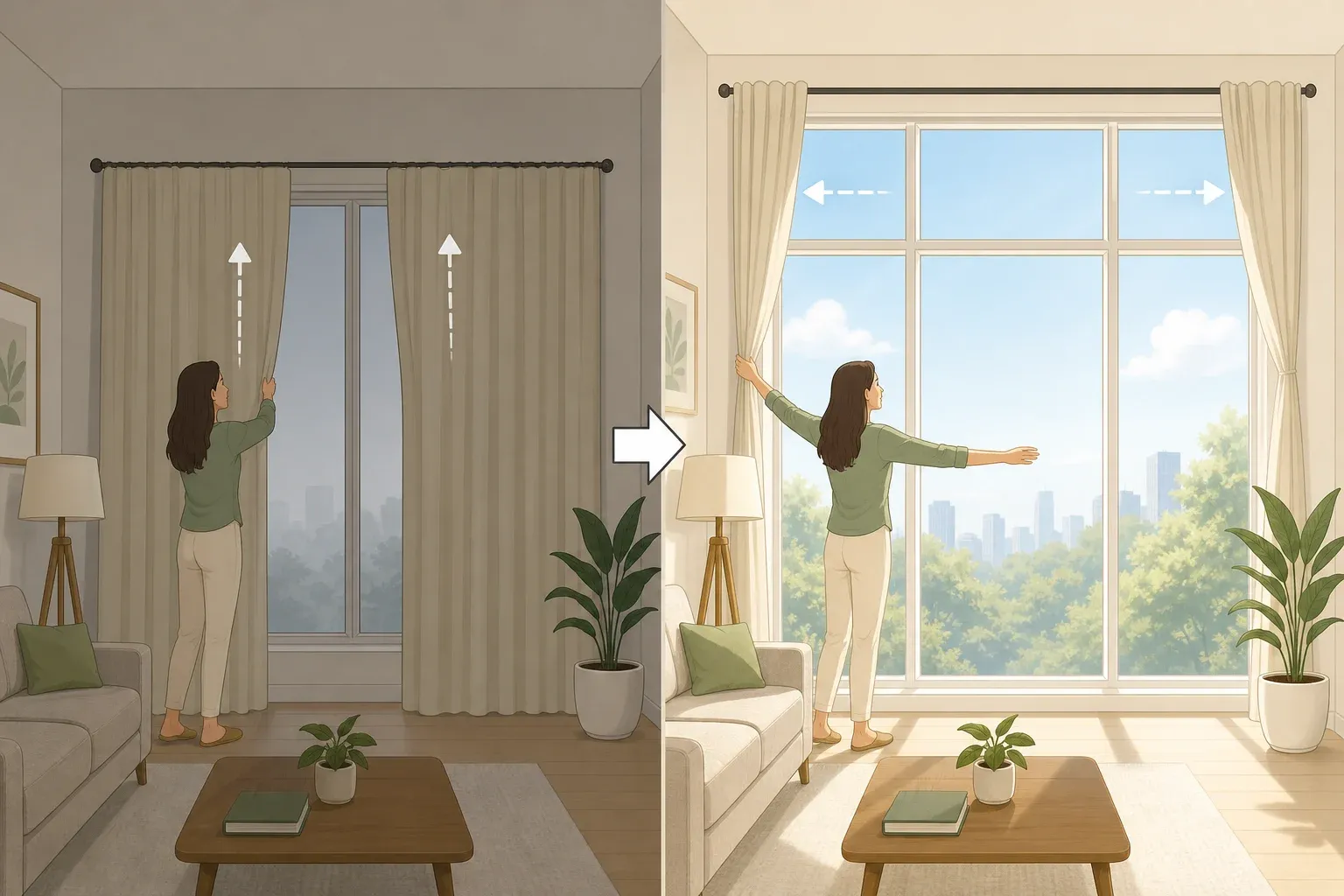
Designer Haley Weidenbaum places sheers closest to the glass for daytime light, with a heavier layer over them for more coverage at night. She points to nurseries and media rooms as clear use cases, according to Architectural Digest.
Architect and interior designer Suzanne Lovell separates the jobs further: shades and screens handle functional light control, while drapery can extend the visual line of the room and emphasize ceiling height.
Boston designer Nina Farmer adds a caveat worth applying to any pairing. The materials and opacities don't need to be dramatically different, but there should be enough contrast that the layers read as purposeful rather than simply doubled up.
Not every one of the six looks pairs equally well. Wall-matched drapery and pinch pleats can work as outer layers over a shade or sheer because both can function as full panels.
A lined or sufficiently opaque outer panel can provide nighttime privacy, but confirm the product's opacity and coverage rather than assuming the fold style guarantees it.
Café curtains and short drapes already handle specific coverage jobs, so adding another layer depends on how much additional privacy or light control the window needs.
Valances can sit decoratively over a shade, but they don't add full-window privacy on their own, so they function as a finishing layer rather than the primary working treatment.
Material choice affects how the pairing reads. Architectural Digest suggests combinations such as woven bamboo shades with airy linen drapes, or a thinner cotton layer under heavier velvet for a more structured look.
Studio Peake founder Sarah Peake favors sheer linen with a Roman blind set into the window reveal, using a soft fold so the pairing reads relaxed and textural.
Designer Sarah Lederman notes that layering adds visual depth "without taking up additional square footage," a point worth weighing for smaller rooms deciding whether the extra hardware and fabric are worth it.
Before you buy: what to measure and when to check product instructions
Fabric opacity, lining, fullness, and weight all affect what the hardware needs to support, so the treatment's function and its hardware aren't separate decisions.
Before shopping, record:
The glass or opening's width and height
Outside-mount clearance above and beside the frame
The height and depth of anything below the window, such as a window seat, radiator, or built-in
How much privacy the room needs during the day versus at night
Whether the treatment needs to open and close or can stay fixed
The existing rod or track type, if one is already installed
The wall or trim material where hardware will be mounted
Skipping those measurements is how a short drape gets ordered for a window that actually had room for a full drop, or the reverse.
Confirm hardware compatibility before finalizing fabric. Ripple fold needs a compatible track, while layered setups may use a thin double rod or an inside-and-outside mounting combination to keep the treatment from looking bulky.
Check the rod or track's rated weight capacity against the finished panel weight, especially with double-width fabric or a heavy material like velvet, using the manufacturer's specifications rather than guessing.
Motorized shades and drapery tracks are worth considering for convenience, but installation varies by product. Some battery-powered or plug-in systems may be suitable for homeowner installation, while hardwired systems should be installed according to the manufacturer's electrical requirements.
Mounting surface matters, especially for renters or older homes. Before drilling into plaster, masonry, or rental walls, check the hardware's mounting requirements and get any required landlord approval.
Use fasteners and anchors rated for the hardware and finished treatment weight, and follow the manufacturer's installation instructions rather than guessing at what the wall can hold.
Finish the plan before you order
Follow this sequence rather than starting with a fabric swatch.
Measure the opening and any clearance below it. Those measurements tell you whether a floor-length or short treatment can physically fit; a valance remains an option because it only covers the upper portion of the window.
Decide whether the window needs daytime light control, nighttime privacy, or both. A café curtain can address partial privacy; a valance is decorative and doesn't provide full-window privacy. A layered shade-and-drapery setup can address both when the materials and coverage support it.
If layering, assign each piece a job: sheer or shade closest to the glass for daytime light, with a heavier or more opaque treatment available for greater nighttime coverage.
Choose hardware that's compatible with the construction, mounting surface, panel weight, and required opening. Ripple fold needs a compatible track; layered setups need enough mounting space for both treatments.
Verify fabric width, opacity, and weight against the rod or track's rated capacity before finalizing yardage. Luna recommends double-width panels for pinch pleats and valances at least 18 inches high, sometimes reaching 24 inches.
Confirm every item above matches before you place the order.
If the plan involves a motorized system, follow the product's mounting and wiring instructions exactly, and don't improvise hardwired electrical work.
Confirm landlord approval before drilling in a rental, and check bracket spacing, anchor requirements, track compatibility, and rated load against the specific product instructions before mounting anything heavy on plaster or masonry.
If the installation requires electrical work beyond a plug-in or battery-powered unit, use a qualified installer or electrician when required.
Do not place the order until the dimensions, coverage goal, fabric weight, hardware compatibility, and mounting requirements all line up.









Comments
Be the first, drop a comment!