



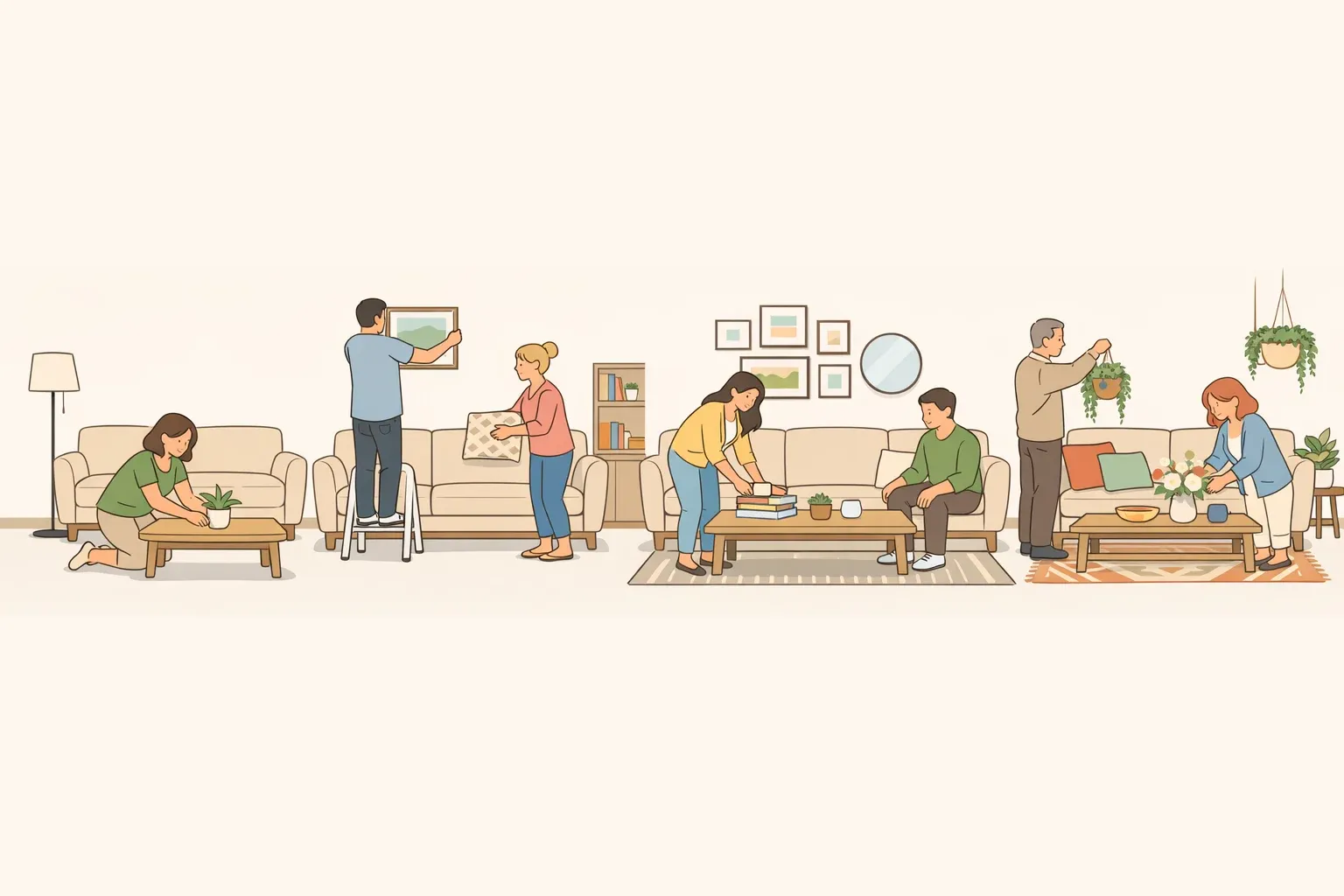
The slow decorating trend has a simple origin story: designers got tired of watching clients furnish homes badly and quickly, then live with the consequences.
The pattern is familiar. Someone moves into a new space, feels the pressure of empty rooms, and buys furniture fast — the wrong sofa scale, a rug that fights the light, pieces chosen to fill square footage rather than to fit how a person actually lives. Social media accelerated this problem considerably.
Over the past decade, it encouraged quick transformations and created pressure to "finish" rooms on a timeline that had nothing to do with good decisions. Many homeowners discovered the hard way that creating a meaningful home isn't an overnight process.
Slow decorating is the specific response to that failure. Not a new aesthetic, not a palette or a silhouette. A different decision-making framework gaining traction in both consumer design advice and professional forecasting.
What slow decorating actually means
Slow decorating is the practice of thoughtfully curating a home over time rather than trying to furnish and complete every room at once, prioritizing intentional decisions, meaningful pieces, craftsmanship, and long-term satisfaction over instant gratification and trend-driven purchases. The appeal comes down to something elemental: people are increasingly craving authenticity and longevity in their homes rather than the appearance of completion.
The concept is frequently mistaken for minimalism. The distinction matters, and designers are precise about it.
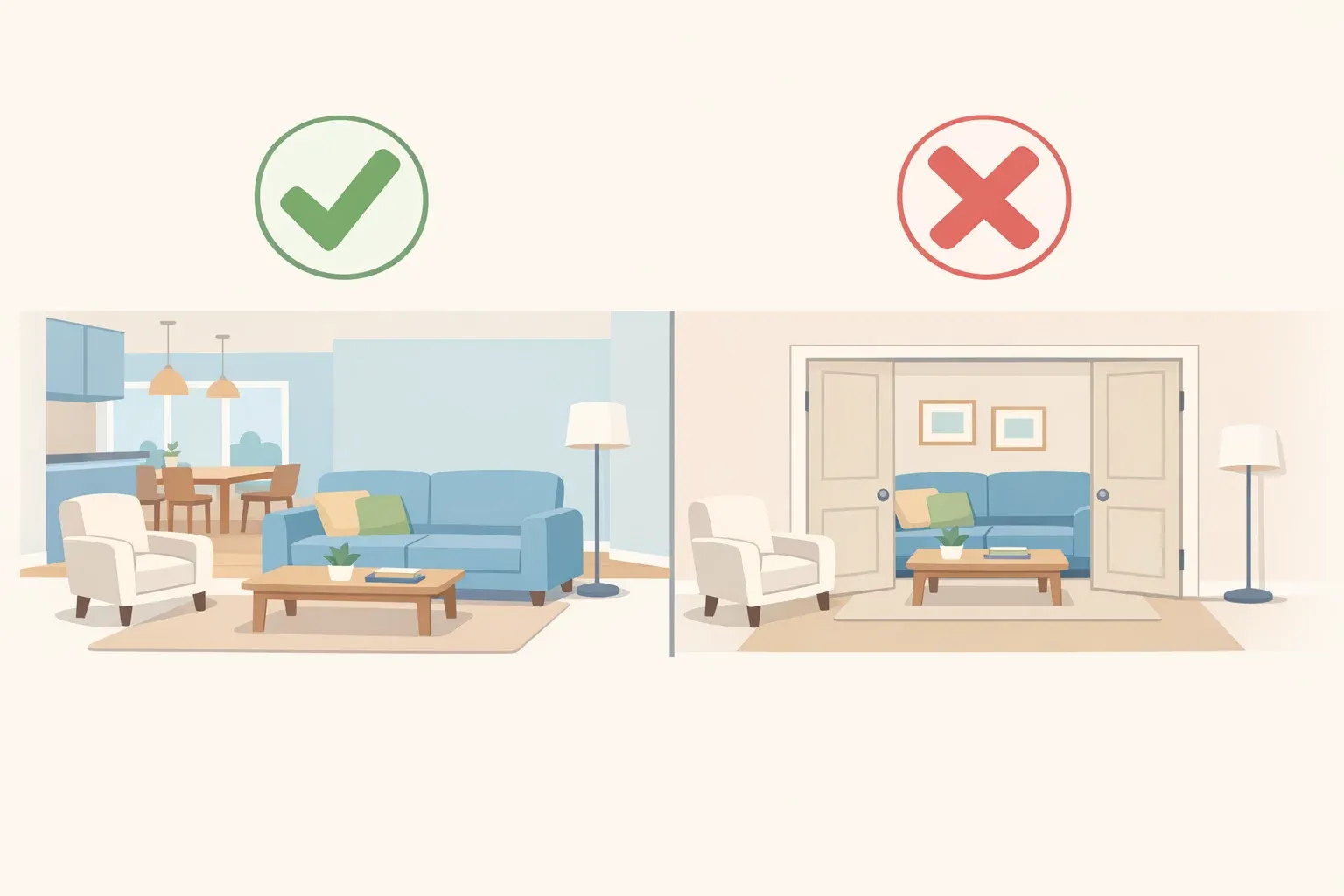
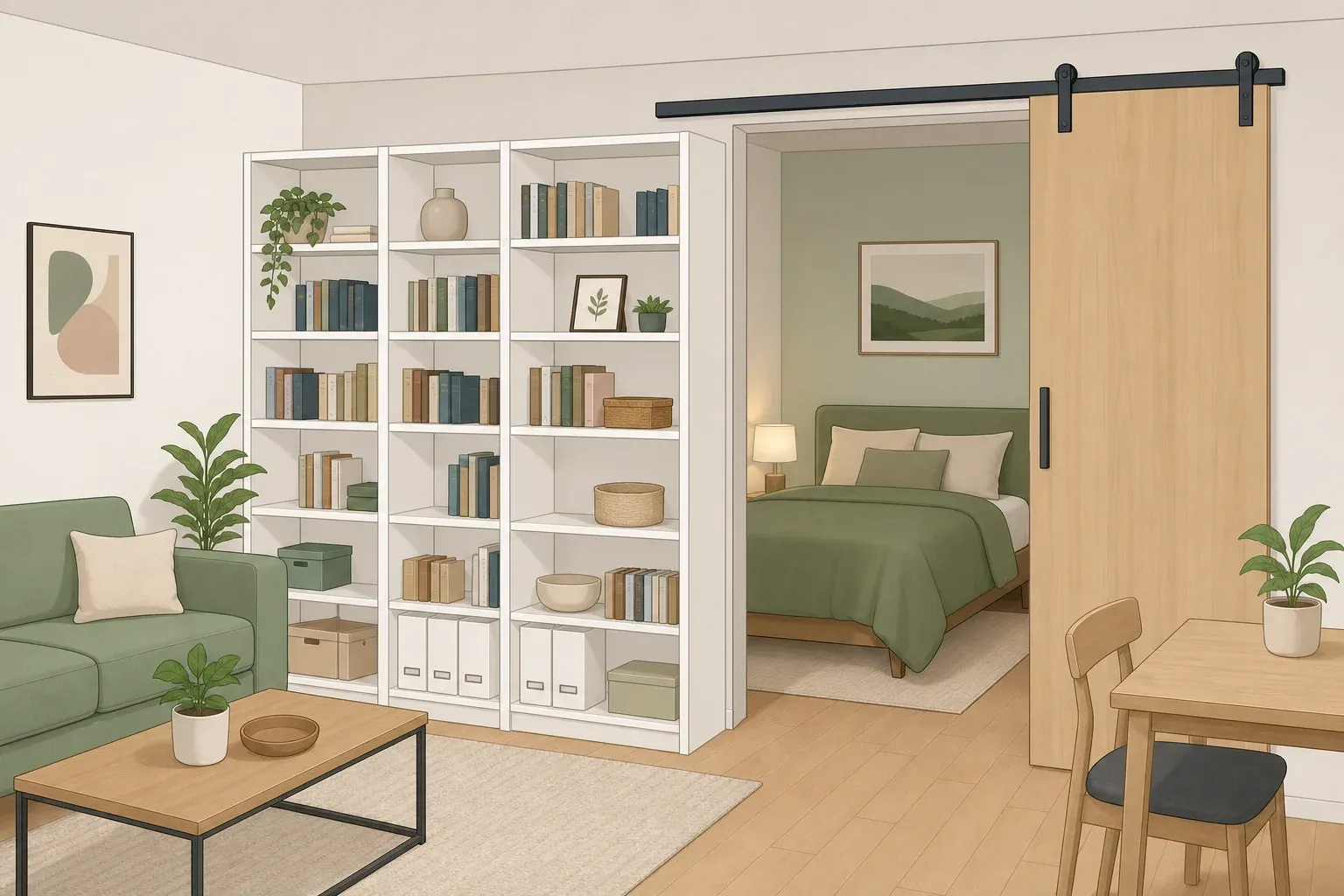
Slow decorating isn't about owning less. It's about acquiring more deliberately over time. Rooms built this way tend to end up layered and personal rather than spare. Milan-based Dimore Studio describes the target as interiors that are "quieter, but not empty; restrained, yet layered," where decoration hasn't been removed but has been, in their phrase, "internalised and refined."
Smita Thomas of Bengaluru's Multitude of Sins calls it "disciplined, intelligent restraint that borrows from maximalism's warmth but strips its excess," explicitly not a minimalist manifesto.
What makes a slow-decorated home legible is accumulation with purpose: vintage finds, inherited furniture, objects picked up through travel, and artwork gathered across years. These don't arrive in one shopping session. Tokyo designer Keiji Ashizawa frames the guiding attitude as developing "a more careful attitude towards what is truly worth keeping" rather than reducing decoration as an ideology. That question — is this worth keeping? — functions as the practical test every potential purchase runs through.
The concept also turns on mixing what already exists. Slow decorating is not simply about waiting to buy; it's about reusing, inheriting, and blending old and new before defaulting to something new. London-based Studio ŪMA forecasts 2026 interiors built around "thoughtful layering" that feels "curated and alive" rather than assembled from scratch. At the consumer level, vintage finds, family heirlooms, and travel objects are precisely recommended because these pieces carry the history and character that a single well-budgeted shopping trip can't replicate.
Why it's gaining ground now: the backlash to screen-first interiors
The reason slow decorating has acquired vocabulary and momentum in 2026 is that its opposite became hard to ignore.
Platforms rewarded the dramatic reveal and framed the half-furnished room as a problem to solve fast, training homeowners to respond to what was trending on a feed rather than what their specific space actually needed.
Dezeen's survey of international designers earlier this year found near-uniform agreement that 2025 marked a turning point: a collective shift from interiors designed to deliver a "wow" effect to spaces built to "hold and support human time." Hong Kong designer Andre Fu distills the same instinct into a directive: "Design for the senses, not just the screen."
The sustainability dimension reinforces the cultural argument with a concrete cost. One designer surveyed by Dezeen points specifically to the habit of choosing finishes for visual effect and then discarding them "a season later," generating material waste at a moment when the construction and interiors industry accounts for approximately 35% of global carbon emissions.
The remedy follows directly from slow decorating logic: work more with what you already have, and where that's not possible, choose materials designed to age rather than to be replaced. Dezeen's designers flag dark woods, aged metals, textured stone, and lime renders as finishes intended to evolve over the years rather than look current for a single season.
The combined pressure trend fatigue, environmental cost, homes designed more for posting than living, explains why the philosophy has enough coherent force to be worth taking seriously, even without consumer data confirming it has changed purchasing behavior at scale.
Benefits of slow decorating and where it falls short
The most persuasive case for slow decorating is financial. Ashley Gallion of Ashley Ayer Interiors calls it the "safe approach" for staying within budget. The reason is straightforward: homeowners who live in a space before furnishing it learn things a floor plan never shows, where light actually falls, which corners get used, and what functional needs only emerge once someone is actually living there. "Don't immediately jump on the first piece of furniture, rug, or decor you see," Gallion advises. "Allow the surroundings of your home to speak to you before purchasing anything that will be the wrong scale or coloring."
When homeowners take their time, they're less likely to make expensive mistakes or purchase items simply because they need to fill a space quickly. The framework has real limits, though. Slow decorating assumes three things not everyone has: permanence, time, and upfront capital for quality over volume. Renters on short leases face a different calculation entirely. Investing in a quality sofa for a space they'll vacate in eighteen months makes less financial sense than buying light and portable. Families who need a functional home immediately can't defer a dining table while waiting for a room to reveal its character. First-time buyers often need quantity before they can afford quality.
The principles that survive those constraints are the ones worth holding onto.
Slow decorating ideas: a practical starting sequence
The philosophy sounds patient. The practice is more structured than it appears.
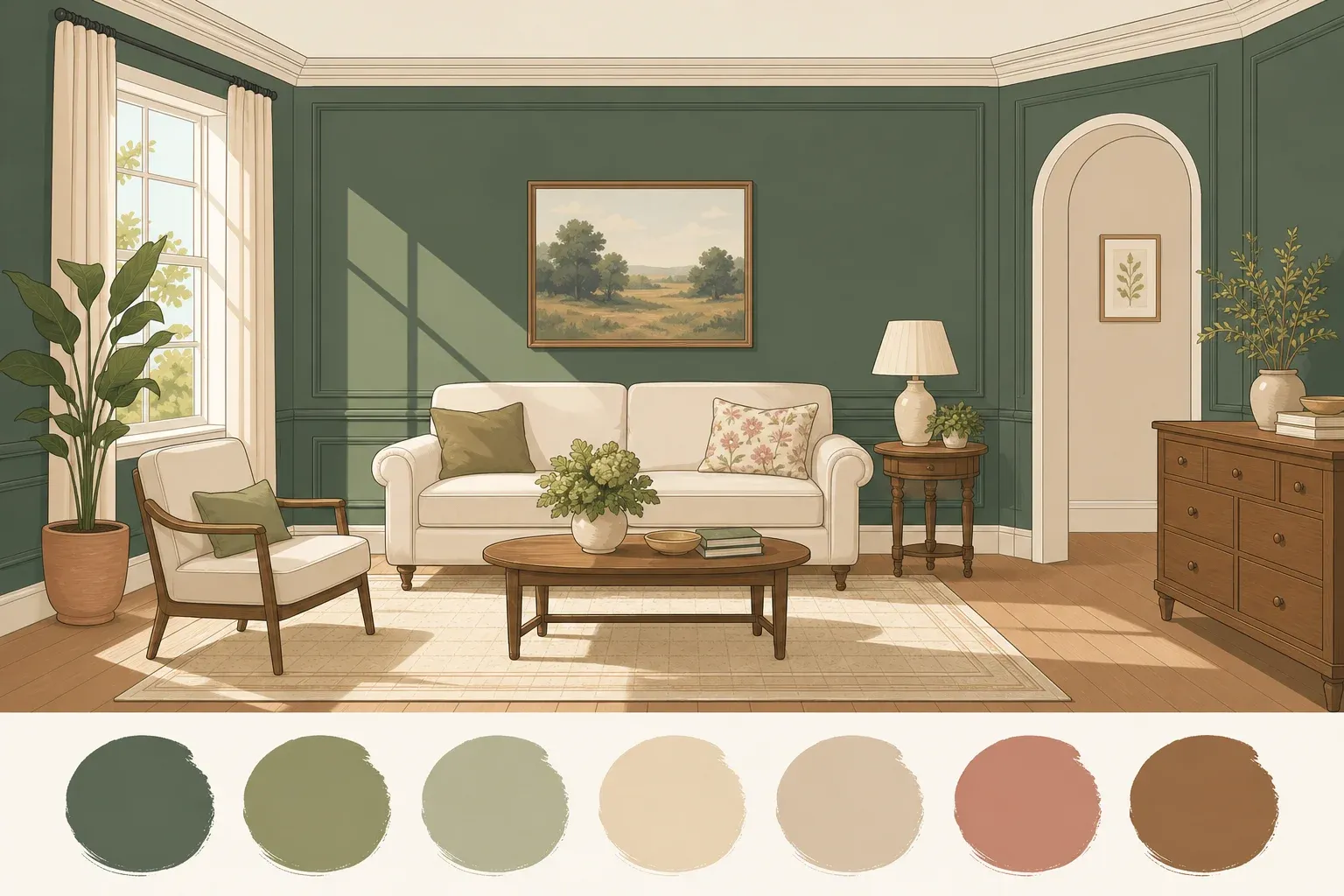
Invest first in pieces with the highest impact and longest lifespan: upholstery, rugs, lighting, and case goods. These are the decisions that define a room and cost the most to undo. Accessories, art, and smaller decorative objects can accumulate later without consequence.
A few approaches that put the framework into practice:
Live in the room first. Gallion recommends spending time in a space before buying anything. Natural light shifts through the day; traffic patterns emerge; the corner you assumed was dead turns out to be where everyone congregates. Buying before that knowledge exists is how the wrong sofa ends up in the room.
Buy one anchor piece before accessories. Identify the structural piece that will define the space, the sofa, the dining table, the bed, and get that right before purchasing anything decorative. Accessories can wait; foundational furniture sets the terms for everything else.
Run every potential purchase through one question. Will this piece still be wanted in ten years? That standard filters out most trend-driven decisions without requiring a complete methodology overhaul. A piece that can't survive the question probably shouldn't survive the purchase.
Mix old with new before buying anything new. Vintage finds, family heirlooms, and travel objects carry history and character that a well-budgeted shopping trip can't manufacture. Take stock of what already exists in the household before defaulting to new purchases.
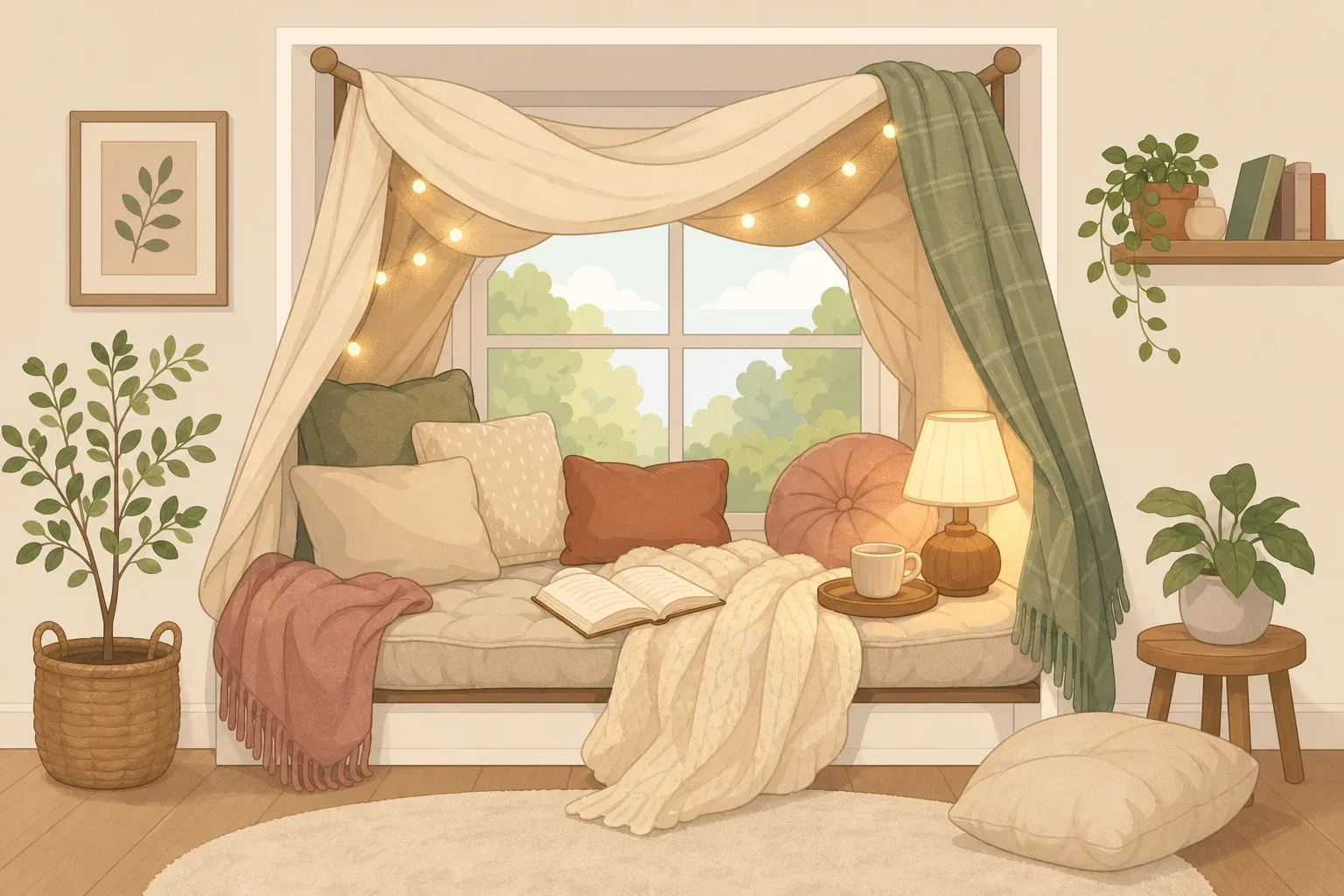
Use temporary placeholders consciously. A folding chair in a living room is not a failure; it's information. Living with a placeholder clarifies exactly what a permanent piece needs to do, and prevents buying something that almost works.
Prioritize materials that age well. For new purchases, designers point toward dark woods, aged metals, textured stone, and lime renders, finishes that develop character over time rather than dating within a season.
For readers who can't implement the full philosophy, the sequencing logic and the ten-year question still apply. Both cost nothing except patience.
Where this goes from here
The practical conclusion slow decorating arrives at is simpler than the philosophy suggests: the most expensive mistakes in home design happen when people buy fast, before they understand the space, to satisfy an urgency that is aesthetic rather than functional.
What's less settled is whether this design-industry value system translates into measurable consumer behavior. The signals worth watching aren't hard to name: longer replacement cycles for furniture, stronger secondary-market and vintage purchasing, fewer room-reveal purchases driven by a single content moment, and more consistent demand for materials specified to last. None of those data points exist yet in any systematic form.
What does exist is a clear and consistent argument from working designers across multiple markets Tokyo, Milan, London, Bengaluru, Hong Kong that speed has been producing worse homes. The remedy isn't emptier rooms. It's more considered ones, built slowly enough that the space gets a say in what fills it.

Comments
Be the first, drop a comment!