



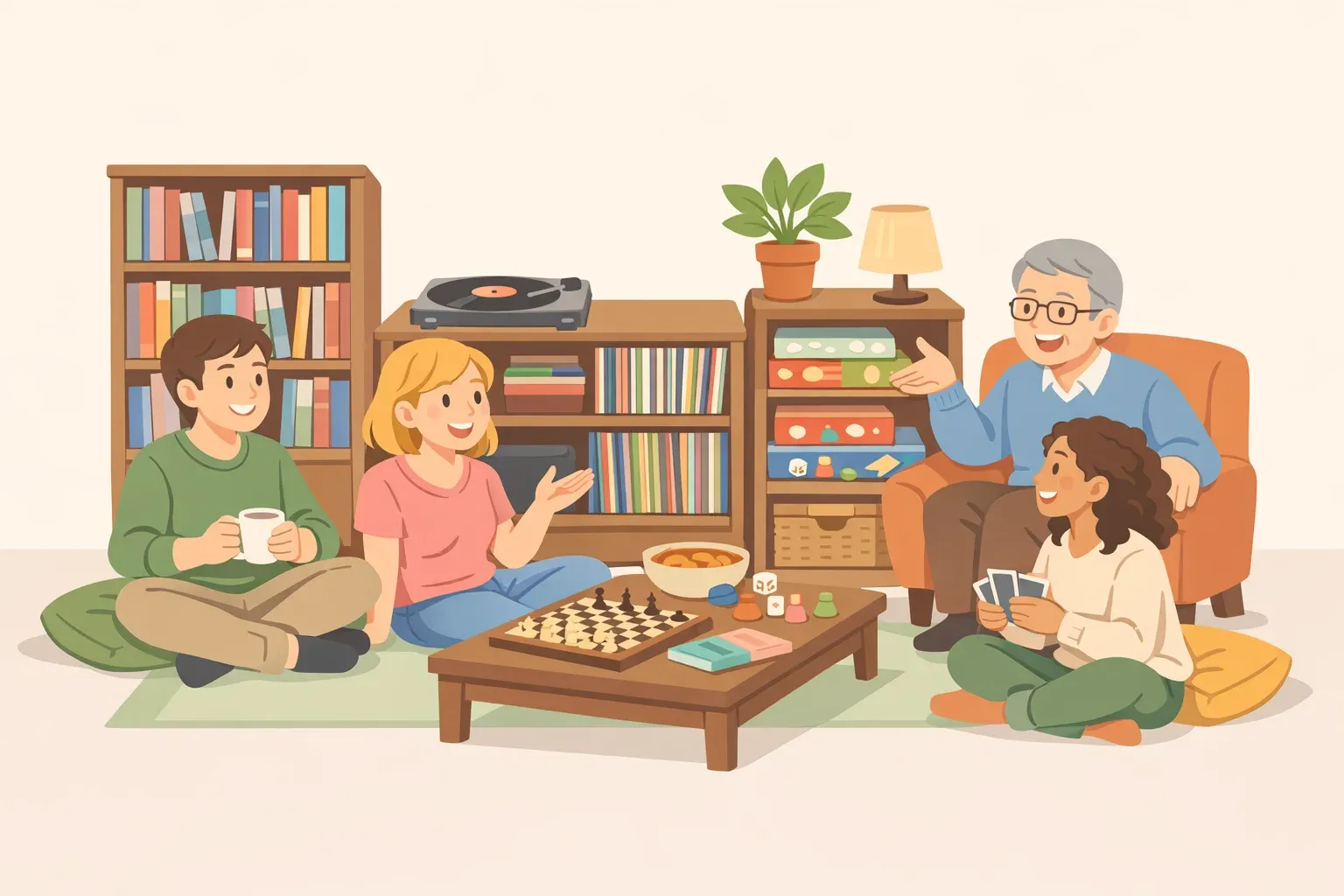
Building a screen-free room doesn't require gutting a space or buying a stack of new furniture. The best analog room design ideas come down to three decisions: pick one offline activity you'll actually return to, decide what happens to the nearest screen, and arrange seating, lighting, and supplies around that single activity. Start with a corner if a full renovation isn't in the cards; converting an entire room into a dedicated retreat is a bigger project, covered further down.
So what is an analog room, exactly? Interior designer Sarah Tract describes it as a space designed for connection rather than screens, whether that's reading, listening to music, playing games, or just talking with the people around you. The setup tends to work best when it's built around an activity someone already does, or wants to start doing again, not around how the room looks.
What is an analog room, and what decision comes first?
An analog room isn't a fixed look, and it isn't defined by exposed brick or a specific retro aesthetic. Interior designer Leanne Ford puts it simply: "There are as many versions of an analog room as there are people." For her, that's a basement art studio with a kiln. For someone else, it might be a library, a music room, or a kitchen that already pulls people in without any effort.
It's also not a rejection of technology. Toronto designer Ashley Rumsey points out that in a home where everything is always connected, "disconnection no longer happens by default." It "increasingly has to be designed in." That's the decision the rest of this guide builds toward. Before picking out a single lamp, decide which of three setups actually fits the room:
A fully screen-free room. The TV is removed or relocated to another part of the house.
A screen-free corner. The TV stays in the room, but seating and the visual focus shift away from it.
A scheduled screen-free zone. Same room, same TV, but it's used phone-free at set times, the way a dining table often already works.
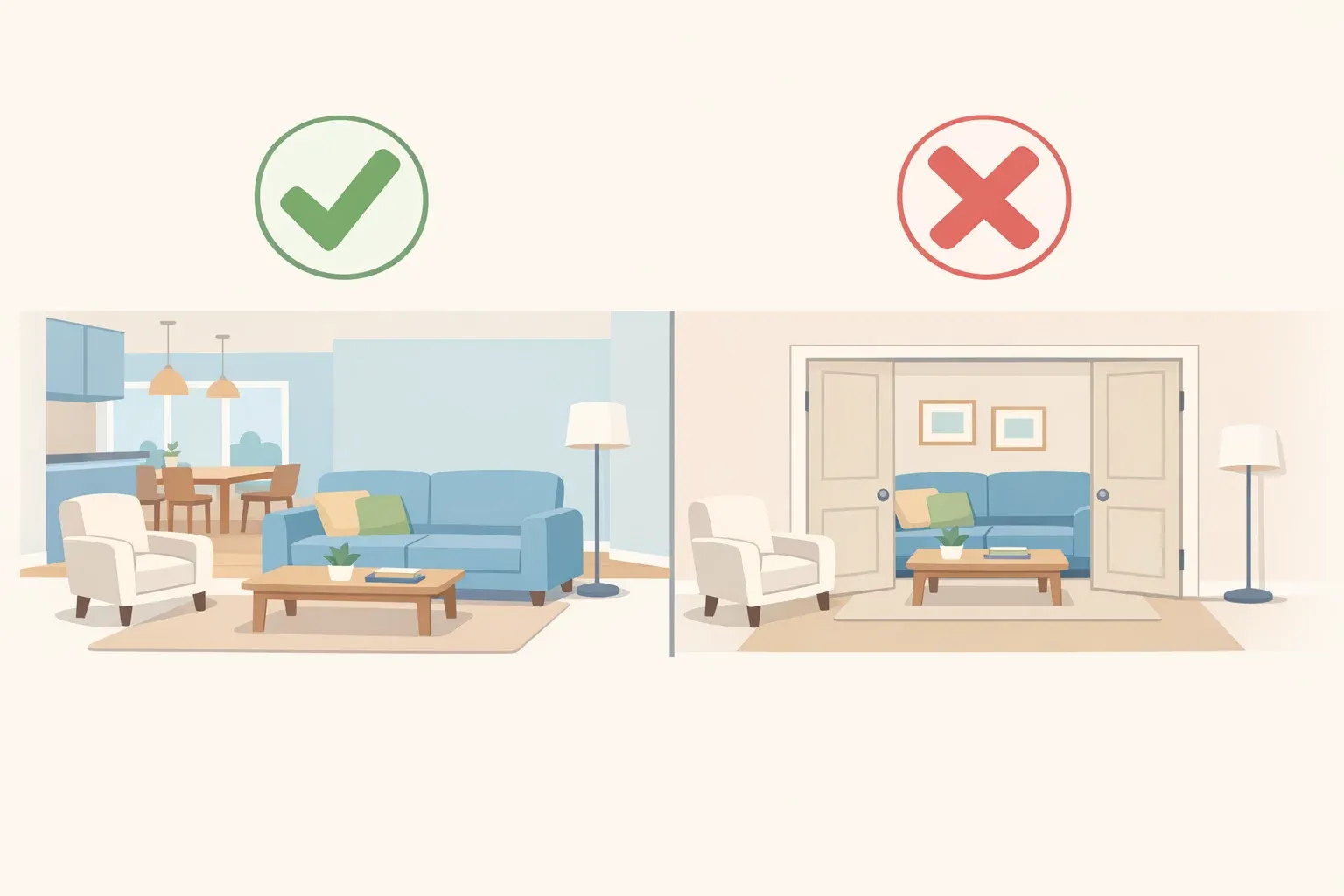
Hunker's coverage of the analog room trend points out that living rooms are often arranged so that many sightlines already land on the television. Turning two chairs to face each other while the TV still dominates the wall isn't the same project as removing the screen. Whichever option fits the household determines which of the steps below actually apply.
What you'll need before you start
Think of the project in two rough categories. A corner reset means swapping in a lamp, moving a chair, and clearing a shelf for books or a game. It's beginner-friendly, and a rough estimate for most homes is an afternoon of work. Converting a full room into a screen-free retreat is bigger: relocating a TV, adding shelving, or treating a wall for sound.
Budget more time for that, often a weekend or longer, and expect cost to scale with whatever gets replaced. Treat both timelines as rough planning estimates, not fixed numbers. If the fuller conversion involves built-in cabinetry or structural changes, treat it as its own project and bring in a carpenter or contractor.
At minimum, cozy analog room decor needs comfortable seating, one light source that isn't an overhead fixture, and visible offline supplies tied to whatever the room is for: books, a deck of cards, a puzzle, a record player.
Beyond that, the shopping list depends on the activity. A table or floor lamp and a side table within reach cover most reading and game setups. A basket, shelf, or sideboard handles game or record storage. A listening space adds stereo equipment plus a rug or heavier textiles to soften the sound.
Before buying anything, settle three questions about how the room fits the rest of the house: Does the TV stay in the room or move somewhere else? Where will phones and tablets charge instead? Is the space screen-free all the time, or only during a set window, like evenings or weekends? Skip these questions, and the setup can end up looking right while getting ignored within days.
For the activity itself, designers point to a practical reason some choices hold up better than others. Ford brings up something as ordinary as a record: "you have to get up and flip the record or change the CD."
Unlike an endless feed, it has a stopping point, and in her view, homes need "more things that ask us to participate instead of just consume endlessly." Favor an activity with a built-in start and finish, an album side, a puzzle, a hand of cards, a journal entry, over something purely decorative that never gets touched.
Step-by-step: an offline room design method
Before moving furniture, take five minutes to check the basics:
Measure the footprint of any chair, table, or shelf you're adding, and confirm it clears doorways and walking paths.
Note the location of vents, outlets, and any hardwired fixtures nearby.
Decide where phones and tablets will charge instead, ideally in another room or a hallway.
With that settled, work through the room in this order.
1. Handle the screen first. Remove the TV, move it to another room, or physically separate the analog corner from its sightline. In the Flow House project, a Toronto home designed for a ceramic artist, the television was relocated out of the main living space and into a basement family room. Renters or anyone who can't relocate a mounted TV can get a similar effect by turning seating toward a different wall or blocking the sightline with furniture. If moving a wall-mounted TV means dealing with wiring concealed in the wall or patching drywall, call a professional installer instead of tackling it solo. Success check: sit in the analog space. The TV shouldn't be the first thing you see, or it should be off and out of the room entirely.
2. Place seating away from the main traffic path. Walk the room and notice where people actually pass through: a doorway, a hallway, a kitchen entrance. Keep the seating area out of that path so it doesn't block anyone's way through the room. Success check: you can sit down without shifting furniture or stepping around anyone.
3. Arrange seating to face inward. Sarah Tract recommends chairs facing one another around a coffee or game table instead of a screen, and suggests swivel chairs so people can turn to follow a conversation. Success check: two people can talk comfortably in the space without turning toward wherever the TV used to sit.
4. Layer the lighting, and know where to stop. Swap the overhead light for table lamps, floor lamps, or sconces. Designers working on both analog living rooms and dedicated listening spaces favor warm, layered light over a bright overhead fixture. To check whether it's working, sit in the seat you'll use and confirm you can see the page, the game surface, or the record player's controls without glare bouncing off the lamp itself.
Plug-in lamps are a simple, beginner-friendly swap; all they need is an outlet. Moving a TV that just unplugs and sits on a stand is a job most people can handle alone. But if the work involves adding new outlets or hardwiring a sconce, that's a call for a licensed electrician. If it means patching drywall, building shelving, or handling wiring hidden inside a wall for a mounted TV, bring in a contractor or qualified installer. Stop and get help any time you're not sure what's behind the wall or how a circuit is wired. Success check: no bright overhead light is on when the space is in use, and the lamp light lands where you're actually reading, playing, or listening.
5. Put offline supplies within reach, and give phones somewhere else to go. Add books, games, a puzzle, or a record player, and set up a charging spot for phones and tablets outside the seating area, in a hallway, kitchen, or entryway. Hunker's reporting on the trend points to exactly this pairing: a phone-and-tablet parking spot outside the room, plus a shelf or sideboard of games and puzzles inside it, prompts people to actually pick something up instead of a phone. It's a boundary that adds a little friction, not a guarantee anyone leaves the phone alone, so pair it with an activity that's genuinely more appealing than scrolling. Success check: the chosen activity's supplies sit closer to the seat than a phone would be.
Common mistake to avoid: picking decor before deciding what the room is actually for. Hunker's reporting on the trend frames it the other way around: start with an activity you already enjoy, or used to, and build the space around making that easy to do without a screen interrupting it.
Analog room design ideas for reading, games, music, and art
The core method stays the same across these screen-free room ideas: address the screen, arrange seating and light around one thing, keep supplies visible. What changes is the specific setup.
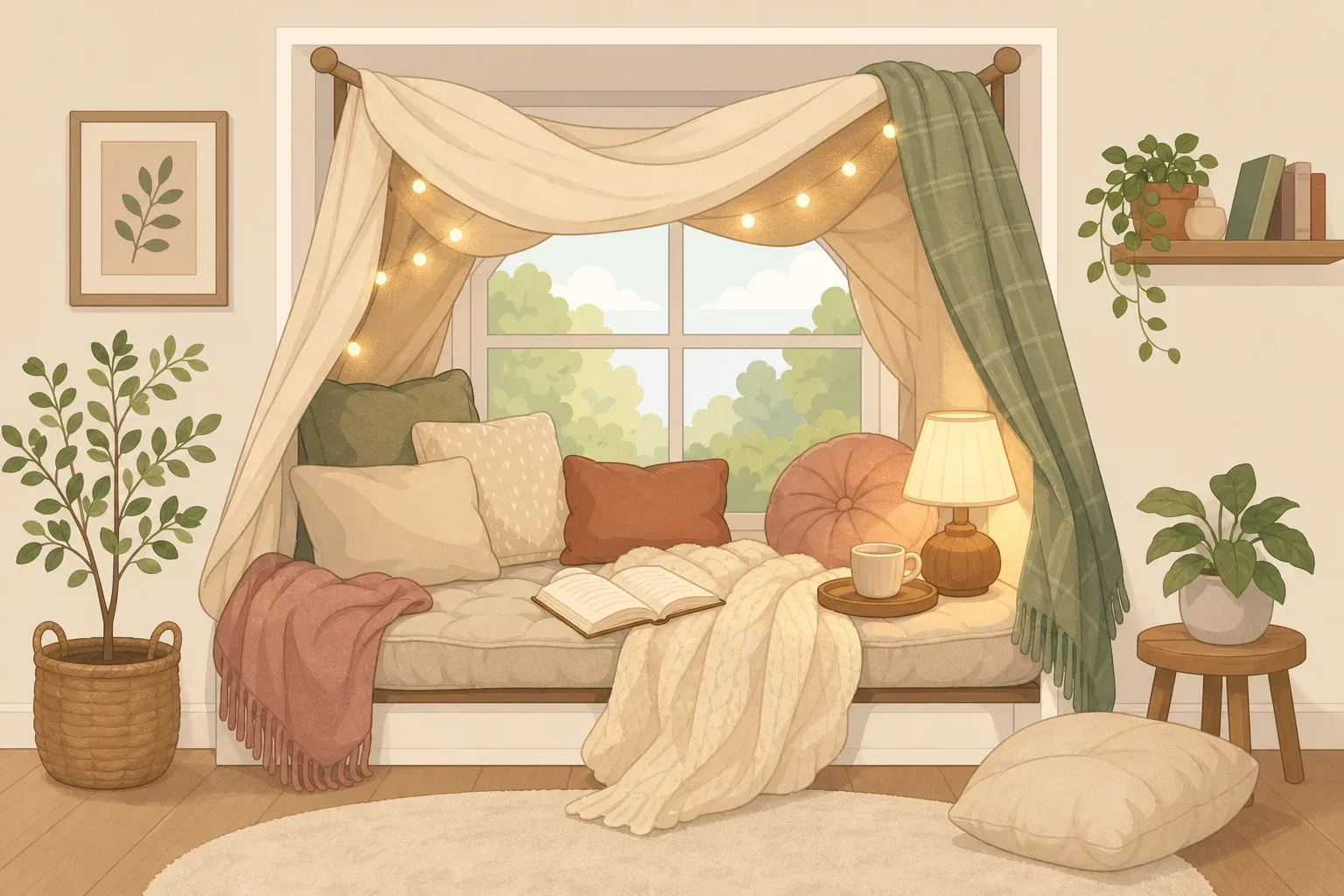
Reading corner: one comfortable chair, a side table within reach for a book and a drink, and a single lamp aimed at the seat rather than the room. Success looks like the book, the light, and the table all being reachable without standing up.
Game or conversation space: a central table, whether that's a coffee table or a dedicated game table, seating that faces inward, and closed storage nearby for board games or cards. Tract points to game tables specifically as multi-use pieces that support games, conversation, and general gathering in the same footprint.
Listening room: centered stereo equipment and seating, tactile materials like rugs, wood, wool, or cork to absorb sound and add warmth, and a visible way to store and display records. Pay extra attention to speaker placement here, since acoustics work differently than in a reading nook or game corner.
Art or craft space: if the activity is messy or loud, look for a spot away from the main living areas instead of forcing it into a shared room; a spare bedroom, basement, or garage all work. Hunker's coverage of the trend lists art studios among the strongest examples of analog spaces, alongside home libraries and game rooms. A room with some distance from daily foot traffic makes it easier to leave supplies set up between sessions instead of packing everything away each time.
If the TV has to stay in a shared room because other people use it, set specific screen-free hours for the space instead of removing the screen outright. Keep the analog supplies out and visible during that window rather than tucked away in a closet, since a game buried in a bin loses out to a phone sitting right on the coffee table.
Finish with a one-week test
Run the space through a one-week test to see if it holds up. Pick one recurring ritual, a nightly chapter, a Sunday album side, a weekly game night, and use the space for that ritual at the same time for seven days. Each day, jot down whether you actually showed up, what pulled you away if you didn't, and anything about the setup, the light, the seat, the phone charger, that got in the way.
At the end of the week, change exactly one thing based on what you recorded: the lamp position, where the phone charges, how the seating faces, or how easy the supplies were to reach. Resist overhauling the whole room over a single off night.
Anyone building a dedicated listening space should look further into speaker placement and sound-absorbing materials, since that setup calls for more intentional sound treatment than a general reading nook or game corner needs.
After seven days, keep the setup if it makes the activity easier to start than reaching for a screen. If it doesn't, change the one obstacle you logged during the week and run the test again.


Comments
Be the first, drop a comment!