



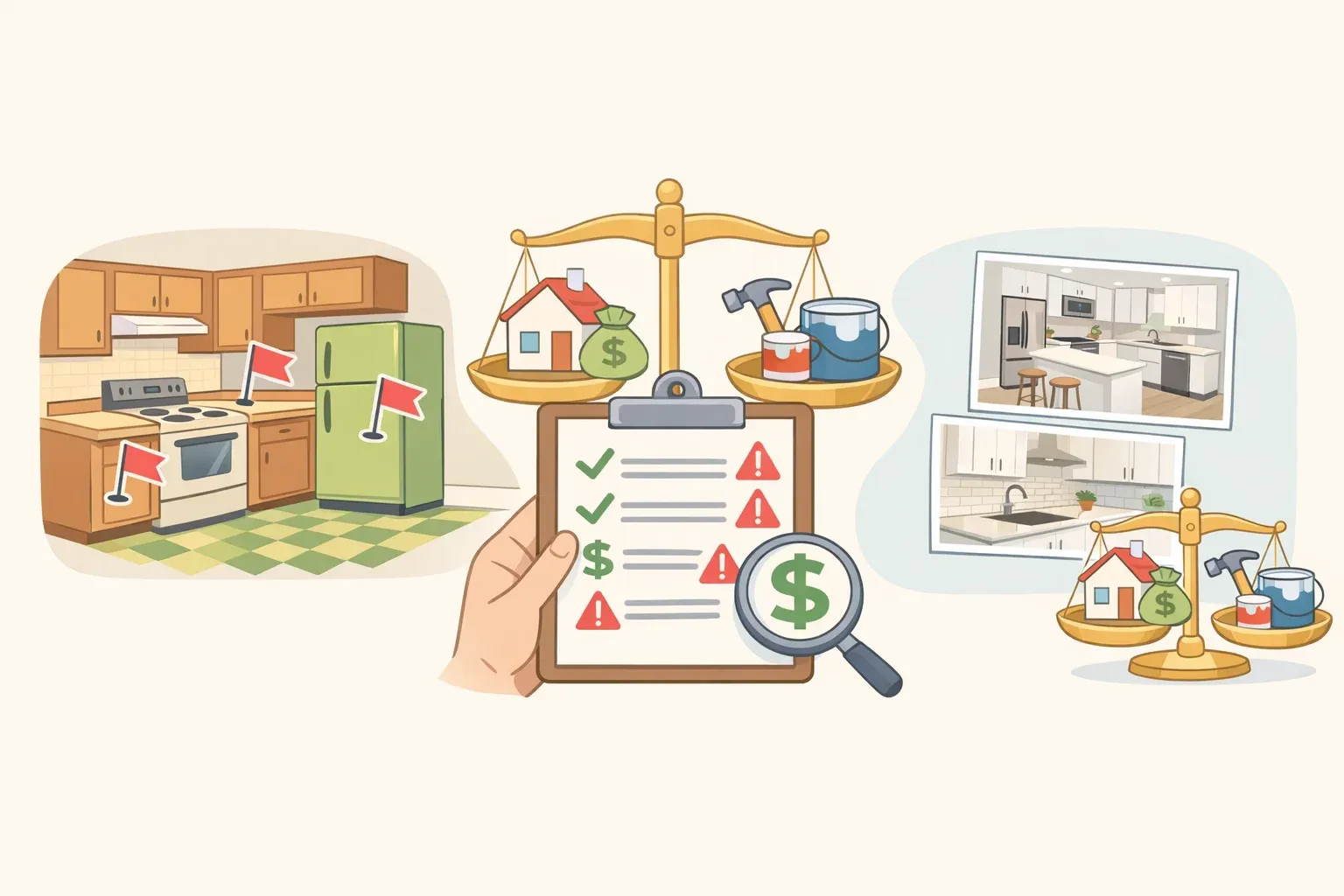
A kitchen that looks dated isn't automatically a kitchen that's losing you money. Before spending a dollar, separate style from function: measure your clearances and storage, inspect finishes for actual damage, and check what comparable homes in your area recently sold for. Among the dated kitchen trends that hurt home value, only the ones that show up as a real, confirmed problem in that check are worth fixing.
That distinction matters because kitchen spending doesn't reliably scale with return. The 2025 Remodeling Impact Report gives a complete kitchen renovation and a minor kitchen upgrade the identical estimated 60% cost recovery at resale.
Spend more or spend less, the report treats the outcome the same way. Appraisers explain the underlying reason in plain terms: buyers determine value, not renovation costs, and valuations rely on comparable sales rather than receipts.
This article walks through nine kitchen features commonly flagged as outdated kitchen design ideas, and gives each one a practical read: what to check, the smallest fix that solves the actual problem, and when the job crosses into professional territory.
Diagnose before you spend
Pull real comps, not national averages. Look at several recently sold homes matched by size, neighborhood, price tier, and overall condition, then isolate the price gap tied specifically to kitchen quality, not the entire difference between the homes. Zillow illustrates this with a simple example: if comparable renovated homes sell for $15,000 more than similar homes with outdated kitchens, that $15,000 is the spending ceiling, not some bigger national figure.
Expect real regional swings in what a kitchen project returns. Minor kitchen remodel ROI ranges from 94.5% in the West North Central region up to 129% in the Pacific region, and in the Mid-Atlantic a minor kitchen remodel ranks only sixth among home-improvement projects by return, according to Zillow. That spread alone is reason enough to trust local comps over any single national number.
This condition math extends beyond the kitchen itself, too. Bringing a kitchen that's more than 20 years old up to current standards can lower a home's overall "effective age" in an appraisal, but a $100,000 kitchen sitting next to an aging roof or unfinished siding creates what appraisers call a condition disconnect, one they may penalize rather than reward. A kitchen doesn't get valued in isolation from the rest of the house.
Your timeline changes the math, too. If you're listing within the next year or two, prioritize the cheapest, most visible fixes below, since nearly half of buyers, 46%, say they're less willing to compromise on a home's condition than they used to be. If you're staying put long-term, a genuine storage or clearance shortfall can justify a project even where the resale recovery on paper looks weak.
Before you decide: gather this first
Walk the kitchen with a tape measure and your phone before you commit to anything. Bring:
A tape measure, for aisle widths and the clearances beside the stove and sink
Your phone or a camera, to document cracks, water stains, delamination, corrosion, or ballast wear before you touch anything
Notes on several recently sold, closely matched homes nearby, so you're comparing against real local outcomes and not a national average
A backup plan for thin data: if nearby sales are too scarce to compare against, ask a certified appraiser for a range using the cost approach along with whatever comparable sales do exist
Once you have those, work through the nine features below one at a time. Each one gets the same three questions: what to check, the smallest fix that solves the real problem, and when to stop and call a professional.
The 9 dated kitchen trends to evaluate before you spend
Short, boxy upper cabinets that stop below the ceiling. Cabinets built a foot or more short of the ceiling were standard for decades, and the dead space above them usually turns into a dust-collecting shelf rather than usable storage.
What to check: Open every upper cabinet. If you're storing rarely used items on the counter or floor because there's nowhere else to put them, that's a real shortfall, not just a style complaint.
Lowest-scope fix: Leave it if storage is adequate. If it's just the look bothering you, close the gap above the cabinets with matching filler panels or crown molding instead of replacing the boxes.
Stop and get help if: the space above the cabinets hides HVAC ducting or wiring. Have that checked before ordering custom boxes.
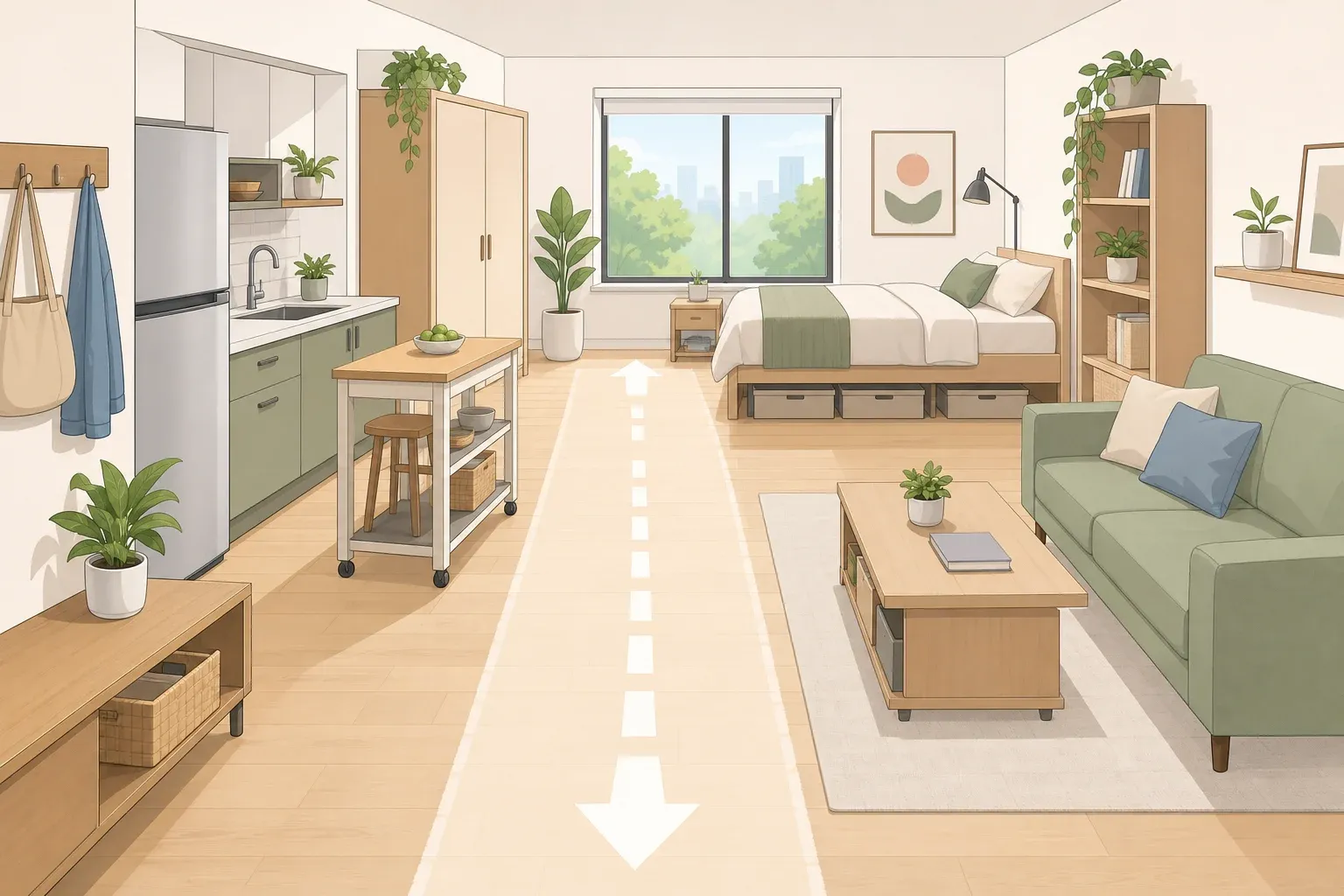
Tight work aisles and clearances. Older kitchens often crowded the stove, sink, and main walkway closer together than current layouts allow, and that shows up as constant bumping and elbow-dodging rather than a look you dislike.
What to check: Stand at the stove and open the oven, then do the same at the sink with someone else standing in the walkway. If you're turning sideways to pass or can't fully open two things at once, that's a functional problem worth measuring more carefully.
Lowest-scope fix: Leave it alone if there's genuinely enough room to work and pass through comfortably. This is a layout issue, not a style one, so don't touch it based on looks.
Stop and get help if: fixing a confirmed shortfall means moving plumbing, gas lines, or a load-bearing wall. That's licensed-professional territory, and permit requirements should be confirmed with your local building department.
Missing or hard-to-clean tile backsplash. Adding a backsplash where none exists is a low-cost, high-impact upgrade running only a few hundred dollars. Separately, swapping to a full-height, low-grout material like quartz or porcelain slab when you're already replacing countertops cuts down on scrubbing grease and food splatter, a cleaning benefit rather than a documented resale finding.
What to check: Whether a backsplash exists at all, and if it does, whether the grout is stained beyond a normal cleaning or actually crumbling.
Lowest-scope fix: Add one if missing, or reseal it if it's intact but grimy. Save the full-height slab upgrade for when you're already replacing countertops.
Stop and get help if: removing old tile reveals soft drywall or mold. That's a moisture problem to inspect before covering it back up.
Recessed fluorescent tube fixtures. Swapping fluorescent cans for LED retrofit trims is listed as a staged, no-demolition upgrade, and it's a usability and presentation issue more than a documented resale driver.
What to check: What you actually have. A recessed fluorescent can typically accepts an LED retrofit trim; a fluorescent tube fixture usually needs a different, fixture-specific replacement, so confirm compatibility against the manufacturer's instructions before buying anything.
Lowest-scope fix: Swap within the existing housing once you've confirmed the trim or retrofit kit matches your fixture type.
Stop and get help if: the fixture has ballasts hardwired into old housing, you're unsure what type you have, or you want to change can spacing or add new fixture locations. That work goes to an electrician.
Dated cabinet door style or finish color, with sound boxes and no damage. Repainting or refinishing sound cabinets costs far less than replacing them and can meaningfully refresh the room. This is a taste-driven trend, not proven value loss.
What to check: Test the hinges and drawer slides, and look closely for swelling, delamination, or water damage on the doors and boxes.
Lowest-scope fix: Leave it if boxes and doors are structurally sound and you're not selling soon. Repaint or refinish if you want a current look.
Stop and get help if: doors are swelling, delaminating, or water-damaged. That's a condition problem, not a cosmetic one, and points toward replacement.
Dated hardware and faucet finish. Swapping hardware and faucets without touching cabinets or plumbing layout is one of the staged, no-demolition upgrades in remodel guidance.
What to check: Whether the hardware and faucet still function properly, and whether removing the faucet is likely to disturb old, possibly corroded supply lines.
Lowest-scope fix: Swap them on their own. It's a simple finish update that doesn't require touching cabinets or the plumbing layout.
Stop and get help if: removing the faucet reveals corroded supply lines or a shutoff valve that won't hold. Bring in a plumber before reinstalling.
Mismatched or inconsistent appliances. Matching your appliances is listed among the upgrades worth making.
What to check: Whether the finishes actually clash, or whether they're just different ages in the same finish.
Lowest-scope fix: Leave it if the finishes are consistent even though the units are older. If one piece genuinely stands out, replacing just that unit is a smaller move than replacing the whole set.
Stop and get help if: you're considering switching fuel type, electric to gas or the reverse. That requires a licensed electrician or gas fitter and local permit approval.
Standalone or drop-in range instead of a slide-in profile. A slide-in range install is listed as part of a no-demolition refresh sequence, a styling preference for a more built-in look, not evidence that older range styles hurt value.
What to check: Whether the range actually works and whether the gap beside it is a real functional problem, not just a look you don't love.
Lowest-scope fix: Leave it if it works fine. If it needs replacing anyway, that's a reasonable time to move to a slide-in, after confirming width, hookup type, and ventilation compatibility.
Stop and get help if: the swap changes fuel type or ventilation routing. That's a professional install.
Original-era laminate countertops with no damage. Quartz, granite, and porcelain are the materials buyers now expect once countertops get replaced, though nothing in the available data says intact laminate reduces value on its own.
What to check: Run a hand over the surface and check the seams and edges for cracks, burn marks, or delamination.
Lowest-scope fix: Leave it if the surface is intact. If you're already doing other work nearby, like a backsplash, that's a reasonable time to fold counters into the same project rather than replacing them on their own.
Stop and get help if the substrate underneath is warped or water-damaged. Get it inspected before installing anything new on top.
Permits and paperwork, in brief
Confirm requirements locally rather than assuming a general rule applies everywhere. Check with your local building department before moving plumbing, gas lines, electrical wiring, ventilation, or any structural element; permit and licensing rules vary by jurisdiction.
Keep the documentation simple but real. Unpermitted structural changes can trigger lender pushback during a later valuation, and that same source notes that a short, itemized list of specific upgrades, something like "quartz countertops installed 2024," helps an appraiser credit the work more than a lump-sum total.
Creators Syndicate recommends going a step further with a full project binder, a signed contract, progress photos, invoices, spec sheets, and warranties, noting that presenting the complete package with an appraisal request improves the odds the upgrade gets fully credited.
Where this leaves your kitchen
Whichever of the nine features you're weighing, the sequence stays the same:
Measure aisles and clearances, and check finishes for actual damage or moisture, not just an outdated look.
Compare your kitchen against several closely matched, recently sold homes, or ask an appraiser for a range if local sales are too thin.
Price the smallest fix that closes the confirmed gap, refresh before remodel, one piece before the full set.
Get trade or permit guidance from your local building department before touching plumbing, gas, electrical, ventilation, or structural elements.
Zillow's data shows how much scope matters on its own: ROI slides from 113% on minor kitchen work down to 51% on midrange major remodels and just 36% on upscale major remodels, according to Zillow. The pattern points toward keeping kitchen upgrades that add resale value proportional to a confirmed gap, not a wish list.
Success here looks clean, functional, and consistent with your home's price bracket, not showroom-new. A sound cabinet in an unfashionable color, an older but undamaged laminate counter, or a standalone range that works fine aren't renovation problems by themselves; they're just kitchens that haven't been shown to have a real problem yet.
Before spending a dollar, measure your aisles and cabinet gaps, inspect finishes and grout for real damage rather than dated color, and pull several closely matched local sales. Match your budget to the gap those comps show, not to a national average or a general sense that the kitchen simply looks old.







Comments
Be the first, drop a comment!