



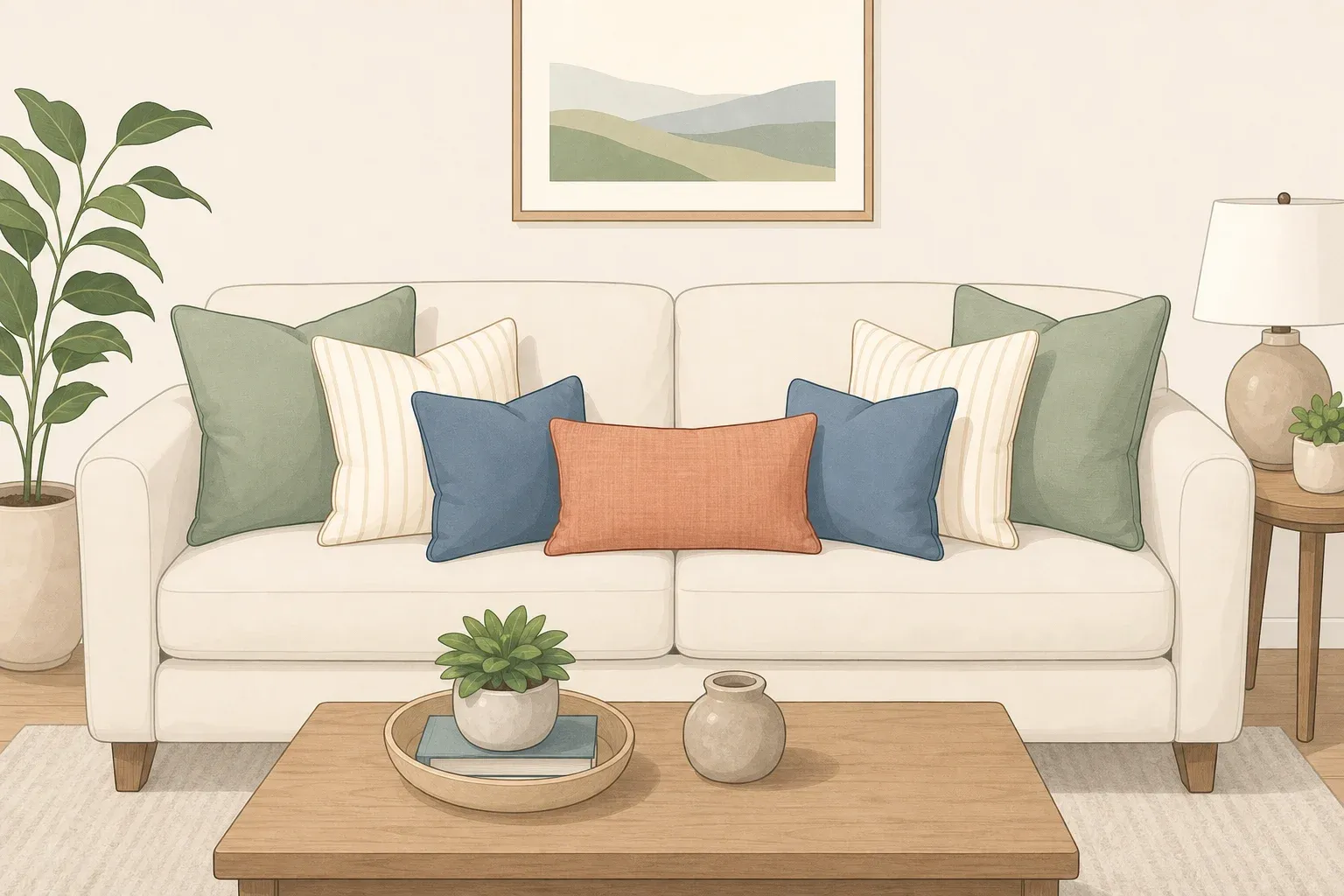
How to Style Throw Pillows: Size, Color, Arrangement
Before choosing colors or counting pillows, fix the one thing that makes the biggest visual difference: the insert. Several designers interviewed by House Beautiful last year size their inserts one to two inches larger than the pillow cover, since an insert that matches the cover's exact dimensions tends to look flat the moment someone leans against it. Wally's Hardware recommends the same approach for a plush, finished look. Getting that right is the first real lesson in how to style throw pillows, and it costs nothing beyond buying the correct size insert.
Scale matters more than any fixed pillow count. LA-based designer Coco Greenblum told House Beautiful that proportion is her first consideration, and she keeps pillows generous without letting them tower over the back of a sofa or chair. Most standard sofas look balanced with three to five pillows, while sectionals with chaises or deep corners can usually handle five to seven, Style Meets Comfort reported last year. Matching pillows exactly to the sofa fabric isn't forbidden, but interior designer Lauren Saab told The Spruce last year that it usually reads flat and showroom-like, since it strips out the contrast that gives a room depth.
This guide covers a full set of throw pillow styling ideas built into four steps: gather materials and take two measurements, set size and count for the specific furniture, build a color and pattern story around one hero pillow, then arrange everything into a finished look that still leaves room to sit down. Each step flags the mistake most likely to derail it. This is a beginner-friendly project: no tools beyond a tape measure, and nothing that requires sewing or modifying the furniture itself.
Step 1: Gather your materials and measurements
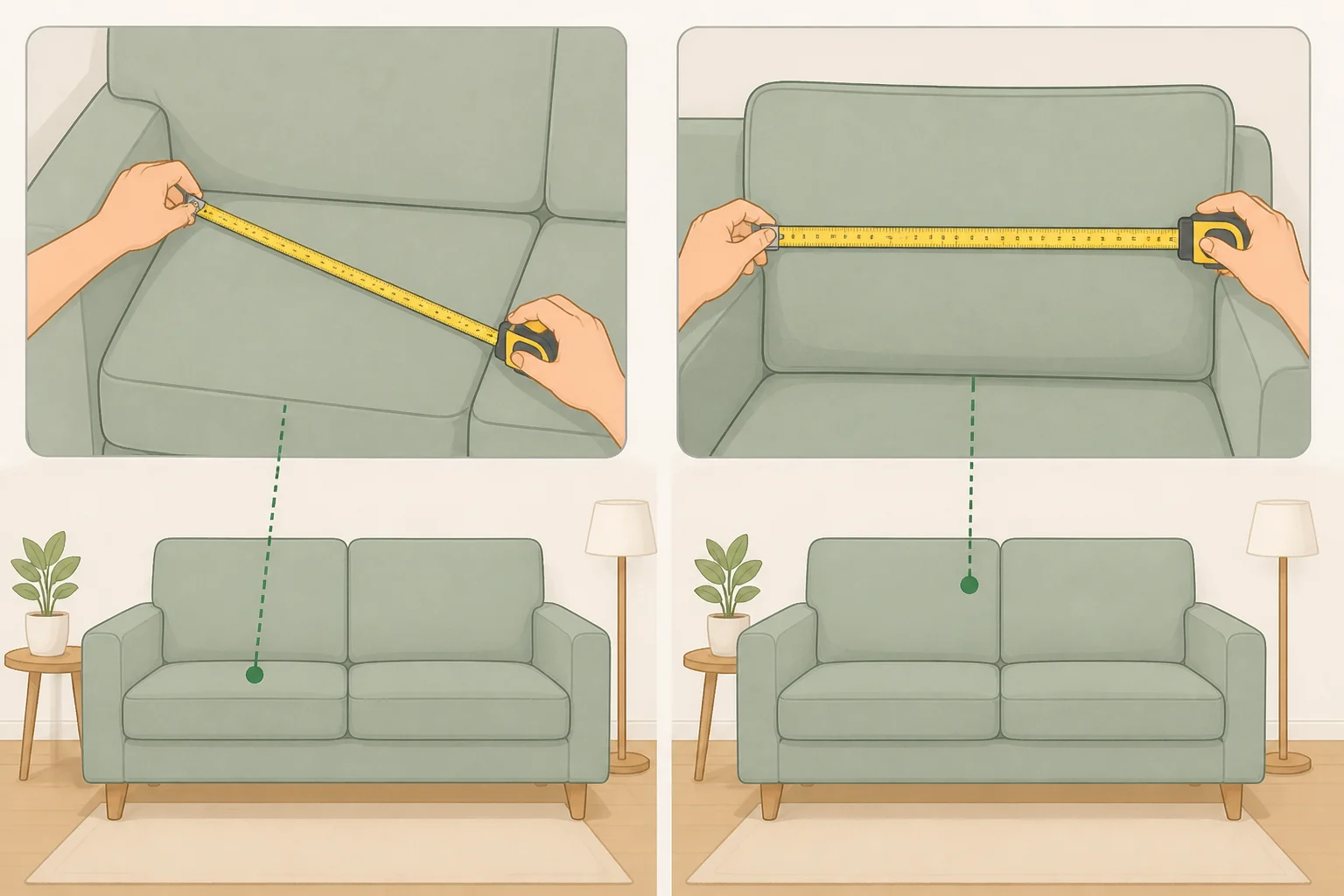
Sort the shopping list and two measurements before buying a single cover. Insert quality and sofa dimensions drive almost every decision that follows, so skipping this step usually means redoing work later. Gather:
- A tape measure
- Pillow covers in the sizes chosen in Step 2
- Inserts sized one to two inches larger than each cover
- One existing color or pattern reference already in the room, such as a rug, a piece of art, or an accent chair
Measure two things on the sofa or chair: seat depth and back cushion width. Seat depth sets the realistic size range for pillows. A 22-by-22-inch pillow is a safe starting point for most sofas, sizing up or down depending on how deep the seat runs, per House Beautiful. Back cushion width tells how much room exists for corner pillows; leave a strip of bare cushion visible at each end so pillows don't crowd the arms or swallow the whole back cushion.
Once the size range is set, buy inserts sized one to two inches larger than the cover, such as a 22-inch insert for a 20-inch cover. Reflections Interior Design, about two years ago, calls a feather-down blend insert one size larger than the cover its go-to for exactly this reason: it fills out the corners and keeps pillows from looking deflated once someone sits nearby. Favor down, feather, or down-alternative fill over foam or polyfill, which tend to feel stiff and look cheap by comparison, per Wally's Hardware.
Before buying any fabric, settle on one reference point already sitting in the room. A rug, a framed print, or an accent chair works fine. That choice becomes the color source for Step 3 instead of something guessed at later in a fabric aisle.
Step 2: Find the best throw pillow sizes for sofas, sectionals, and chairs
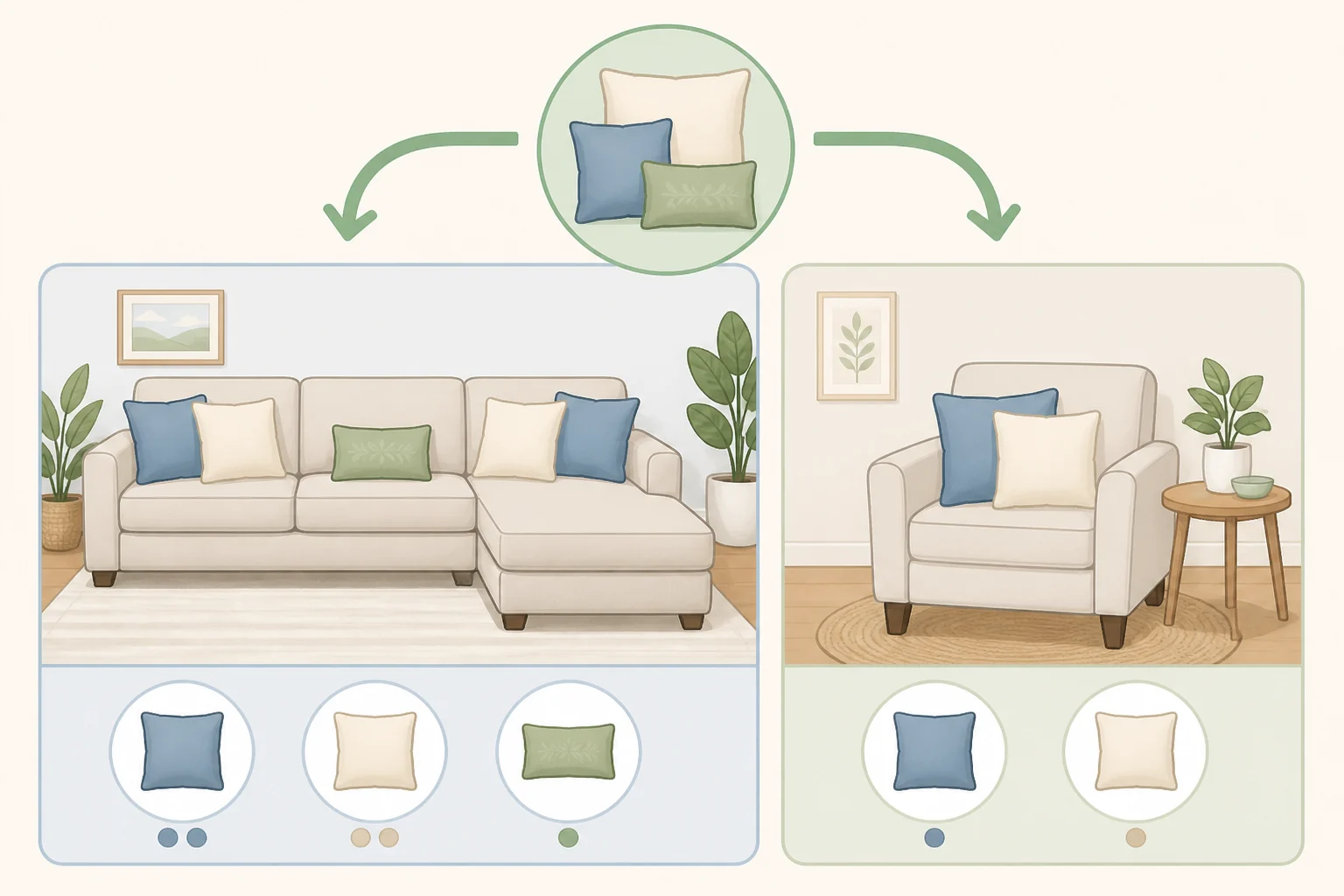
Translate the measurements from Step 1 into an actual size range and pillow count, adjusted by furniture type rather than one universal number:
- Loveseat: Scale down from a full sofa. One pillow per corner, sized a notch smaller than a standard sofa pillow, keeps proportion without crowding the shorter seat.
- Standard 7- to 8-foot sofa: A workable baseline is two 20-by-20-inch squares with one 14-by-16-inch lumbar centered between them. Three to four total pillows is typically plenty for a sofa that size, per Reflections Interior Design.
- Sectional with a chaise or deep corner: Five to seven pillows generally fill the space without overwhelming it, since there's more surface area to cover, according to Style Meets Comfort.
- Armchair: One small lumbar pillow adds style and lower-back support without crowding a seat that's already narrow, per Reflections Interior Design.
For an even-numbered, more formal look, designer Cynthia Ferguson often uses two pairs of pillows in different sizes to build a tailored but full arrangement, per House Beautiful, a four-pillow alternative to the odd-numbered layouts above.
Run a crowding check before locking in a final number. If a guest would need to move a pillow just to sit down, or the usable seat space feels reduced, pull one, per Style Meets Comfort. That check matters more than hitting a specific count, since a technically correct number still fails if nobody can actually sit on the couch.
Odd counts, like three or five, tend to read relaxed and informal. Even counts, like four or six, create a more symmetrical, formal look, according to Style Meets Comfort. Pick based on the mood of the room. With size and count settled, the next decision is what the pillows look like.
Step 3: How to mix and match throw pillows around one hero piece
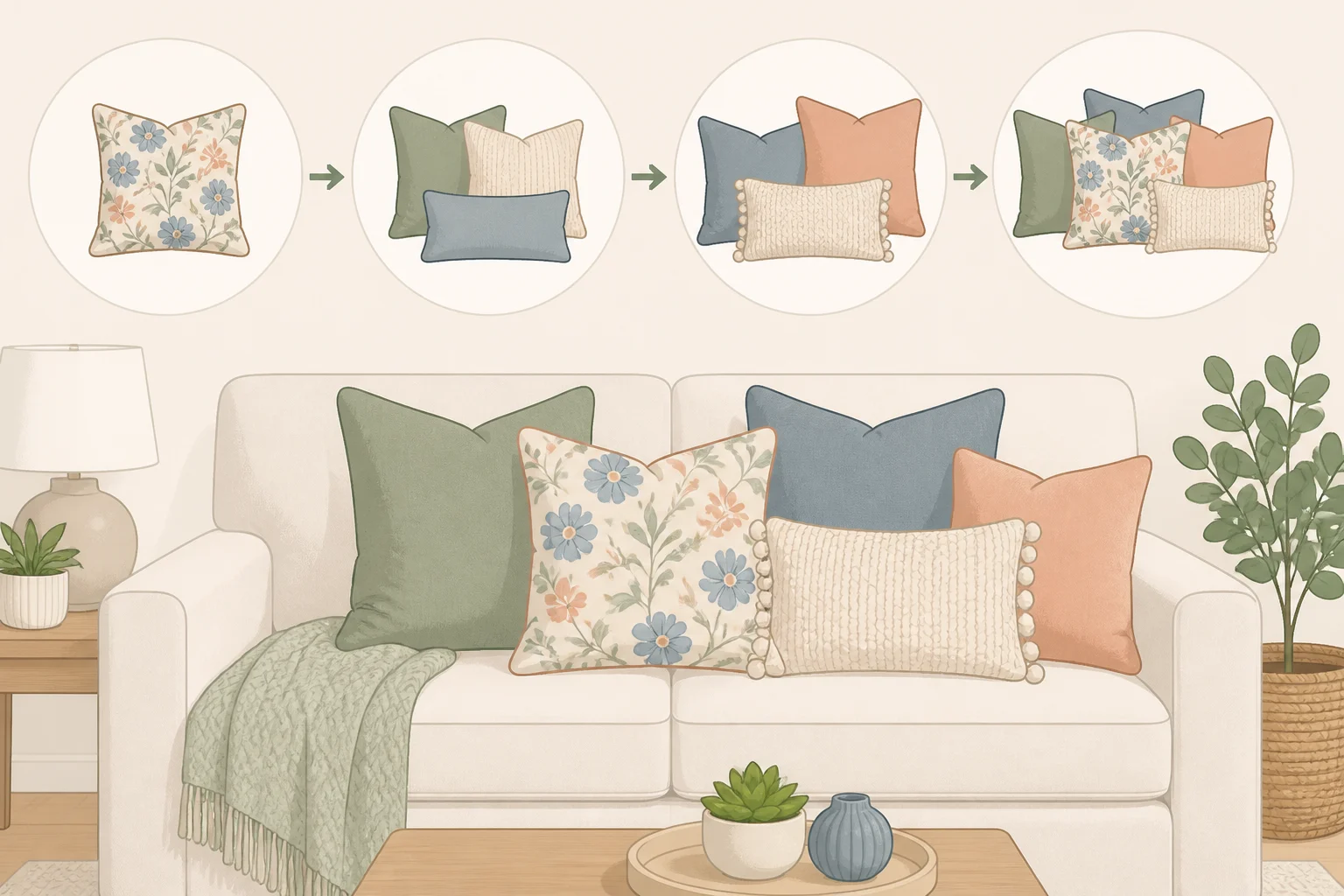
Give the color decisions a repeatable order instead of shopping for fabric first and hoping it coordinates later. Start with one pillow that carries a strong pattern or several colors. This becomes the hero piece the rest of the arrangement gets built around, per House Beautiful. Some designers reverse that order, starting with pattern, then color, then size, then quantity last, a sequence designer Isabel Ladd favors. Either approach works, but this guide locks in size and count first since furniture dimensions are fixed while pattern and color stay flexible.
From there, pull two to three coordinating tones from the room reference chosen in Step 1. A rug or piece of artwork is usually enough to build a full color story without matching anything exactly, according to both Style Meets Comfort and The Spruce. When mixing patterns, vary the scale. Pair a small geometric with a larger floral rather than two similarly sized prints, which tend to compete with each other instead of complementing, per Reflections Interior Design.
Mix tactile textures even within one color family. Saab told The Spruce that pairing a soft bouclé with a crisp linen, and adding something with weight like velvet or mohair, is what makes an arrangement feel layered instead of flat, a point Style Meets Comfort echoes in describing texture as underrated.
There's one exception to the no-matching rule from the opening: pillows made from the same fabric as the sofa can work if it's a deliberate choice, such as a tailored or minimalist look, rather than a default pick straight off the showroom floor, according to The Spruce. Once the hero pillow, palette, and textures are chosen, the only decision left is where everything goes.
Step 4: How to arrange throw pillows on a sofa or sectional
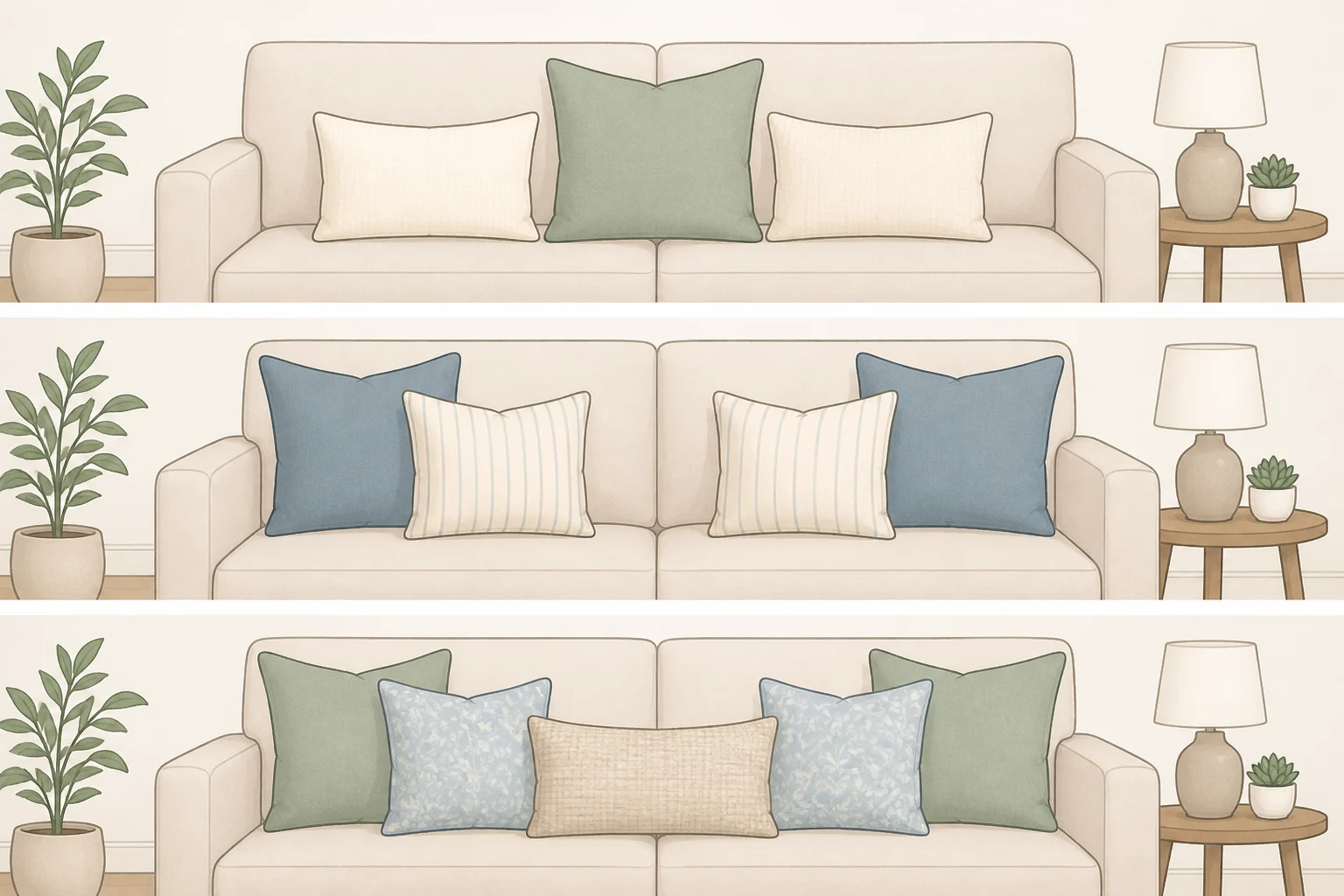
Buy and place pillows in the same order: largest pillows at the back corners first, then smaller ones layered toward the front, then the lumbar or bolster last, per Wally's Hardware. That sequence keeps the arrangement from looking lopsided partway through.
Three-pillow layout: Place one 20-by-20 square at each back corner, then center a lumbar pillow in front. It's a simple, versatile pairing that works across most sofa styles, per House Beautiful.
Four-pillow layout: Set two pairs of pillows in different sizes, one pair at the back corners and a smaller pair layered in front, for a tailored, symmetrical look rather than the relaxed asymmetry of the three- or five-pillow versions.
Five-pillow layout: Set 22-inch squares in the back corners, then layer 18- to 20-inch squares in front, angled slightly toward the center. Finish with a lumbar or bolster at front-center for contrast, per Style Meets Comfort.
Front pillows should overlap the back row without covering the sofa arms or blocking the main seat; if a front pillow hides more than half of the one behind it, pull it forward or swap it for a smaller size. For sectionals, repeat whichever layout fits each seating cluster rather than spreading pillows evenly across the entire piece, which keeps individual zones from looking sparse or overloaded. For an armchair, place the single lumbar against the back cushion, slightly off-center, so it supports the lower back without blocking the seat.
Once everything's placed, sit down in the main seating spot without moving anything. If that's not possible, pull one pillow per seating zone until it is. Before calling the arrangement finished, run through three throw pillow styling mistakes to avoid: an insert that looks flat or skimpy, two patterns of the same scale sitting side by side, and a pillow count that fails the crowding check from Step 2. Any one of these can undercut an otherwise solid arrangement, so it's worth a last look before stepping back and calling it done.
Finishing up
Success looks like pillows that feel full instead of flat, varied in pattern scale and texture, and proportional enough that nobody has to clear the seat to sit down.
Seasonal swaps are optional. Some designers treat pillows as a year-round, seasonless layer, while others swap covers for velvet in fall and winter and linen in spring and summer as an easy refresh, per House Beautiful. If swapping, keep the same inserts and change only the covers. Wally's Hardware suggests storing off-season covers folded in labeled bags, which saves buying new inserts every time the seasons turn.
One thing not to overthink: the pillow chop, the crease pressed down the center of a pillow. It's a style preference, not a rule. Some designers skip it because it can look commercial, while others use a softened version, and leaving a pillow unchopped simply reads more relaxed, according to both House Beautiful and Wally's Hardware.
Treat insert size, pattern scale, and seat clearance as the non-negotiables. Everything else, from the chop to the exact color mix to whether a pillow gets swapped each season, comes down to personal taste, and none of it needs more than a second look once those three fundamentals are in place.



Comments
Be the first, drop a comment!